
Yellowstone Supervolcano: What Happens If It Erupts?
A scientifically plausible timeline of what could happen if Yellowstone produced a giant eruption today.
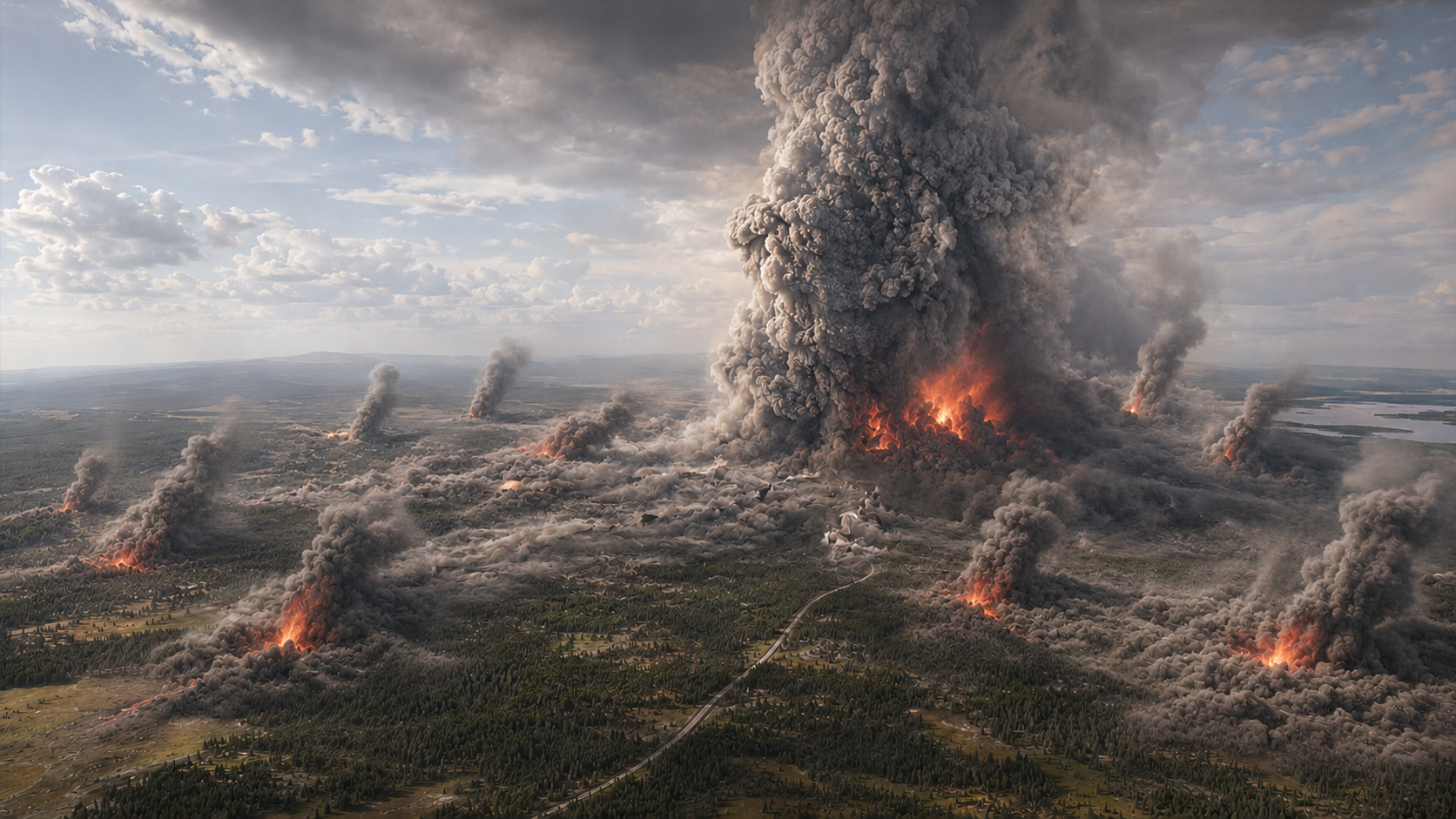
Yellowstone is a land of ice, fire, life and death.
Famous as the world’s first national park, its mountains, forests, geysers and wildlife form one of the most extraordinary landscapes on Earth.
Tourists, locals and wildlife alike walk on its lush green crust day in, day out, giving little thought to the snoring giant that lies beneath.
Around 631,000 years ago, that giant last woke up. If an eruption of comparable scale happened today, it could devastate the landscape for thousands of kilometres beyond Yellowstone, spread ash across North America and change life on Earth for decades to come.
So what would actually happen if Yellowstone erupted today?
- Eruption History -
How Yellowstone Became a Supervolcano
Yellowstone has not always looked like the landscape we see today. Much of what exists now was shaped by an extraordinary volcanic history stretching back millions of years.
Over the past 2.1 million years, the Yellowstone region has experienced three enormous caldera-forming eruptions: 2.1 million, 1.3 million and 631,000 years ago. Each one reshaped the landscape. The most recent, the Lava Creek eruption, created much of the Yellowstone Caldera visible today.
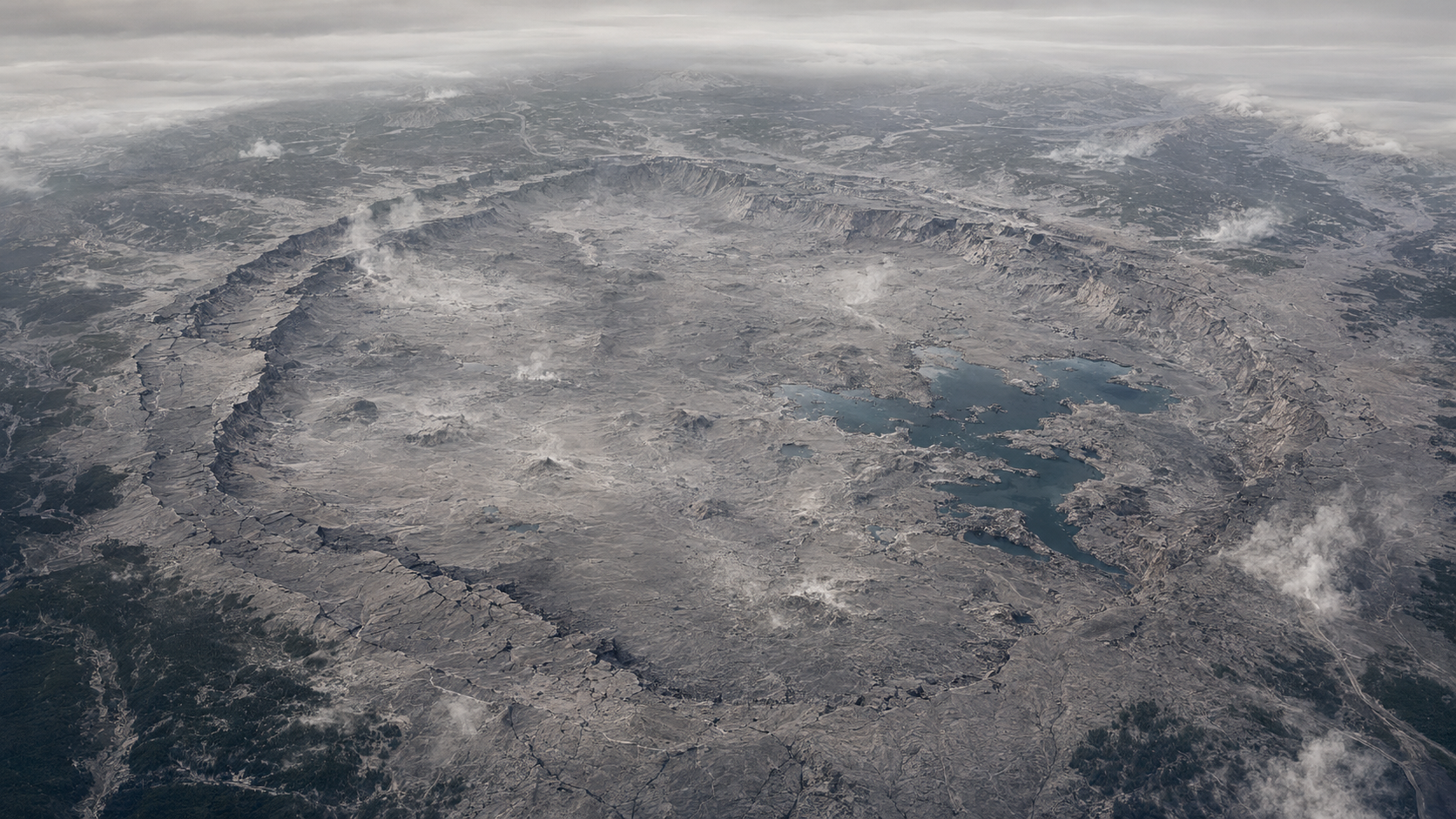
The source of all this activity is the Yellowstone hotspot, an area of intense heat beneath the North American tectonic plate. The hotspot stays roughly where it is. The ground above it does not. The plate has gradually moved southwest, leaving a long trail of volcanic activity across what is now Idaho and towards Yellowstone.
Which means millions of years from now, that activity could sit much farther northeast, perhaps even across the border into Canada. Future humans might be calling it the Canadian Supervolcano.
Yellowstone is commonly described as a supervolcano, although technically the term refers to a volcanic system capable of producing an eruption involving more than 1,000 cubic kilometres of material, roughly one million Empire State Buildings. Two of Yellowstone's three major eruptions reached that scale.
And Yellowstone certainly isn't extinct. The region remains volcanically active, with magma, earthquakes, hot springs and geysers all providing evidence of the enormous heat still beneath the surface. Its most recent lava flow occurred roughly 70,000 years ago.
If you want to see how volcanic landscapes behave elsewhere around the world, EarthLive.TV also has a collection of live volcano views.
So, with the history out of the way, what might actually happen if Yellowstone produced another giant caldera-forming eruption today?
- Eruption Timeline -
Quick Quiz - Roughly how many times greater was the estimated energy released by Yellowstone’s last super-eruption than the Tsar Bomba, the largest nuclear weapon ever detonated?
A - 1,700x
B - 17,500x
C - 340,000x
D - 1,200,000x
We’ll reveal the answer later.
__________________________________________
The Eruption Begins
After weeks, months or perhaps even years of increasingly obvious warning signs, Yellowstone has been evacuated. Roads through the park are empty, visitor centres abandoned, and powerful earthquakes are shaking the landscape.
Then the eruption begins.
Cracks tear across the ground. Trees fall, roads buckle and sections of the landscape begin to fracture as magma forces its way upwards through the crust.
As the magma approaches the surface, pressure falls and gases trapped within it expand violently. Ash, volcanic gas and shattered rock are blasted high into the atmosphere.
Within minutes, an enormous eruption column towers above Yellowstone. During an eruption on this scale, that column could eventually reach 30 to 50 kilometres into the atmosphere.
But not everything travels upwards. Parts of the eruption column collapse under their own weight, sending devastating pyroclastic flows of ash, gas and rock racing across the surrounding landscape.
The super-eruption has begun.
__________________________________________
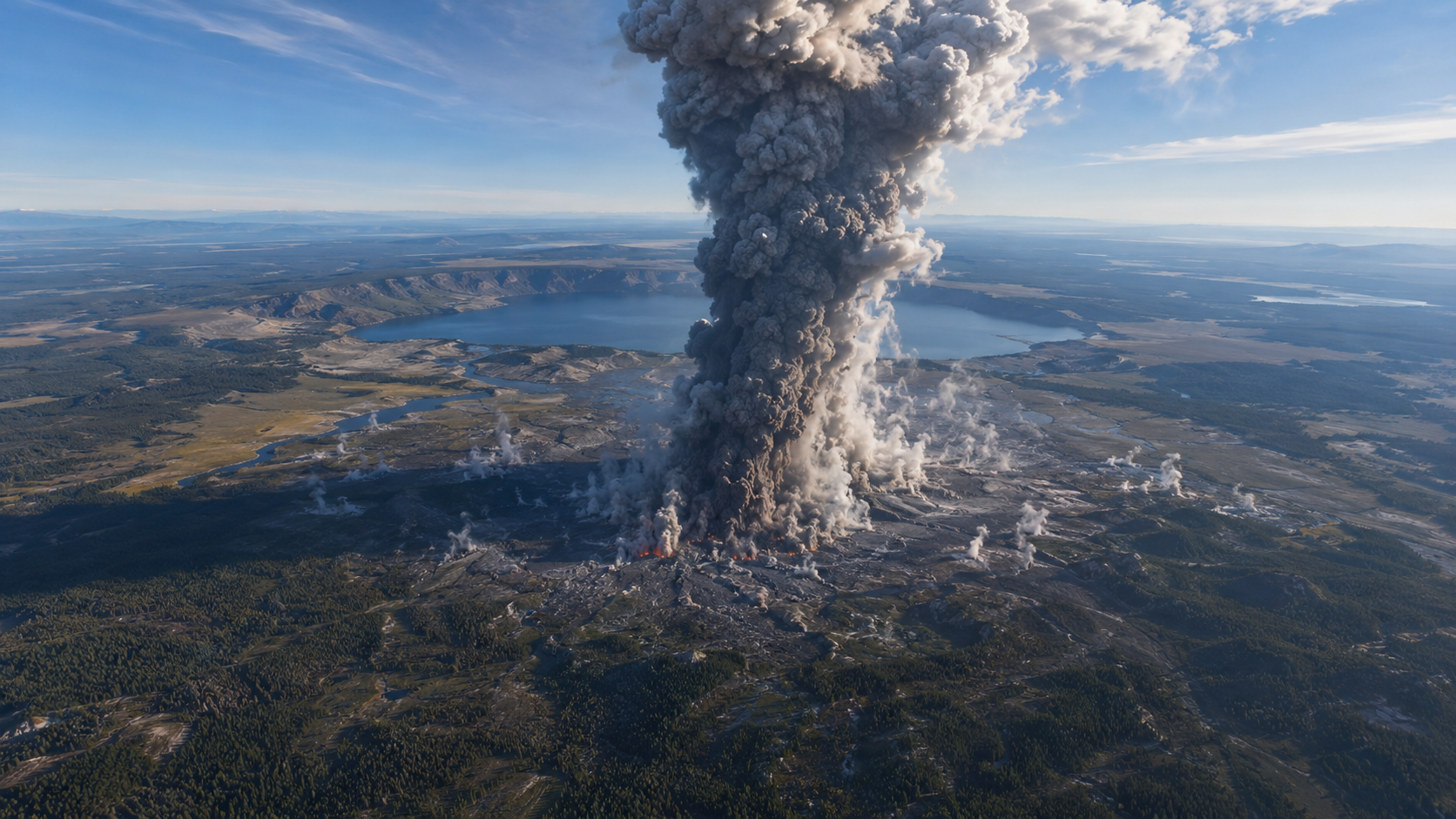
1 Minute After Eruption
Within the first few minutes, Yellowstone begins disappearing beneath fast-moving walls of scorching ash, gas and rock.
These deadly pyroclastic flows can race outward at hundreds of kilometres per hour and reach temperatures of up to around 700°C (1,300°F), hot enough to ignite forests, destroy buildings and kill almost anything in their path.
Above them, the towering cloud of ash and volcanic gas continues climbing into the atmosphere, while heavier fragments of rock begin raining back down around the vents and surrounding landscape.
Across Yellowstone, daylight fades beneath an increasingly thick cloud of ash.
Yellowstone, as we know it, is being erased.
__________________________________________
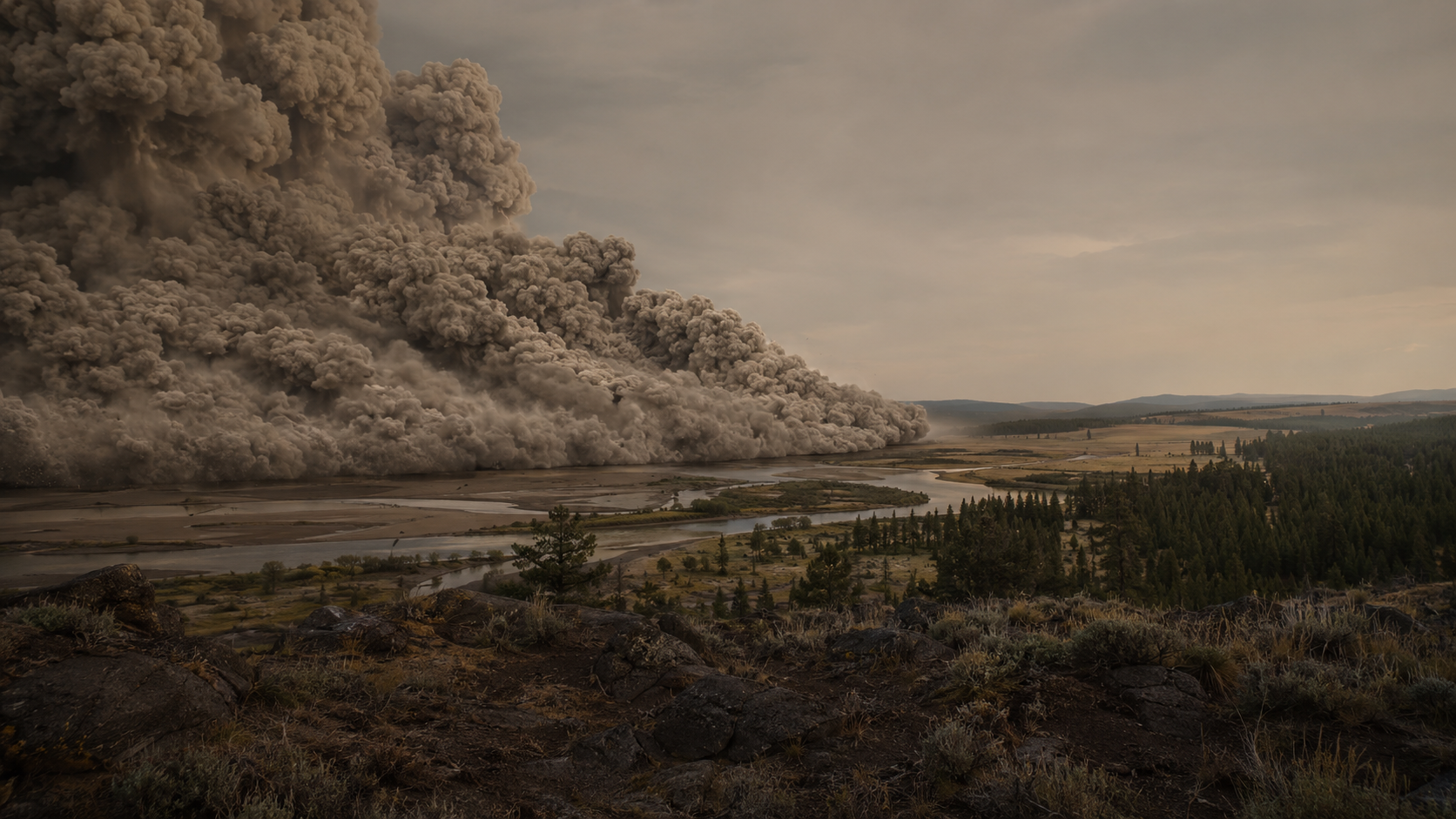
1 Hour After Eruption
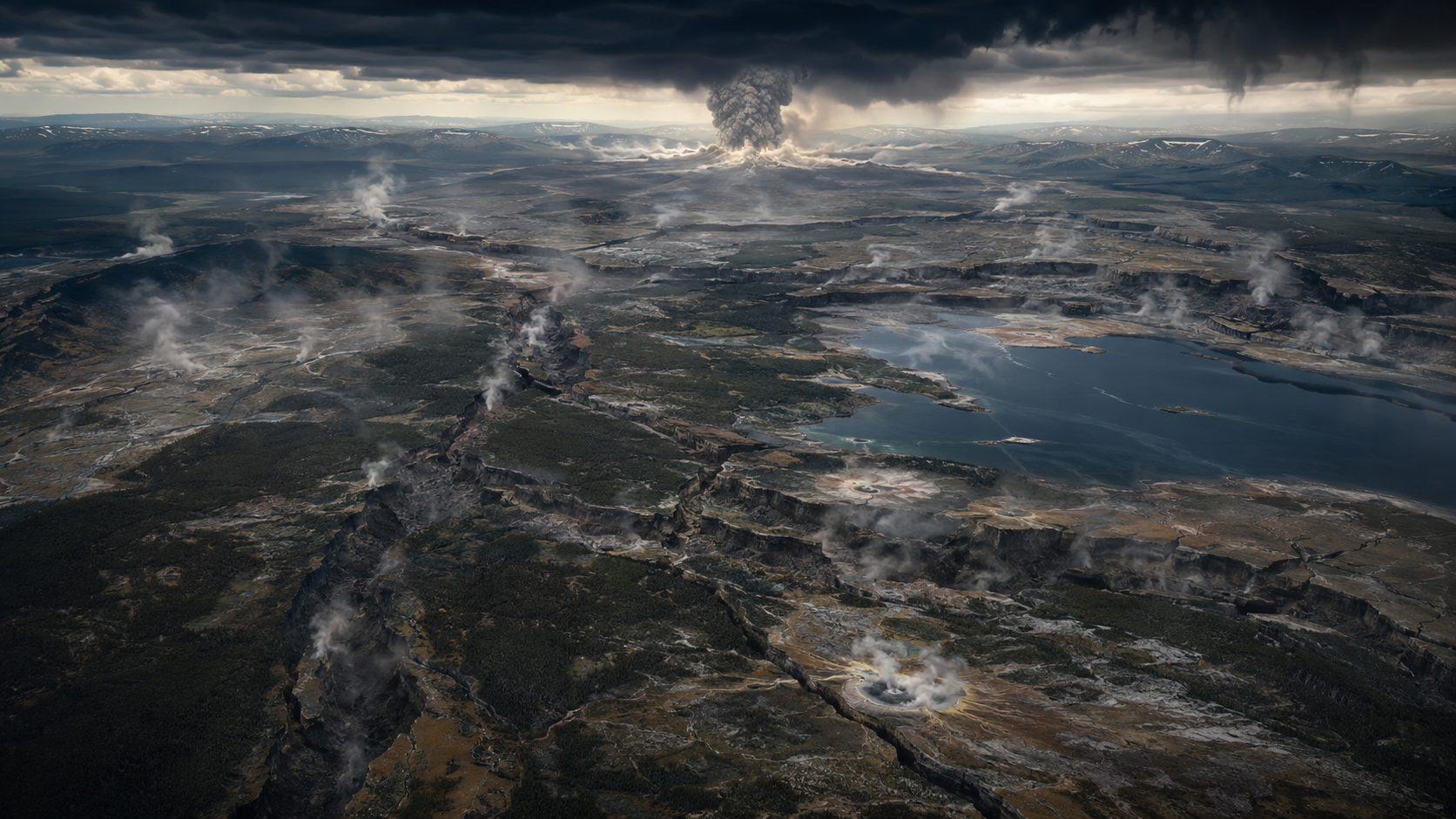
One hour into this hypothetical eruption, Yellowstone is almost unrecognisable.
Deadly avalanches of ash, gas and rock continue sweeping across the region, burying forests, roads and buildings beneath scorching layers of volcanic debris. Within the devastated zone, almost nothing exposed above ground survives. Yellowstone's past giant eruptions produced pyroclastic flows that spread across vast areas.
Above, the towering column of ash and gas reaches into the stratosphere. At its summit, the cloud spreads sideways into an enormous umbrella, carried away from Yellowstone by high-altitude winds.
Nearby parts of Wyoming, Montana and Idaho would face the greatest immediate danger, while volcanic ash begins affecting areas farther away. In a caldera-forming eruption, USGS estimates that ashfall could eventually affect much of the United States, as well as parts of southern Canada and northern Mexico.
Across the United States, phones light up with emergency alerts as news networks interrupt their broadcasts. The park emptied weeks ago, but ash reaches far beyond it. Evacuation orders now spread through communities downwind, and roads fill with vehicles heading away from the falling ash.
Meanwhile, the ground above the volcanic system begins to collapse as huge volumes of magma are withdrawn from beneath it. This process creates a caldera, a vast depression formed when the surface can no longer support itself. Yellowstone’s existing caldera was created by this same process during the Lava Creek eruption around 631,000 years ago.
The eruption is no longer simply destroying Yellowstone.
Yellowstone itself is collapsing.
__________________________________________
1 Day After Eruption
Twenty-four hours later, the eruption may still be raging.
Yellowstone has disappeared beneath a vast landscape of ash, shattered rock and volcanic debris. Where forests, roads and geyser basins once stood, parts of the ground above the magma system continue collapsing into the growing caldera.
High above, winds carry fine volcanic ash hundreds or even thousands of kilometres from Yellowstone. Towns and cities downwind begin turning grey beneath falling ash, while lighter deposits spread across much larger areas of North America. The exact direction and thickness depend heavily on the wind.
So how much ash would land on you?
USGS modelled this in 2014, running a Yellowstone super-eruption against real historical wind data. Roughly what it found:
Billings, Montana and Casper, Wyoming - inches to more than three feet. Roofs at risk of collapse, roads impassable, near-total disruption.
Minneapolis and Des Moines - a few inches. Transport halted, water supplies contaminated, crops smothered.
Portland and Seattle - up to an inch or so, despite sitting upwind. The eruption generates its own winds strong enough to overcome the prevailing westerlies.
Los Angeles - a fraction of an inch to under two inches. Enough to ground flights and foul engines.
New York, Washington DC and Miami - a dusting, measured in millimetres.
One thing the model cannot tell you is which way the wind blows on the day. Shift it and the map changes completely.
Across the ash-covered region, daylight turns dim and unnatural. Airports across the affected region close, with no reliable reopening date. Roads become slippery and difficult to see.
Ash is far more troublesome than ordinary dust. It can clog engines and ventilation systems, damage machinery, contaminate water supplies and make roads dangerously slippery. Where enough wet ash accumulates, its sheer weight can also damage or collapse roofs.
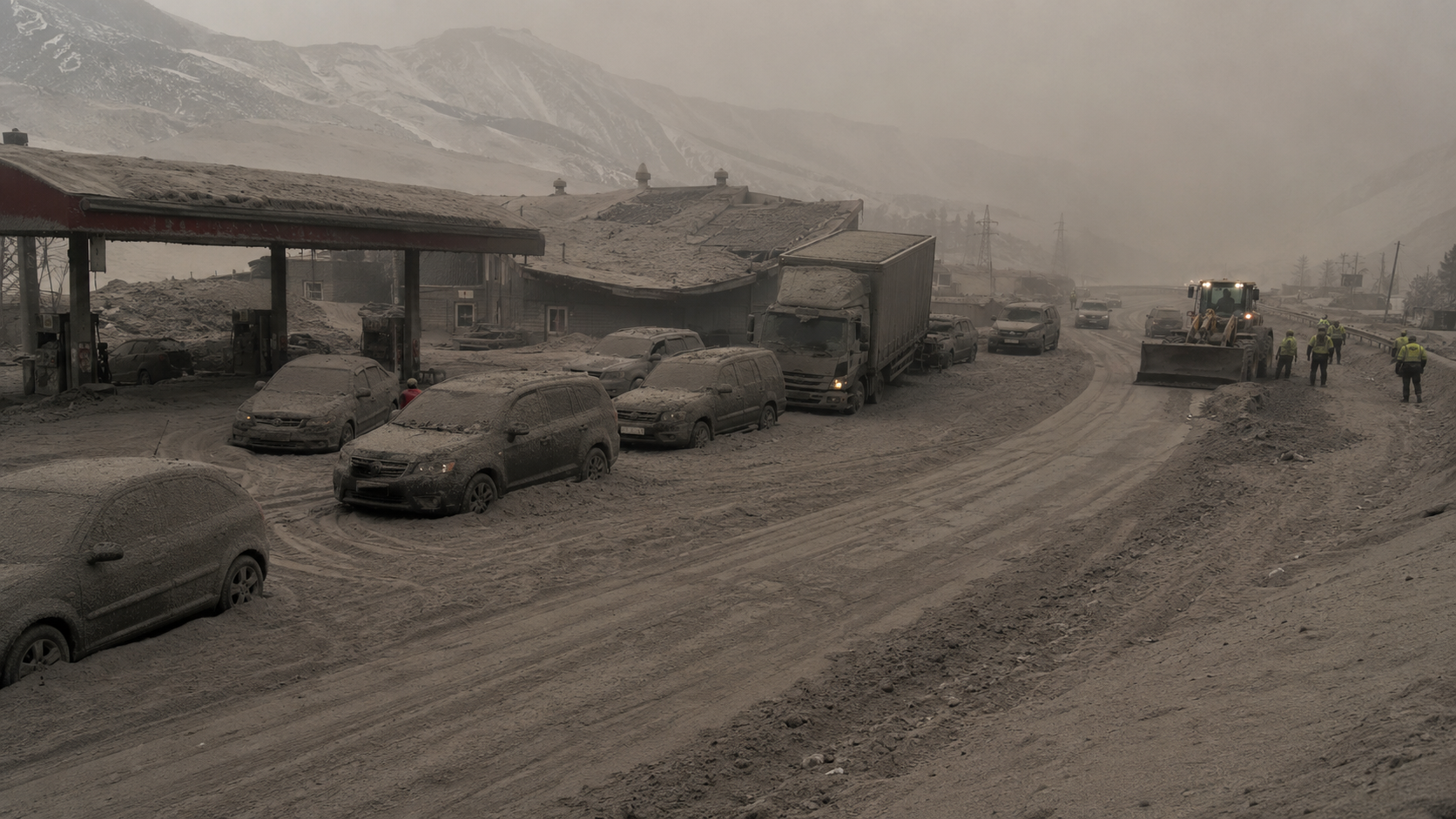
Inside homes, people seal doors and windows. Masks, bottled water, food and fuel disappear from shelves. Pharmacies and hospitals begin filling with people suffering irritated eyes, coughing and breathing difficulties, especially children, older people and those with asthma.
Emergency services struggle to reach isolated communities. Power and water systems begin failing in the worst-affected areas. Panic buying spreads, some shops are abandoned, and isolated theft and looting may begin. But millions of people also help neighbours, share supplies and get each other out safely.
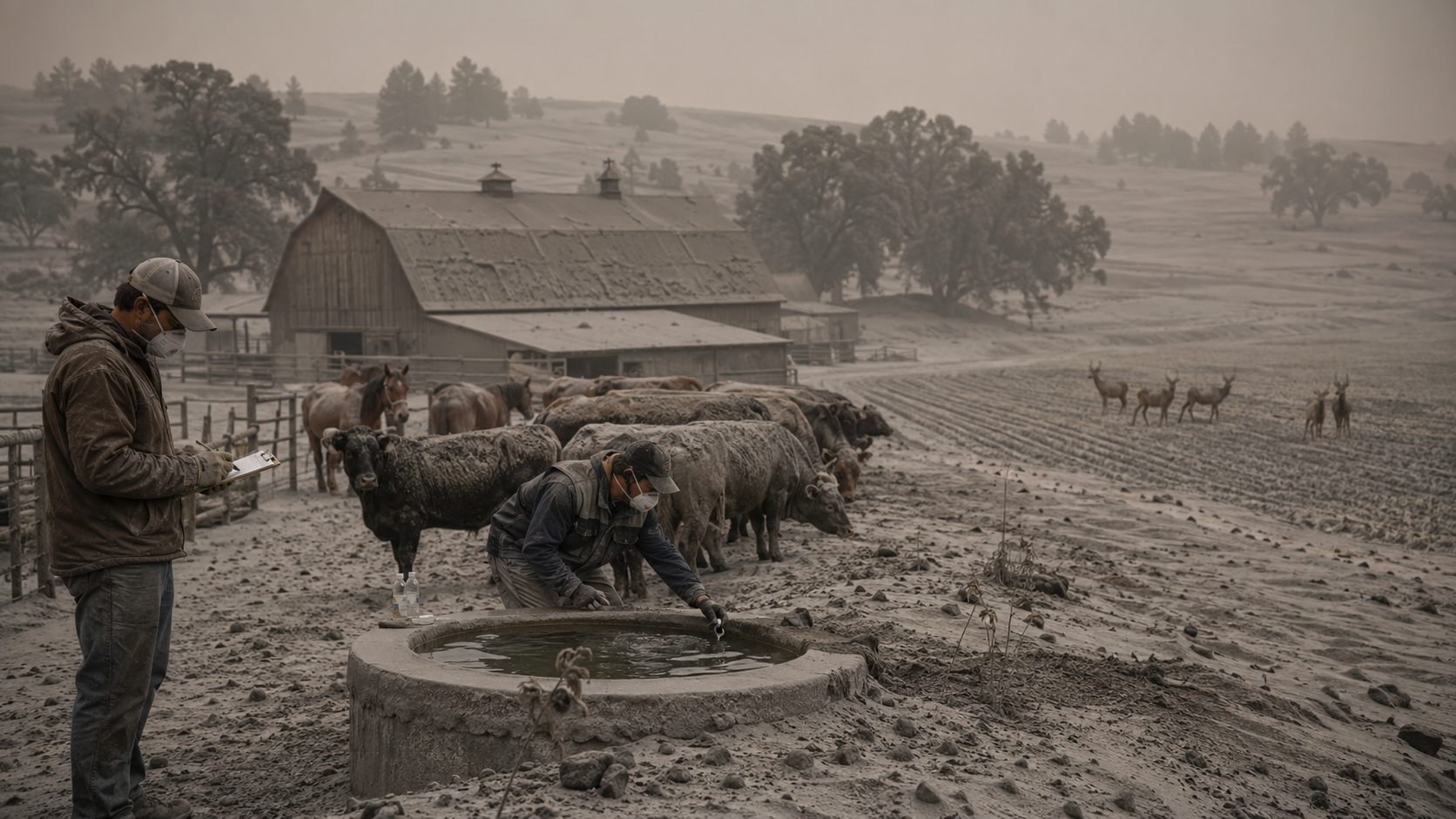
Farms and grazing land are smothered. Livestock and wildlife struggle to find clean food, water and breathable air. Many will become sick or die, while contaminated livestock may no longer be safe to eat.
Across the Atlantic, Europe is still largely going about its day. But flights are being rerouted, governments are preparing for possible global effects, and television screens around the world are showing the same images from America.
And still, the eruption continues.
After only one day, this is no longer a disaster confined to Yellowstone.
It has become a continental emergency - and the rest of the world is beginning to realise that the consequences may not stop at America's borders.
__________________________________________
1 Week After Eruption
One week later, the eruption may still be continuing.
Across much of North America, the scale of the disaster is becoming clear. Ash has buried communities closest to Yellowstone and spread across vast areas farther downwind. Airports remain closed, roads are blocked and machinery fails as ash enters engines, power systems and water supplies.
Millions of people have fled the worst-affected regions. Emergency shelters overflow, supply chains begin breaking down, and food, medicine and clean water become increasingly difficult to come by.
Farms beneath heavier ash are devastated, while livestock and wildlife struggle to survive.
The United States remains a functioning country, but it is under extraordinary pressure. Federal agencies, the military and neighbouring nations are coordinating one of the largest disaster responses in history.
Around the world, markets plunge and governments prepare for shortages, disrupted trade and a possible cooling of the climate. Fine ash and sulfur aerosols are beginning to spread around the planet, although the full global effects have not yet arrived.
Meanwhile, America's geopolitical rivals would almost certainly be watching closely, studying its vulnerabilities during this period of weakness.
For now, the greater enemy is not another country.
It is the ash in the air, the collapse of infrastructure and the growing fear that the world's food supply may be next.
After one week, Yellowstone has become a global crisis.
__________________________________________
1 Month After Eruption
One month on, the eruption may finally be fading - but its consequences are only beginning.
Geological models show Yellowstone super-eruption scenarios lasting as long as one month, with ash spreading across much of the United States, southern Canada and northern Mexico. These are modelled scenarios rather than predictions, but fine particles have now begun circling the globe.
Across the world, the crisis is impossible to escape. Factories face shortages, and governments begin restricting food exports to protect their own populations.
On farms, the next harvest is in serious danger. Ash has smothered crops and grazing land across affected regions, while livestock face shortages of clean water and uncontaminated feed. The concern is no longer surviving the eruption. It is what happens when the next harvest arrives.
High above Earth, another process is unfolding. Sulfur dioxide released during the eruption can form tiny sulfate aerosol particles in the stratosphere, where they interact with incoming sunlight and alter the planet's climate.
Exactly how much cooling a super-eruption could cause remains uncertain. A 2024 NASA-led study found that previous estimates may have exaggerated the effect and concluded that global cooling from even enormous super-eruptions is unlikely to exceed about 1.5°C (2.7°F). The researchers also stressed that aerosol size remains a major source of uncertainty.
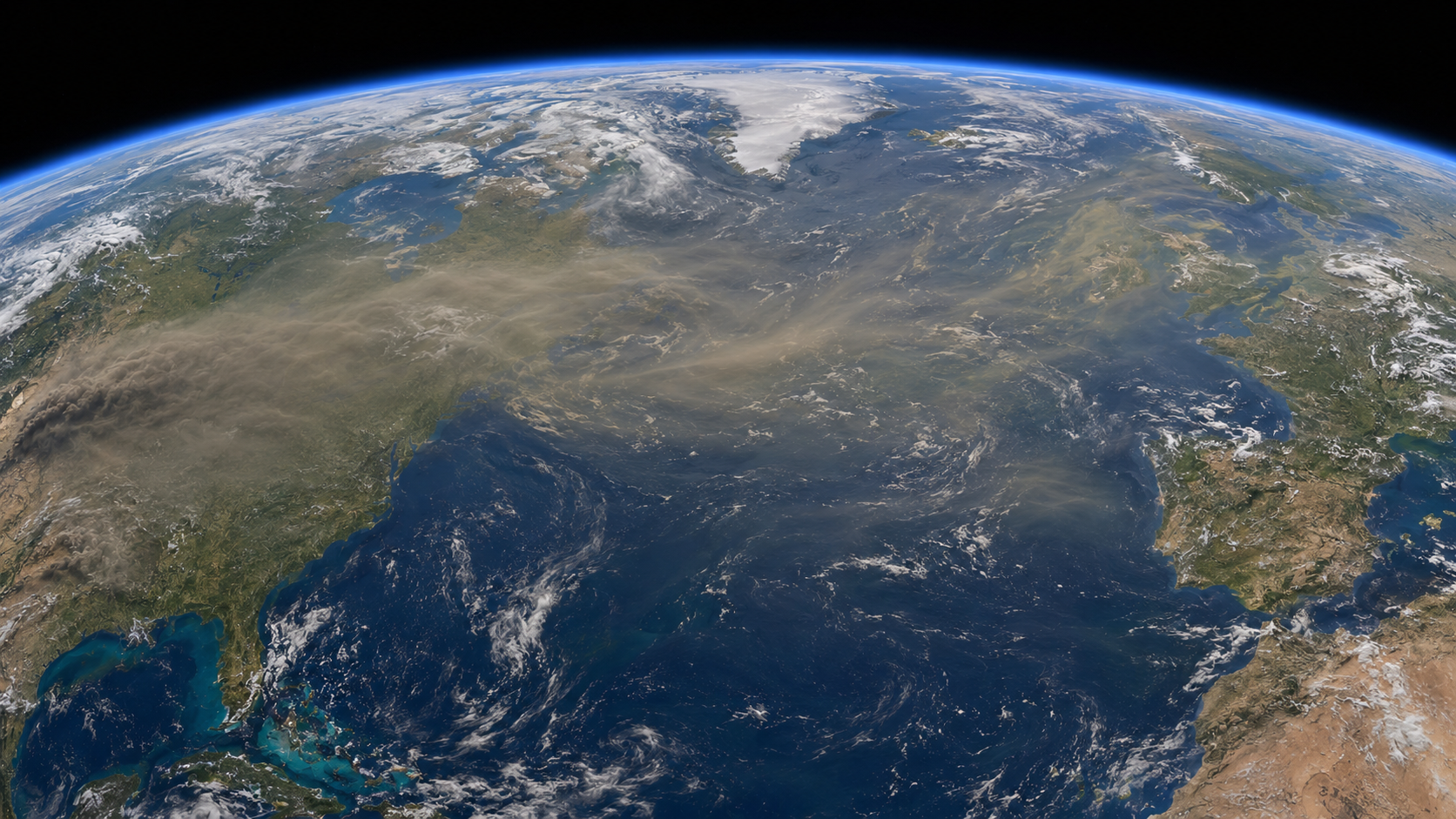
Even that level of cooling could matter enormously for agriculture. Weather patterns begin behaving strangely. Rainfall shifts. Farmers thousands of kilometres from Yellowstone now fear frost, failed crops and a shorter growing season. USGS says a catastrophic Yellowstone caldera-forming eruption would likely alter global weather patterns and could have major effects on agriculture for one to two decades.
Europe, Asia and the rest of the world are no longer simply watching America's disaster.
They are preparing for their own.
After one month, Yellowstone is no longer just a volcanic disaster. It has become a potential threat to the global food system.
__________________________________________
1 Year After Eruption
One year later, the eruption itself is over. The disaster is not.
Much of Yellowstone and the surrounding region remains buried beneath ash and volcanic debris. Entire towns have been abandoned, roads and railways are still being cleared, and rebuilding across the worst-affected areas has barely begun.
Across North America, millions remain displaced. Some communities have returned. Others may never be rebuilt. The land itself has changed, with ash-damaged farms, contaminated water supplies and abandoned infrastructure making large areas difficult to live in long after the eruption stopped.
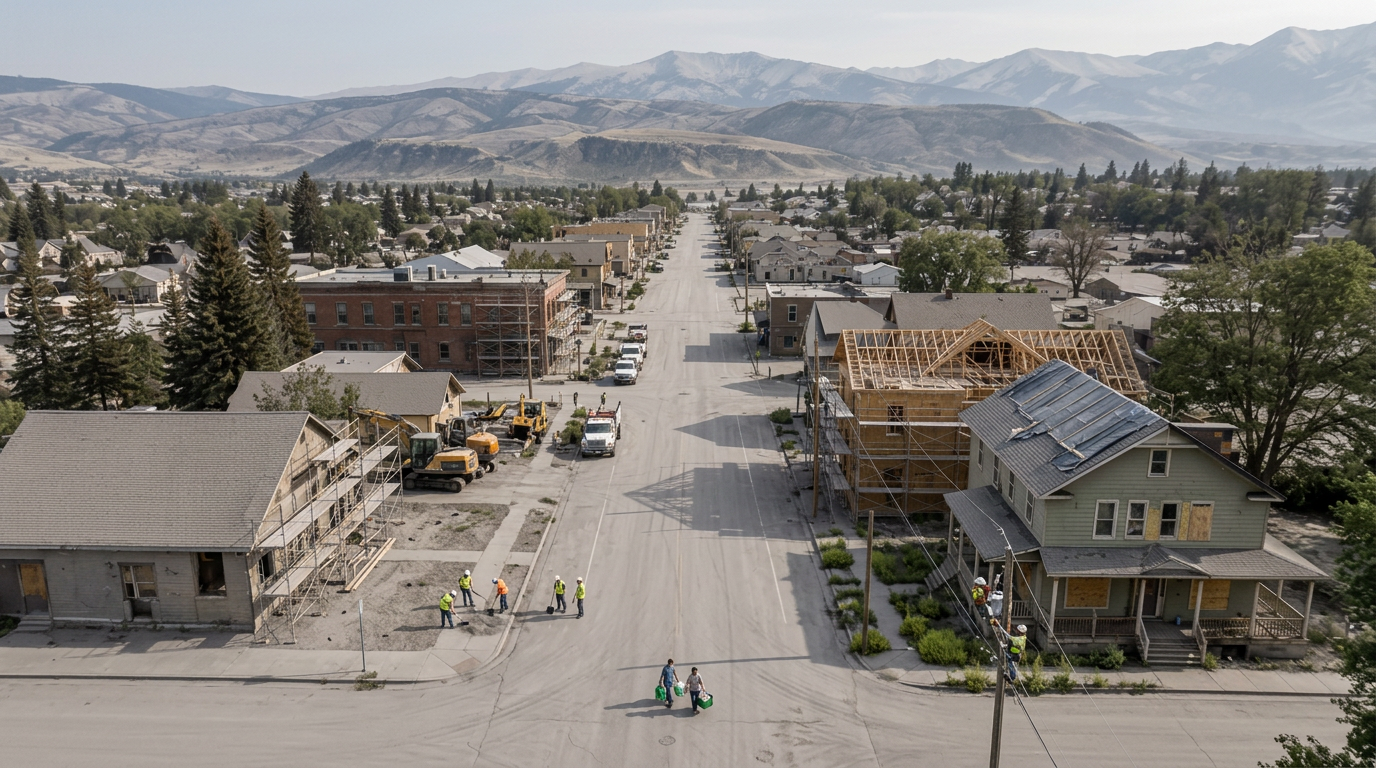
The world economy is still recovering. Airlines, agriculture, manufacturing and international trade remain damaged, while political unrest grows in countries where food, fuel and basic necessities have become unaffordable.
But humanity has survived.
Cities far from Yellowstone continue functioning. Scientists monitor the atmosphere, farmers adapt what and where they grow, and nations begin the long process of rebuilding.
One year after the eruption, the world has not ended. But it is colder, hungrier and permanently changed.
__________________________________________
10 Years After Eruption
Ten years later, the eruption has become history - but its scars remain.
Yellowstone itself has been permanently transformed. The landscape around the collapsed caldera bears little resemblance to the national park that existed before the eruption. Thick volcanic deposits cover parts of the region, drainage systems have changed and some areas that once contained forests, roads and geyser basins are gone altogether.
Much of the surrounding area remains abandoned. Some towns have been rebuilt, while others exist only as names on old maps. Roads and railway lines have been rerouted around land too damaged or unstable to recover.
Across North America, agriculture has slowly returned, but enormous areas of farmland remain damaged by ash, erosion and abandoned infrastructure. A generation of families has grown up far from the homes they lost.
The atmosphere is gradually clearing. Global temperatures may be returning toward normal, although USGS describes the potential climate disruption from such an eruption as lasting years to decades.
Food production and international trade have recovered, but the political and economic damage remains. Countries have redrawn emergency plans, rebuilt supply chains and created vast food reserves in preparation for the next global disaster.
And nature would be returning.
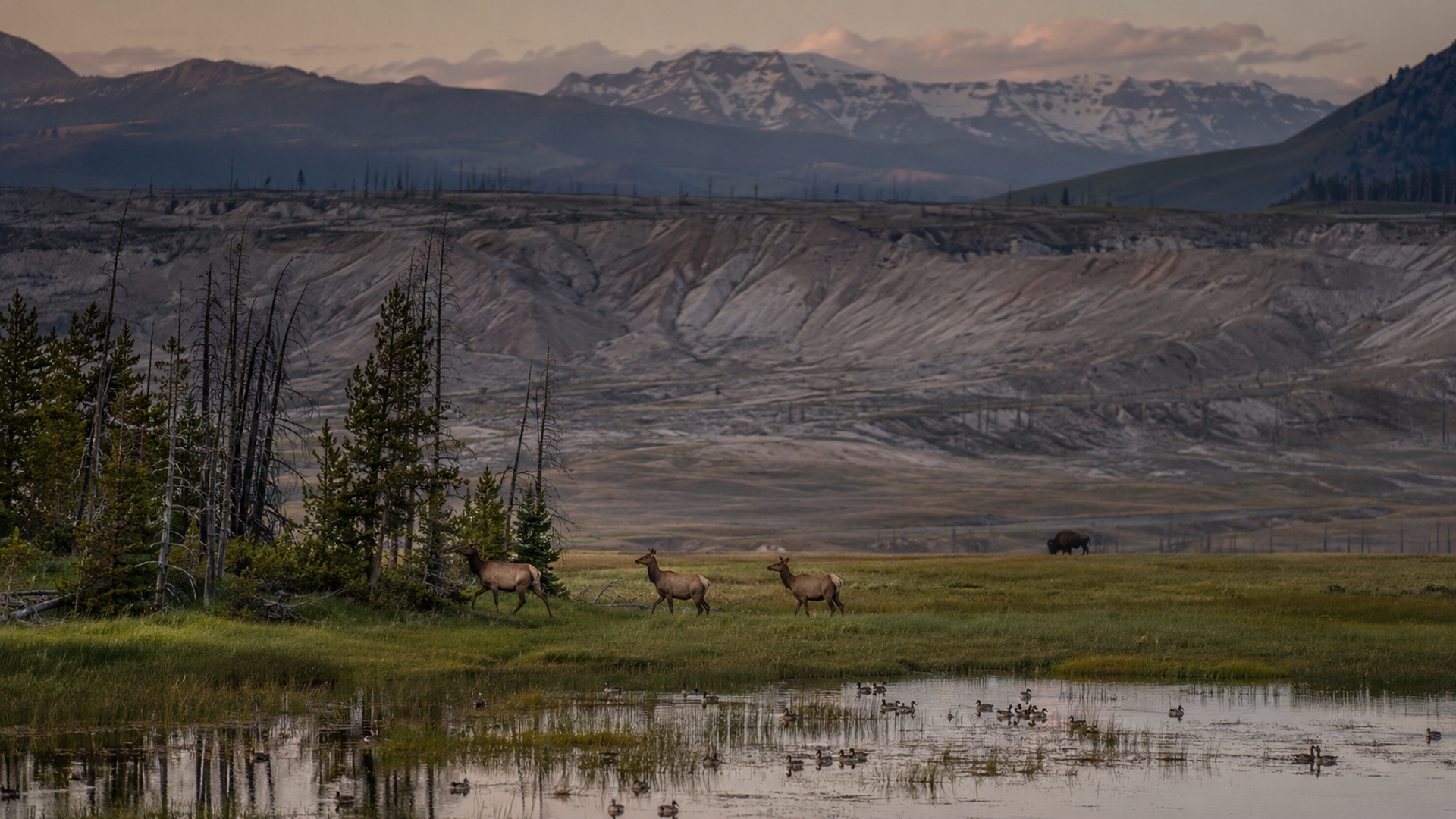
Plants push through ash-covered ground. Animals move back into surviving habitats. But the Yellowstone known before the eruption is gone for hundreds of years to come.
Humanity survived.
Not because the eruption was small, but because civilisation adapted.
Ten years later, the world is rebuilding. Yellowstone is not.
Will It Really Erupt?
After everything we have just seen, there is one obvious question left:
Could Yellowstone really erupt like this?
The answer is yes, but the chances are extremely small.
The odds in any single year are tiny. But tiny does not mean impossible.
USGS estimates the annual probability of another caldera-forming Yellowstone eruption at roughly 1 in 730,000, or about 0.00014%. Even that figure is only a rough estimate based on the intervals between Yellowstone's three previous giant eruptions, not a prediction of when another one will occur.
Yellowstone is also not overdue. Volcanoes do not follow a timetable, and the gaps between previous eruptions cannot be used as a countdown to the next one.
In fact, another super-eruption is considered the least likely volcanic scenario at Yellowstone. Smaller hydrothermal explosions are more likely on human timescales, while a future volcanic eruption would be more likely to involve lava flows than another enormous caldera-forming event.
That does not mean Yellowstone is inactive.
Thousands of earthquakes are recorded yearly. Satellites measure the ground rising and sinking. Scientists at the Yellowstone Volcano Observatory monitor heat, gases, water and tiny changes beneath the surface.
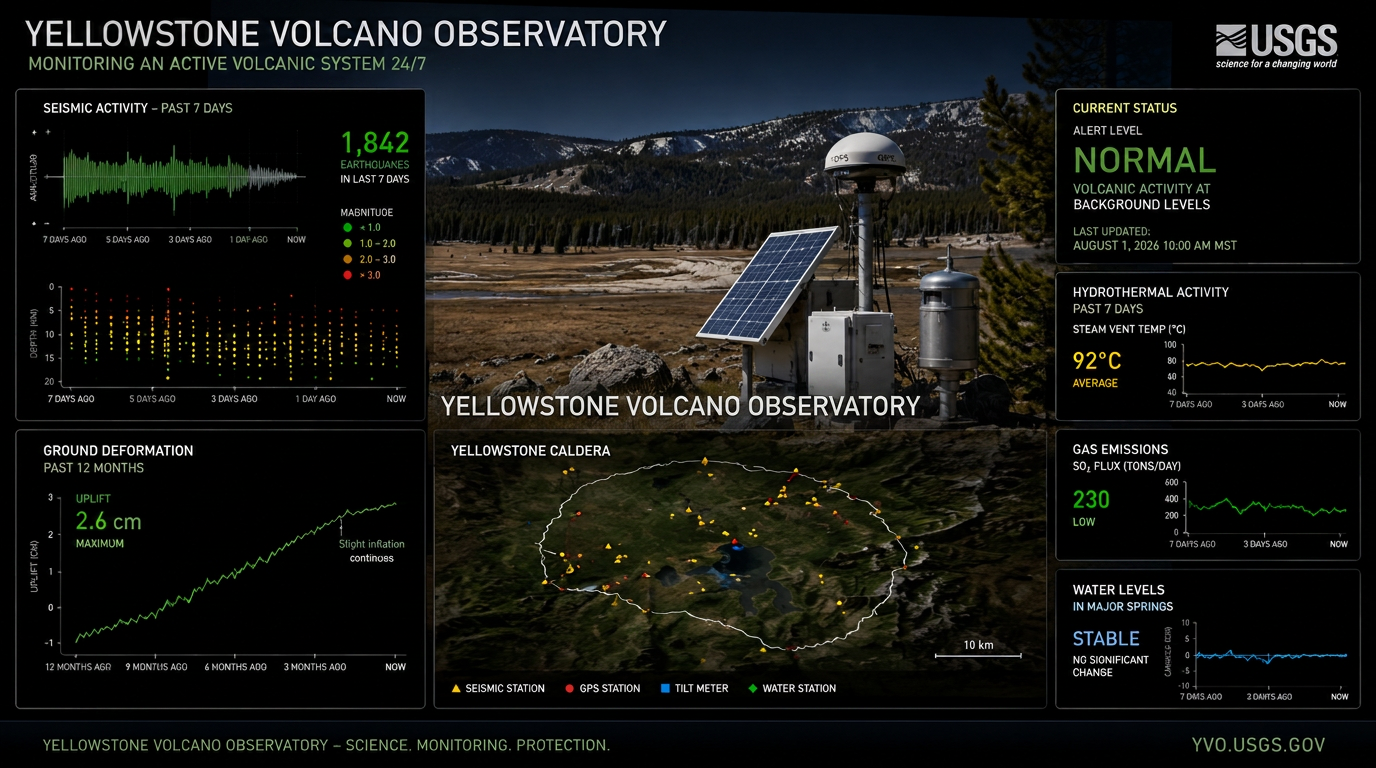
A catastrophic eruption would also be unlikely to happen without warning. Scientists expect the build-up to such an event to produce major changes, including intense earthquake swarms and rapid ground deformation. Those warning signs could potentially appear weeks, months or even years before a giant eruption.
And no - bison running down a road does not mean Yellowstone is preparing to explode. Claims that animals are fleeing the park ahead of volcanic activity have repeatedly circulated online, but Yellowstone scientists say there is no evidence that this is happening.
At the time of writing in August 2026, Yellowstone remains at NORMAL alert level, with activity described by the Yellowstone Volcano Observatory as being at background levels.
A true super-eruption would almost certainly give warning. The ground would deform. Earthquakes would intensify. Yellowstone would not simply explode one morning without the world knowing something was wrong beforehand.
So will the exact disaster we just played out really happen?
Maybe.
Maybe thousands of years from now.
Maybe hundreds of thousands.
Maybe never again on the scale we have just seen.
But the heat beneath Yellowstone is still there.
The ground still rises.
The earthquakes still come.
The geysers still erupt.
So perhaps Yellowstone is not a ticking time bomb.
Perhaps it is something more unsettling.
A loaded weapon with no clock attached.
Not today.
Probably not tomorrow.
But one day…
Yellowstone will awaken once again.
Quiz Answer
Remember the quiz question from the beginning?
If you answered 17,500 times, you were right.
One widely cited estimate puts the total energy released by a Yellowstone-scale super-eruption at roughly 875,000 megatons of TNT. The Tsar Bomba, detonated by the Soviet Union in 1961, had a yield of about 50 megatons.
Using those figures, the eruption would represent roughly 17,500 times as much energy.
There is an important catch: a volcanic eruption and a nuclear explosion release energy in very different ways, so this is not a perfect like-for-like comparison. It is simply a way of putting the extraordinary scale of a super-eruption into perspective.
Even the most powerful nuclear weapon ever detonated would be tiny by comparison.
Remember!
So, before you go about your daily life today or tomorrow, remember this.
Right now, you are standing on a thin shell of cooled rock that is slowly moving, with magma underneath it reaching nearly 1,500°F.
All while our thin blue marble we call Earth floats in space, rotating at up to 1,670 km/h and racing in circles around the Sun at 107,000 km/h, a blazing star reaching temperatures of up to 27,000,000°F.
Feeling dizzy yet?
Have a great day and see you next time… hopefully 🌋
__________________________________________