Webcams Are Getting AI Brains!
- 3 Live Examples -
Live cameras have always shown us the world in real time. But a new generation of webcams is doing something different - they're not just watching, they're thinking.
Most live cameras are passive. They sit there, stream what they see, and leave it up to you to figure out what's happening. But artificial intelligence is starting to change that.
For the first time, webcams are beginning to understand what they're looking at - turning passive live streams into intelligent real-time systems.
A small number of live webcams around the world are already doing this, analysing, identifying, and interpreting what's in front of them, right there on screen.
Here are three that are already doing it, and a look at where it's all heading next.
__________________________________________
AI That Counts
- Shibuya Crossing, Tokyo -
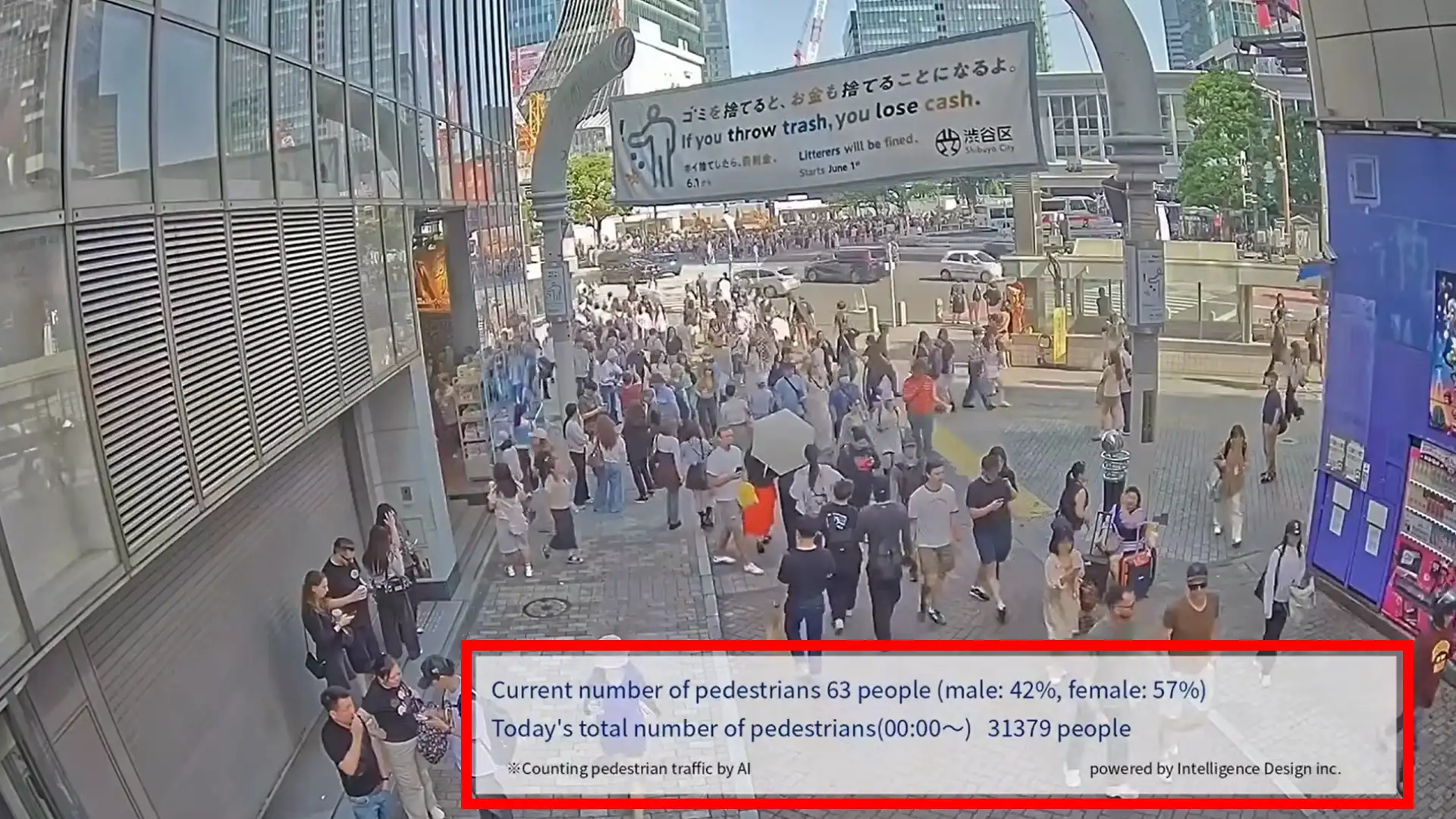
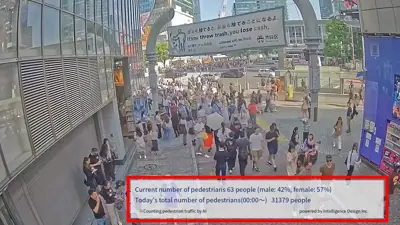
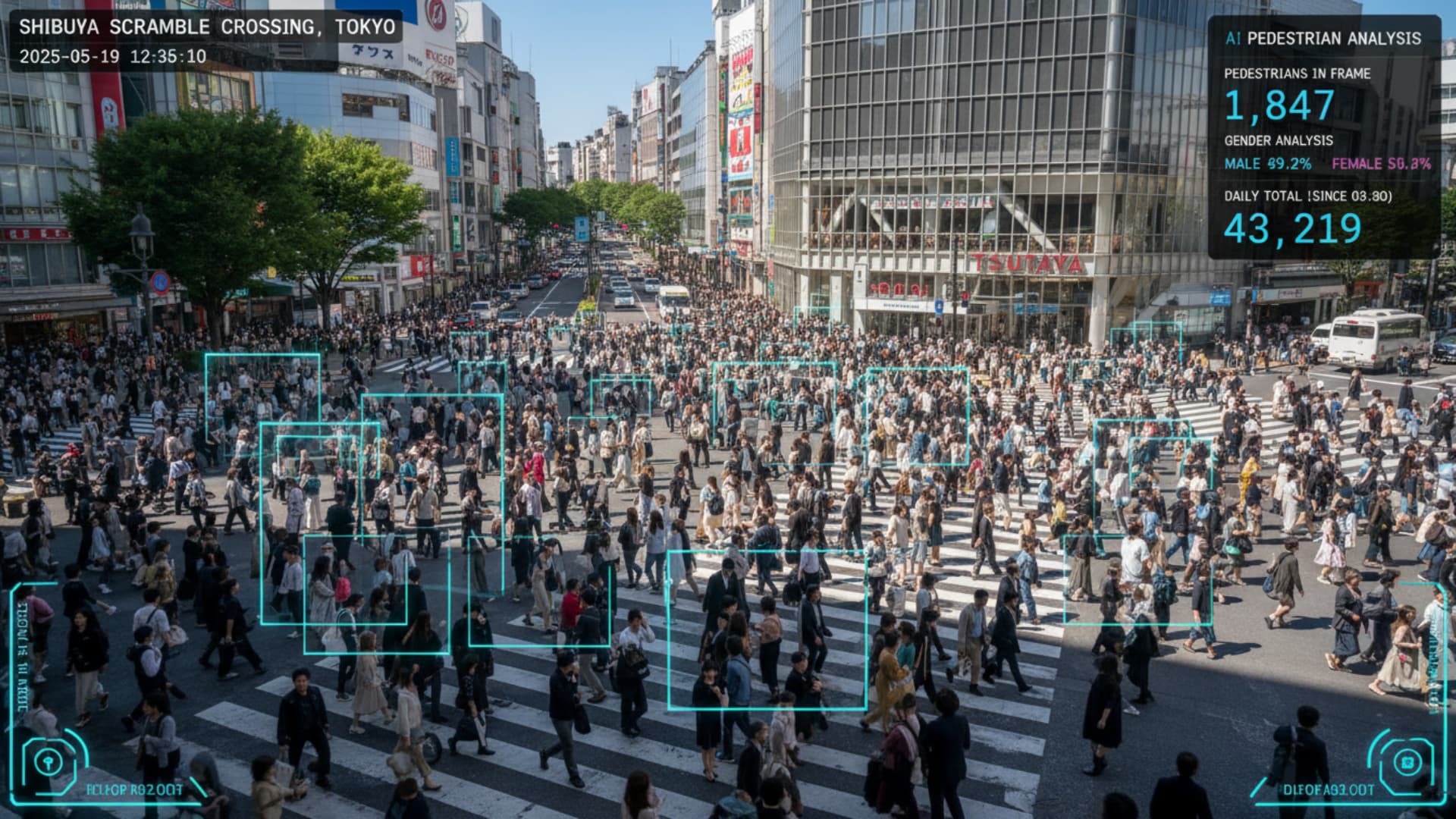
What the AI does: Counts every single person crossing one of the world's busiest intersections - live, in real time.
The Shibuya Scramble Crossing in Tokyo is already one of the most watched webcams on the planet.
Up to 3,000 people cross at a time during peak hours, from every direction simultaneously, in a choreographed human swarm that's become one of the most iconic sights in the world.
But look closer at the live stream and you'll see something remarkable. In the corner of the screen, an AI is counting. Not estimating - counting.
It tracks the current number of pedestrians in frame, breaks down the gender split as a percentage, and keeps a running total of every person who has crossed since midnight.
Powered by Intelligence Design Inc., the system analyses the video feed continuously, using computer-vision models to detect and track each person frame-by-frame - turning an anonymous crowd into live, granular data without ever identifying individuals.
On a busy Saturday, the daily total can exceed 100,000 people - all counted automatically, all in real time.
It's quietly extraordinary. The world's busiest crossing, counted to the last person.
Watch Shibuya Scramble Crossing Live
__________________________________________
AI That Tracks
- SFO & LAS Airports -
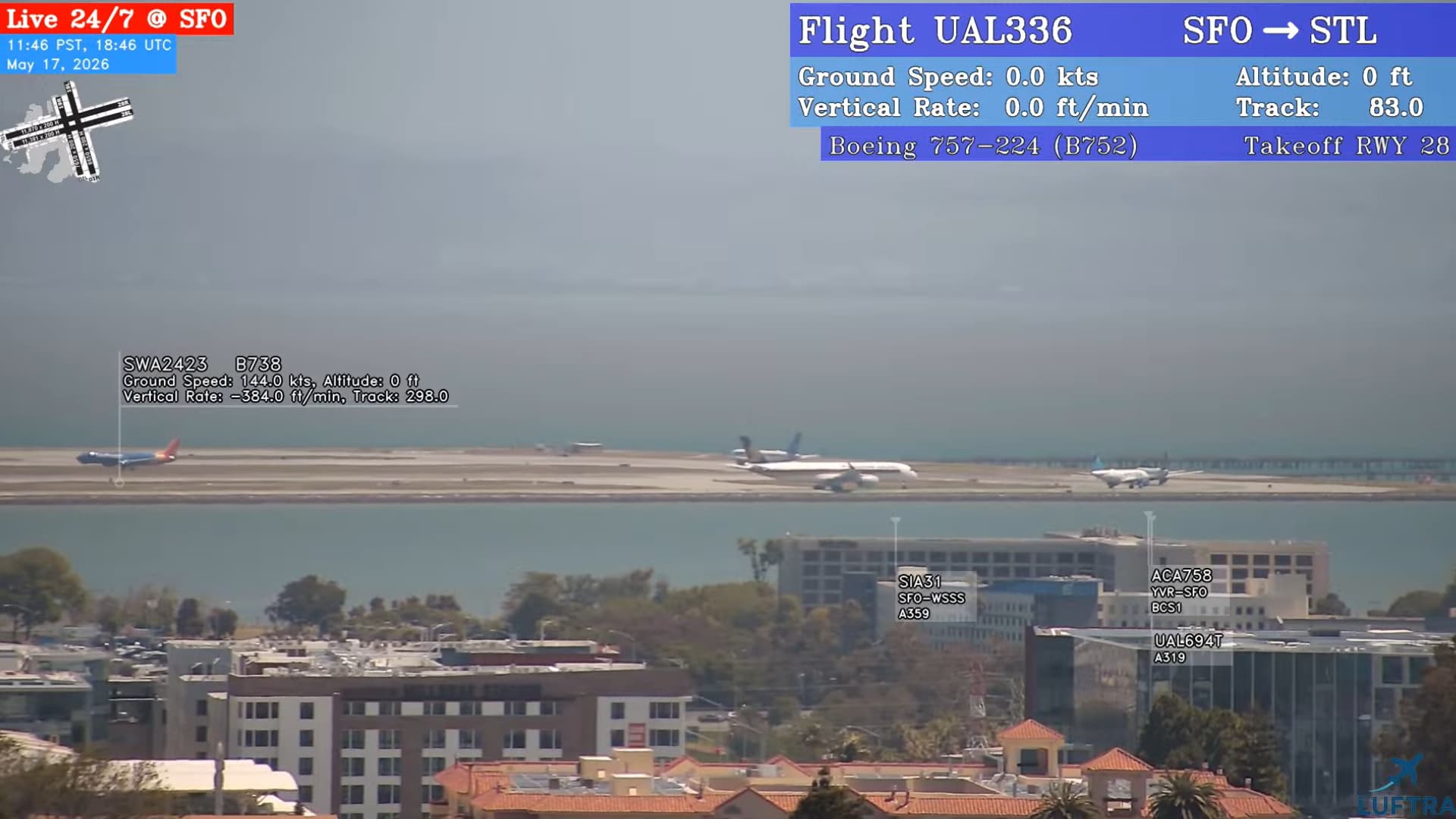
What the AI does: Identifies every aircraft in view and overlays live flight data directly on screen - flight number, airline, route, speed, altitude and more.
Two of the best AI-powered airport webcams are both in the United States - and together they show just how far this technology has come.
At San Francisco International Airport, the Luftra Aviation live stream uses AI to detect every aircraft that appears in the fixed camera's view.
The moment a plane enters frame, a data box appears automatically - flight number, origin, destination, aircraft type, ground speed, altitude, vertical rate and track.
It updates continuously as the aircraft moves, with multiple planes tagged simultaneously.
For aviation fans, it's like having a simplified air-traffic control screen laid directly over the real world, with the AI doing all the work of matching tiny silhouettes to rich flight data.
At Las Vegas Harry Reid International Airport, the Flightradar24 and CamStreamer collaboration takes it a step further.
Here, the camera itself is AI-controlled - a motorised PTZ (pan-tilt-zoom) camera that physically moves and zooms automatically to follow each aircraft as it approaches, lands, and departs.
It's a form of sensor fusion: live ADS-B flight data combined with AI tracking to physically aim the camera before the plane even appears in shot.
Live ATC audio runs alongside so you can hear pilots talking to the tower in real time.
Together they represent the current cutting edge of AI in live webcams - one showing you what the AI knows, the other showing you the AI in physical motion.
Watch San Francisco Airport Live
__________________________________________
AI That Understands
- International Space Station -
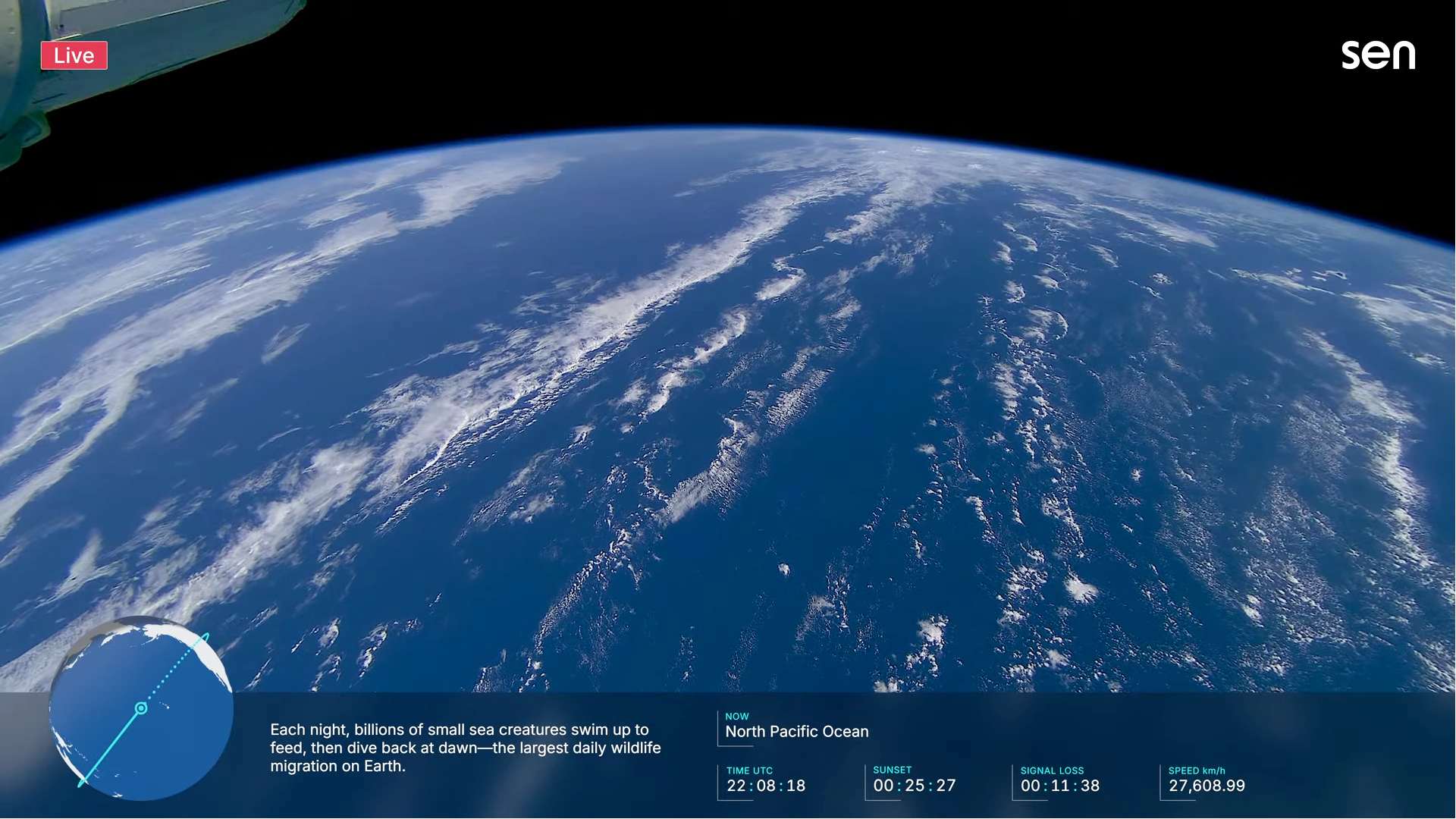
What the AI does: Identifies where on Earth the ISS is flying over, generates a live description of what's below, and tracks speed, sunset countdown and signal status in real time.
This one is on another level - literally.
The ISS Earth View camera, operated by SEN, streams live footage from the International Space Station as it orbits Earth at 27,500 km/h. But what makes it remarkable is what the AI is doing underneath the image.
In real time, it identifies the exact location passing below the station - whether that's the South Pacific Ocean, the Sahara Desert, or the coast of Japan. It then generates a live contextual description of what's in view - facts about the region, its geography, the wildlife below.
It tracks the station's current speed down to two decimal places, counts down to the next signal loss, and shows time to local sunset over whatever part of Earth is currently in view.
It is, in every sense, a camera with a brain. Not just labelling what it sees - narrating the planet in real time from 400 kilometres above it. Think of it as a live, intelligent atlas of Earth, updating every second.
When it's working - and cloud cover permitting - it's one of the most astonishing live feeds anywhere on the internet.
Together, these three cameras hint at something bigger - a new kind of smart live camera that doesn't just show you the world, but explains what you're seeing and why it matters, in real time.
__________________________________________
What's Coming Next?
- AI Wildlife Identification -
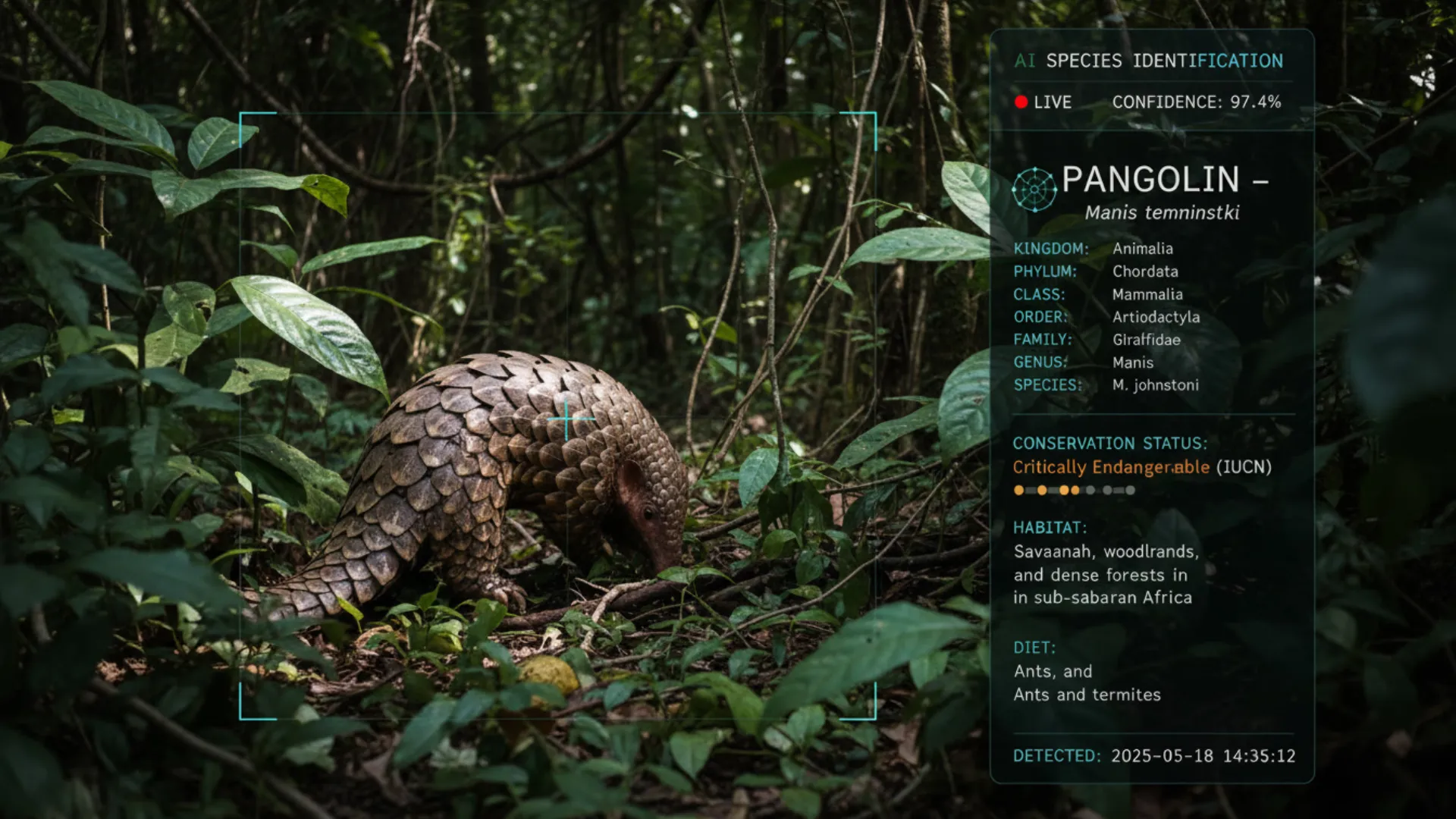
The three cameras above show AI doing something visible and useful right now. But the next frontier - arguably the most exciting one - hasn't arrived yet.
Live wildlife identification -The technology already exists. Google's SpeciesNet model can identify animals across more than 2,000 categories right down to species level.
Smart bird feeders like Birdfy's OrniSense system already identify over 6,000 bird species the moment one lands, generating facts, migration data and behavioural insights automatically.
Crucially, these models now run on compact, consumer-level hardware - meaning global deployment in remote locations is no longer a pipe dream.
The bottleneck isn't the algorithms any more - it's stitching them together with rugged cameras, reliable connectivity, and platforms that can stream annotated video to millions of viewers at once.
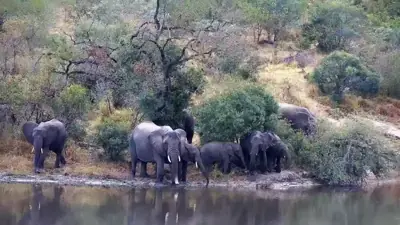
Imagine a 24/7 live webcam at a Maasai Mara waterhole in Kenya, where AI labels every animal that walks into frame.
A lion arrives - the AI identifies the species, overlays its name, flags whether it's a known individual. A herd of zebra crosses - each one counted. An elephant approaches - age and behaviour noted automatically.
Or wildlife cameras with AI identifying each bird species the moment it lands. Or underwater reef cameras off Australia or the Maldives, identifying fish species and coral health in real time - not just for viewers, but for conservation.
When someone finally joins those dots - models, cameras, streams - the first generation of truly thinking wildlife webcams will come online, and they'll change how we watch the natural world for good.
More from EarthLive.tv:
- 5 of the Loneliest Webcams on Earth
- Live World Cup 2026 Celebrations
- Watch Africa's Big Five Live
__________________________________________