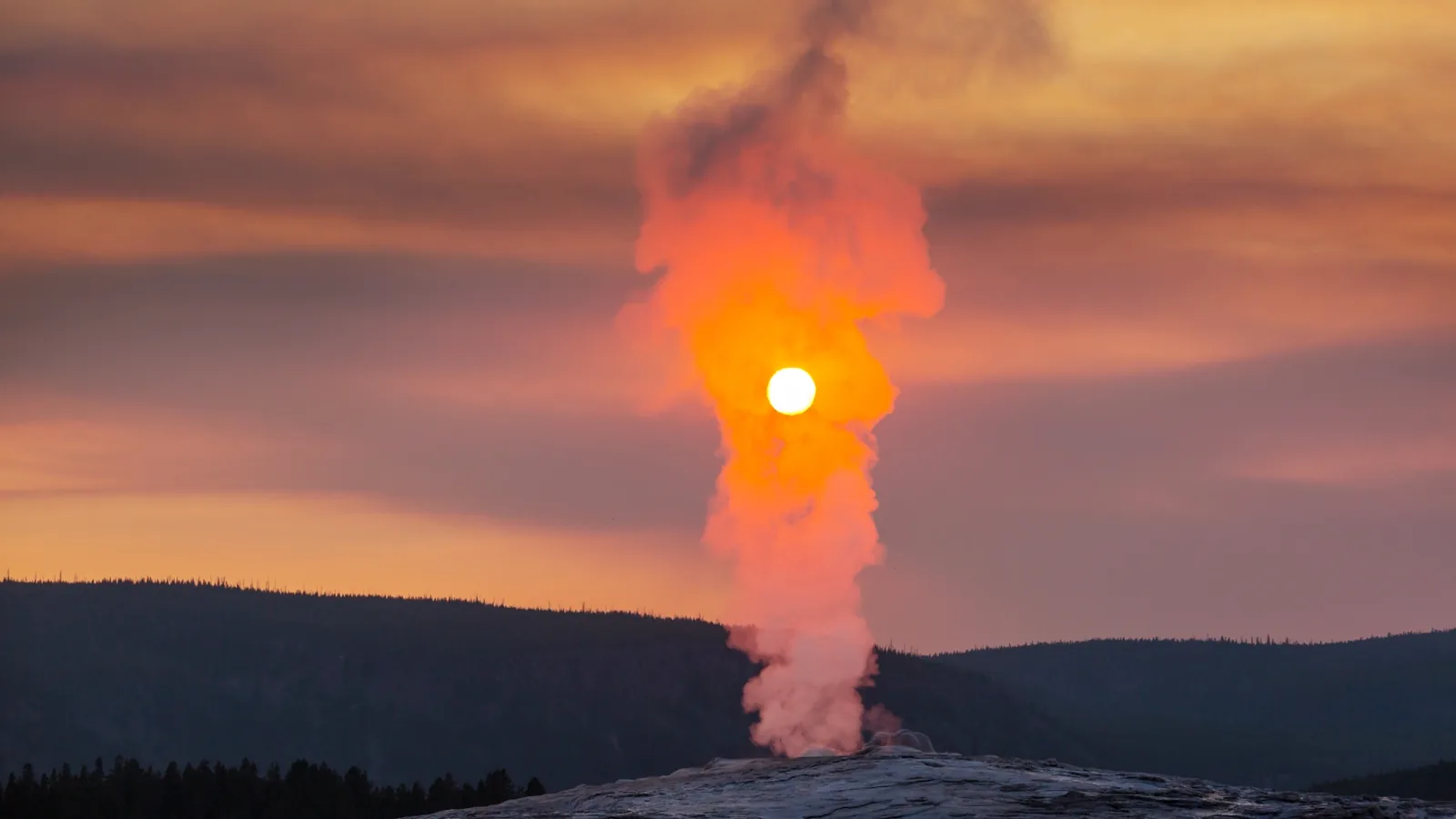
Imagine standing in one of the most remote corners of Yellowstone National Park. No roads. No houses. Almost certainly no other people for miles - just a few hungry bears.
However, this rather remote corner of Yellowstone may just be the ideal place to commit the perfect crime.
The police would still arrest you if you were caught and prosecutors could still charge you - after all, you're still in the United States.
The corner of Yellowstone National Park we are referring to is known as the "Zone of Death" - and thanks to a strange clash between the Constitution and federal law, the government may never be able to hold a valid jury trial in the event of a serious crime being committed here.
Lawyers have been arguing about it for more than twenty years.
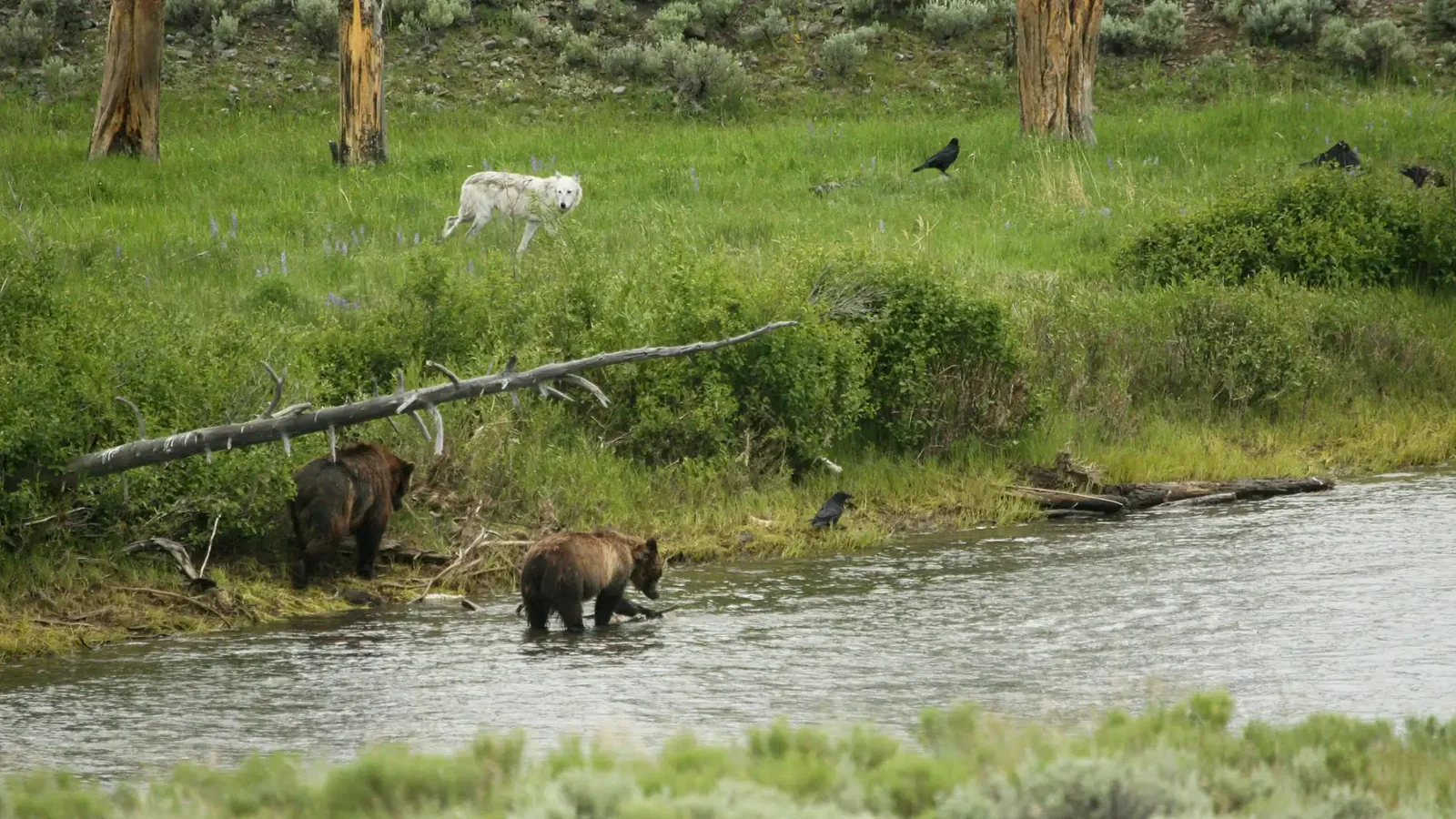
Photo: Jim Peaco / National Park Service
Where Is Yellowstone's "Zone of Death"?
Yellowstone covers about 3,472 square miles (8,991 km²) and according to the National Park Service, roughly 96% of it lies within Wyoming, 3% in Montana and 1% in Idaho.
Several parks in the United States cross state lines, and a few share international borders with Canada, so the geography alone isn't the problem. The oddity is how Congress drew Yellowstone's federal court boundary.
Under federal law (28 U.S.C. §131), the whole of Wyoming plus the Montana and Idaho parts of Yellowstone form one federal court district: the District of Wyoming.
So in the Idaho part of Yellowstone, you're standing in the State of Idaho - but for federal crimes, you're in the District of Wyoming.
That tiny red Idaho slice below - about 50 square miles, or 130 square kilometers - is where the loophole lives.
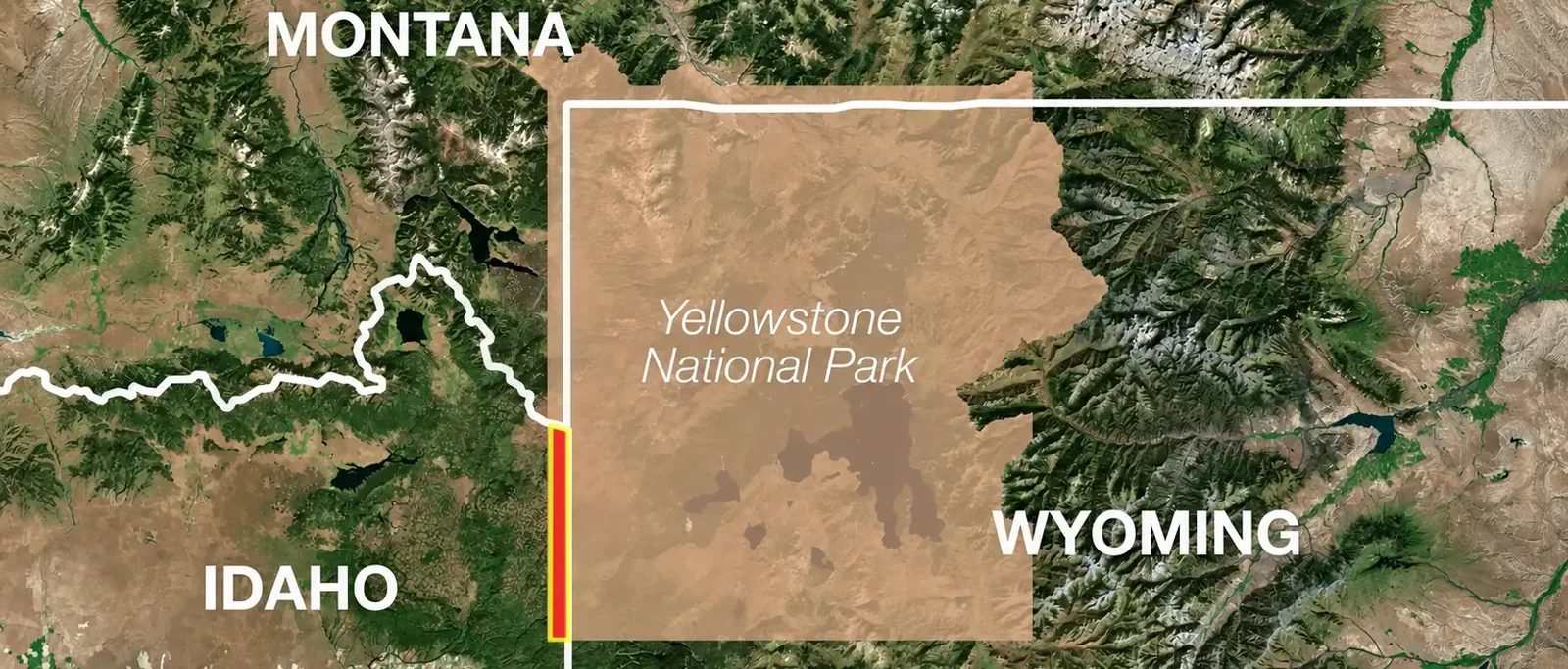
See it for yourself - Google Maps (44.33, -111.07)
Why Are Crimes in Yellowstone Federal?
Federal law puts Yellowstone under the "sole and exclusive jurisdiction" of the United States - an arrangement dating back to 1894.
So a serious crime committed inside the park is normally a federal case, tried in federal court, not handed to Idaho just because the ground happens to be in Idaho. A killing there would fall under the federal murder statute, 18 U.S.C. §1111.
Most of the time, none of this matters. Most of Yellowstone is in Wyoming, where the state line and the federal district line match.
The puzzle only appears where they don't.
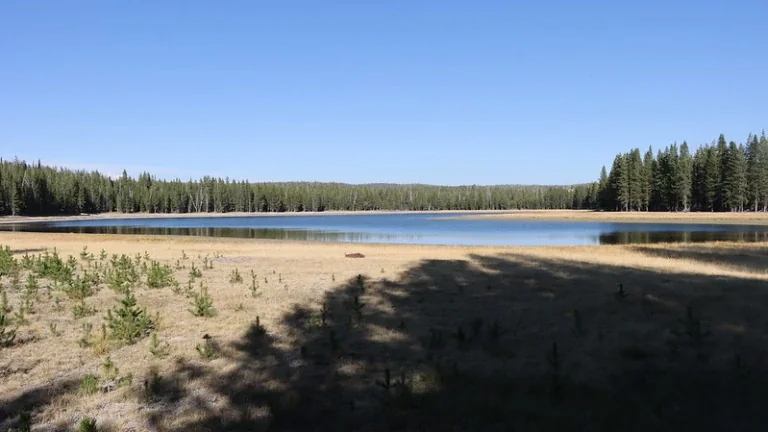
Photo: scatman / BackcountryPost
The Line in the Constitution That Creates the Problem
The loophole hangs on an easily overlooked part of the Sixth Amendment - the right to a jury drawn from the local area.
...an impartial jury of the State and district wherein the crime shall have been committed...
— Sixth Amendment, U.S. Constitution
"State" and "district" are two separate requirements. The jurors must come from both.
For a serious crime in Yellowstone's Idaho section, the state is Idaho. The federal district is the District of Wyoming.
So the jury would have to be made up of people who live in Idaho and inside the District of Wyoming at the same time.
The only place that fits both is Yellowstone's Idaho section - and nobody lives there.
The Impossible Jury
The Idaho section of Yellowstone is remote, roadless wilderness - and census figures, including the 2020 count, show no permanent residents.
Brian Kalt, the Michigan State University law professor who brought the loophole to light, built his argument around exactly that.
If the jury has to come from a place where nobody lives, there's nobody to summon.
Assuming that you do not feel like consenting to trial in Cheyenne,
— Brian Kalt, law professor, Michigan State University
you should be free to go.
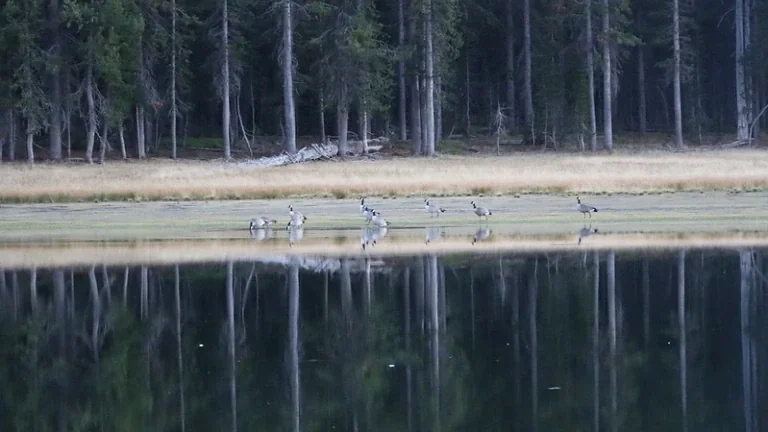
Photo: scatman / BackcountryPost
So this isn't a trick for dodging a parking ticket. It only matters for serious federal charges, where the defendant insists on a jury trial and the crime happened in exactly the right spot.
Murder is simply the dramatic example the media - us included - used to make the loophole famous.
Who Discovered the Loophole?
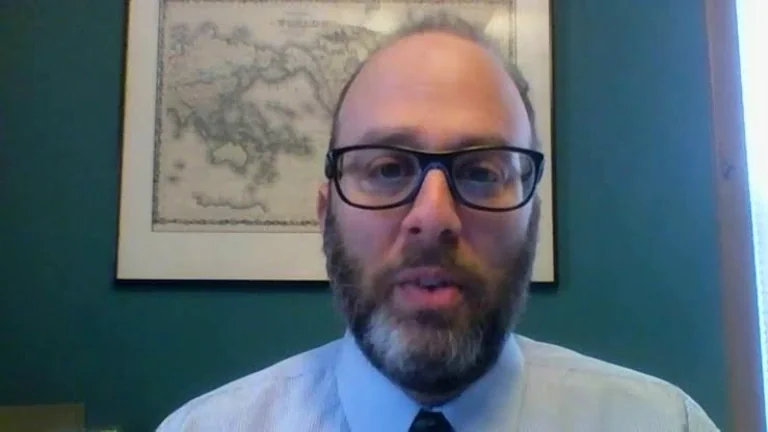
Photo: MSNBC
Brian Kalt laid out the argument in a 2005 Georgetown Law Journal article called "The Perfect Crime."
He wasn't writing a guide for criminals - he wanted Congress to fix the flaw before a real case forced a court to deal with it.
The idea quickly escaped the law journals. Newspapers picked it up, it earned the nickname "Zone of Death," and Wyoming novelist C.J. Box built his 2007 thriller Free Fire around it.
And it's still very much alive. In a 2026 Wyoming Law Review article, Kalt revisited the theory, the arguments against it, and why the loophole still hasn't been closed.
That doesn't prove Kalt would win in court. But it does show this isn't an old internet myth that was quietly fixed years ago.
Has Anyone Ever Tried to Use the Loophole?
Surprisingly, no - not in the Idaho section, and not in a murder case.
Perhaps that's because the plan has a few practical flaws. Most people have never heard of the loophole, and anyone who has would still need to talk their victim into a very long hike to a corner of the park with no roads, no houses and no witnesses. "Fancy a day trip to the Zone of Death, darling?" isn't the most tempting invitation.
However, one real Yellowstone case did come close - showing the problem isn't just a myth or a thought experiment.
In 2005, Michael David Belderrain shot a bull elk near the park's Montana boundary. According to the court record, he fired from inside the Montana part of Yellowstone at an elk standing just outside the park, then carried its head and antlers through Yellowstone.
Because he had a gun inside the park and carried the illegally killed elk through it, it became a federal case.
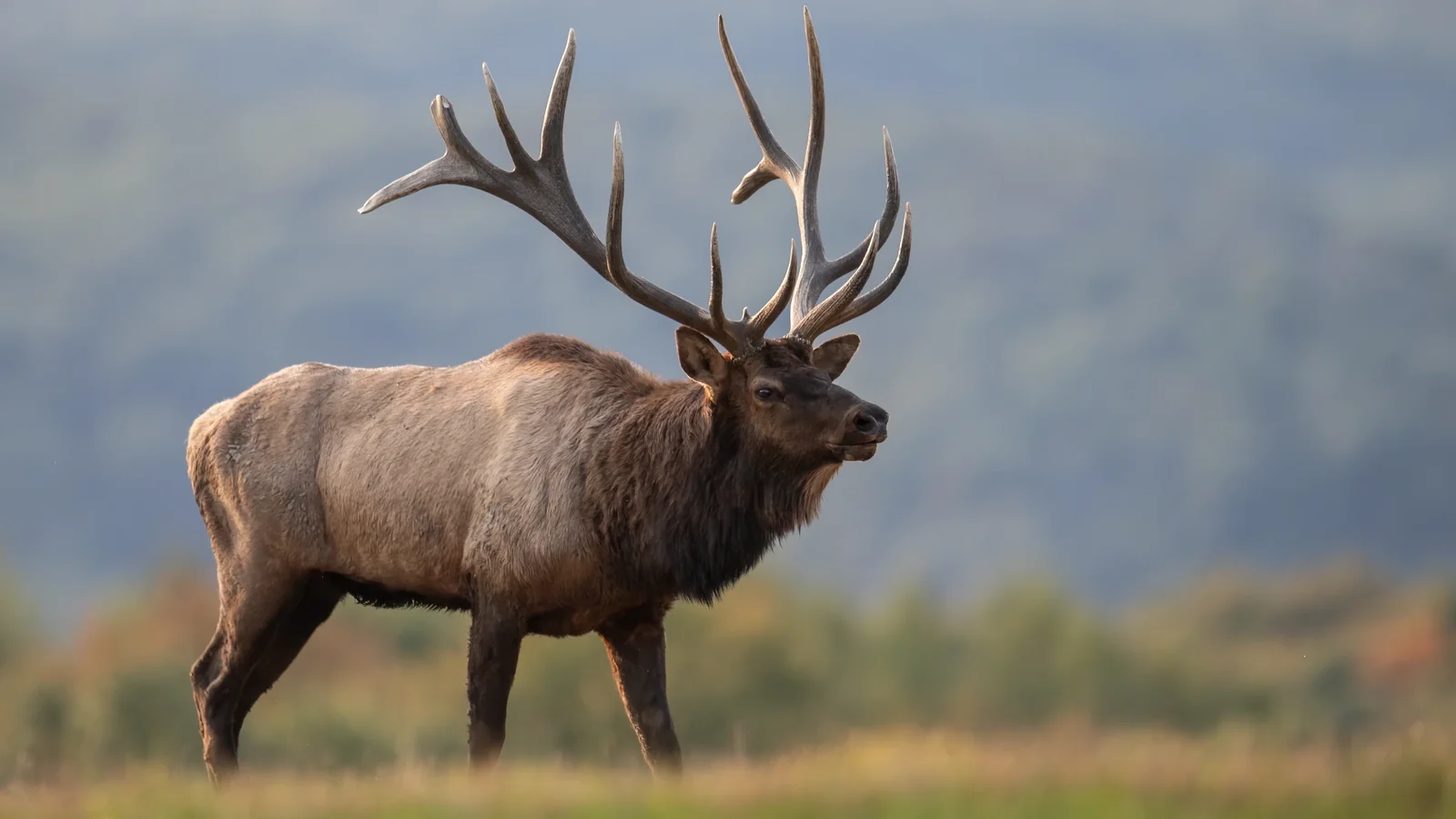
Photo: Envato
In court, Belderrain's lawyers tried a version of the Zone of Death argument. Because the Montana part of Yellowstone sits in the District of Wyoming, they said, a valid jury would have to come from people living in both - in other words, from that small part of the park.
In 2007, the judge ultimately said no. He admitted Congress had created an odd "conundrum," but ruled the case could go ahead anyway.
Belderrain then pleaded guilty. As part of the deal, he agreed not to appeal the judge's ruling on the jury question - so a higher court never got to decide who was right.
And unlike the Idaho section, the Montana part of the park does have people living in it. So this was never the true "no possible jury" case.
The real test - a serious crime in the empty Idaho section - has still never happened.
So Would a Murderer Actually Walk Free?
This is where the internet version of the story usually gets too confident.
The Zone of Death doesn't make murder legal. It doesn't stop an arrest. It doesn't stop a charge. And no court has ever ruled that a killer there must be set free because no jury can be found.
Kalt's argument is much narrower: if the facts lined up perfectly, and a court agreed with his reading of the Constitution, the government might be unable to hold a valid jury trial.
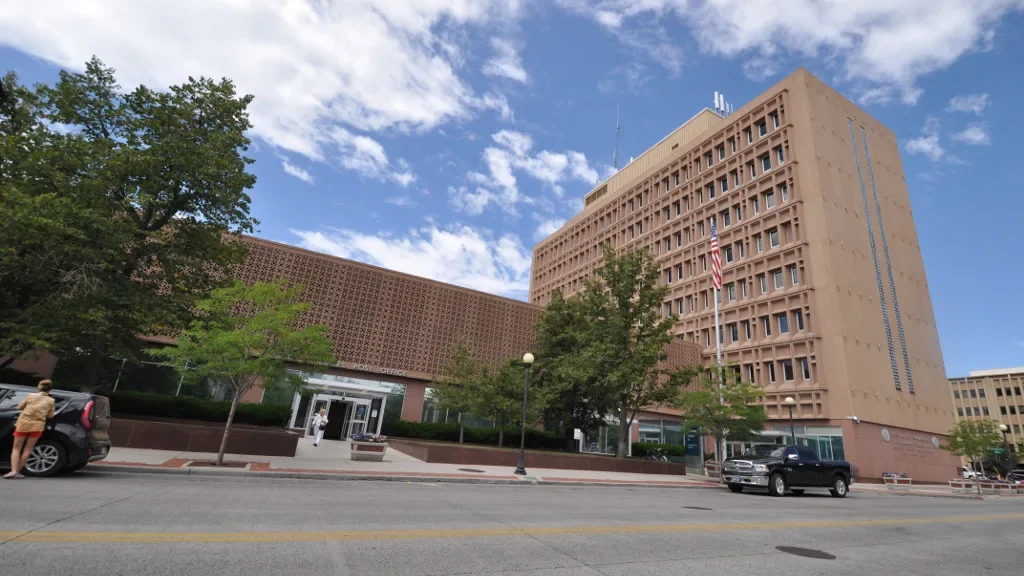
Photo: Magicpiano / Wikimedia Commons (CC BY-SA 4.0)
And even then, there are plenty of ways a killer could still end up behind bars:
- Related crimes - like plotting it with someone else, or kidnapping the victim first in another state.
- Rather than taking a gamble, the defendant could give up the right to a local jury, or take a plea deal.
- A court could simply reject Kalt's reading of the Constitution.
- And none of it would stop the victim's family suing in civil court.
A 2023 Supreme Court case adds another twist. In Smith v. United States, the Court ruled that when a conviction is thrown out because the trial was held in the wrong place, the Constitution doesn't automatically stop a retrial in the right one.
That doesn't solve Yellowstone's empty-jury problem. But it shows that "one mistake and you walk free forever" is far too simple.
So the honest answer isn't "yes, you can get away with murder." It's that there's a serious constitutional argument that has never been tested in the exact place needed to settle it.
Why Hasn't Congress Fixed It?
The fix may sound simple.
Congress could redraw the court boundaries so Yellowstone's Idaho section belongs to the District of Idaho, and its Montana section to the District of Montana. Then "state" and "district" would line up like everywhere else - easy, problem solved!
But the Sixth Amendment says the district must have been "previously ascertained by law." Kalt argues that means Congress can't wait for a notorious crime and then redraw the map to create a jury for that one case. The fix has to come first.
This is a change Congress could make in five minutes.
— Brian Kalt
Idaho lawmakers have urged Congress to act, but the law still reads the same in 2026: 28 U.S.C. §131 - which keeps all of Yellowstone in the District of Wyoming.
So, Could You Actually Get Away With It?
Possibly - but with a giant asterisk.
Yellowstone's Idaho section really is a strange collision between geography, federal court boundaries and the Sixth Amendment. The law still says what Kalt says it says.
A judge has rejected the broader theory once, but no higher court has ever ruled on the exact empty-jury problem.
But an unresolved loophole isn't the same as "murder is legal here." Anyone who tried it could still be arrested, locked up while the case dragged on, and prosecuted - with nobody able to promise how it would end.
And that's what makes the Zone of Death so fascinating. Not that it's a place without law - but that one of the most famous parks on Earth hides a question the American legal system has never answered.
Yellowstone has plenty of other secrets, too - including the Yellowstone supervolcano beneath it, one of the world's largest volcanic calderas.
 Take Me Anywhere
Video Transcript About 330 words
Did you know there's a roughly 130-square-kilometre area of remote wilderness in Idaho, known as Yellowstone's Zone of Death - where you just might be able to get away with murder?
You may still be arrested and charged.
However, prosecutors could face a bizarre constitutional problem that could set you free.
Almost all of Yellowstone is in Wyoming, but parts of the park extend into Idaho and Montana.
Despite that, federal law places the entire park inside Wyoming's federal judicial district.
The Sixth Amendment says that for a serious crime, the jury must come from both the state and the judicial district where the crime was committed.
So, for a crime committed in Yellowstone's Idaho state section, the jurors would come from Idaho, which is easy.
But the Idaho residents chosen to be the jury would also need to be living inside Wyoming's federal judicial district, which is not so easy.
As it means the jury would need to come from this exact section of Yellowstone.
The problem is, nobody lives there.
No residents in this small section of the national park means no residents to make up a jury.
And overall potentially, no constitutionally valid trial could be completed.
The loophole could apply to murder and other serious federal crimes requiring a jury, not just one specific offence.
However, nobody has successfully tested it yet with a murder case.
A judge might try to find another solution.
A skilled defense lawyer might argue the defendant's case must be dismissed.
As the law currently stands, nobody knows for certain what would happen.
Congress could close the loophole by changing the judicial boundary.
But more than 20 years after law professor Brian Kalt first exposed it, the problem remains unresolved to this very day.
So could someone really get away with murder in Yellowstone?
Possibly.
But until somebody commits the ultimate crime there and takes the argument all the way through court, Yellowstone's strangest legal mystery remains unanswered.
How this video was made
Every scene in this video was researched, selected and edited by the EarthLive team, drawing on the fully sourced research in the article above.
Sources16 sources
- U.S. Constitution - Sixth Amendment
- Constitution Annotated - Local Juries and Vicinage Requirement
- Constitution Annotated - When the Right to a Jury Trial Applies
- 28 U.S.C. §131 - District of Wyoming
- 16 U.S.C. §24 - Yellowstone jurisdiction
- 18 U.S.C. §1111 - Murder
- National Park Service - Yellowstone Park Facts
- Brian C. Kalt - "The Perfect Crime," Georgetown Law Journal, Vol. 93 (2005)
- Brian C. Kalt - Tabloid Constitutionalism (2008)
- Brian C. Kalt - C.J. Box and the Yellowstone Zone of Death, Wyoming Law Review (2026)
- United States v. Belderrain - Tenth Circuit (2009)
- Smith v. United States - U.S. Supreme Court opinion (2023)
- U.S. Census Bureau - Yellowstone National Park CCD, Idaho (2020: 0 population)
- 2020 United States Census - state populations
- MeatEater - Yellowstone's "Zone of Death" (Kalt quotes)
- Wanderlog - Cheyenne to West Yellowstone driving distance