In 1878, the American palaeontologist Edward Drinker Cope described a single dinosaur back bone from Colorado. Nearly 150 years later, researchers are still arguing about the animal it came from. Nobody can re-examine the bone directly, because it has been lost.
In the 1980s, in southern India, researchers dug up a leg bone about two metres long. It fell apart before it could reach a museum.
Those two missing fossils sit at the top of this list. That is the awkward truth about ranking the heaviest land animals that ever lived: the biggest contenders are the ones we are least able to check. So rather than hide it, this list shows its working.
How This List Works 5 rules
1. Heaviest means mass
Not length, not height. The Chinese sauropod Mamenchisaurus sinocanadorum had a neck estimated at more than 14 metres, one of the longest of any animal, but length alone earns nothing here.
2. Land animals only
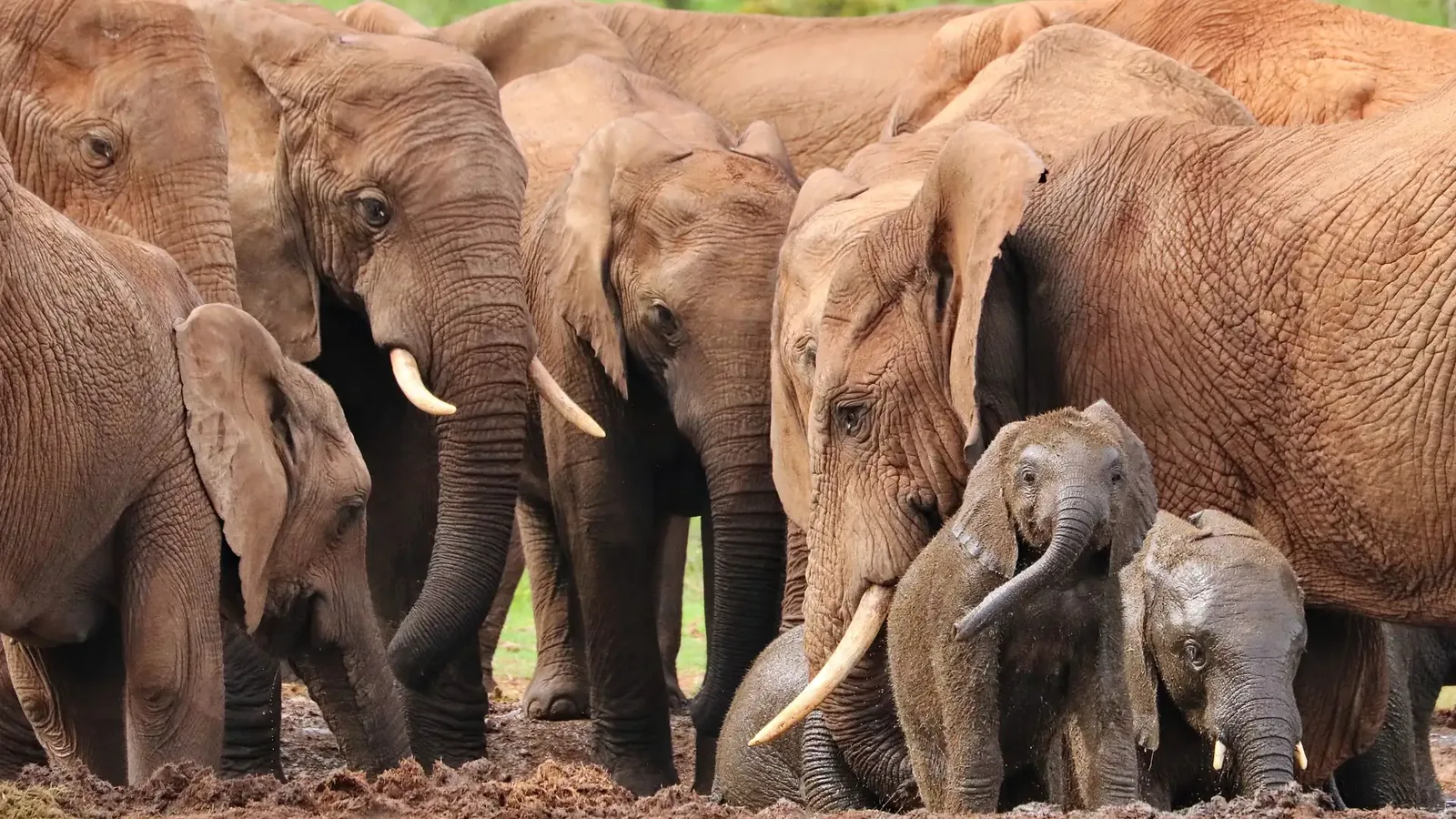
The blue whale, which typically weighs 100 to 150 tonnes, lives in the sea and is not eligible. Extinct and living animals both count, though no living one gets close. A fully grown bull African elephant weighs about 6 tonnes, and the heaviest on record reach about 10.
3. Every figure is an estimate
There are two main ways to weigh an animal that died millions of years ago. The volumetric method builds a three-dimensional model of the body around the skeleton, measures its volume and multiplies by an estimated density. Air-filled spaces running through their bones and bodies made sauropods somewhat less dense than water overall, though estimates vary between species and body regions. The limb-bone method uses the thickness of the upper arm and thigh bones, calibrated against living animals.
The two methods can disagree badly. Limb-bone scaling puts the Argentinian titanosaur Dreadnoughtus at 59.3 tonnes. A 2015 volumetric study put its maximum at about 38 tonnes.
4. One comparison where possible, but the methods differ
The headline figures for #1 to #4 are taken from a 2023 comparison by Gregory Paul and Asier Larramendi. They were not all calculated the same way. #3 and #4 come from full volumetric models, #1 is scaled up from a single leg bone, and #2 repeats an estimate Paul first published in 2019 from a single vertebra. #5 has no volumetric model, so its range combines the describers' limb-bone figures with Paul's 2019 comparison. Treat the ranking as approximate. #4 and #5 in particular overlap.
5. Lost fossils count, but they are labelled
Two entries rest on bones that no longer exist. They are included because they are in the published scientific literature with serious mass estimates behind them. If you would rather count only fossils that can still be measured, Argentinosaurus is the heaviest land animal known from substantial surviving remains, and everything below it moves up.
#5 Notocolossus
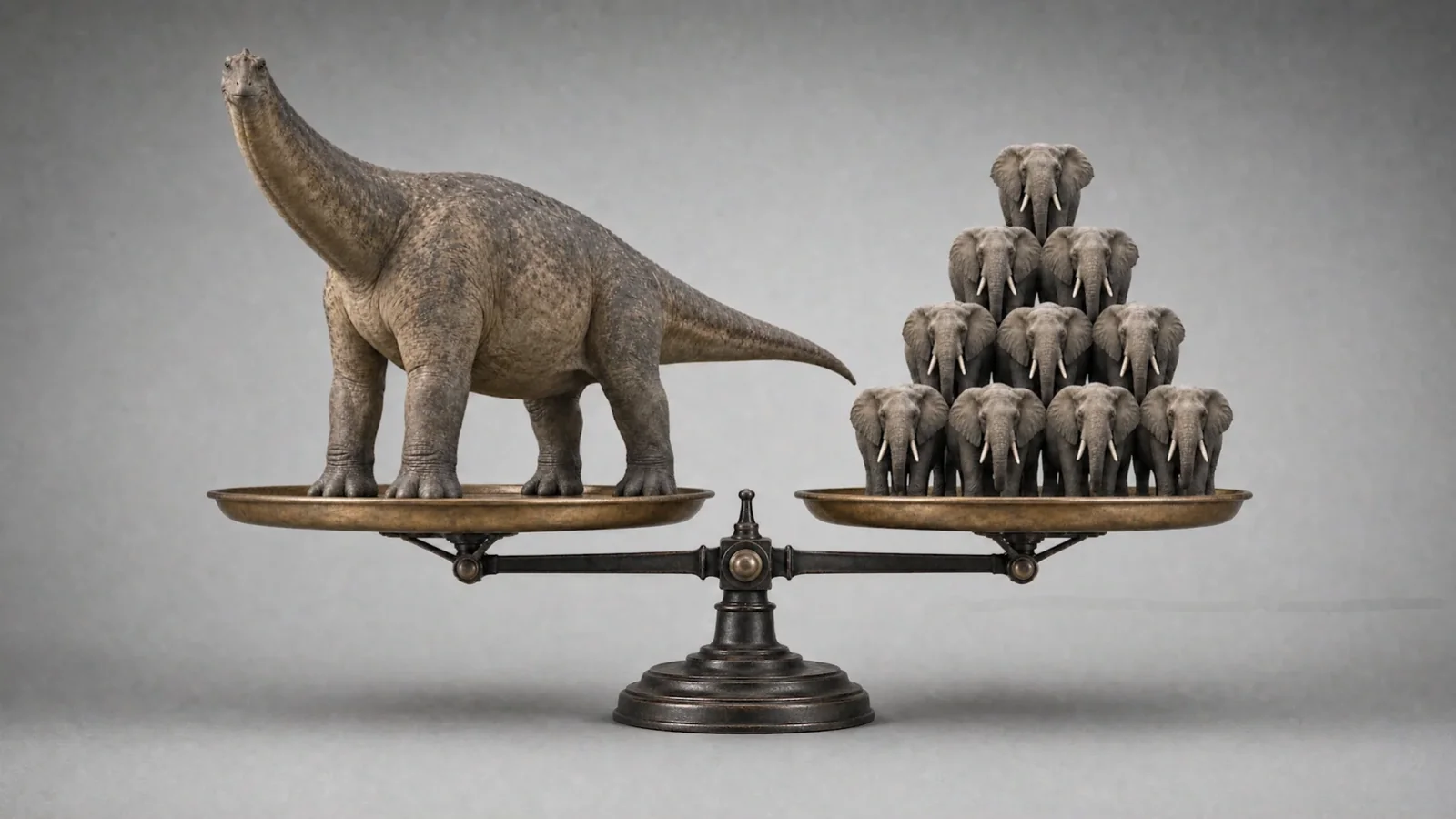
Illustration: EarthLive.TV
About 45 to 60 tonnes | Late Cretaceous, Argentina
Named in 2016 from fossils found in Mendoza Province, Argentina, Notocolossus means “southern colossus”. Only a few bones survive, but every one is enormous. Its upper arm bone is 1.76 metres long, the longest of any titanosaur when it was described. A second individual left a complete hind foot, built to carry extraordinary weight.
The weight. Its describers estimated about 60 tonnes, but warned the figure could fall to around 45, and that their method may overestimate the biggest titanosaurs.
Why #5? Its range overlaps Patagotitan’s. The same method first gave Patagotitan 69 tonnes, so compared like with like, Notocolossus comes out lighter.
#4 Patagotitan
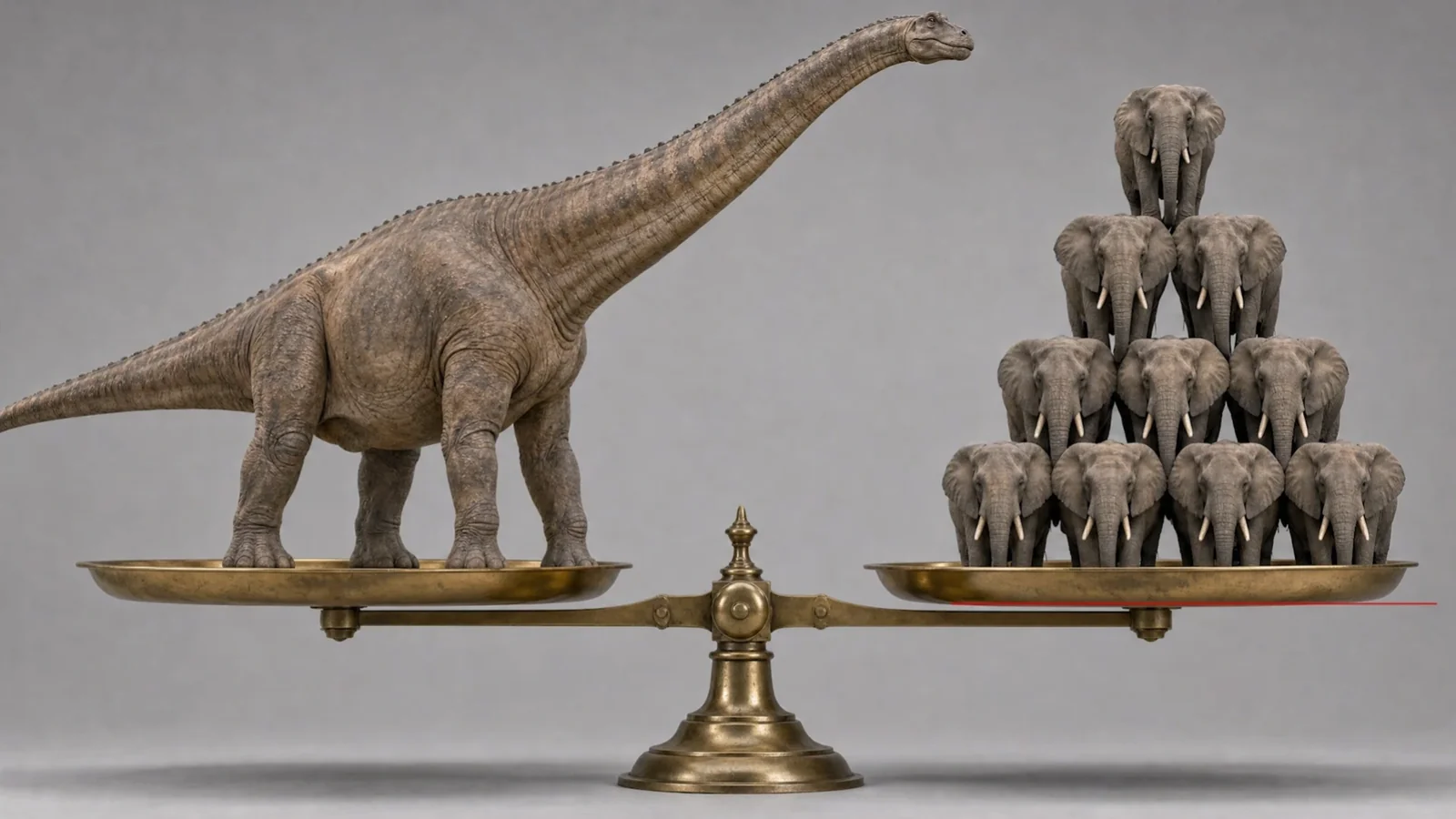
Illustration: EarthLive.TV
About 57 tonnes | Early Cretaceous, Argentina | The best-known giant
In 2010, a worker on La Flecha Ranch in Patagonia spotted an enormous bone poking out of the ground. Digs over the next five years recovered hundreds of bones from at least six individuals, buried by floods about 101 million years ago. It was named in 2017, after the Mayo family who own the ranch.
The weight. It was first put at about 69 tonnes and billed as the biggest dinosaur yet. In 2020, the same research group revised that to a mean of 57 tonnes, and a separate volumetric model landed on almost exactly the same figure. London’s Natural History Museum calls it the giant whose size scientists can be most sure of.
#3 Argentinosaurus
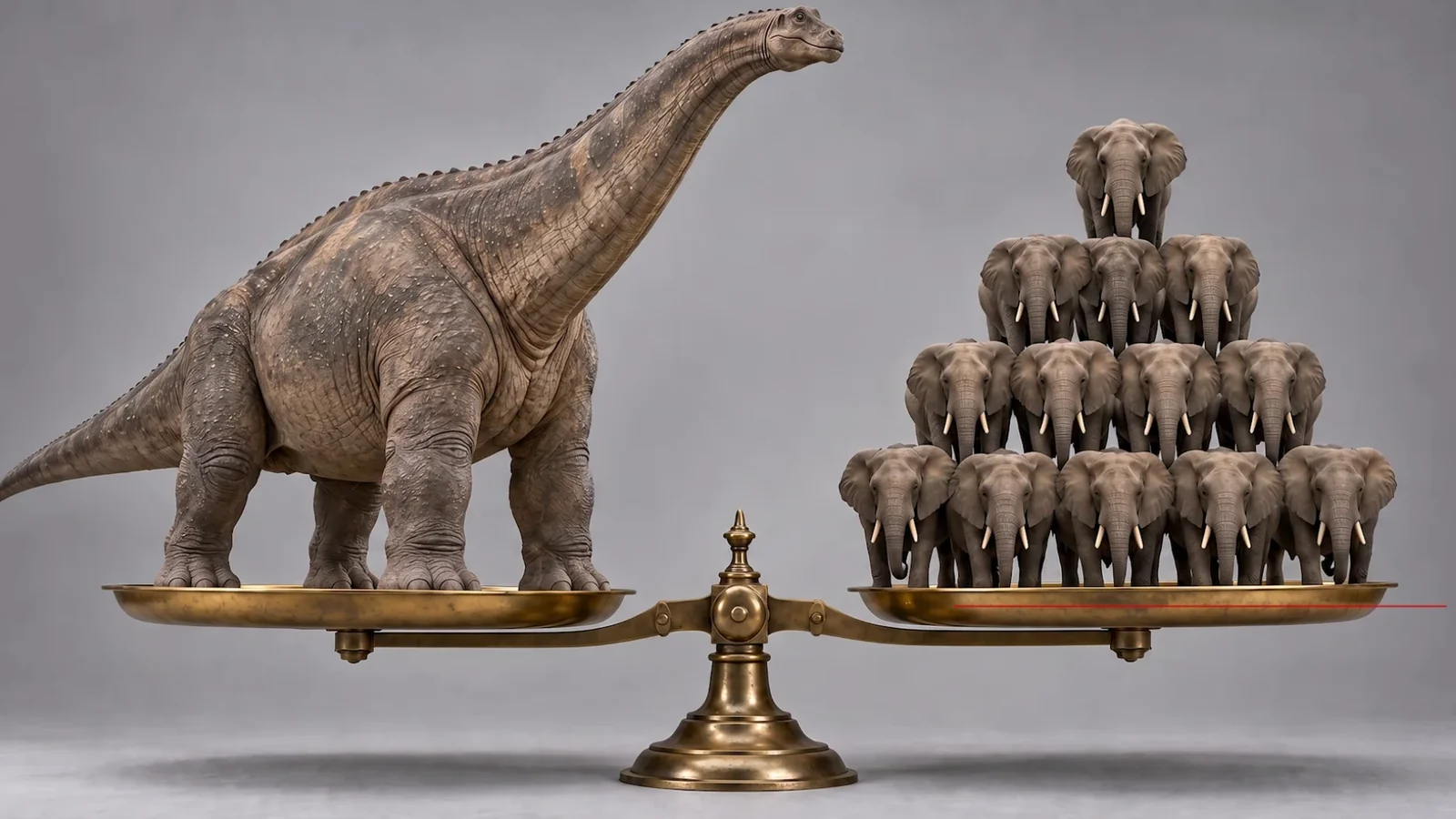
Illustration: EarthLive.TV
About 77 tonnes | Late Cretaceous, Argentina
A farmer found the first bone near the town of Plaza Huincul in Neuquén Province. The site was dug in 1989, and Argentinosaurus was named in 1993. It then held the title of the biggest known dinosaur for almost 20 years.
The weight. Three independent studies put it at 73, 77 and 83 tonnes, an unusually tight range for a giant sauropod.
The catch. Even Argentinosaurus is known only from a handful of huge vertebrae, part of the hips and one lower leg bone. But those bones sit in a museum and can be measured again, which is more than can be said for the two animals above it. Of all the giants known from substantial surviving remains, this is the heaviest.
#2 Maraapunisaurus
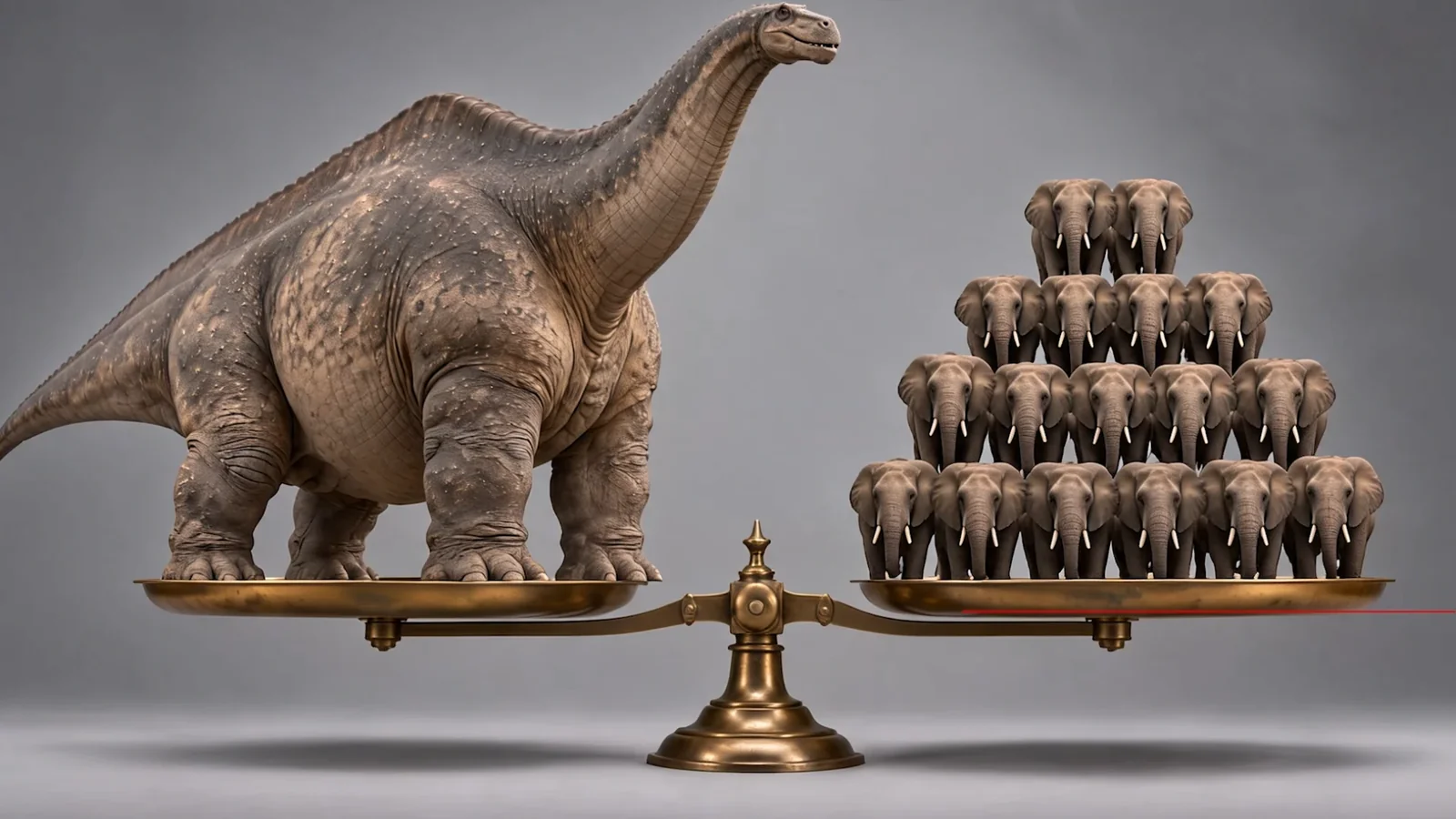
Illustration: EarthLive.TV
80 to 120 tonnes | Late Jurassic, Colorado, USA | One bone, now lost
In 1878, Edward Drinker Cope described a single vertebra from Colorado in the United States. The bone was later lost, and no photograph of it exists. All that survives is Cope’s written description and his drawing.
For decades it was pictured as a super-sized relative of Diplodocus, up to 58 metres long. In 2018, palaeontologist Kenneth Carpenter looked again and concluded it belonged to a different family with much taller back vertebrae. He renamed it Maraapunisaurus, from the Southern Ute word for “huge”. His revised animal is shorter, at 30 to 32 metres, but still about 8 metres tall at the hips.
The weight. Gregory Paul estimates 80 to 120 tonnes. Another study puts it nearer 70.
The catch. There is no bone to re-measure. Every estimate rests on a description written in the 1870s.
#1 Bruhathkayosaurus
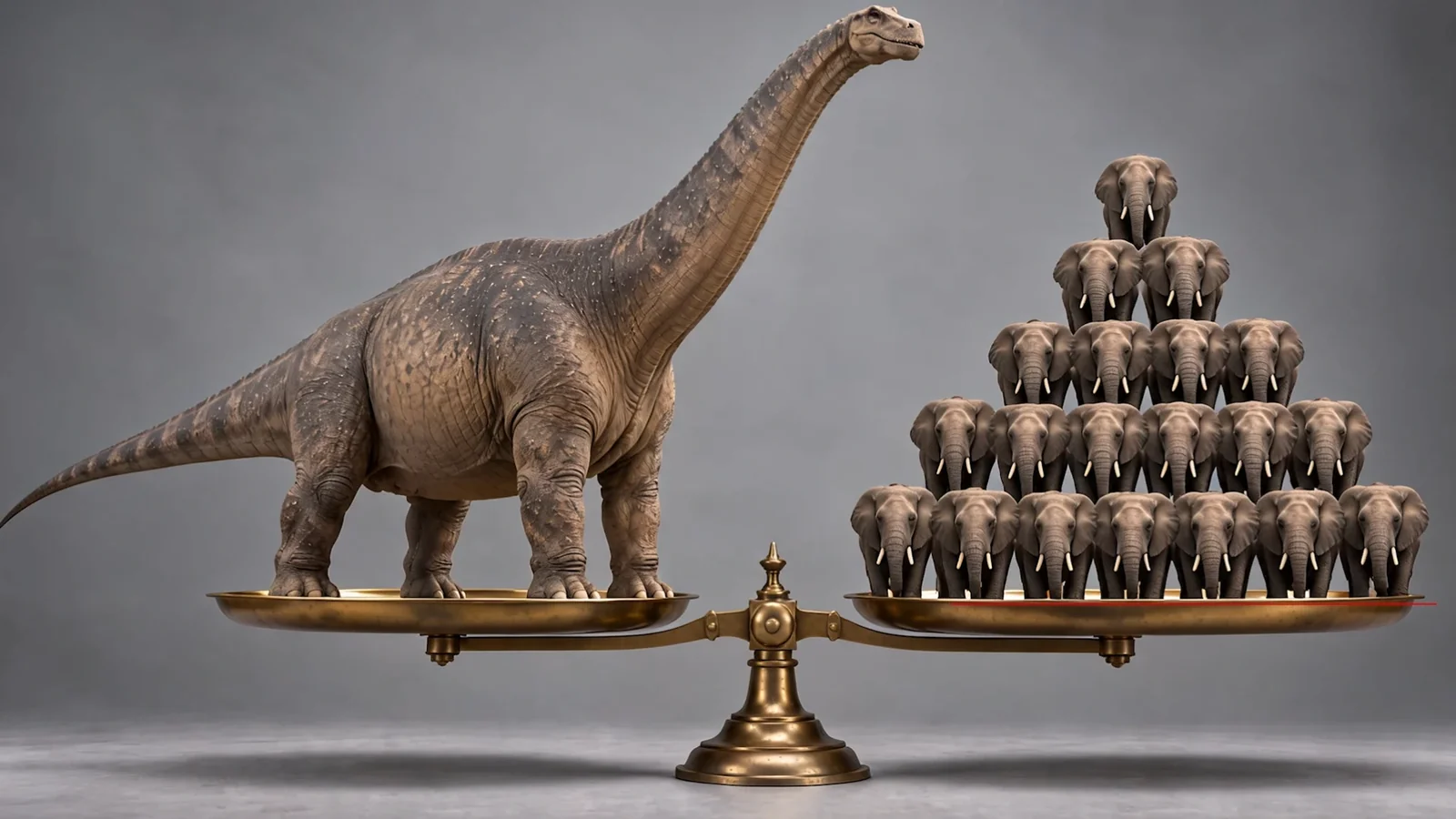
Illustration: EarthLive.TV
Probably 110 to 130 tonnes | Late Cretaceous, India | Fossils disintegrated
Bruhathkayosaurus was described in 1987 from fossils found in Tamil Nadu, southern India. It was first mistaken for a large meat-eater. Then the fossils crumbled to dust before they reached a museum, and for decades it was treated as doubtful.
In 2022, newly published photographs suggested the main bone was the shin of a giant titanosaur, about 2 metres long. For comparison, the equivalent bone of Argentinosaurus is about 1.55 metres.
The weight. In 2023, Gregory Paul and Asier Larramendi scaled up from that leg bone and got 110 to 170 tonnes. They think the lower end, 110 to 130, is more likely, which is comparable to a fully grown female blue whale.
The catch. A 2024 review said the photos still don’t settle what the bone is. The name may also officially belong to a different animal, a meat-eater, which would leave this giant unnamed. It may be the heaviest land animal that ever lived. It may not be the animal its name says it is.
Outside the Top Five
A giant from China. A possible 60 to 80 tonne relative of Mamenchisaurus, known only from neck and skull bones. It’s too uncertain to rank, so we’ve left it out.
Puertasaurus. One of its back vertebrae is about 1.68 metres wide, even broader than Notocolossus’s. With only a few vertebrae and no limb bones, it can’t be weighed properly, but it’s thought to be in the same class as #4 and #5.
Dreadnoughtus. One of the most complete giant titanosaurs, and proof of how much method matters: 59.3 tonnes by its limb bones, but 38 tonnes at most by volume.
The one to watch. BYU 9024, a 1.38-metre neck vertebra from Colorado, may come from a Barosaurus that one informal calculation puts at around 96 tonnes. It isn’t a published estimate, but unlike #1 and #2, this bone still exists.
The mammals. The biggest land mammals, the giant rhino Paraceratherium and the straight-tusked elephant Palaeoloxodon, reached about 17 to 19 tonnes. That’s less than half the lowest estimate for #5.
Could Something Heavier Be Out There?
Probably. Blue whales have been measured in huge numbers, so the record for the sea is unlikely to move much. Sauropods are the opposite. Giant skeletons rarely fossilise, and the biggest individuals were rare, so the handful we’ve found almost certainly doesn’t include the largest that lived.
As for how they got so big, a major 2011 review found no single cause but a combination: a long neck that reached far more food, a small head that swallowed without chewing, a skeleton lightened by air-filled bones, fast growth and lots of eggs.
If the estimates for India’s lost giant are anywhere near right, the heaviest animal ever to walk on land was in the same class as the largest blue whales ever measured.
The heaviest land animal alive today is the African elephant, and you can watch them live at safari waterholes on EarthLive.TV. Or explore the Live Webcam Map, or browse by Category and Country.
LIVEWatch live → Take Me Anywhere
Video Transcript 1:44
#5 Notocolossus - weighing roughly 45 - 60 tonnes
Just one bone from this dinosaur's front leg was 1.76 metres long - taller than the average grown man today.
Weighing 45 - 60 tonnes, this would be roughly the same weight as 7 to 10 fully grown bull African elephants.
#4 Patagotitan - weighing roughly 57 tonnes
In 2010 a ranch worker spotted one of its bones sticking out of the ground in Argentina.
Weighing about 57 tonnes - roughly the same as 9 to 10 fully grown bull African elephants.
#3 Argentinosaurus - weighing roughly 77 tonnes
A farmer found the first bone in Argentina in 1989. It stayed the biggest dinosaur known for 20 years.
Weighing about 77 tonnes, that is roughly the same as 13 fully grown bull African elephants.
#2 Maraapunisaurus - weighing 80 - 120 tonnes
Nobody alive has ever seen this dinosaur's bones. The one bone ever found went missing over 100 years ago.
Weighing 80 - 120 tonnes, that is roughly the same as 13 to 20 fully grown bull African elephants.
#1 Bruhathkayosaurus - weighing 110 - 130 tonnes
Its bones crumbled to dust before reaching a museum. Its shin bone alone was about 2 metres long.
Weighing 110 - 130 tonnes, about the same as a blue whale, or 20 fully grown bull African elephants.
The video closes on wildlife footage and the EarthLive.TV - Earth Unedited outro.
How this video was made
The video runs 1 minute 44 seconds with no voiceover. All wording appears on screen. The dinosaur and elephant scenes are AI illustrations made by EarthLive.TV, and every weight comes from the published studies listed in the sources below.
Sources 22 sources
Main mass estimates
- Paul, G.S. (2019). Determining the largest known land animal: a critical comparison of differing methods for restoring the volume and mass of extinct animals. Annals of Carnegie Museum 85(4): 335-358. Maraapunisaurus 80-120 t, Patagotitan 50-55 t, Notocolossus in a similar range.
- Paul, G.S. & Larramendi, A. (2023). Body mass estimate of Bruhathkayosaurus and other fragmentary sauropod remains suggest the largest land animals were about as big as the greatest whales. Lethaia 56(2). Figures for #1 to #4, mammals, blue whales, Bruhathkayosaurus holotype.
#5 Notocolossus and Dreadnoughtus
- González Riga, B.J. et al. (2016). A gigantic new dinosaur from Argentina and the evolution of the sauropod hind foot. Scientific Reports 6: 19165. Humerus, vertebra, foot, 60.4 t and 44.9 t, Dreadnoughtus 59.3 t and 38.2 t, Puertasaurus vertebra width.
#4 Patagotitan
- Carballido, J.L. et al. (2017). A new giant titanosaur sheds light on body mass evolution among sauropod dinosaurs. Proceedings of the Royal Society B 284: 20171219.
- Otero, A., Carballido, J.L. & Pérez Moreno, A. (2020). The appendicular osteology of Patagotitan mayorum. Journal of Vertebrate Paleontology 40(4). Revised 42-71 t, mean 57 t.
- Natural History Museum, London - Dino Directory: Patagotitan. Discovery, six individuals, 42,500-71,400 kg range.
- Sci.News (August 2017). Meet Patagotitan mayorum. Reports the original 69 t figure.
- Sauropod Vertebra Picture of the Week (August 2017). Don't believe the hype: Patagotitan was not bigger than Argentinosaurus.
#3 Argentinosaurus
- Mazzetta, G.V., Christiansen, P. & Fariña, R.A. (2004). Giants and bizarres: body size of some southern South American Cretaceous dinosaurs. Historical Biology 16. 73 t.
- Sellers, W.I. et al. (2013). March of the titans: the locomotor capabilities of sauropod dinosaurs. PLOS ONE 8(10): e78733. 83 t.
- Calvo, J.O. (2023). What is the most giant sauropod from Argentina? Metode. Discovery, fibula, time as record holder.
#2 Maraapunisaurus
- Carpenter, K. (2018). Maraapunisaurus fragillimus, n.g. (formerly Amphicoelias fragillimus), a basal rebbachisaurid from the Morrison Formation (Upper Jurassic) of Colorado. Geology of the Intermountain West 5: 227-244.
- Sauropod Vertebra Picture of the Week (October 2018). What if Amphicoelias fragillimus was a rebbachisaurid? 58 m previous estimate, name origin, hip height.
- Molina-Pérez, R. & Larramendi, A. (2020). Dinosaur Facts and Figures: The Sauropods and Other Sauropodomorphs. Princeton University Press, p. 254. About 70 t.
Why sauropods got so big
- Sander, P.M. et al. (2011). Biology of the sauropod dinosaurs: the evolution of gigantism. Biological Reviews 86: 117-155.
- Scientific American, Tetrapod Zoology blog. The Second International Workshop on the Biology of Sauropod Dinosaurs. Summary of growth and reproduction findings.
#1 Bruhathkayosaurus
- Pal, S. & Ayyasami, K. (2022). The lost titan of Cauvery. Geology Today. Fossils disintegrated before reaching the repository.
- Mohabey, D.M. et al. (2024). A review of small-bodied theropod dinosaurs from the Upper Cretaceous of India. Journal of Vertebrate Paleontology 43(3).
Just outside the top five
- Wedel, M.J. Postcranial pneumaticity in dinosaurs and the origin of the avian lung (PhD dissertation, posted to arXiv 2013). BYU 9024 centrum length.
- Taylor, M.P. & Wedel, M.J. (2016). How big did Barosaurus get? SVPCA abstract.
- Sauropod Vertebra Picture of the Week (June 2019). Supersaurus, Ultrasaurus and Dystylosaurus in 2019, part 2. Informal 96 t calculation.
- Moore, A.J. et al. (2023). Re-assessment of the Late Jurassic eusauropod Mamenchisaurus sinocanadorum. Journal of Systematic Palaeontology 21(1). Single specimen, neck over 14 m.
Editor's note
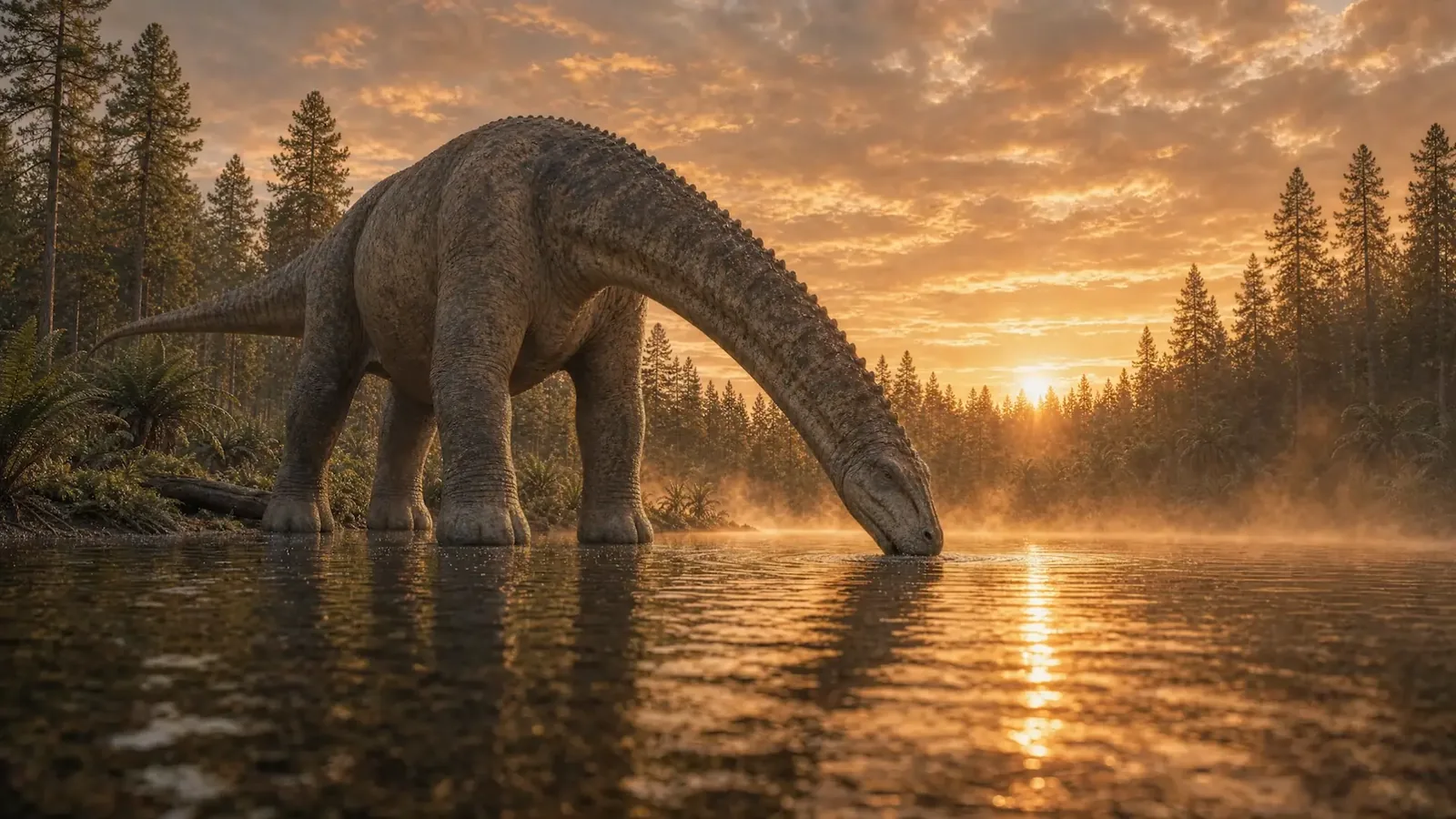
Figures checked 20 September 2026. Every weight in this story is a published scientific estimate, not a measurement. The dinosaur and elephant pictures are AI illustrations made by EarthLive.TV to show scale. They are not scientific reconstructions.
How we researched this article
We compared the mass estimates for each giant across the published studies above, using the 2023 comparison by Paul and Larramendi as the main reference for #1 to #4, and the describers' own figures for #5. Where studies disagree, we give the range and say which method each figure comes from.