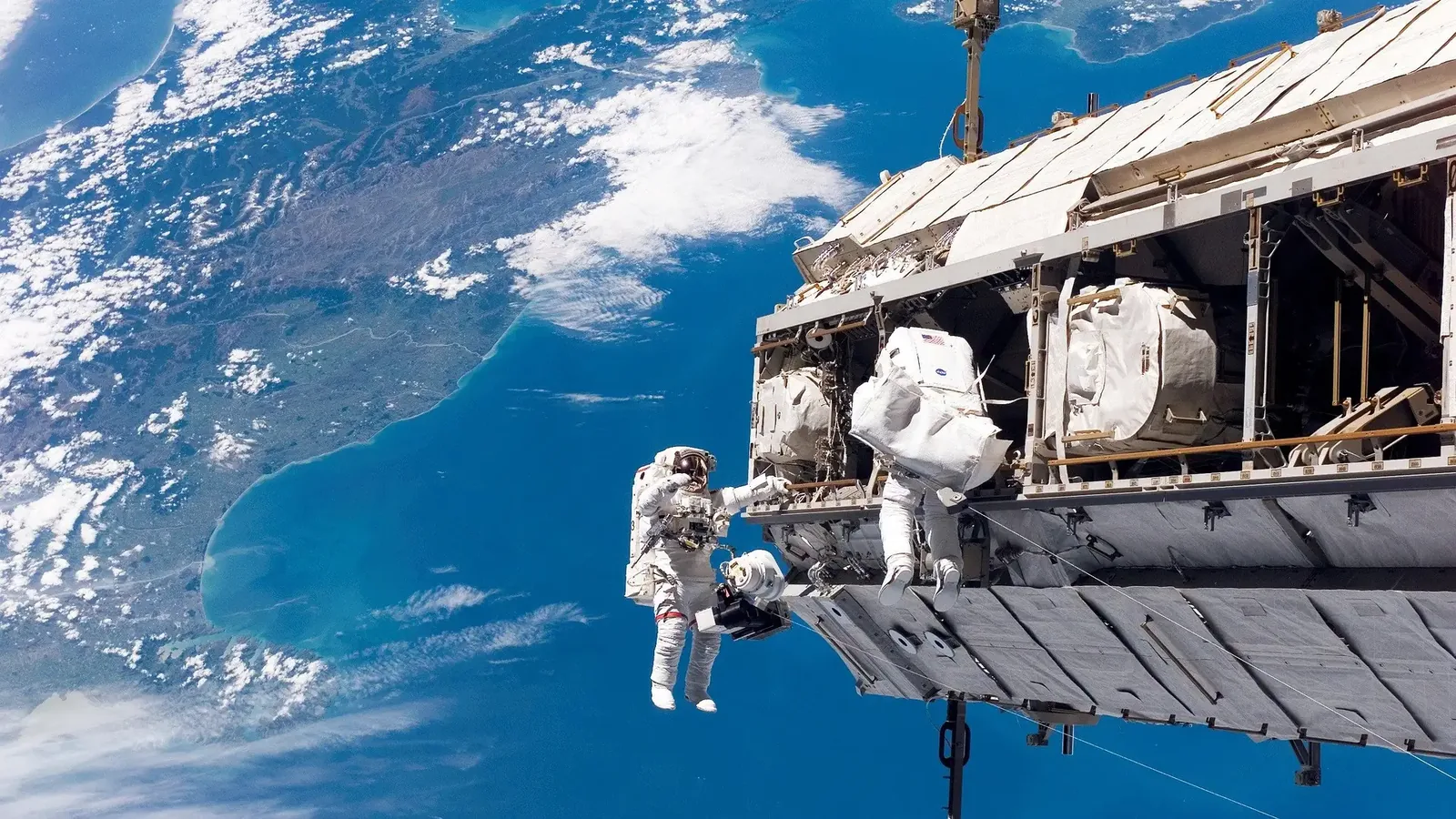
Since November 2000, there has always been someone living in space. For all of that time, they’ve been aboard the International Space Station, a structure about the size of a football field, circling Earth at around 17,500 mph, roughly 250 miles up.
It orbits the planet about every 90 minutes, which means the crew sees around 16 sunrises and 16 sunsets every day.
But the ISS is getting old, and its days are numbered. Here’s why it’s being retired, how it will come down, what’s replacing it, and how to watch it live while you still can.
Why Retire It?
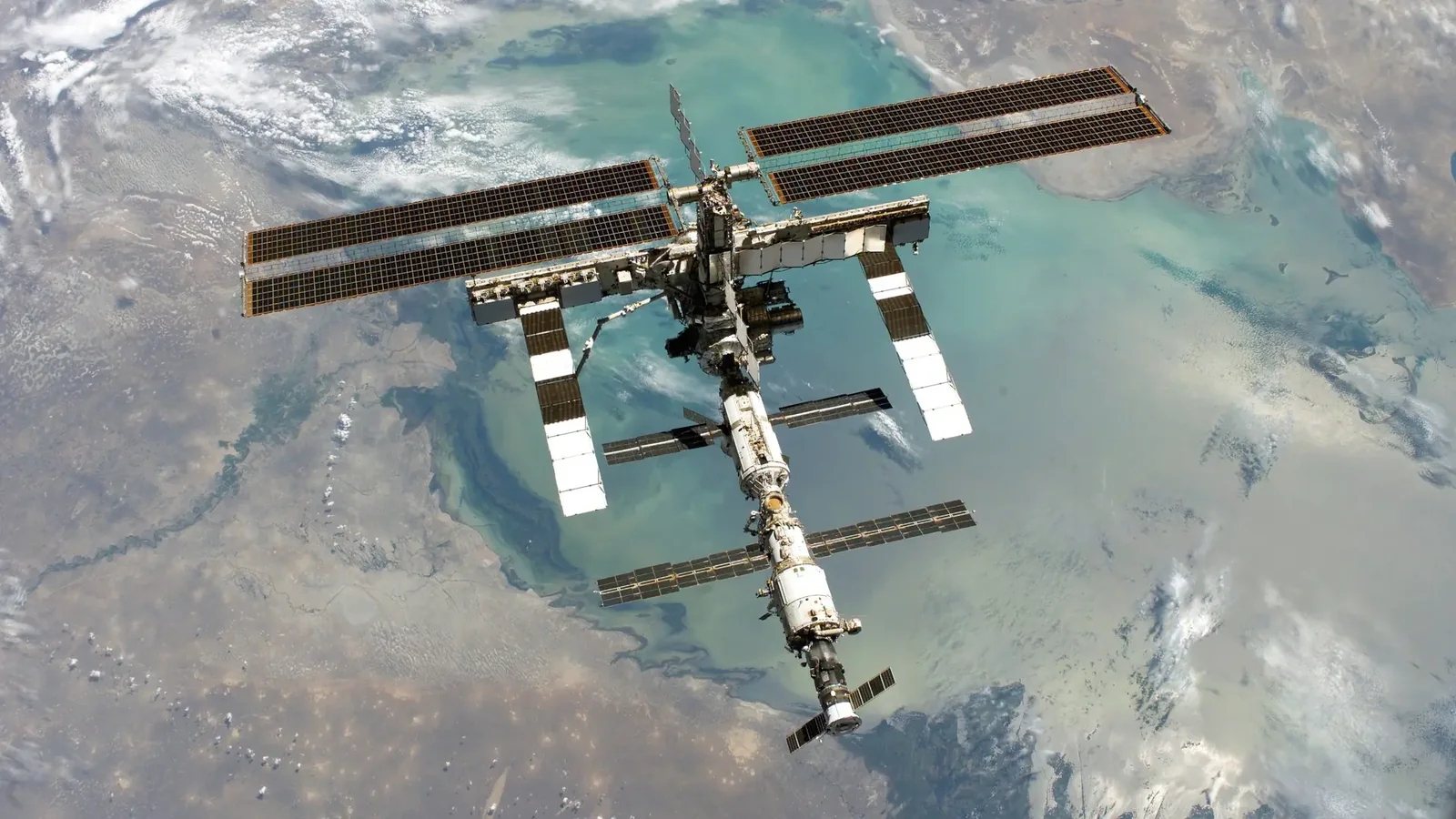
Photo: NASA / Pixabay
The first piece of the ISS, Russia’s Zarya module, launched in November 1998. That makes parts of the station almost 28 years old, far longer than its designers originally planned for.
Up there, it takes a beating. Every 90 minutes it swings from scorching sunlight into freezing darkness and back again, and it’s constantly peppered by tiny bits of space dust and debris. Years of heating and cooling, docking jolts and general wear put a constant strain on its aging structure.
The best-known problem is a slow air leak in a tunnel in the Russian Zvezda module, linked to small cracks that engineers have been tracking since 2019, according to Tech Times. Keeping the station safe costs billions of dollars a year, and the older it gets, the harder that becomes.
So instead of waiting for something to break, the five space agencies that run it (NASA, Roscosmos, ESA, JAXA and Canada’s CSA) have agreed to bring it down safely, on their own terms.
The Deorbit Plan
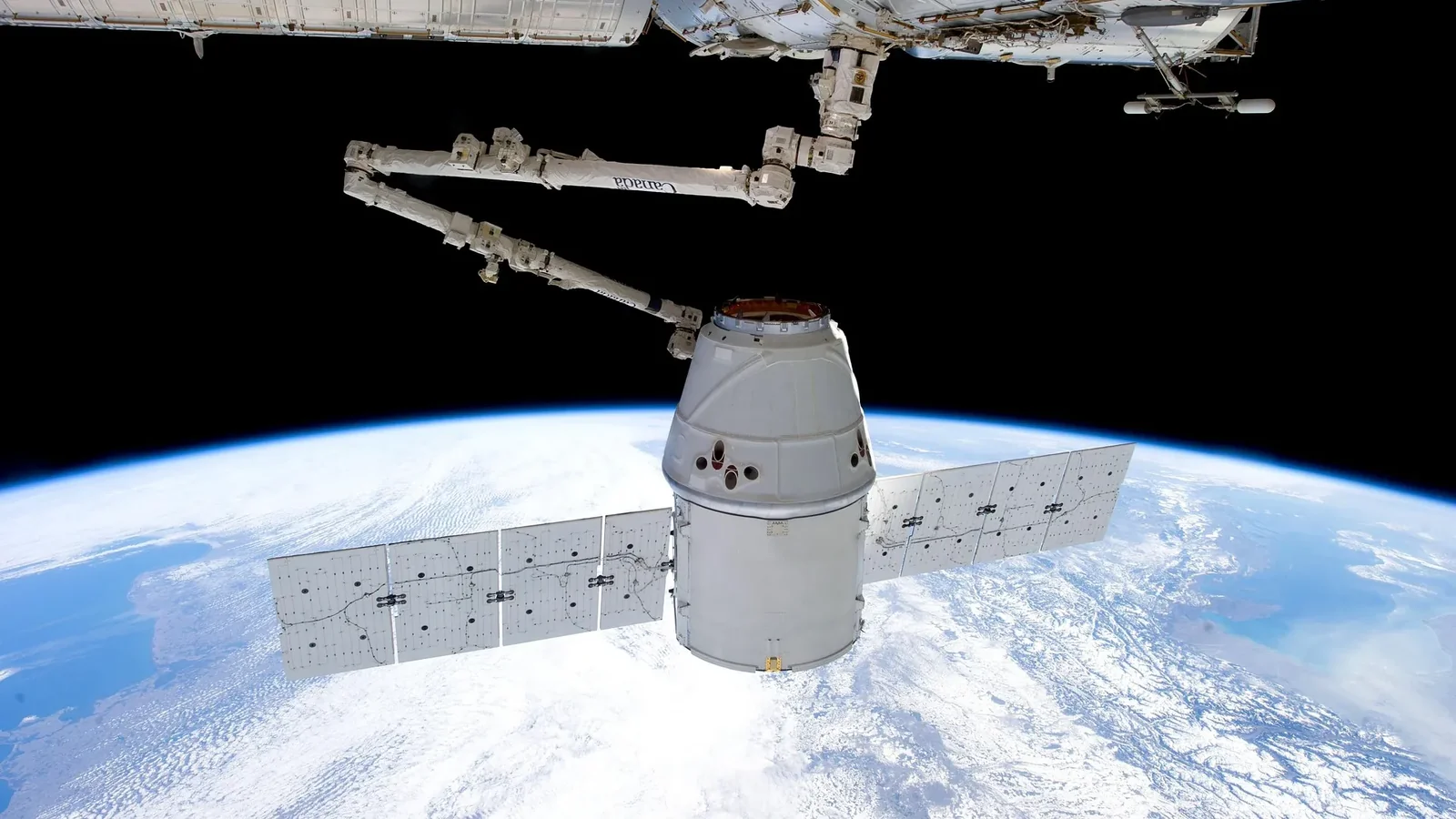
Photo: SpaceX / Pixabay
You can’t just switch off something the size of a football field and let it fall. At about 450 tons, the ISS is far too big to burn up completely, so where it comes down matters.
In June 2024, NASA picked SpaceX to build the US Deorbit Vehicle, a heavily upgraded version of its Dragon spacecraft, under a contract worth up to $843 million.
Here’s the plan. Over its final couple of years, the station’s orbit will be lowered bit by bit. Then the deorbit vehicle will dock and fire its engines to push the ISS into a steep, controlled dive.
Most of it will burn up in the atmosphere. The pieces that survive will be steered into a remote stretch of the South Pacific near Point Nemo, the most remote spot in the world’s oceans, about 1,670 miles from the nearest land. It’s known as the “spacecraft cemetery,” and it has already taken in Russia’s Mir space station and hundreds of other spacecraft.
The date isn’t locked in yet. A June 2026 GAO report says NASA must decide by 2027 whether a replacement station will be ready in time, or whether to keep the ISS flying past 2030.
What Comes Next?
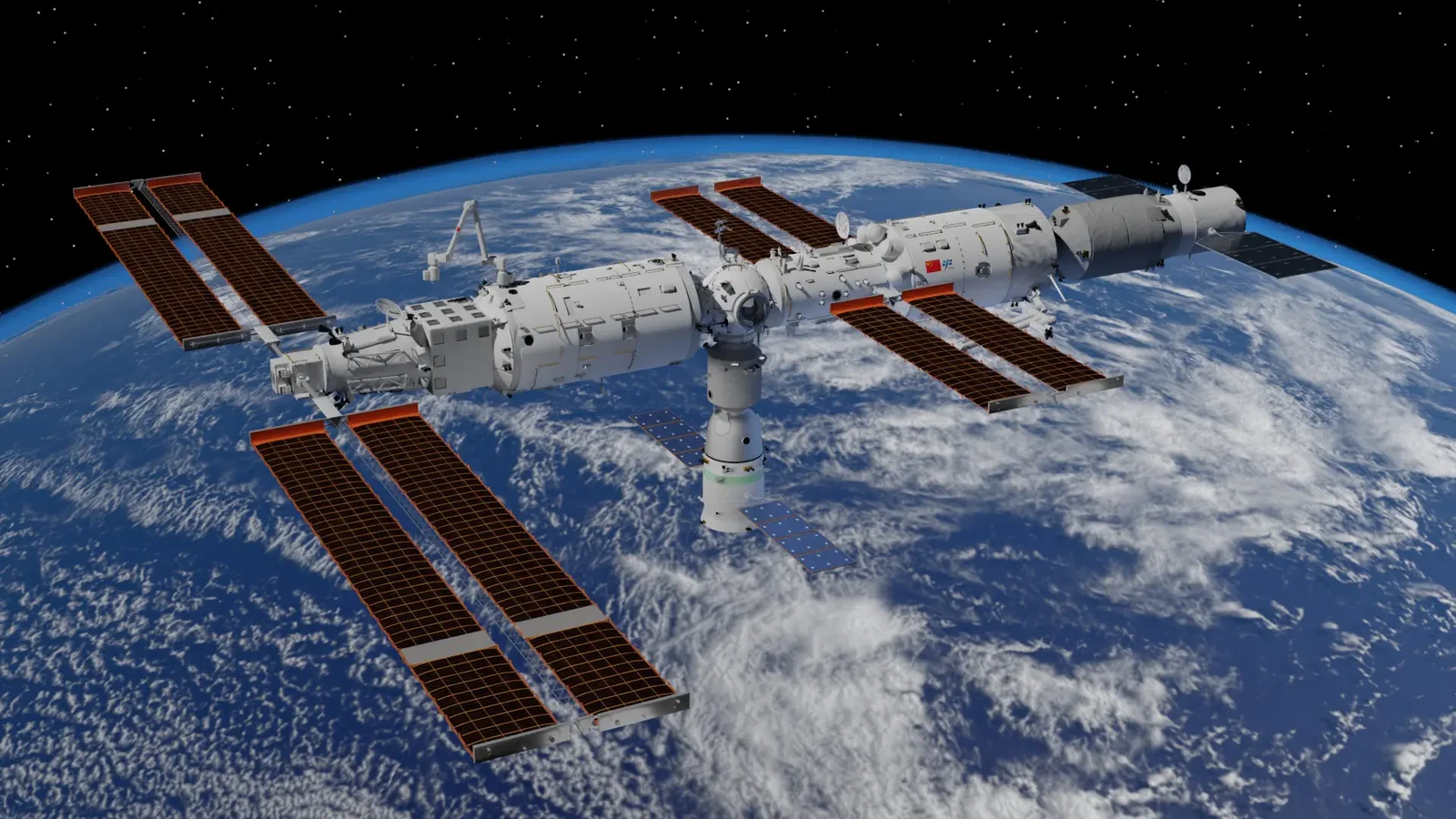
Image: Shujianyang / Wikimedia Commons (CC BY-SA 4.0)
When the ISS goes, it won’t leave space empty. China’s Tiangong station has been complete since 2022 and usually has three astronauts on board.
To keep Americans and their partners in orbit, NASA is paying private companies to build smaller commercial stations. NASA would rent space on them rather than owning one itself. In October 2026, it invited companies to send in their final plans for the next stage. All of them are running later than first planned:
Russia is going its own way too. It plans to build its own station, ROS, with the first module currently due in 2028.
The big worry is a gap. If none of the new stations are ready when the ISS comes down, the US could lose its continuous human presence in orbit for the first time since 2000, which is exactly the risk the GAO report warns about.
Watch It Live
You don’t need a rocket to see the ISS. Cameras on the station stream live to YouTube, showing Earth rolling by about 250 miles below.
The station circles the planet every 90 minutes, so about half the time it’s on Earth’s night side. If the screen looks dark, that’s not a fault. Watch for city lights, lightning and the glow of sunrise on the horizon.
LIVEWatch live →LIVEWatch live →You can also spot the ISS with your own eyes. It’s often the brightest thing moving across the night sky, and NASA’s Spot the Station tells you when it will pass over you.
For more views from orbit, browse our Space cams, or look up at the Aurora and the Night Sky.
 Take Me Anywhere
ISS FAQ 5 questions
When will the ISS be retired?
NASA plans to retire the International Space Station in 2030 and bring it down soon after. A June 2026 GAO report says NASA must decide by 2027 whether a replacement will be ready in time, or whether to keep the ISS flying longer.
Where will the ISS crash?
Most of the station will burn up as it falls through the atmosphere. The pieces that survive will be steered into a remote area of the South Pacific near Point Nemo, about 1,670 miles from the nearest land, where hundreds of spacecraft have been brought down before.
Who is building the vehicle that will deorbit the ISS?
SpaceX. In June 2024, NASA awarded it a contract worth up to $843 million to build the US Deorbit Vehicle, a heavily upgraded version of its Dragon spacecraft.
What will replace the ISS?
NASA is backing private companies building smaller commercial stations, including Vast's Haven-1, Axiom Station, Starlab and Orbital Reef. Their launch dates are still provisional. China already runs its own station, Tiangong, and Russia plans to build its own, called ROS.
Can I watch the ISS live?
Yes. Cameras on the station stream live to YouTube, and you can watch them on EarthLive.TV. On clear nights you can also see the ISS with your own eyes. NASA's Spot the Station website tells you when it will pass over you.
Sources 8 sources
- NASA - NASA Selects International Space Station US Deorbit Vehicle (June 2024)
- NASA - NASA Seeks US Industry Plans for Commercial Space Stations (October 2026)
- US GAO - Report GAO-26-107805 on the ISS transition (June 2026)
- Tech Times - ISS Deorbit Audit Begins; Russia Exits With Next Station (August 2026)
- Payload - Vast Delays Haven-1 Launch to 2027 (January 2026)
- Wikipedia - International Space Station
- Wikipedia - Point Nemo
- NASA - Spot the Station
Editor's note
Fully rewritten in October 2026 with the latest deorbit plans and replacement station dates. Space station schedules change often, so we'll keep this page updated as plans firm up.
How we researched this article
Facts come from NASA, the US Government Accountability Office and recent space industry reporting, checked in October 2026. All ISS cams featured were checked live on EarthLive.TV.