
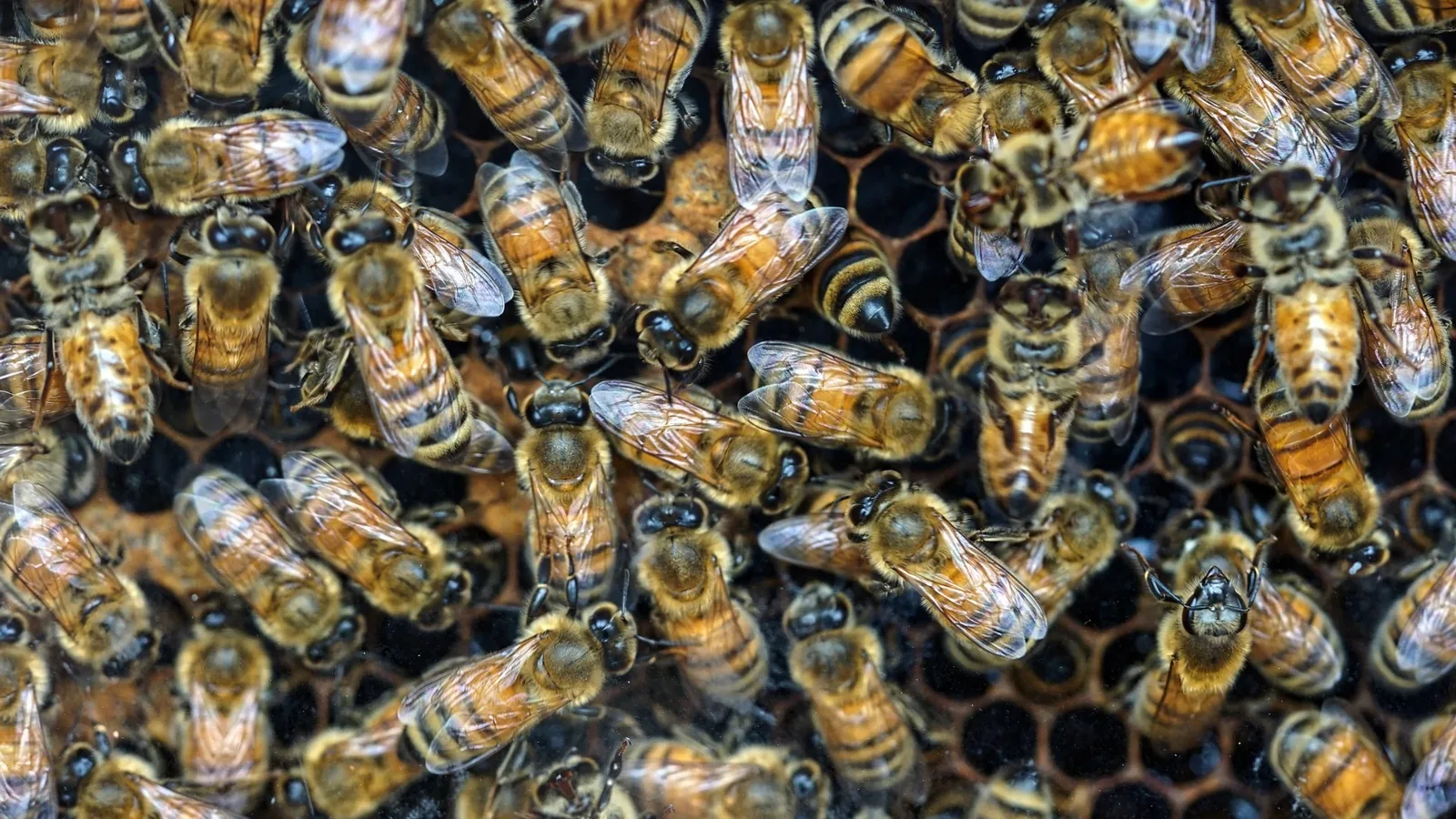
Every spoonful of honey takes a lot of teamwork. By one commonly quoted estimate, a single worker bee makes about 1/12 of a teaspoon of honey in her entire life.
Another commonly quoted estimate puts the work behind one pound of honey at around 2 million flower visits and 55,000 miles of flying, which is the same distance as flying around the Earth over two times! Here’s how they do it, plus how long bees live, which ones sting, and where to watch them live.
How Do Bees Make Honey?
Collecting nectar: A forager bee sucks nectar from a flower through her long, tube-like tongue and stores it in her honey stomach, a special pouch separate from her real stomach. She may visit 50 - 100 flowers on a single trip.
Adding enzymes: Enzymes start working straight away. They break down sucrose, one of the sugars in nectar, into two simpler sugars: glucose and fructose.
Passing it on: Back at the hive, the forager regurgitates the nectar to younger house bees, which pass it mouth to mouth and add more enzymes before depositing it into wax cells.
Drying it out: Nectar can contain up to about 80% water. Bees fan their wings over the cells to evaporate it until honey is only about 18% water, making it less likely to ferment and spoil.
Sealing it up: Once the honey is ready, the bees cap each cell with a thin layer of beeswax, storing it as food for the colony.
Sealed honey can last for decades, even centuries, because it’s so low in water and slightly acidic. Archaeologists have even found jars labeled as honey in ancient Egyptian tombs, though claims that their contents were still edible are unproven.
How Long Do Honey Bees Live?
It depends on the job, and the season:
Workers: All female. Summer workers live about six weeks, often literally working themselves to death. Workers born in fall can live up to about six months, keeping the colony warm through winter.
Drones: The males. They don’t collect food, make honey or sting, and their only real job is to mate with a queen from another colony. The few that succeed die straight afterward, and in fall, the workers push the rest out of the hive to save food.
Queens: Queens can live for several years. During peak season, a queen can lay 1,000 - 2,000 eggs a day.
A busy summer colony can hold 30,000 - 80,000 worker bees.
What Do Bees Eat?
Adult honey bees get energy from nectar and honey, while pollen provides protein for the colony. Young honey bee larvae receive gland-made food from nurse bees. Larvae raised as queens receive a rich royal-jelly diet throughout their development, which is what turns them into queens.
Types of Bees
There are more than 20,000 species of bees worldwide, including about 4,000 native species in the United States. Most don’t live in hives or make honey at all. Some of the best known are:
Honey bees: The famous honey makers, living in colonies of tens of thousands.
Bumblebees: More than 250 species. Big, fuzzy and gentle, and great at pollinating crops like tomatoes.
Large carpenter bees: Many look like bumblebees but have a shiny, mostly hairless black abdomen. They drill nest tunnels into wood.
Sweat bees: Small, often metallic green bees attracted to the salt in human sweat.
Mason and leafcutter bees: Solitary bees that build nests from mud or neatly cut pieces of leaf.
Bees aren’t the only insects that live in big colonies. Some ants will even explode to protect their nest.
Do Bumblebees Make Honey?
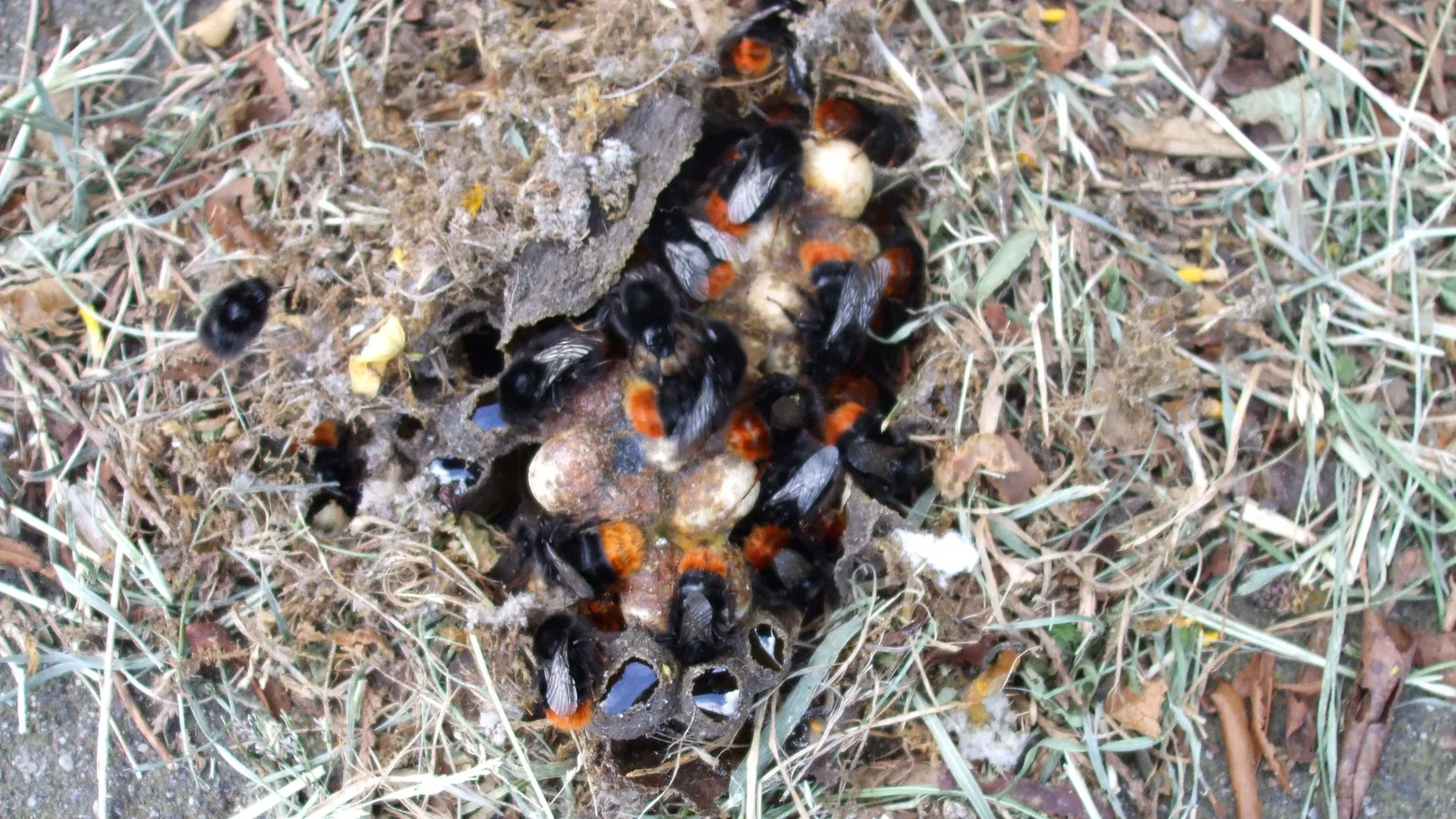
Photo: Phelyan Sanjoin / Wikimedia Commons, CC BY 2.0, cropped
Not really like honey bees do. Bumblebees keep small nectar stores in wax pots, rather than the large, long-lasting honey reserves made by honey bees. Their colonies are small, and in most species only the new queens survive winter, hibernating until spring.
Do Bees Sting?
Only female bees can sting. The stinger is a modified egg-laying tube, so males don’t have one.
Worker honey bees usually die after stinging a person, because their barbed stinger gets stuck in our skin and tears away. Bumblebees have smooth stingers, so they can sting more than once, though they rarely do unless provoked. Most stings are simply defensive bee-havior.
Do bees know stinging will kill them? There’s no evidence they do. Stinging is a defensive response, not a sign that a bee understands it will die. Protecting the hive and the queen helps a worker’s close relatives survive and reproduce, even if she dies. Whether animals understand death at all is a question scientists are still exploring. Read more in do animals know they will eventually die?
Her sacrifice still isn’t wasted. The torn-off stinger keeps pumping venom, and it releases an alarm scent that smells a bit like bananas, calling other bees to join the attack.
Do Carpenter Bees Sting?
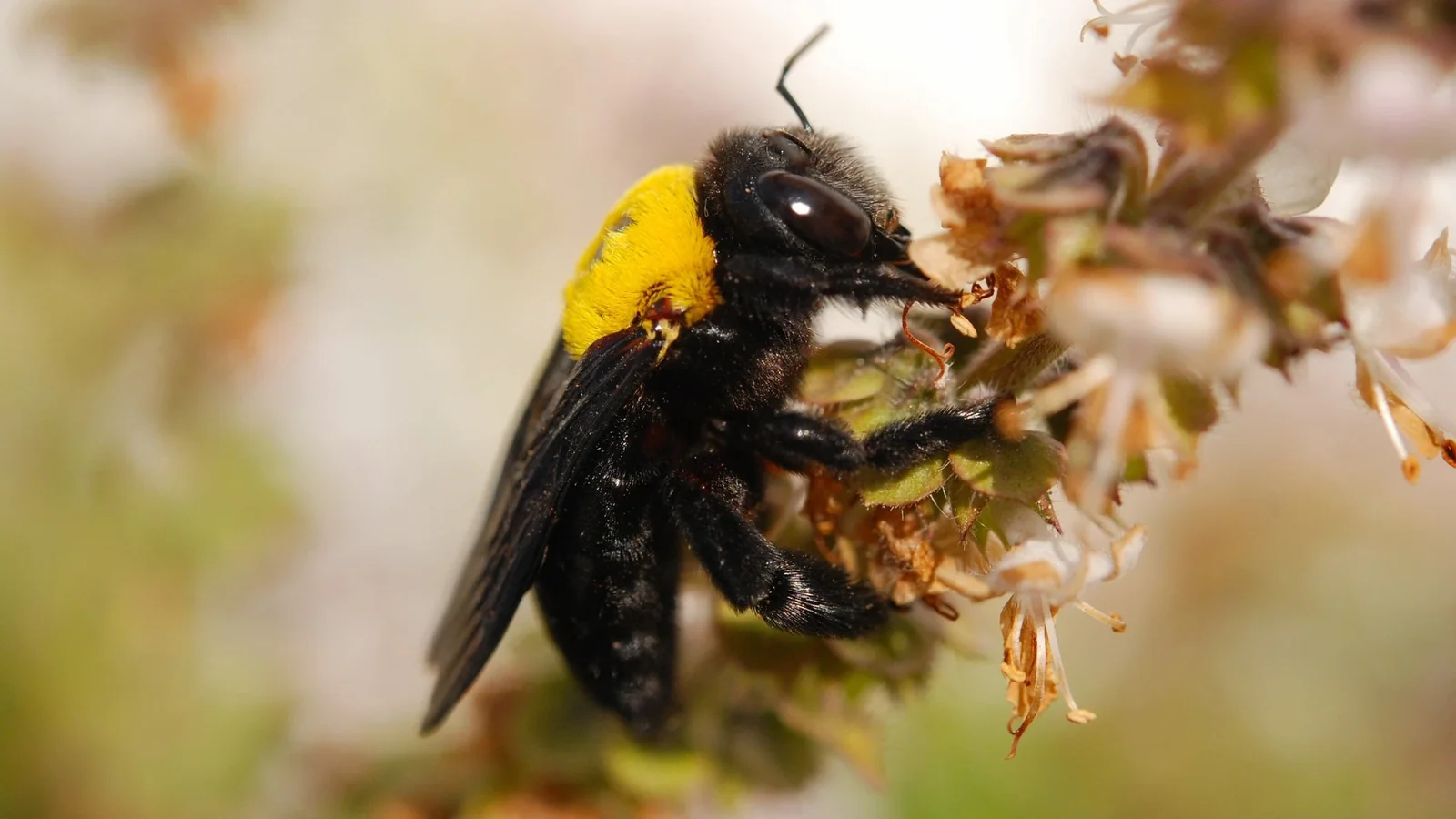
Photo: Khwissem / Wikimedia Commons, CC BY-SA 4.0, cropped
Male carpenter bees can’t sting at all. They often hover around people near their nests, which looks aggressive, but they have no stinger. Male eastern carpenter bees have a pale patch on their face.
Females can sting, but usually only when handled, trapped or threatened.
Watch Bees Live
These cams show bees coming and going from hives in the US, Australia and Germany.
LIVEWatch live →LIVEWatch live → Take Me Anywhere
Sources 15
- Science Focus - How do bees make honey?
- National Honey Board - Honey trivia
- MU Extension - Honey bee facts
- Canadian Honey Council - Bee facts
- NSW DPIRD - Nutritional requirements of honey bees
- USDA - Pollinator week fact sheet
- Penn State Extension - Queen honey bee development
- SARE - The life cycle of honey bees
- USGS - How many species of native bees are in the US?
- Britannica - 8 buzzworthy types of bees
- Bumblebee Conservation Trust - Bumblebee nests
- Live Science - Do bees die after stinging?
- Missouri Department of Conservation - Eastern carpenter bee
- Cornell IPM - Carpenter bees
- Simple Things - Surprising Histories (2026) - How Bees Make Honey
Editor's note
Facts and figures were checked on November 12, 2026. Honey production figures are commonly quoted estimates, and real numbers vary with the season, the flowers available and how far bees have to fly.
How we researched this article
We used information from university extension services, government agencies, beekeeping and conservation organizations, and science publications, along with the video featured in this story. The live cams show bees at hive entrances and may not always show the activity described in the article.