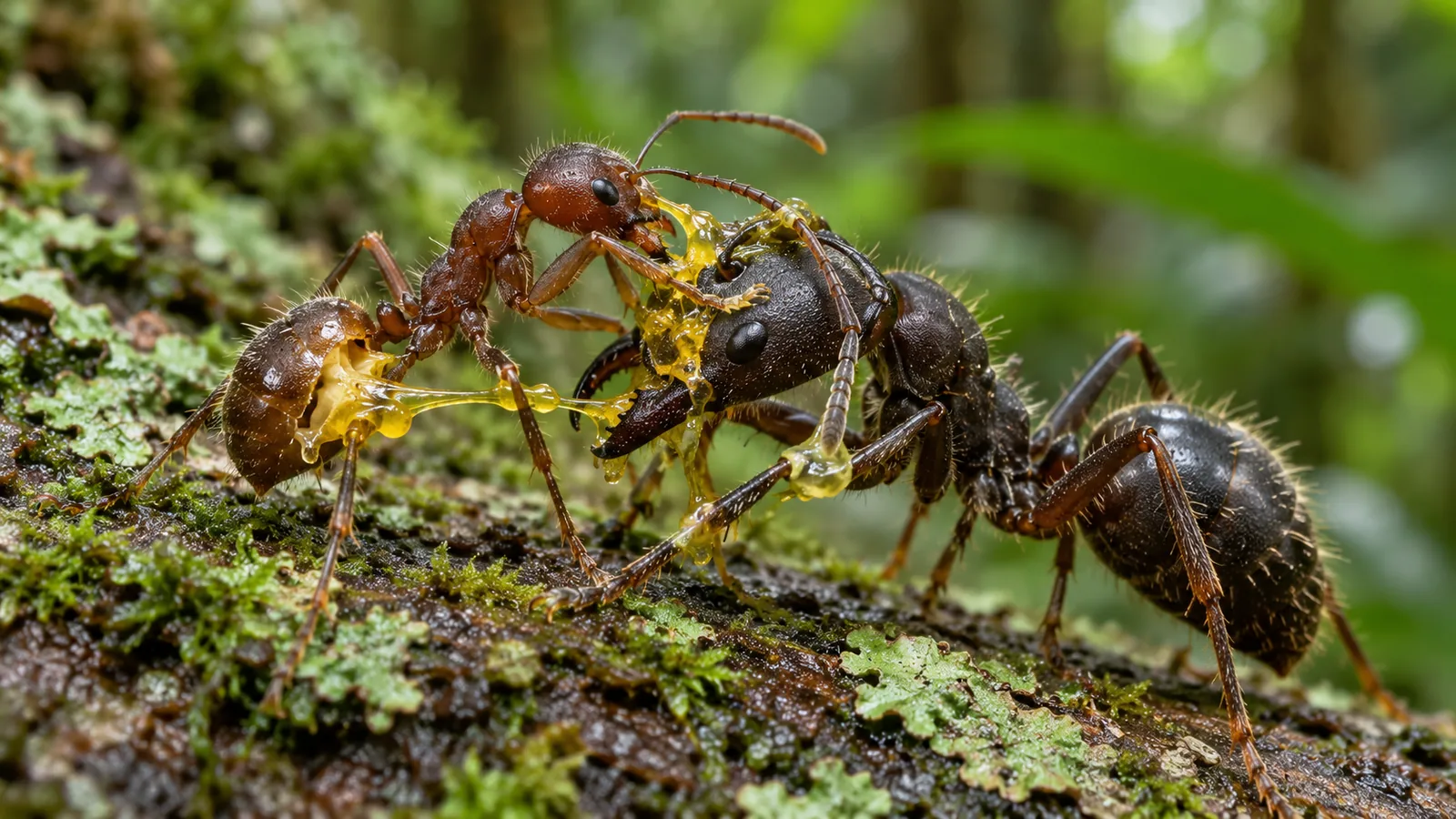
In the rainforests of Borneo lives an ant with a defense that sounds made up. When an enemy grabs it, the ant grabs back, squeezes its own body until it splits open, and smothers its attacker in sticky yellow goo.
The ant dies. But the enemy can be left glued in place, and the colony is safer for it.
Scientists call this autothysis, from the Greek for “self-sacrifice.” And in one species, Colobopsis explodens, the worker’s whole body is built for it.
A Tiny Ant With a Huge Chemical Weapon
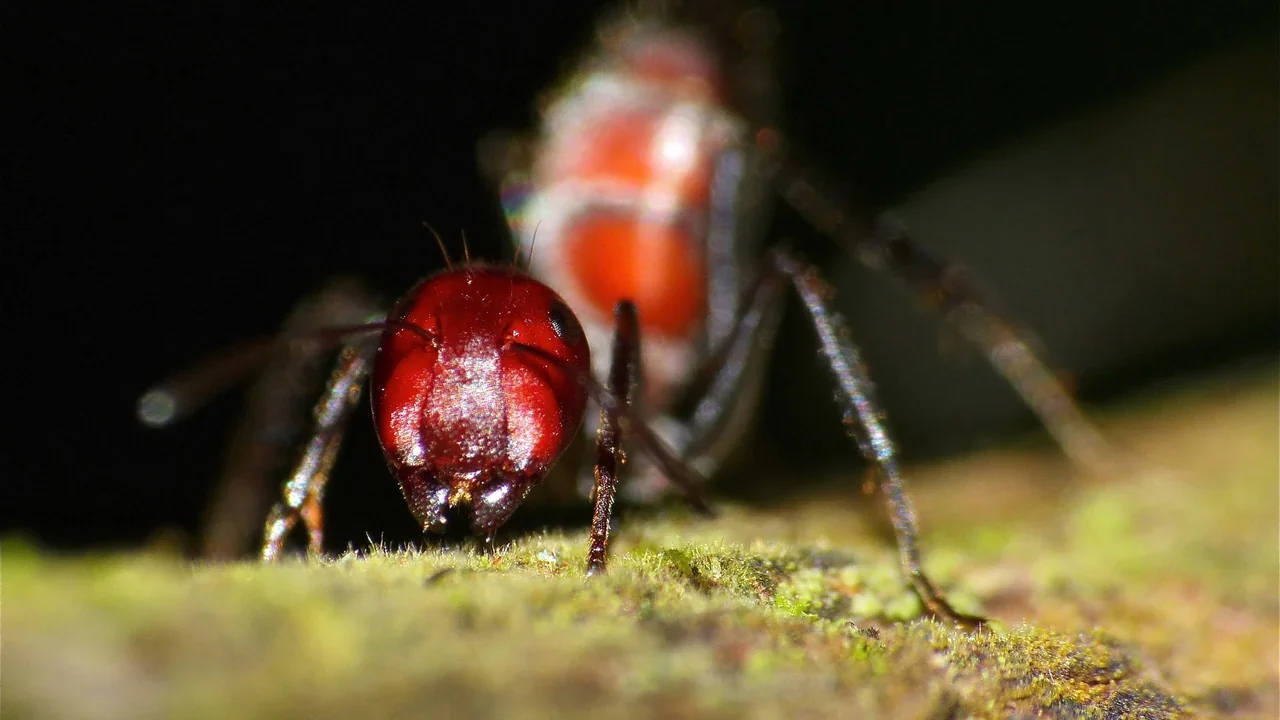
Photo: Bernard Dupont / Wikimedia Commons (CC BY-SA 2.0)
Colobopsis explodens was formally described as a new species in 2018, after years of fieldwork around the Kuala Belalong Field Studies Centre in Brunei, on the island of Borneo. It has also been recorded in Thailand and Malaysia.
Before it had an official name, researchers simply called it “Yellow Goo.” It was common around the research station, eager to burst in a fight, and easy to study, so it became the model species for exploding ants.
Built to burst: The small workers are only about 0.19 to 0.28 inches (4.7 to 7.2 mm) long, but their chemical glands are enormous. They stretch from the head right through much of the body.
When a worker is seriously threatened, it raises the rear of its body in a defensive pose. If the fight goes on, it squeezes the muscles of its abdomen until the body wall tears open, and the glands burst with it. Out pours a thick, bright yellow goo, and the ant doesn’t survive.
Less a Bomb, More a Glue Grenade
Despite the name, there’s no tiny blast. What matters is the rupture: the ant tears itself open and releases its goo at point-blank range.
Workers bite or cling to an enemy first, then burst. The goo sticks to the attacker’s legs, mouthparts and body, and can leave it unable to move.
Mostly glue: The 2018 study described the goo as sticky and irritating. But when researchers tested it on crickets and leafcutter ants in 2020, it did little harm as a poison. The glue itself seems to be the main weapon. The same tests found it was strongly antimicrobial, so it may also help fight germs.
Scientists have detected about 45 different chemical compounds in it. And bursting isn’t the only option: these ants can also release tiny droplets of goo from near their jaws without dying.
The smell: The 2018 paper describes the goo as spice-scented. One of the scientists who named the species, Alice Laciny, told National Geographic it smells like curry.
Small Workers Explode, Soldiers Become Doors
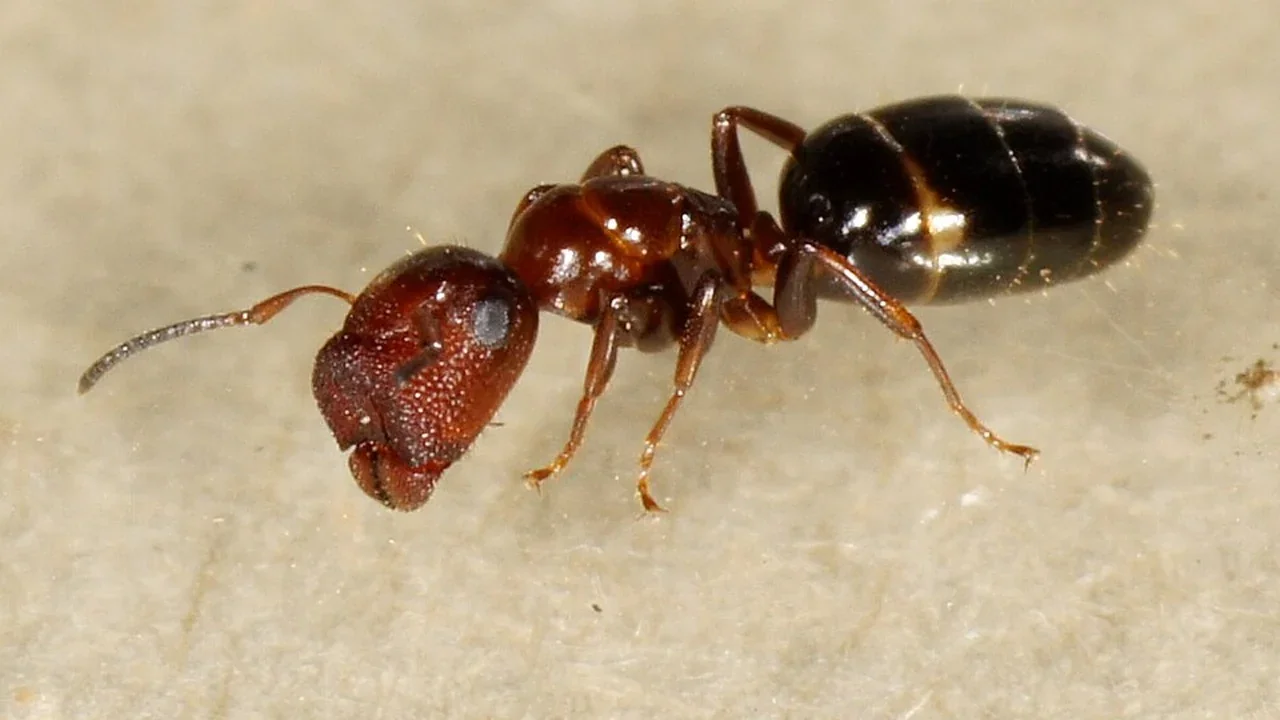
Photo: Volker Borovsky / Wikimedia Commons (CC BY-SA 3.0)
The colony splits its defense between two kinds of ant. The small workers carry the oversized glands and do the bursting.
The bigger soldiers have a completely different weapon: their heads. They have large, flat, plug-shaped heads, and they’re rarely seen outside the nest.
If something tries to get in, a soldier wedges its head into the small entrance hole and seals it with its own body. Scientists call this phragmosis. In simpler terms, the ant becomes the door.
So one group patrols outside with a defense that can end in self-destruction, while another stays inside and turns its face into a barricade.
Why Would Evolution Favor an Ant That Kills Itself?
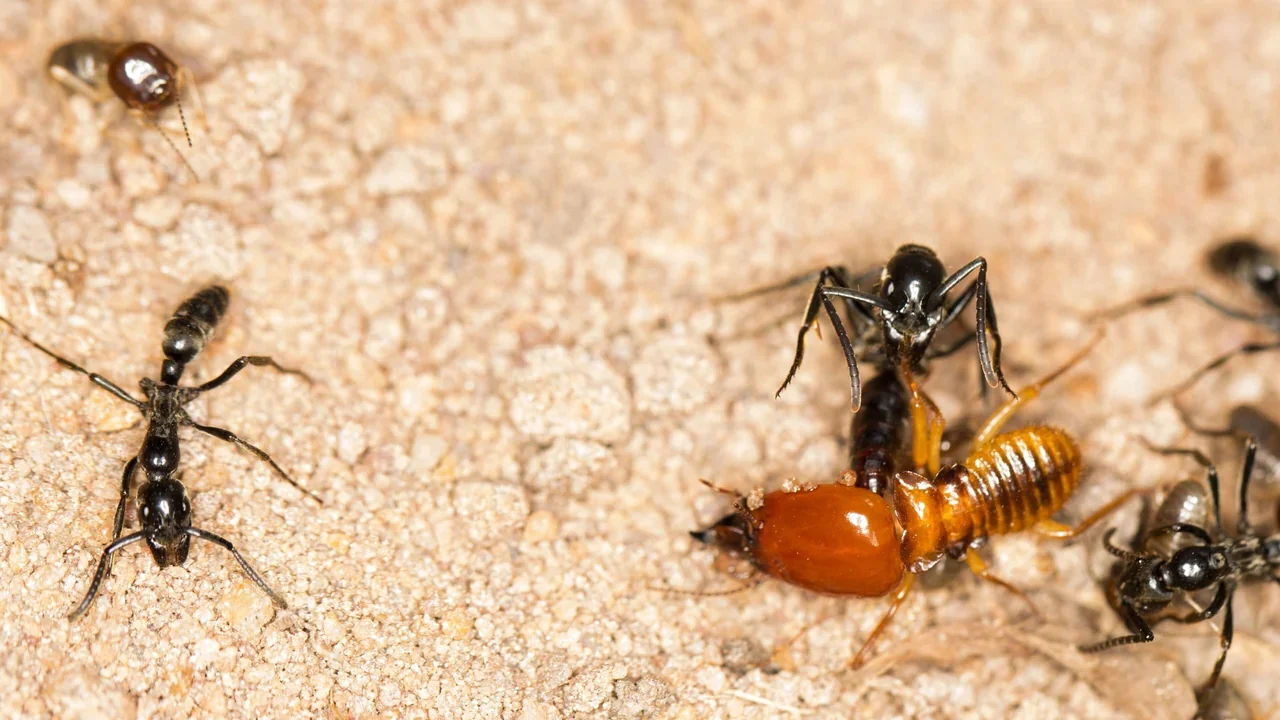
Photo: ETF89 / Wikimedia Commons (CC BY-SA 4.0)
Dying in a fight sounds like a terrible survival strategy. But an ant colony changes the math.
Worker ants rarely have young of their own. Instead, their genes are passed on through their relatives in the colony, especially the queen and her young. So if one worker’s death protects enough of its relatives, the genes they share still win. Biologists call this kin selection, and a 2012 review found self-destructive defenses across ants, termites, bees and other social insects.
That doesn’t mean the ant understands any of this or decides to sacrifice itself. Words like “suicide” describe the result. The behavior itself is an evolved reaction.
In this National Geographic clip, Matabele ants, the same species as in the photo above, carry their injured nestmates home after a termite raid. Badly wounded ants may not be able to get into the right position to be carried, so they’re left behind:
Not the only ones: The behavior was first noted in these ants in 1916, and described in detail in 1974. Some termites have evolved to burst open too. Honeybees can die after stinging, though that’s different: the sting tears away rather than the body bursting. And a Brazilian ant seals its nest every night, leaving a few workers locked outside, a story we cover in Do Animals Know They Will Eventually Die?
Life in the Rainforest Canopy
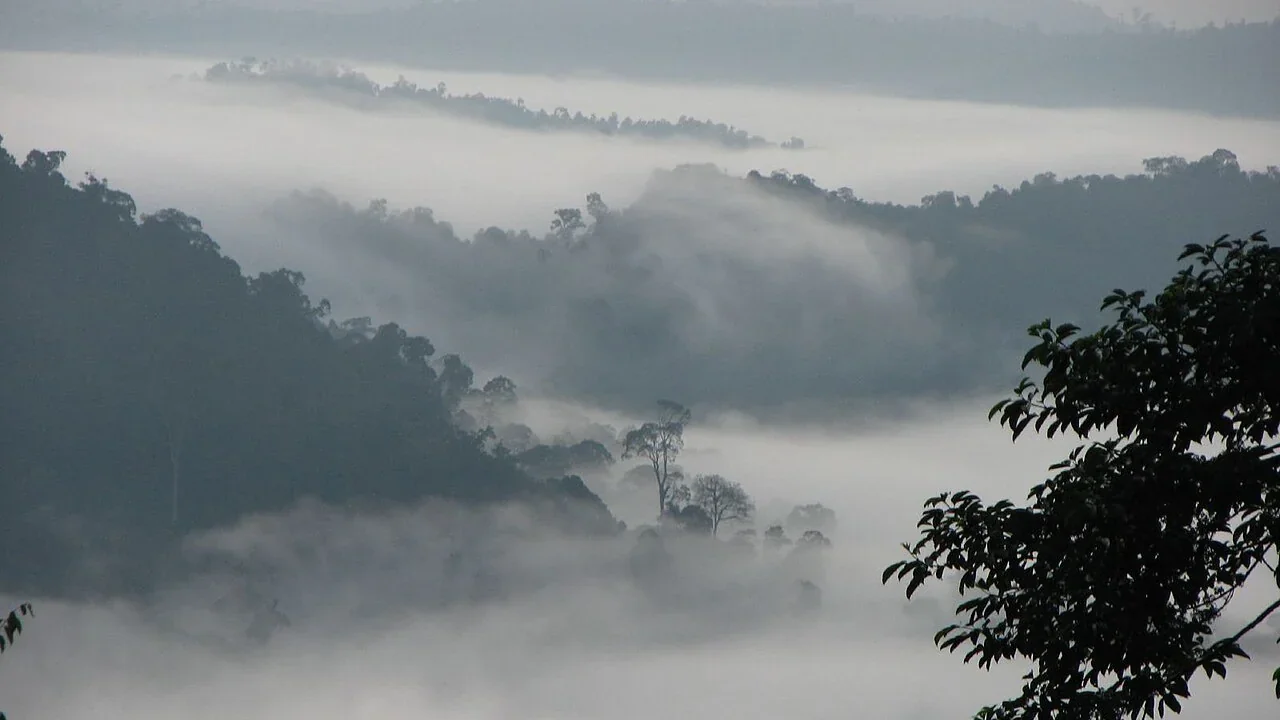
Photo: Rob and Stephanie Levy / Wikimedia Commons (CC BY 2.0)
Exploding ants live in trees, from near the forest floor right up into the canopy and the tallest treetops.
The small workers spend much of their time moving over leaves and bark. On bark, they graze over thin layers of moss, lichen, algae and fungi, apparently feeding, although their exact diet is still a puzzle. In early lab tests, they didn’t eat the stringy fungi offered to them, but they did accept yeast mixed in water.
They also live in a crowded world, competing with other ant species for space across the rainforest trees.
More than one species: C. explodens isn’t the only exploding ant. The 2018 study counted at least 15 species of the group around the Brunei research station alone, many of them still unnamed at the time. Scientists are still working out what triggers the final burst, how workers team up against bigger enemies, and why this defense became so extreme here.
When the Ammunition Is the Ant
A single exploding ant worker is tiny. It can’t sting, and it doesn’t have the huge jaws of some famous ants. Against a bigger rival, it looks badly outmatched.
Evolution found another way: turn much of the body into a chemical store, get close, hold on and, if the threat is bad enough, burst.
Once a worker commits, there’s no second attack. The weapon doesn’t need to save the ant that uses it. It only needs to give the colony behind it a better chance. And if an attacker somehow gets past, there may still be a soldier waiting at the entrance, its head wedged in the doorway.
Nature has produced armor, venom, camouflage, horns, claws and teeth. Exploding ants went with something else entirely: a defense where the ammunition is the animal itself.
For more incredible wildlife, explore the Live Webcam Map.
 Take Me Anywhere
Sources 11
- Laciny et al. (2018) - Colobopsis explodens sp. n., model species for studies on "exploding ants", ZooKeys
- National Geographic (2018) - "Exploding" ant rips itself apart to protect its own
- Hoenigsberger et al. (2019) - Volatiles from the mandibular gland reservoir content of Colobopsis explodens worker ants, Molecules
- Hoenigsberger et al. (2020) - Strong antimicrobial and low insecticidal activity of mandibular gland reservoir content in Bornean "exploding ants", Myrmecological News
- Rahimi et al. (2018) - Isolation of mandibular gland reservoir contents from Bornean "exploding ants" for volatilome analysis, Journal of Visualized Experiments
- Jones et al. (2004) - The chemistry of exploding ants, Camponotus spp. (cylindricus complex), Journal of Chemical Ecology
- Maschwitz and Maschwitz (1974) - Platzende Arbeiterinnen: eine neue Art der Feindabwehr bei sozialen Hautflüglern, Oecologia
- Shorter and Rueppell (2012) - A review on self-destructive defense behaviors in social insects, Insectes Sociaux
- Davidson et al. (2007) - The tropical ant mosaic in a primary Bornean rain forest, Biotropica
- Davidson et al. (2016) - Nutrition of Borneo's "exploding" ants: a preliminary assessment, Biotropica
- Tofilski et al. (2008) - Preemptive defensive self-sacrifice by ant workers, The American Naturalist
Editor's note
"Exploding" is the scientists' own nickname, but there's no blast: the ant ruptures its body to release sticky secretion. Words like "suicide" and "self-sacrifice" describe the result, not a conscious decision. Some photos show close relatives of Colobopsis explodens, and the cover is an illustration.
How we researched this article
We based this article on the 2018 scientific description of Colobopsis explodens and the follow-up studies on its chemistry and defensive behavior, along with earlier research on exploding ants in Borneo and reviews of self-destructive defense in social insects.