In the summer of 2018, a killer whale called Tahlequah pushed the body of her newborn calf through the waters off Canada and Washington State for 17 days and more than 1,000 miles. In January 2025, she did it again with a second calf.
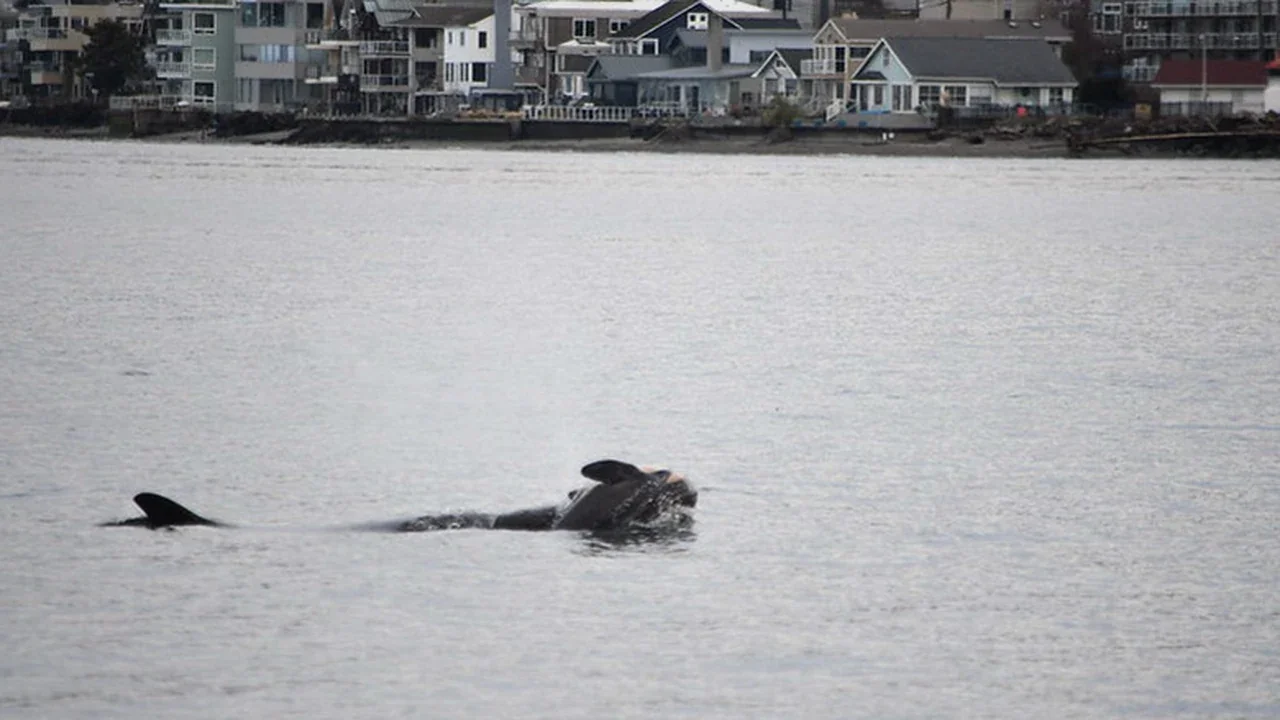
Photo: NOAA Fisheries
It’s almost impossible to watch without thinking of grief, and grief may well be the right word.
But a 2026 study tells a different story. A beluga whale in an aquarium lost her newborn calf, and staff removed the body from her tank. So she started carrying the placenta, the organ that fed her calf in the womb, around on her head instead. When that was taken away too, she carried a floating buoy.
Both mothers were carrying something, but only one was carrying a body. So carrying alone can’t tell us what an animal understands. That gap, between what animals do and what they know, is what this article is about.
Four Questions Hiding Inside One
Before any of the evidence makes sense, the big question needs pulling apart. It’s really four smaller ones.
Most articles on this squash all four into one. An elephant touches a skull, and we’re told it’s thinking about its own mortality.
The philosopher Susana Monsó argues the first two are much easier than we assume. In her paper How to Tell If Animals Can Understand Death, she describes a “minimal concept of death” built from just two ideas: the body has stopped working, and it won’t start again. No deep thinking is needed, just an expectation of how living things behave and the sense that this one has stopped.
That bar is low enough for many animals to clear. The fourth question is a different matter entirely.
What Animals Do Around a Body
Start with the thing everyone believes about elephants.
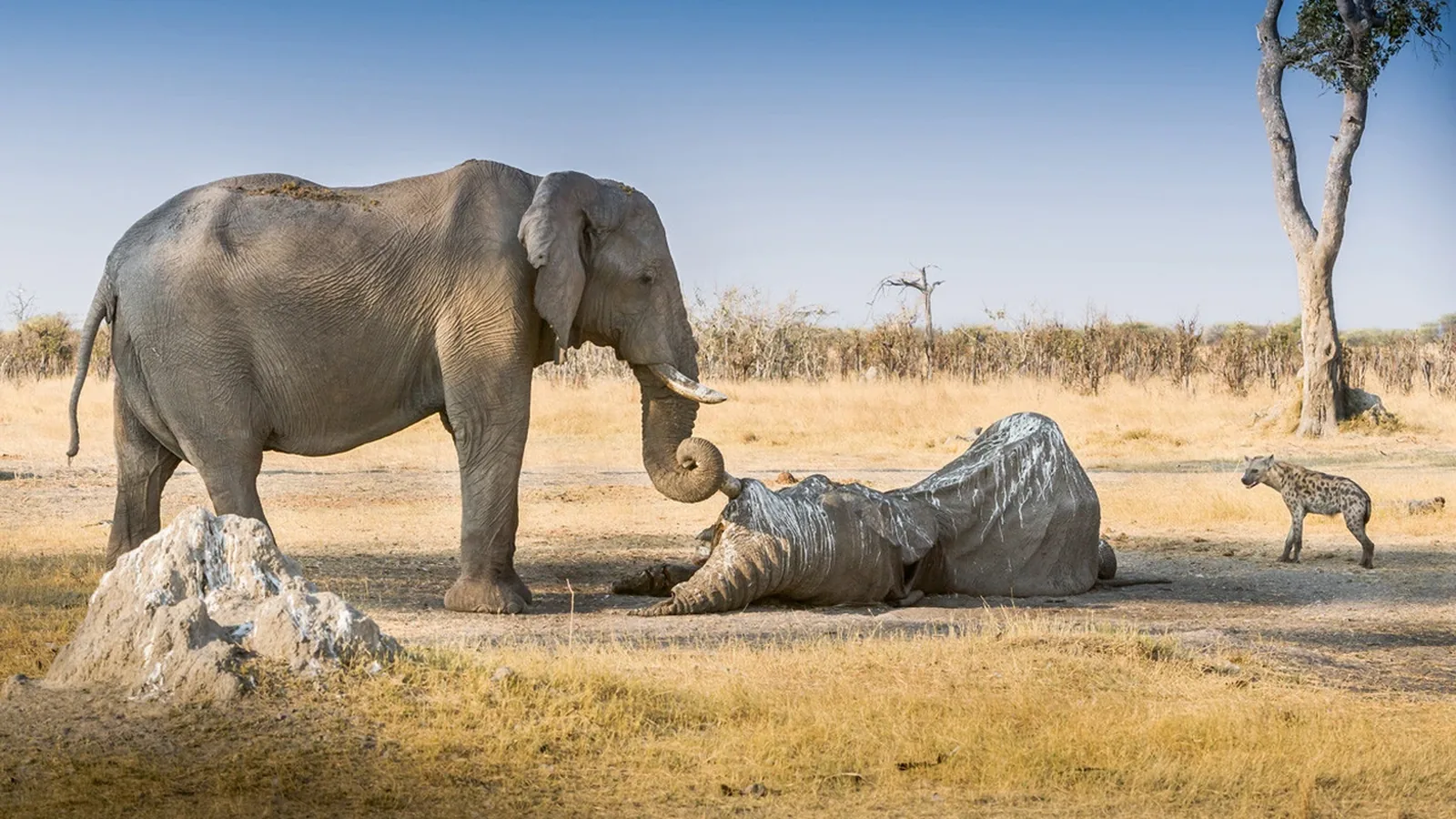
The elephant test: In a study published in 2006, scientists laid out objects for wild elephant families in Amboseli, Kenya, and watched what they explored. The elephants were far more interested in elephant skulls and ivory than in wood or the skulls of buffalo and rhinos. Ivory drew the most attention of all. They touched it with their feet and rocked it gently.
But there was a twist. The three families tested showed no clear preference for the skull of their own matriarch over those of other matriarchs. So the experiment supports a general attraction to elephant remains, but it didn’t show that elephants seek out their relatives’ remains in particular.
The same study noted that most mammals show only passing interest in the remains of their own kind. Lions, for example, may briefly sniff or lick a dead lion, and sometimes eat it.
Crows: When scientists showed wild American crows a dead crow, the birds gathered, raised the alarm and then avoided the spot. They even learned to scold the people they’d seen near the body, and held the grudge for weeks. The crows clearly treated the death as a warning about danger. What the study can’t tell us is whether they understood death itself.
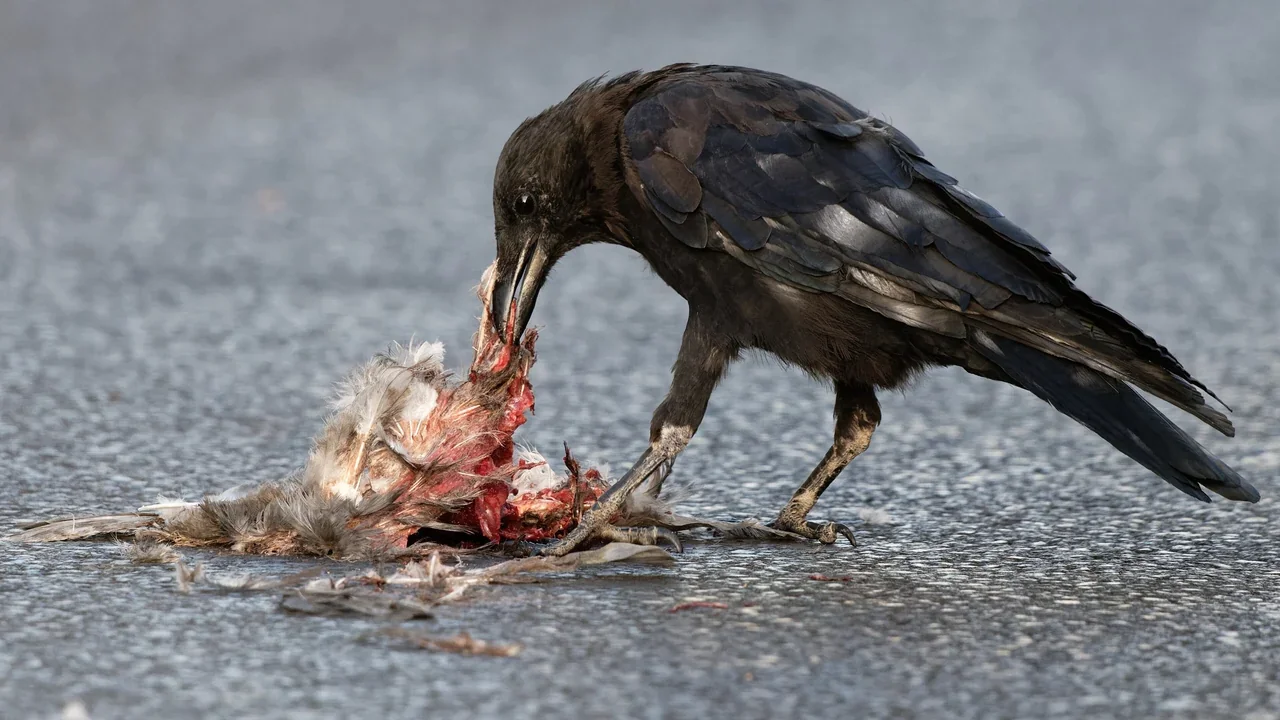
Photo: Marie-Lan Taÿ Pamart / Wikimedia Commons (CC BY 4.0)
Ants and bees: At the other end of the scale, ants and honeybees clear their dead out of the nest using chemical cues. In classic ant experiments, chemicals from dead bodies made workers carry out even a living ant coated in them. Honeybees can also pick up on the loss of the signals a warm, living bee normally gives off.
So the same test gives a wide spread: elephants show strong interest, crows learn from it, lions may sniff and sometimes eat, and ants and bees follow chemistry.
You can watch elephants and other wildlife at a Kenyan waterhole live:
LIVEWatch live →The Mother Who Won't Let Go
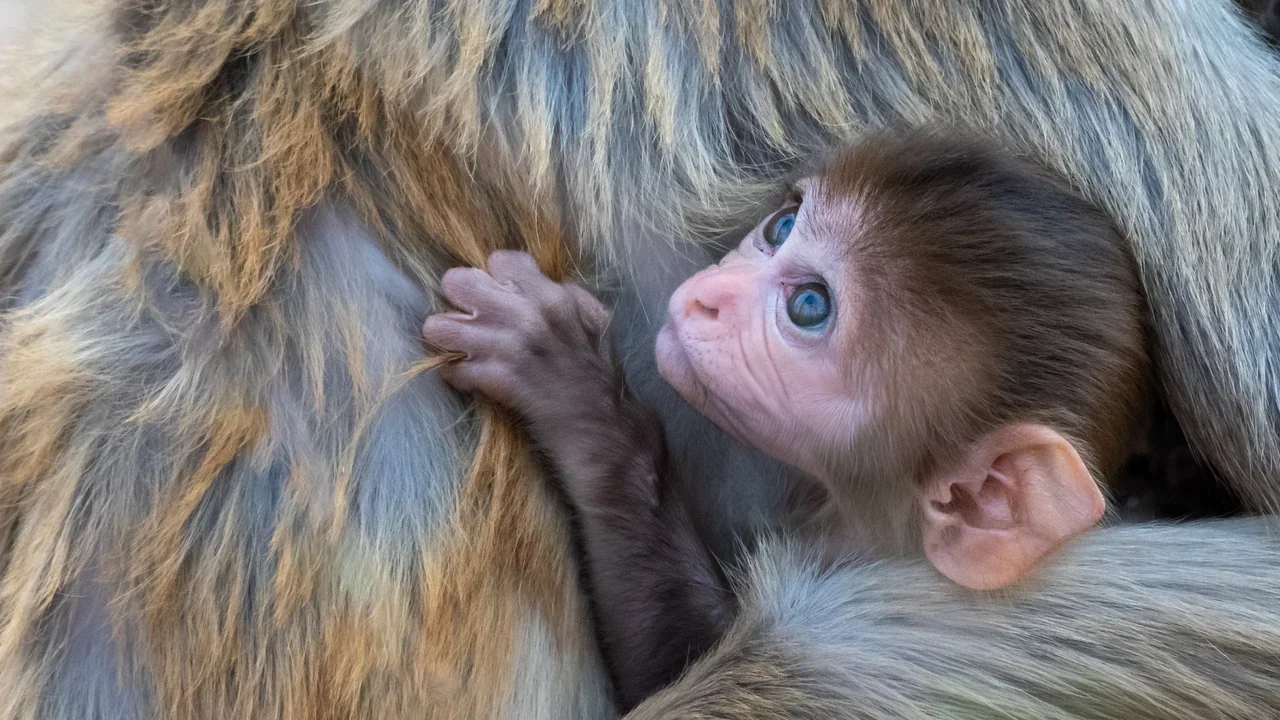
Photo: Rohit Sharma / Wikimedia Commons (CC BY-SA 4.0)
The most heartbreaking behavior in this whole field is a mother carrying her dead baby. It’s also the one where scientists have proper data.
The primate study: In 2021, researchers at University College London gathered 409 cases of primate mothers whose infants had died, across 50 species. Some mothers carried the body, and others didn’t.
Two findings stood out. Mothers were more likely to carry the body when the baby died of something like illness, and less likely after a violent death, such as an attack or an accident. Younger mothers also carried more often than older ones.
The researchers think a badly injured body signals death clearly, while one that has simply stopped moving doesn’t. But there’s another explanation: after a violent death, a mother may leave quickly because the danger is still nearby. And the age finding hints that mothers learn, without proving it.
Orcas do it too: A 2026 study described an adult female killer whale off Baffin Island, in the Canadian Arctic, carrying a dead calf by its flippers in 2023. It’s based on about seven minutes of drone footage, so it’s a short observation, not a major study.
What it does show is reach. Until then, calf-carrying in orcas had been seen almost only in Tahlequah’s population in the Pacific. Finding it in the Arctic suggests it belongs to the whole species, not one group. It has even been seen in a male.
So the behavior itself seems widespread. Tahlequah’s 17 days, and her second journey in 2025, may say more about her as an individual.
The same paper is careful with the word “grief.” Calling this mourning is still debated, because it depends on how we define animal emotion and what we assume animals understand about death. And the beluga with the buoy shows the urge to carry can continue with no body at all, so carrying alone can’t tell us what a mother understands.
You can watch the waters where Tahlequah’s family feeds, live:
LIVEWatch live →So Why Does a Zebra Run From a Lion?
This is the question most readers arrive at. If animals don’t understand death, why is every prey animal on Earth so desperate to avoid it?
The answer is that running from a predator doesn’t need any idea of death at all.
Escape is a simple system: spot the threat, judge the risk, run. Even animals with very simple nervous systems do it. Aphids flee, and so do tiny worms. Over millions of years, animals that ran left more young than animals that didn’t, and none of them needed to understand what was at stake.
James Anderson, one of the founders of the study of how animals respond to death, makes this point in Chimpanzees and death. Avoiding predators doesn’t prove an animal knows about death. Fear of pain, learning from others and built-in reactions all produce the same running.
So a zebra running from a lion shows it treats the lion as dangerous. It doesn’t show the zebra is thinking, “If that lion catches me, I’ll be gone forever.”
That lets us accept that the whole animal kingdom acts as if death matters, without assuming it understands what death is.
Does a Predator Know What It Has Done?
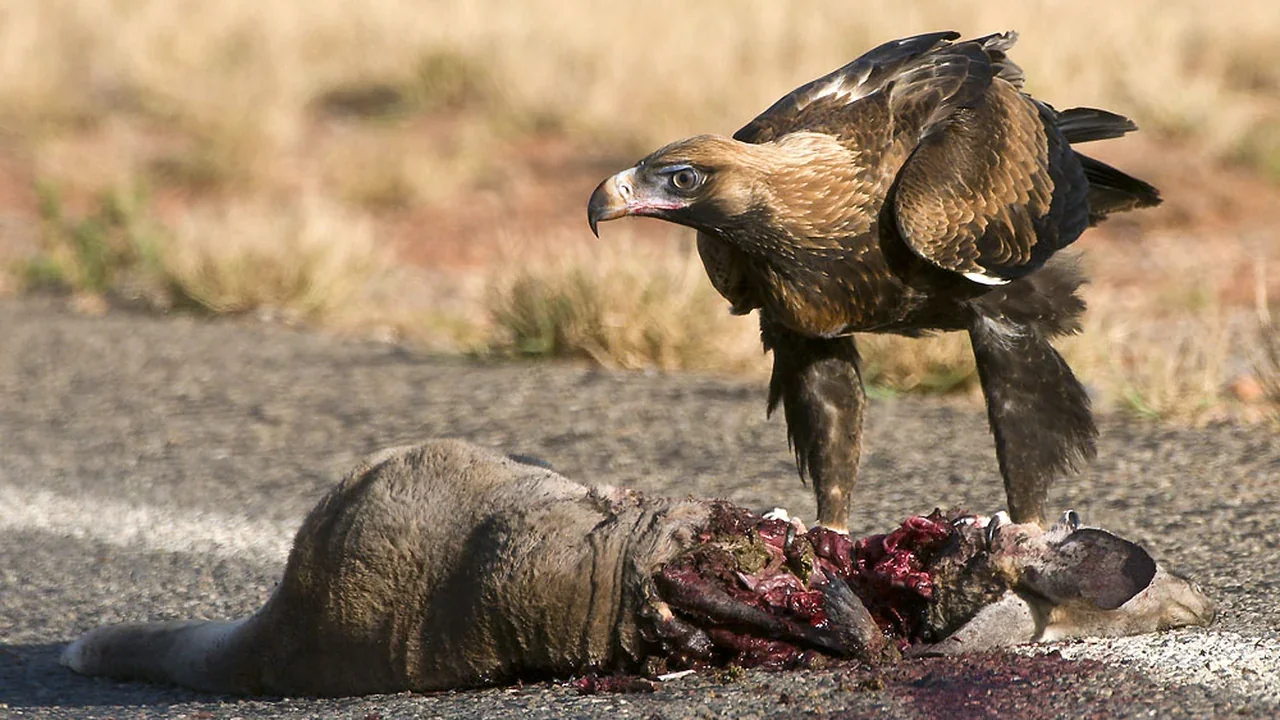
Photo: Djambalawa / Wikimedia Commons (CC BY-SA 4.0)
When a lion brings down a wildebeest, does it understand what it has just ended?
Monsó argues that hunters are among the best candidates for that “minimal” understanding of death, for a practical reason. A predator needs to know when its prey has stopped fighting for good. One that can tell “this has stopped working, permanently” from “this is only playing for time” wastes less energy and gets hurt less often.
That doesn’t mean the lion thinks about death in the abstract. It only needs to sort the world into things that respond and things that don’t, and to learn that the second group stays that way.
It also changes how we see the lion’s quick sniff before it eats. That isn’t necessarily a sign it doesn’t care or doesn’t understand. It may be a fast, reliable check that the job is done.
And some hunters seem to react to the death of their own. In this BBC Earth clip, a tigress in India searches for her mate for days after he was killed:
Could a hunter take the next step and think, “That could happen to me”? Nobody has shown it. We’ll come back to that at the end.
You can watch some of Britain’s smaller hunters live in North Yorkshire, UK:
LIVEWatch live →Why Playing Dead Doesn't Settle It
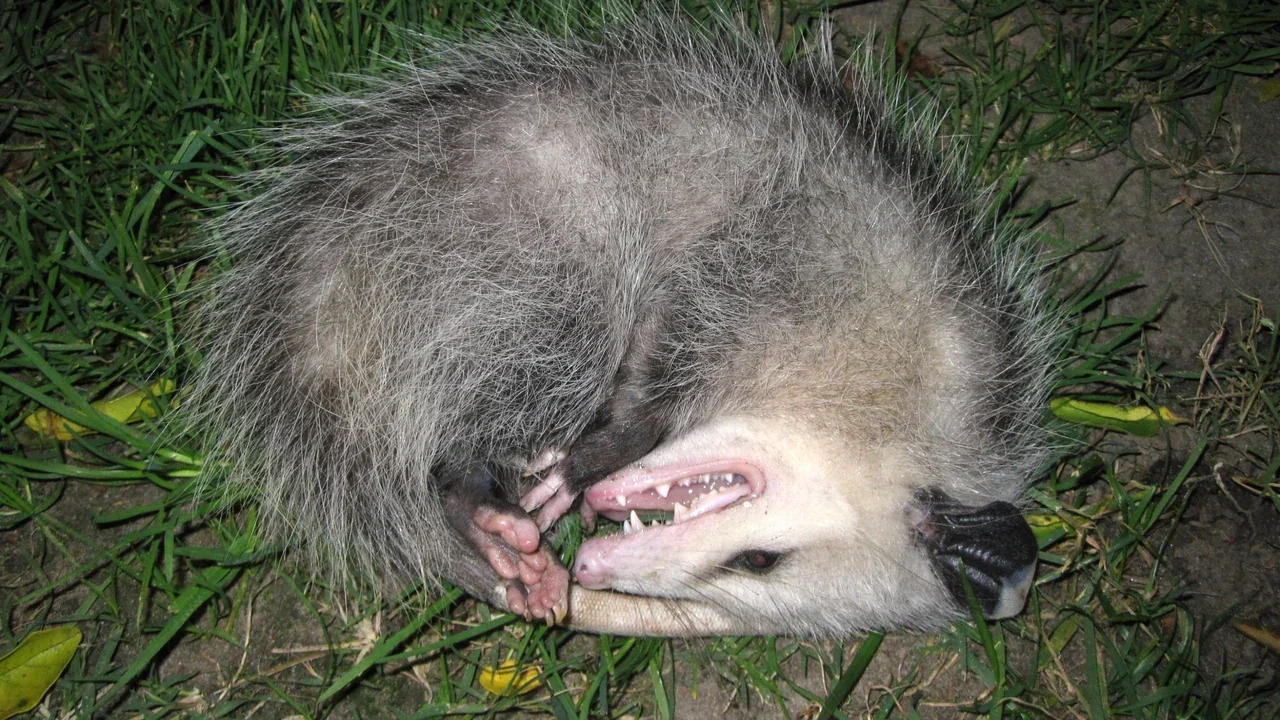
Photo: Tony Alter / Wikimedia Commons (CC BY 2.0)
Does a playing-dead opossum know what it’s pretending to be?
When a predator threatens a Virginia opossum, it doesn’t just freeze. It collapses with its mouth open and tongue out, its breathing and heart rate slow, and it releases a foul-smelling green fluid that makes it smell like a rotting body. It’s an extraordinary performance.
Monsó’s point is that the opossum almost certainly doesn’t know it’s copying a corpse, just as a stick insect doesn’t know it looks like a stick. The behavior is built in, not thought through.
But that act had to evolve for a reason. A display this detailed only pays off if predators react to the specific impression of death. If so, the animals that hunt opossums may have some concept of death themselves.
It’s a clever twist: the prey’s behavior as evidence about the predator’s mind.
It’s also disputed. Critics argue that predators don’t need to understand death to react to an animal that has gone still. A 2025 review also questions whether the smell and the rest of the display protect the opossum any more than simply staying still does, and treats the link as an idea still to be tested.
So playing dead is the most interesting argument anyone has made here, but it doesn’t settle the question.
Can an Animal Kill Itself on Purpose?
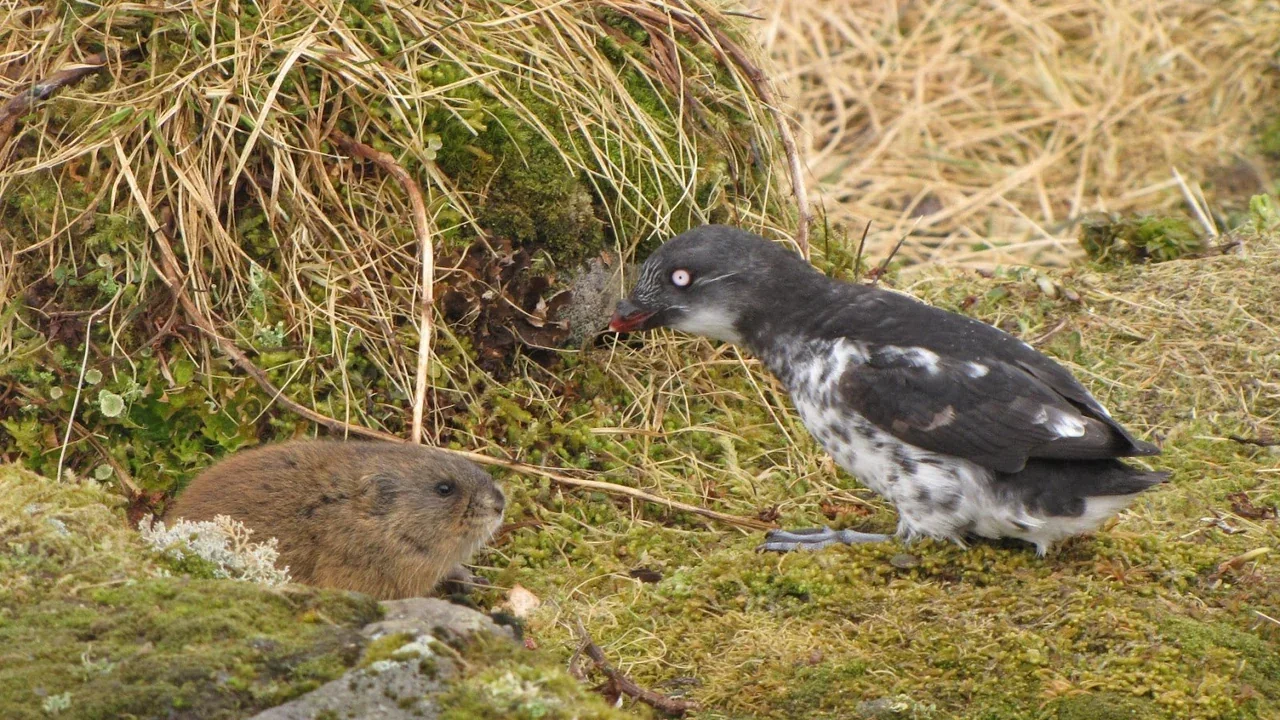
Photo: Lauren Scope / USFWS
If an animal could deliberately end its own life, that would be strong evidence that it understands death. So it’s worth asking, starting with the most famous example, which turns out to be fake.
The lemming myth: Disney’s 1958 film White Wilderness helped make the lemming cliff myth famous, and it won the Oscar for best documentary feature the following year. The scene was staged. A 1982 Canadian TV documentary, Cruel Camera, revealed that the lemmings were shipped in, filmed on a snow-covered turntable to fake the migration, and then pushed off the cliff by the crew.
The ants that lock themselves out: The real cases are stranger. A Brazilian ant called Forelius pusillus seals its nest every evening, and up to eight workers finish the job from the outside, shutting themselves out for the night. In the 2008 study that described this, researchers moved 23 of these workers into bowls of nest material, and only six were still alive the next morning.
Honeybees can die after stinging a mammal, because the sting tears away from their body. Some ants even burst their own bodies to spray chemicals at enemies.
All of these look like self-sacrifice, but none needs an ant or a bee to understand that it will die. They can evolve because they protect the colony.
What about a captive animal that stops eating, or a pet that seems to give up? A 2007 review found that scientists had never identified suicide in a wild animal, despite studying thousands of species. Some researchers argue that the definition of suicide is built so tightly around humans that animals can’t meet it, while others reply that self-harm still doesn’t show an intention to die.
So there’s no scientific agreement that any animal has ever killed itself knowing it would die. The debate is over whether we’re asking the question fairly.
“I Can Die” Is Not “I Will Die”
Scoring the whole animal kingdom: In January 2026, a team including Anderson published one of the broadest attempts yet to compare how species respond to death. It’s often summed up as showing that dolphins, elephants and chimps understand death better than their relatives.
Two things are worth knowing. The headline 135 species come from what had already been reported about each one, and the main statistical test used just 19 of them. And what the study scores is behavior, like how closely an animal inspects a body or whether it carries a dead infant, not what the animal understands.
Its real finding is still interesting: species with more complex social lives show richer responses to death.
The last leap: Take the most generous reading of everything above, and one enormous step still remains. To think “one day I will die,” an animal has to picture its future self and understand that this self will eventually stop. Not “that can happen to me,” but “that will happen to me, whatever I do.”
Monsó draws exactly this line. An animal might learn from experience that it can die. That’s very different from knowing it will. An animal might know a lion could kill it, yet have no idea it will die even if nothing ever does.
Anderson reaches a similar place. Chimpanzees are good candidates for understanding that death is permanent, but whether any understand that it’s inevitable, including for themselves, is unknown. Even the ability to imagine yourself in the future is still debated in animals.
What this really means: It would be easy to read all this as a list of things animals can’t do. It isn’t. An elephant singling out the bones of its own kind, a crow turning a death into a warning, and a mother who won’t let go of her baby are all remarkable.
What hasn’t been shown yet is something much more specific: an animal understanding that death comes to everyone, including itself. Tahlequah may have grieved, and she may have understood that her calf would never move again. Whether she could take the final step, “one day this will happen to me,” we don’t know.
For more on how animals experience their lives, find out whether animals with one-day lifespans feel they lived a lifetime, or meet the 5 longest living animals on Earth.
 Take Me Anywhere
Sources 11
- NOAA Fisheries (2025) - Southern Resident killer whale calf dies days after birth; second newborn appears healthy
- Kucheravy et al. (2026) - Deceased calf-carrying by female Arctic killer whale suggests species-wide epimeletic behavior, Journal of Ethology
- Monsó (2022) - How to tell if animals can understand death, Erkenntnis
- McComb, Baker and Moss (2006) - African elephants show high levels of interest in the skulls and ivory of their own species, Biology Letters
- Swift and Marzluff (2015) - Wild American crows gather around their dead to learn about danger, Animal Behaviour
- Fernández-Fueyo et al. (2021) - Why do some primate mothers carry their infant's corpse?, Proceedings of the Royal Society B
- Anderson (2018) - Chimpanzees and death, Philosophical Transactions of the Royal Society B
- Frontiers in Psychology (2025) - Tonic immobility and phenomenal consciousness in animals: a review
- Tofilski et al. (2008) - Preemptive defensive self-sacrifice by ant workers, The American Naturalist
- Preti (2007) - Suicide among animals: a review of evidence, Psychological Reports
- Mu et al. (2026) - Unveiling animal death cognition: the role of social systems, Science China Life Sciences
Editor's note
We've kept what animals do around death separate from what they understand about it. Behaviors like carrying a dead infant may well involve grief, but on their own they can't show whether an animal knows that death is permanent or that it will happen to itself. Where scientists disagree, we've said so.
How we researched this article
We went back to the original studies wherever possible, including the elephant skull experiment, the crow and primate studies, the 2026 Arctic killer whale report, the 2026 comparison of death responses across species, and the key papers by Susana Monsó and James Anderson. Details about Tahlequah come from NOAA Fisheries.