Around 1499, a clam settled on the seabed off Iceland, around the time Columbus was still sailing to the Americas. In 2006, 507 years later, it was still alive.
But that doesn't make it the longest-living animal on Earth.
Some animals are aged by counting rings, some by chemistry, and one doesn't seem to age at all. So here are the five longest-living animals on Earth, counting down, plus two that break the rules completely.
#5 Bowhead Whale: 211 Years
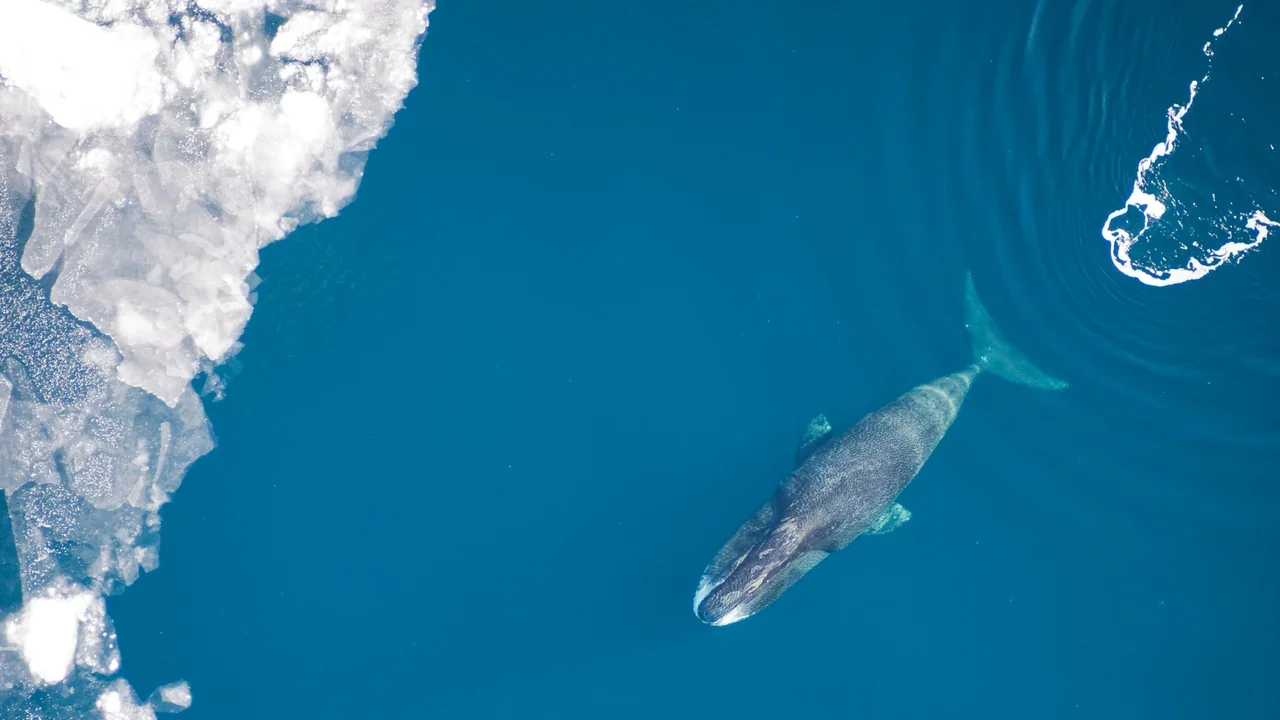
Photo: Vicki Beaver, NOAA Fisheries
The longest-living mammal on Earth isn’t an elephant. It’s a whale that spends its whole life in the icy Arctic waters around Alaska, Canada and Russia.
In 1999, scientists studied the eyes of bowheads taken in Alaska’s traditional Iñupiat hunt. Proteins in the center of the eye lens form before birth and are never replaced, but one of their building blocks slowly flips into a mirror-image form at a steady rate. Measure how much has flipped and you get the whale’s age.
Four males came out at over 100 years old. The oldest was estimated at 211, give or take 35 years.
The harpoon clue: Hunters have also found old stone harpoon tips buried in bowheads they’ve caught, a weapon that largely went out of use around 1900. One female carrying a stone tip was aged by a completely different method at about 133 years. The two clues matched.
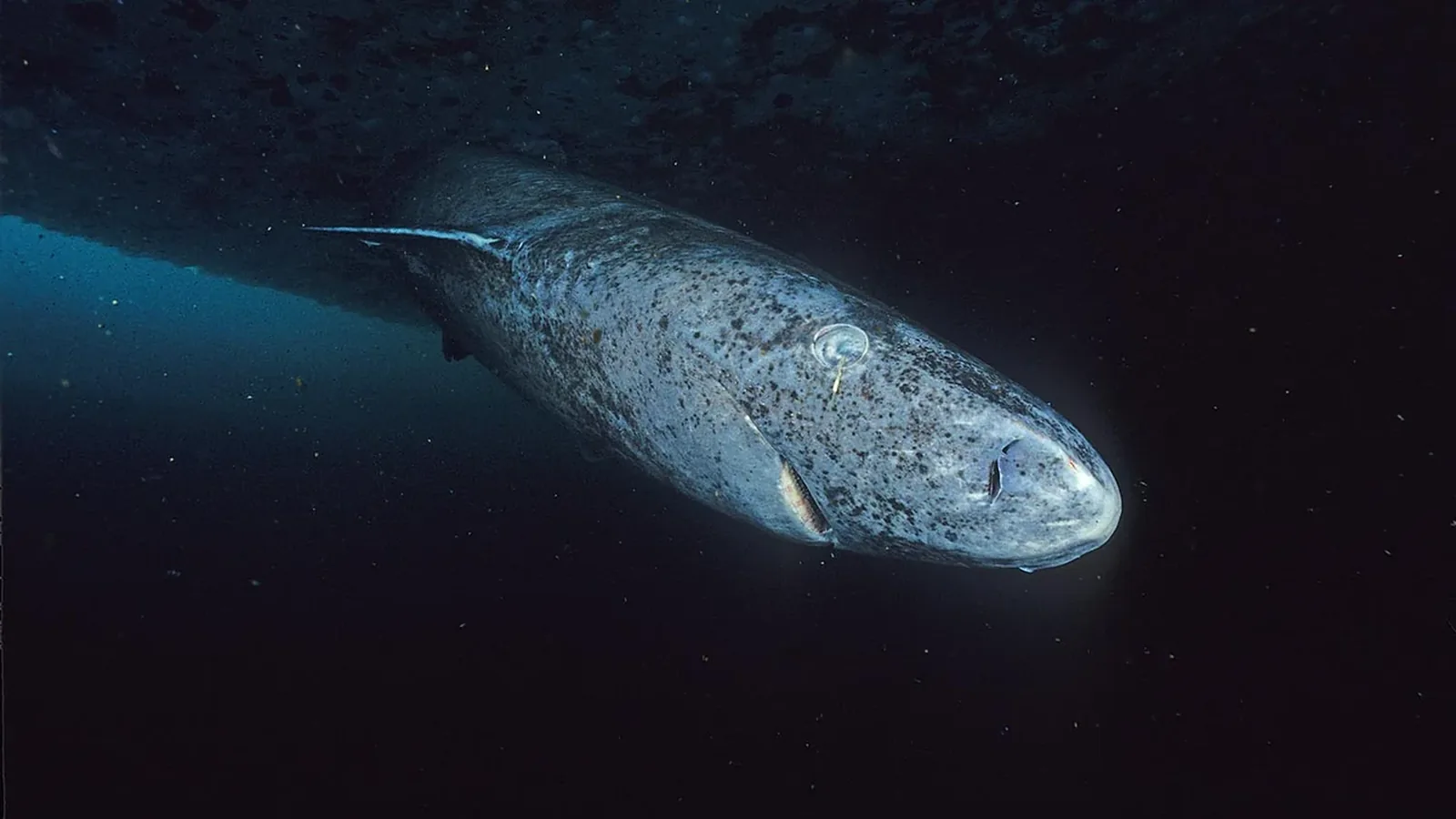
#4 Greenland Shark: 392 Years
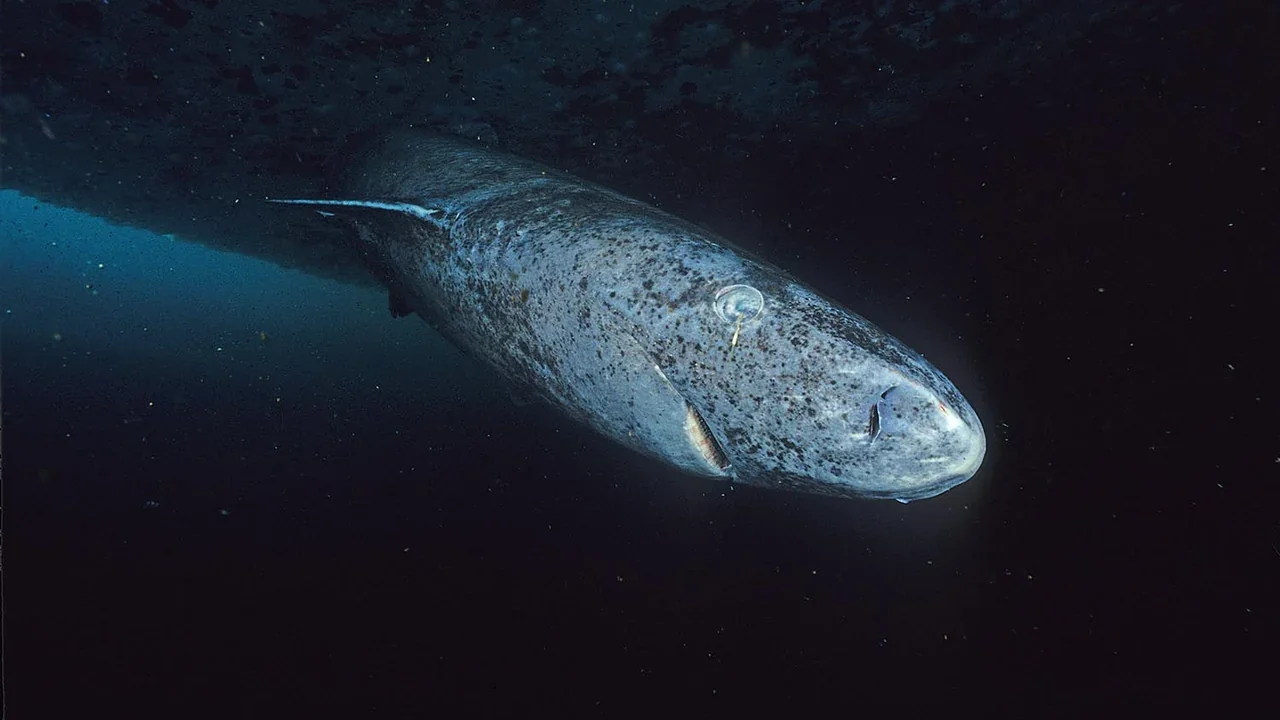
Photo: Hemming1952 / Wikimedia Commons (CC BY-SA 4.0)
The Greenland shark lives in the freezing waters of the North Atlantic, from Greenland to Iceland, where it’s famously eaten as fermented shark. It moves so slowly that scientists still aren’t sure how it catches anything.
In 2016, researchers used the same eye trick as with the bowhead, but this time they carbon-dated the lenses of 28 sharks. Nuclear bomb tests in the 1950s left a spike of carbon in the oceans, so sharks born after it carry the marker and older ones don’t.
The biggest shark, a 16.5-foot female, came out at about 392 years old. But the study’s estimated range was 272 to 512 years, and some shark experts doubt they live anywhere near that long.
The strangest part: The same study estimated that females don’t become adults until they’re around 150. If that’s right, a Greenland shark spends longer as a teenager than most bowhead whales spend alive.
#3 Ming the Clam: 507 Years
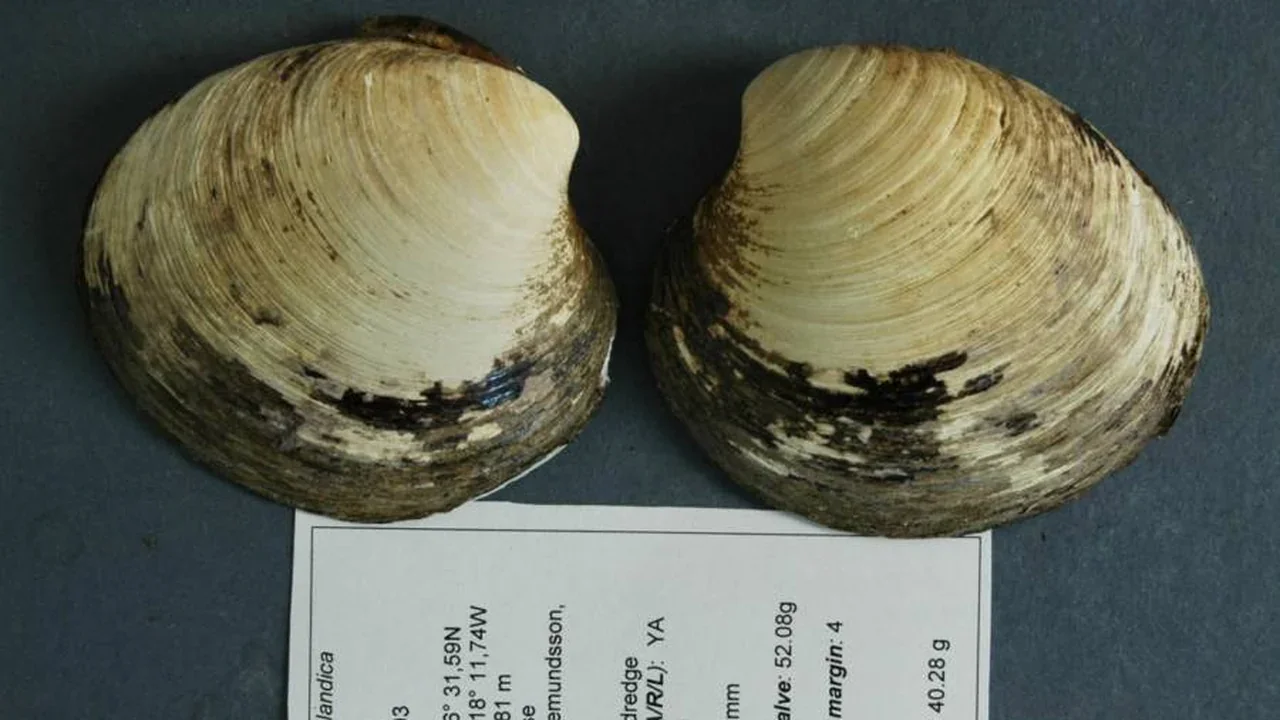
Photo: Bangor University
This is the record that matters most, because it’s the only age on the list that was actually counted rather than estimated.
In 2006, scientists from Bangor University dredged up about 200 live ocean quahog clams off the north coast of Iceland to study past ocean climates. Like trees, these clams add a growth ring to their shells every year.
One clam turned out to have lived longer than any non-colonial animal ever recorded. In 2007, the team put it at around 405 years and the press named it Ming, after the Chinese dynasty ruling when it was born.
Then they recounted: The rings near the hinge had become too squashed to read. In 2013, after counting the outer edge of the shell instead, the team added a century, making Ming 507 years old. Guinness now lists it as the oldest non-colonial animal ever recorded.
The myth: You’ll often read that scientists killed the world’s oldest animal to find out its age. In fact, Ming was one of around 200 clams frozen on board as normal practice. Nobody knew it was special until it reached the lab.
#2 Glass Sponge: 11,000 Years
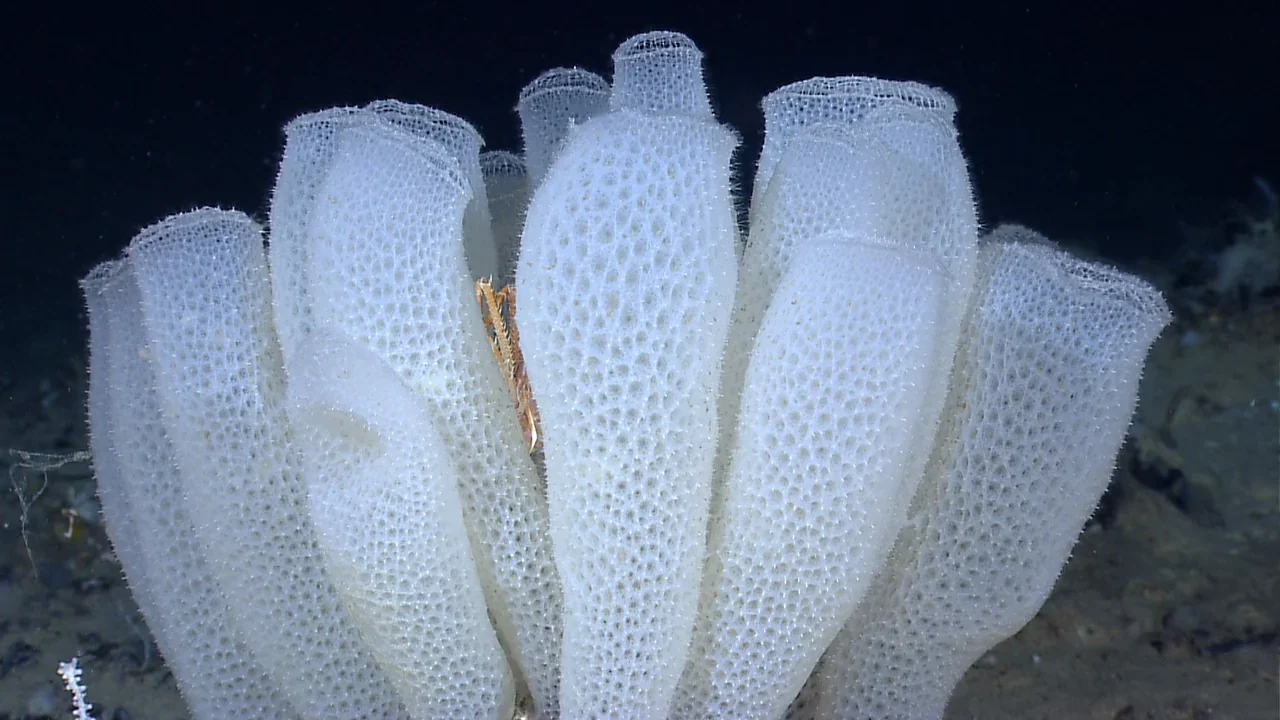
Photo: NOAA Okeanos Explorer Program
From here on, the ages stop being counted and start being worked out.
Monorhaphis chuni is a deep-sea glass sponge that anchors itself to the seabed with a single giant spike of glass. That spike can grow up to 10 feet long, the biggest glass structure made by any animal on Earth.
In 2012, scientists studied a spike pulled up from about 3,600 feet down in the East China Sea. Its layers hold a chemical record of how warm the water was as each one formed. Matching that record against known changes in ocean temperature gave an age of about 11,000 years.
Handle with care: Nobody carbon-dated this animal. The real range is anywhere from 8,000 to 14,000 years, and it depends on the model being right. But if it holds, this sponge was already growing when humans were first learning to farm.
To see more of the creatures living in the deep, take a look at what lives at every depth of the ocean.
#1 Immortal Jellyfish: Unknown
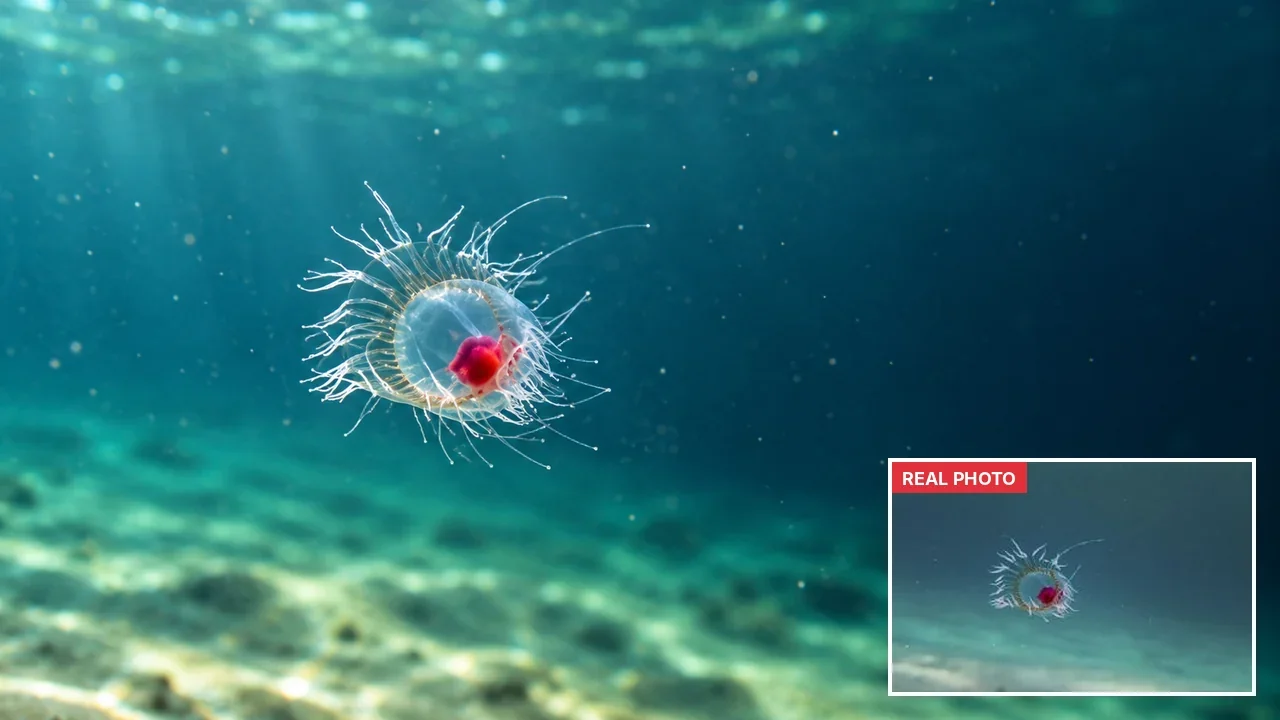
Illustration: EarthLive.TV · Photo: Bachware / Wikimedia Commons (CC BY-SA 4.0)
And here, the number disappears completely.
Turritopsis dohrnii is smaller than a fingernail, barely a fifth of an inch across. Most jellyfish live one way: they start as a tiny polyp stuck to the seabed, grow into a swimming jellyfish, then die. This one can run its life backwards.
When it’s injured, starving or shocked by a sudden change in temperature, an adult can shrink into a blob and rebuild itself as a young polyp. Its cells turn directly into different kinds of cells, and then it grows up all over again.
Nobody knows of any limit to how many times it can do this, so it has no known maximum age.
What “immortal” really means: It can still be eaten, catch diseases or get damaged like any other animal. It just doesn’t seem to have a built-in expiry date. And almost all of this has been seen in labs and aquarium tanks, not in the wild.
You can watch other jellyfish drifting live right now:
LIVEWatch live →Where the Ranking Falls Apart
Two animals didn’t make the list, and they’re both more interesting than a place on it.
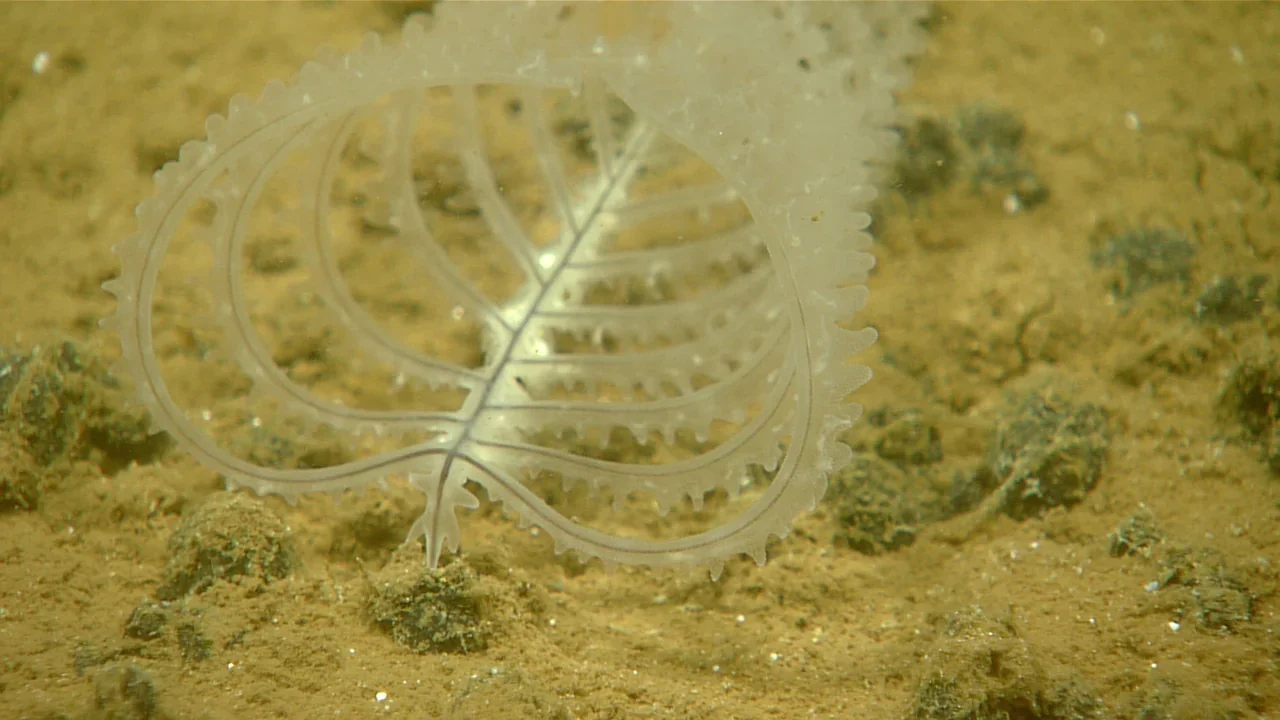
Photo: NOAA Ocean Exploration
Black coral, 4,265 years old (sort of): In 2009, scientists radiocarbon-dated a deep-sea black coral off Hawaii at 4,265 years old, which puts it at the top of a lot of lists. But Guinness files it as the oldest colonial organism, a separate record from Ming’s. The coral is a structure built up by generation after generation of tiny polyps, and each polyp lives only about two to five years.
Hydra, which doesn’t seem to age: This tiny freshwater animal, a few millimeters long, lives in ordinary ponds. In a study published in 2015, scientists followed more than 2,000 hydra in the lab for up to eight years, from family lines kept going for more than 40 years. Their death rate never rose with age, and they kept breeding just as well.
That doesn’t make hydra immortal. Its body is constantly replacing itself with fresh cells, so it simply doesn’t wear out. In the wild, though, most hydra probably live only a few months at most before predators or the weather get them.
So, What's the Longest-Living Animal?
It depends on the rule you pick, and there are four fair ones.
You’ll often hear that these animals all live long because they live in cold water. That’s true for the whale, shark, clam and sponge, but the jellyfish lives in warm seas and hydra lives in ordinary ponds. Cold water alone doesn’t explain it.
What really links them is that almost none of these ages were measured directly. We can’t watch an animal for 500 years, so scientists read the clues it left inside itself: bomb-test carbon, eye proteins, shell rings and glass layers.
That means the oldest animal on Earth is probably still out there, unmeasured. For the opposite end of the scale, find out whether animals with one-day lifespans feel they lived a lifetime. Or explore more live beach and coastal cams and the Live Webcam Map.
 Take Me Anywhere
Sources 9
- George et al. (1999) - Age and growth estimates of bowhead whales via aspartic acid racemization, Canadian Journal of Zoology
- North Slope Borough - Bowhead whale life history and longevity
- Nielsen et al. (2016) - Eye lens radiocarbon reveals centuries of longevity in the Greenland shark, Science
- Guinness World Records - Oldest non-colonial animal ever
- Amgueddfa Cymru - Museum Wales - Meet Ming the clam
- Eos - One of the world's oldest animals records ocean climate change
- Piraino, Boero, Aeschbach and Schmid (1996) - Reversing the life cycle, Biological Bulletin
- Roark et al. (2009) - Extreme longevity in proteinaceous deep-sea corals, PNAS
- Max Planck Institute for Demographic Research - Forever young: Hydra study (Schaible et al., 2015)
Editor's note
Almost every age in this article is an estimate, not a birth certificate. We've given the ranges scientists published alongside the headline numbers, and kept colonial organisms like black coral separate from individual animals. Lengths and depths are given in feet, and rounded.
How we researched this article
We went back to the original scientific papers for each animal, including the bowhead eye-lens study, the Greenland shark radiocarbon study, the Ming the clam recount, the glass sponge climate record, the first description of the immortal jellyfish's life-cycle reversal, the deep-sea coral dates and the long-term hydra study. We checked record categories against Guinness World Records.