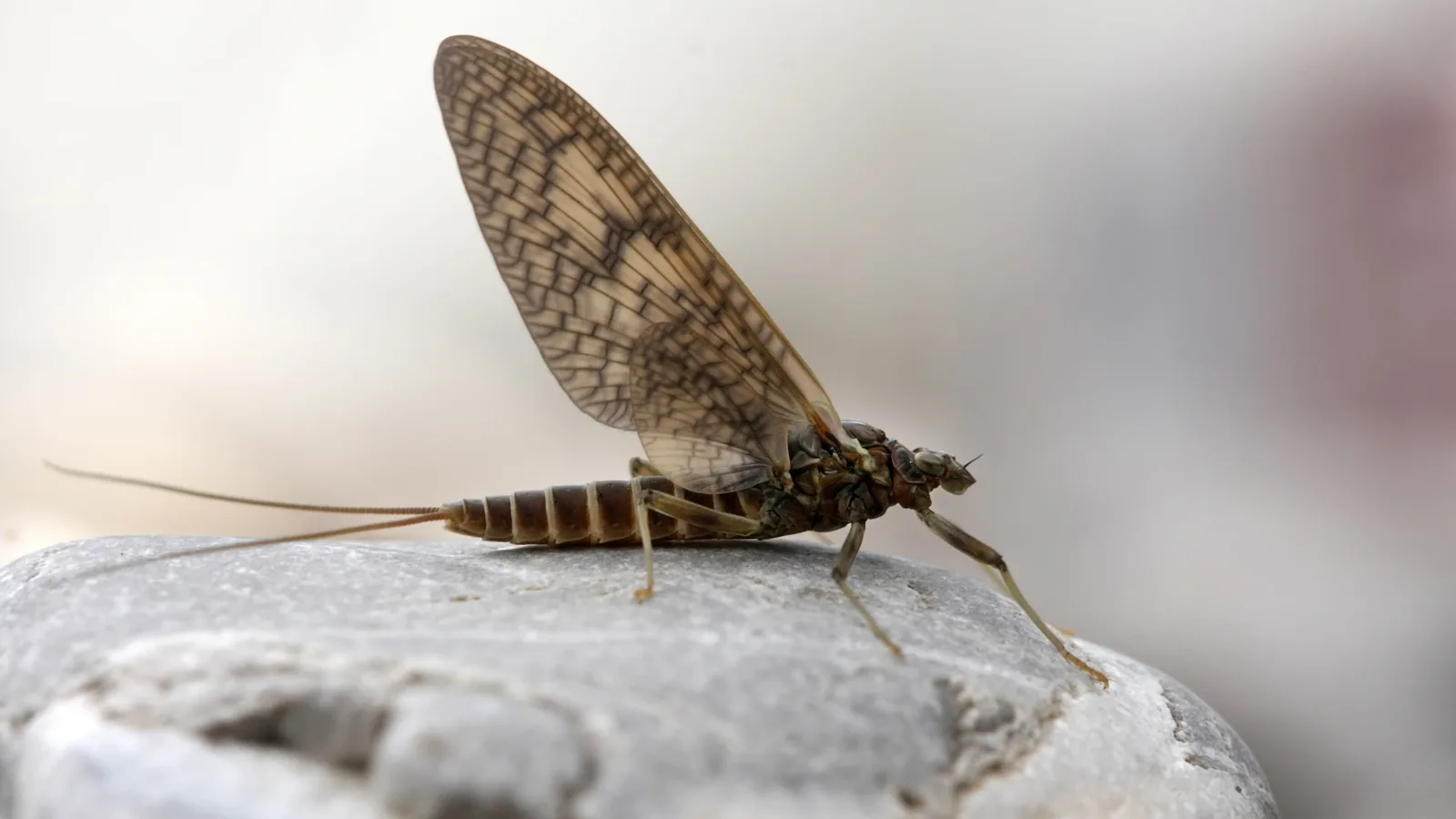
Before dawn on a summer morning, in a sandy stream in the southeastern United States, a female mayfly climbs out of the water and opens her wings for the first time.
She has no working mouth. She’ll mate, drop her eggs on the water and die, all in under five minutes. Most never see the sun come up.
She’s the American sand-burrowing mayfly (Dolania americana), and no insect is known to have a shorter adult life. That raises a question that’s almost impossible not to ask: did those five minutes feel short to her?
The Five-Minute Life Isn't the Whole Life
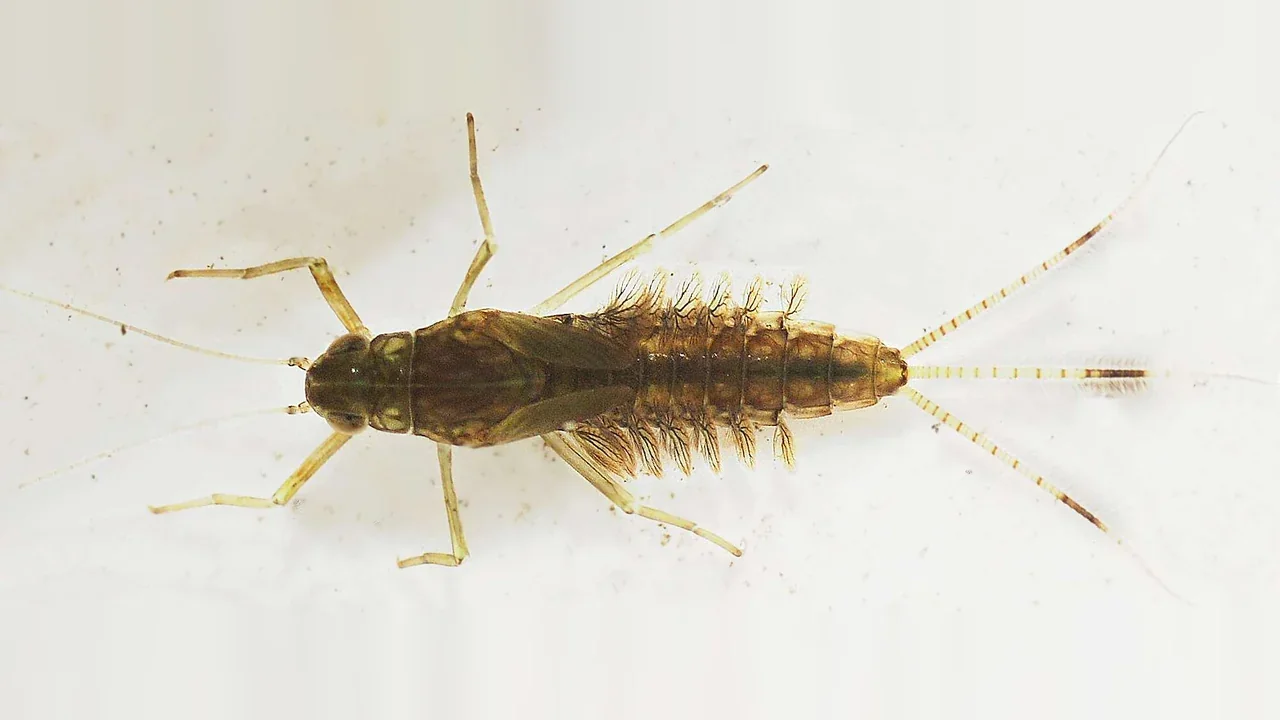
Photo: Ian Alexander / Wikimedia Commons (CC BY-SA 4.0)
“Mayflies only live for a day” is one of nature’s great half-truths. Their scientific name, Ephemeroptera, even comes from the Greek for “lasting a day,” the same root as the word ephemeral.
But the winged adult is only the very end of a mayfly’s life. Most of it is spent underwater as a nymph in lakes and rivers, for anywhere from a few months to a few years depending on the species.
Mayflies are also the only insects that molt again after growing wings. They go from nymph to a winged pre-adult, then shed their skin one last time to become a full adult. Dolania females skip that final molt completely. They mate and die as pre-adults.
One to two years underwater: Dolania nymphs spend one to two years burrowed in river sand, hunting tiny midge larvae. In one South Carolina creek, scientists found that more than 95% of them came out within a single week.
So the animal that lives five minutes has really been alive for a year or two. What lasts five minutes is the final chapter.
Three Kinds of Time
Most articles on this topic go wrong by mixing up three very different ideas.
The first is easy. The second is hard but possible. The third is the one everyone actually wants answered, and it’s the one science can’t reach yet.
The biggest mistake is measuring the second and claiming it tells you the third.
Some Animals See the World Faster
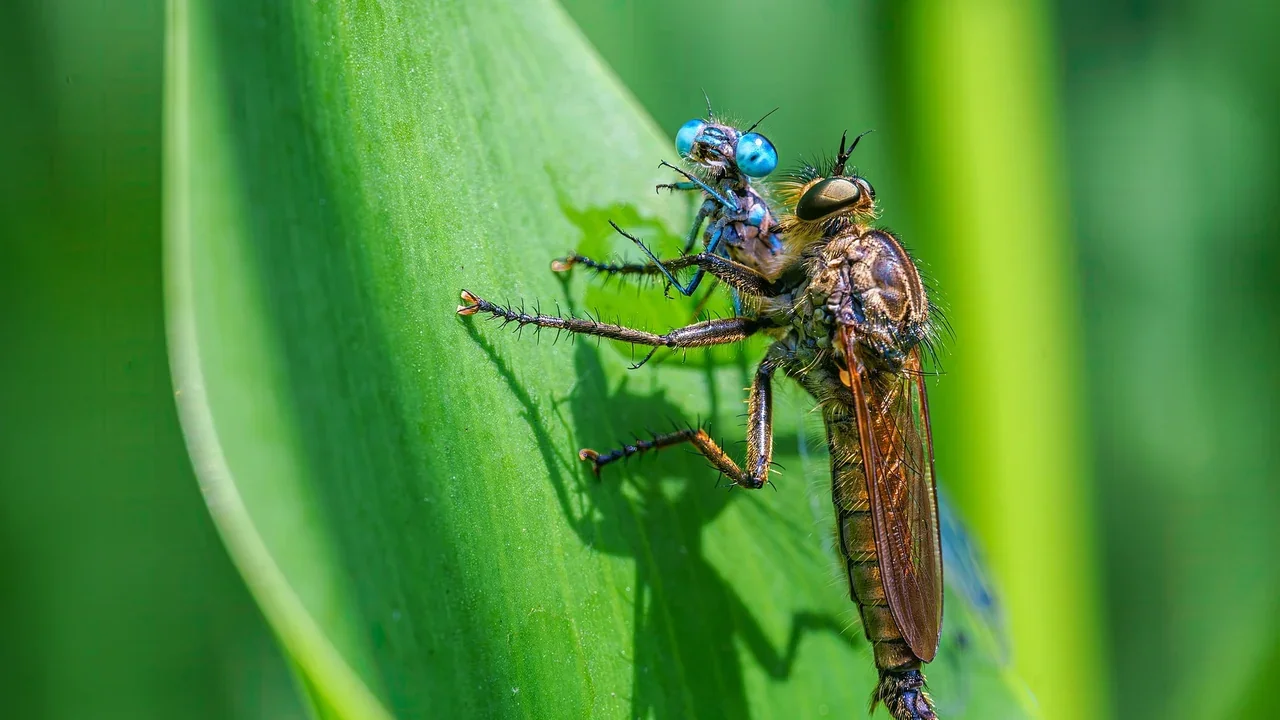
Photo: pcjvdwiel / Pixabay
The part scientists can measure is remarkable. Every animal’s eyes have a limit to how quickly they can pick up change.
You can see your own limit at home. Flash a light on and off slowly and you see separate flashes. Speed it up and at some point the flashes blur into a steady glow. Scientists call that point flicker fusion, and they’ve measured it in hundreds of species.
Faster lives, faster eyes: In February 2026, researchers from Trinity College Dublin and the University of Galway compared 237 species, from jellyfish to mammals. Animals with fast-paced lives had the fastest eyes. Flying species saw about twice as fast as animals that don’t fly, and hunters that chase moving prey beat animals that eat things that stay still.
It makes sense once you picture the job. A robber fly snatching a damselfly in mid-air has a split second to get it right. A grazing animal in a quiet field doesn’t need eyes anywhere near that fast.
But this measures one thing only: how finely the eyes slice up change. It says nothing about how long a second feels.
The Fastest and Slowest Eyes on Earth
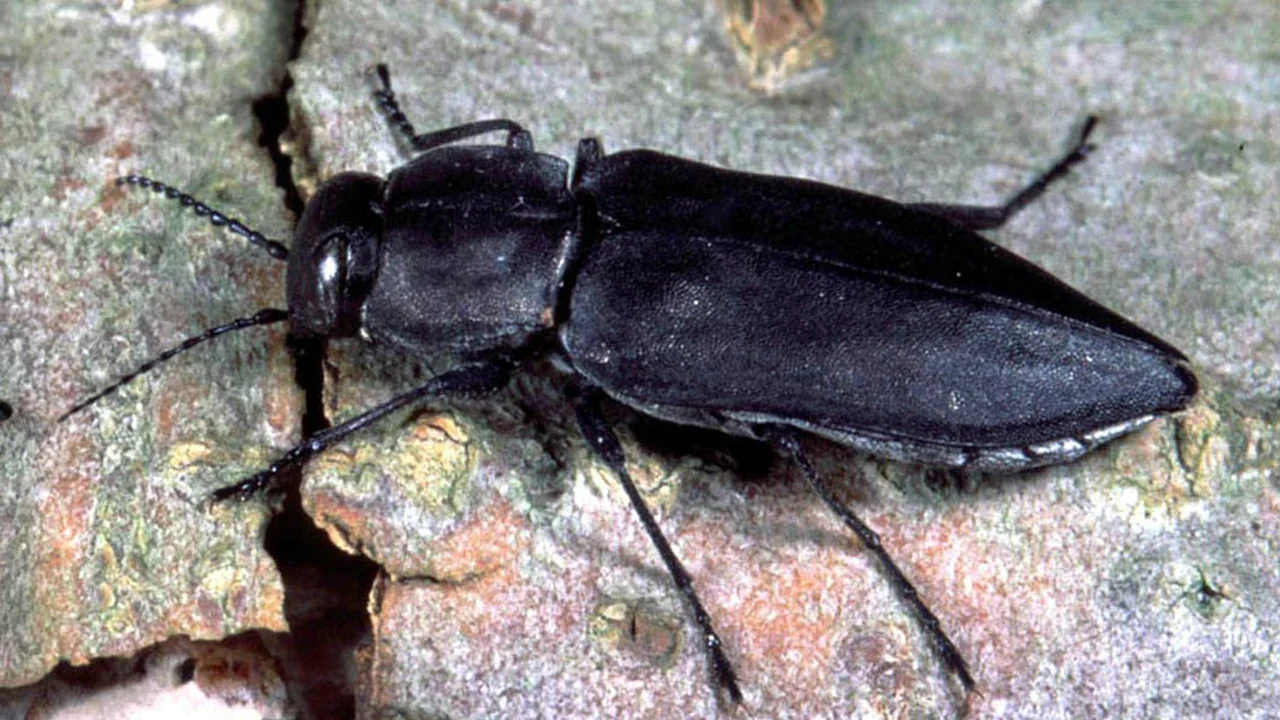
Photo: AG Prof. Schmitz / Wikimedia Commons (CC BY-SA 2.5)
In 2022, scientists pulled together every reliable flicker fusion measurement they could find, screening nearly 5,000 studies down to 200 results from 156 species. The gap between the fastest and slowest is hard to believe.
The fastest: At the top was the black fire beetle, which can pick up 300 to 500 flickers a second. Most people top out at around 60.
The beetle is just as strange as its eyesight. Its young can only grow in trees killed by fire, so instead of fleeing forest fires, it flies towards them. It finds them with heat-sensing pits on its body, and researchers calculated it could detect a large fire from up to about 7.5 miles away.
The slowest: At the bottom was the giant African land snail, at just over half a flicker a second. That makes its eyes roughly 500 to 900 times slower than the beetle’s.
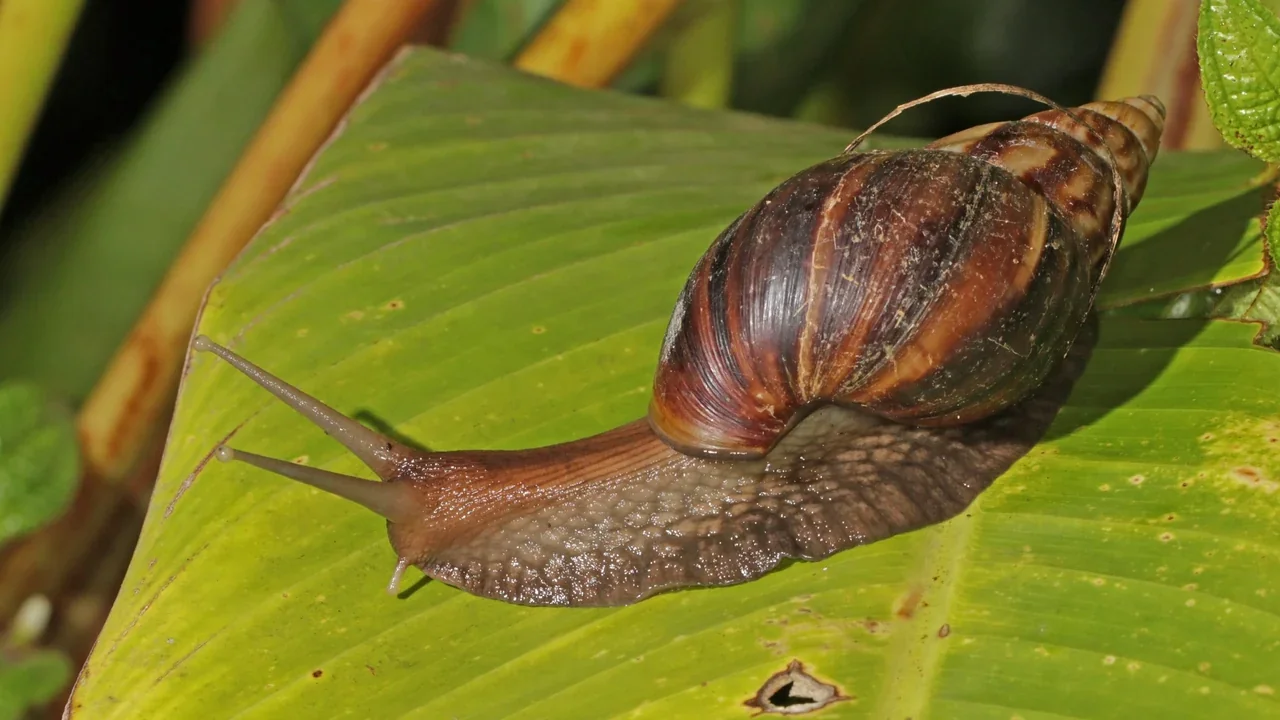
Photo: Charles J. Sharp / Wikimedia Commons (CC BY-SA 4.0)
Across the whole review, insects and birds had the fastest eyes, and animals active at night were slower than those active by day.
So Does a Fly Live in Slow Motion?
This is where most articles on the subject go wrong, usually in the headline.
The logic sounds convincing. If a beetle picks up 400 flickers a second and you manage 60, it’s fitting more moments into every second. More moments should mean a second that feels longer. And if every second feels longer, maybe a short life feels like a long one.
Every step sounds reasonable, but the chain doesn’t hold. Flicker fusion only tells you when an animal’s eyes stop seeing separate flashes of light. It doesn’t tell you how long a moment feels, or whether the animal experiences anything like time at all. Nobody has ever shown that one leads to the other.
The “600% slower” myth: You’ll often see claims online that flies experience time six times slower than we do. That number isn’t backed up by the research it usually points to, and even a correct figure would be measuring the wrong thing.
Even humans don’t have one speed: People are usually said to see about 60 flickers a second. But a 2024 Trinity College Dublin study found that healthy people range from about 35 to over 60. Brightness, color and where the light hits your eye change the result too.
So comparing a beetle’s number with a human’s means comparing one rough range with another, then treating the answer as a fact about how life feels.
A New Way to Ask the Question
In June 2026, three researchers published a review proposing a new way to approach the subject.
In Timescapes of non-human experience, Ishan Singhal, Jonathan Birch and Anil Seth argue that flicker fusion isn’t wrong, it’s just far too narrow. Squeezing an animal’s sense of time into one number can be misleading.
Instead, they describe an animal’s timescape: the way it organizes what it senses over time. They break it into five separate windows, all of which can be tested.
Seen this way, a dragonfly and a snail aren’t just running at different speeds. They may organize their experience in completely different ways that can’t be compared on one scale.
The paper is a plan for future research, not a set of answers. Even a full timescape wouldn’t tell us whether five minutes feels like an afternoon or a lifetime. But it moves the question on from a single number to things scientists can actually measure.
What Animals Do Know About Time
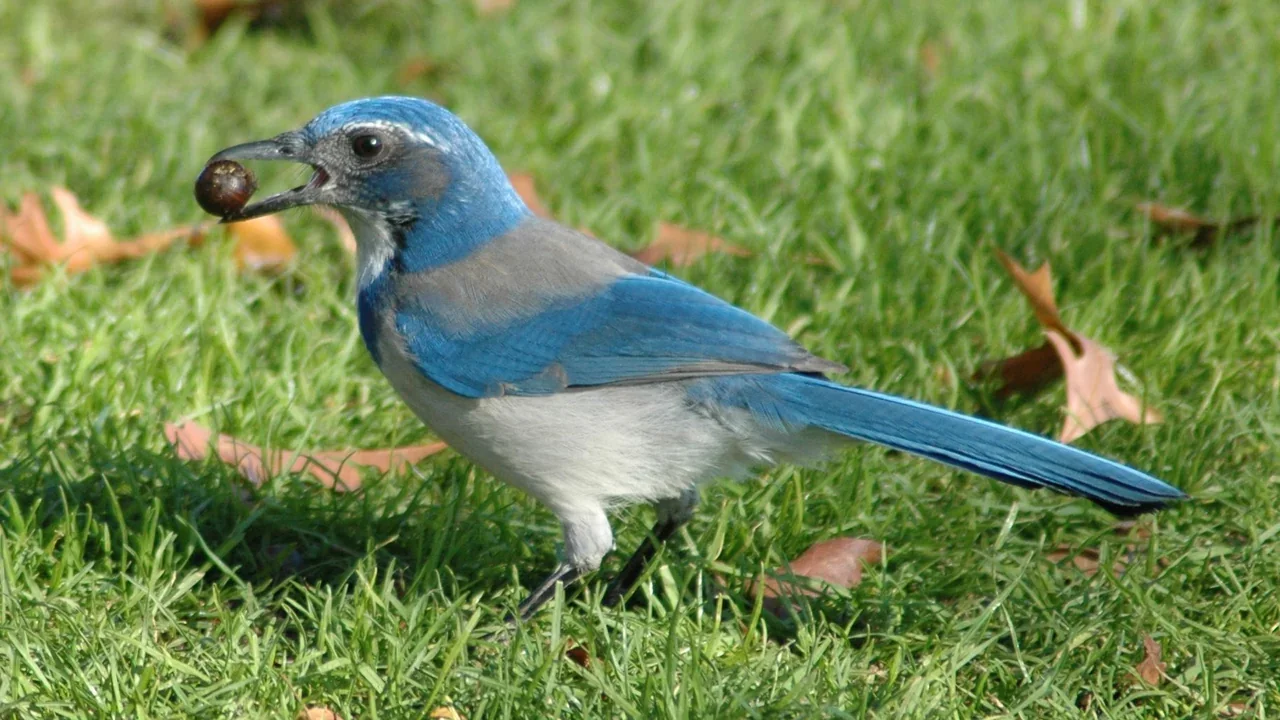
Photo: Msulis / Wikimedia Commons (CC BY-SA 2.5)
None of this means animals are stuck in an endless present.
Many species can tell short waits from long ones and time their behavior to things they expect to happen. A 2021 review found this could help with finding food, avoiding predators and navigating, although most of the evidence comes from the lab, not the wild.
The scrub jay experiment: In a famous 1998 study, scrub jays hid two kinds of food: worms, which go off quickly, and peanuts, which last. When they came back, they acted as if they remembered what they’d hidden, where they’d hidden it and how long ago. Similar results have since been found in other birds, mammals and even octopuses and their relatives.
Scientists call this “episodic-like” memory, and the careful wording matters. We can see the behavior, but we can’t tell whether the bird consciously remembers the moment the way you would.
All of this is about seconds, hours and seasons. It’s a very long way from an animal thinking about its whole life and wondering whether it’s been short. So far, there’s no evidence that any animal does that.
So, Does a One-Day Life Feel Like a Lifetime?
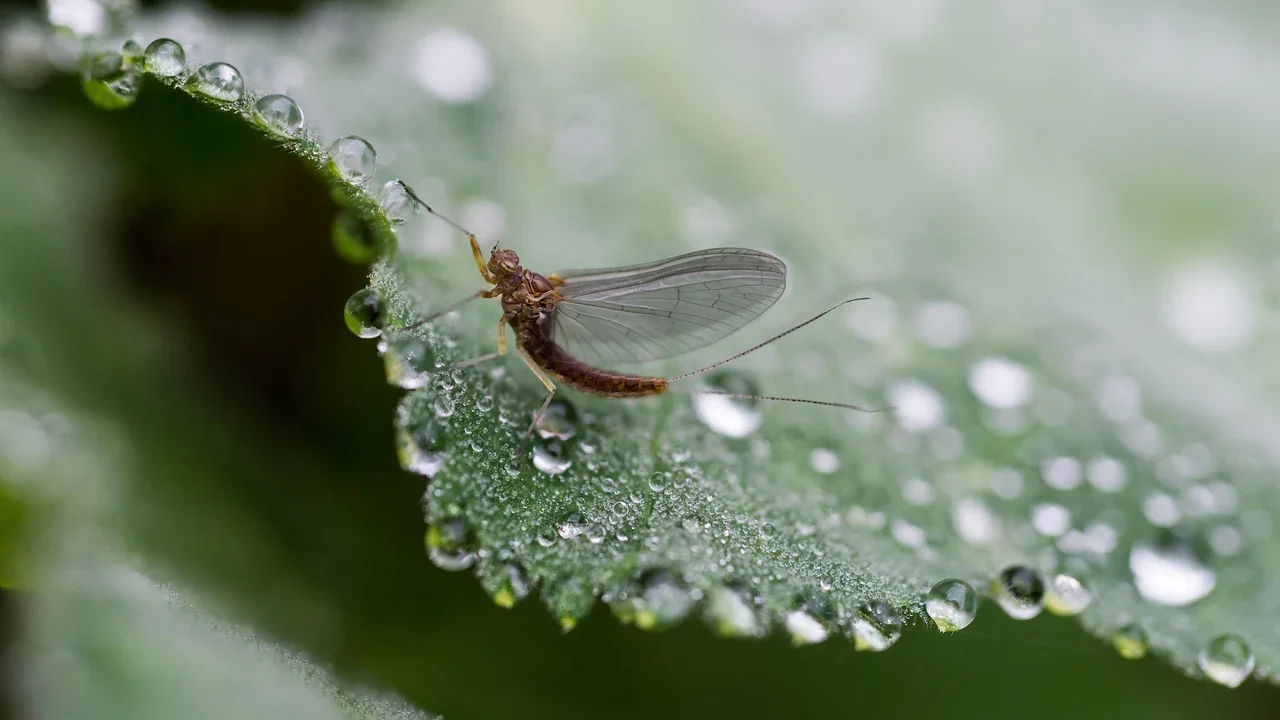
Photo: wal_172619 / Pixabay
Science doesn’t know. No study has ever linked an animal’s lifespan to how long its life feels, and there’s no accepted way to measure it.
A short life doesn’t mean a squashed-up one, and fast eyes don’t mean a stretched-out one. Heart rate and metabolism don’t give you a conversion rate either. Any claim that “one mayfly day equals X human years” rests on guesses nobody has tested.
Back to the mayfly: She comes out before dawn, after a year or two in the river sand. She has no working mouth and will never eat again. She finds a mate, drops her eggs on the water, and within five minutes it’s over.
From the outside, that’s almost unbearably brief. Whether it felt brief from the inside, we can’t yet say. That’s not because the answer is hiding in data nobody has checked. It’s because we don’t have the tool to measure it yet.
What started as a simple question about lifespan turns out to be one of the oldest questions there is: what does time feel like inside another mind?
For the opposite end of the scale, meet the 5 longest living animals on Earth, or find out whether animals know they will eventually die. You can also watch life on one of the world’s most famous rivers, live:
LIVEWatch live → Take Me Anywhere
Sources 15
- Haarlem et al. (2026) - Pace of ecology drives the tempo of visual perception across the animal kingdom, Nature Ecology & Evolution
- Trinity College Dublin - Some animals see the world more quickly than others (2026)
- A flashing light may not be that flashy: a systematic review on critical fusion frequencies (2022), PLOS ONE
- Inger et al. (2014) - Potential biological and ecological effects of flickering artificial light, PLOS ONE
- Haarlem et al. (2024) - The speed of sight: individual variation in critical flicker fusion thresholds, PLOS ONE
- Singhal, Birch and Seth (2026) - Timescapes of non-human experience, Trends in Cognitive Sciences
- London School of Economics - New paper explores how animals experience time (2026)
- Georgia Biodiversity Portal - American sand-burrowing mayfly (Dolania americana)
- Peters and Peters (1977) - Adult life and emergence of Dolania americana in northwestern Florida
- Harvey, Vannote and Sweeney (1980) - Life history, developmental processes and energetics of the burrowing mayfly Dolania americana
- Britannica - Mayfly
- Schmitz and Bleckmann (1998) - The photomechanic infrared receptor for the detection of forest fires in the beetle Melanophila acuminata
- Ng et al. (2021) - The ecological significance of time sense in animals, Biological Reviews
- Clayton and Dickinson (1998) - Episodic-like memory during cache recovery by scrub jays, Nature
- Davies and Clayton (2024) - Is episodic-like memory like episodic memory?, Philosophical Transactions of the Royal Society B
Editor's note
Flicker fusion measures how fast an animal's eyes pick up change, not how time feels to it, and we've kept those two ideas separate throughout. Figures for the fire beetle and for people are ranges, because results vary with the method and the light used. Sources disagree on how long Dolania nymphs live, so we've given one to two years.
How we researched this article
We went to the original studies wherever possible, including the 2026 comparison of 237 species, the 2022 review of flicker fusion across 156 species, the 2026 timescapes paper, the field studies of Dolania americana and the scrub jay memory experiments. Where a paper couldn't be accessed directly, we checked its findings against the publishing university's own summary.