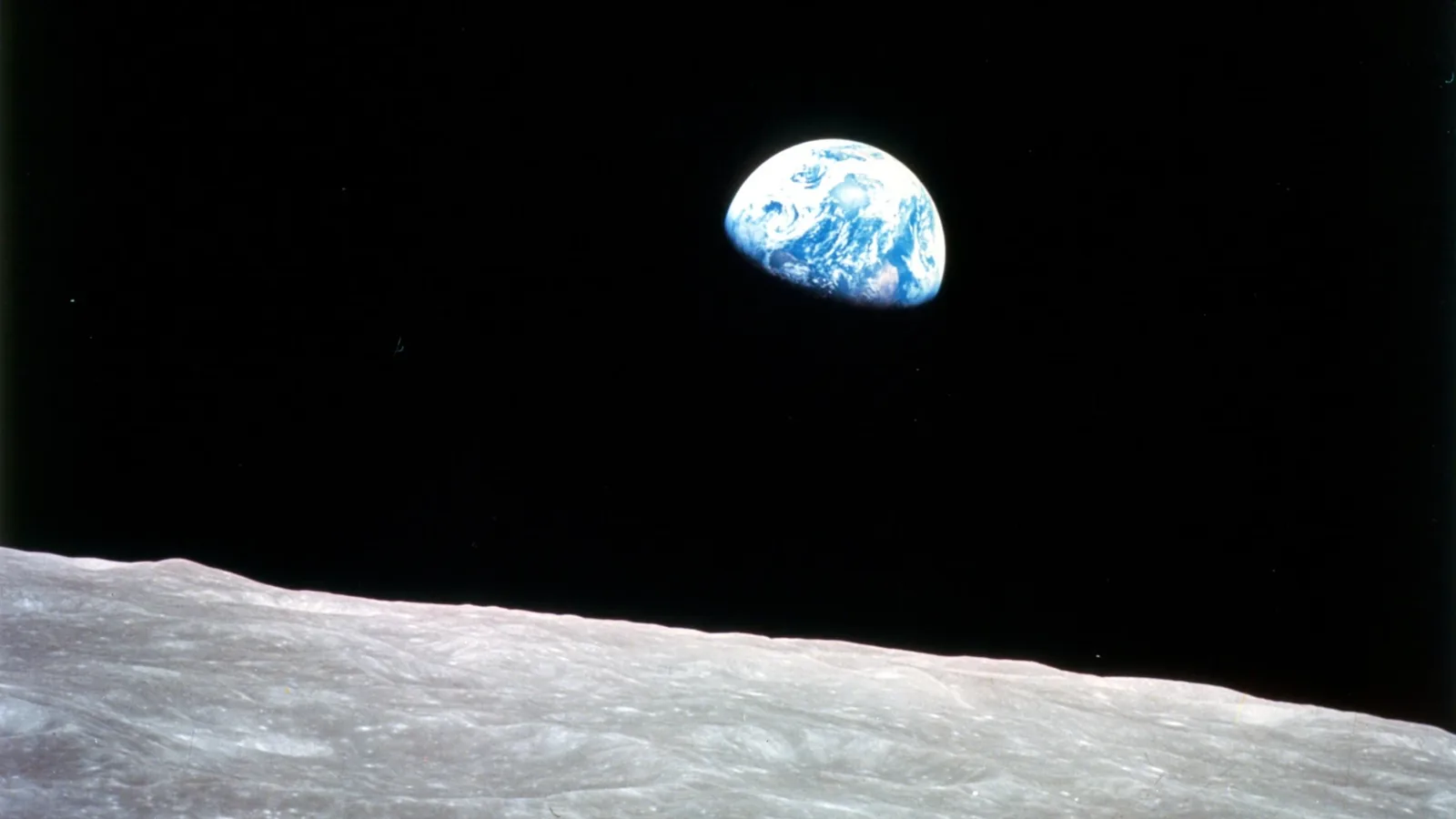
Ask how far away the moon is and you’ll usually get one number. But the moon never stays put. Its distance changes daily, and it’s slowly drifting away from us.
Below, we’ll take you on a trip out from the ground, past the planets and into interstellar space, with a calculator to see how long the journey would take by snail, cheetah, car, plane or spaceship.
While you read, Earth is carrying you around the sun at about 67,000 mph. Ever wondered what would happen if the Earth stopped spinning?
How Far Away Is the Moon?
Why it changes: The moon’s orbit is an oval, not a circle, so its distance changes through the month. Scientists track it by bouncing laser pulses off reflectors left on the moon’s surface by Apollo astronauts.
It’s drifting away: Those lasers show the moon moving about 1.5 inches (3.8 cm) farther from Earth every year, roughly as fast as your fingernails grow.
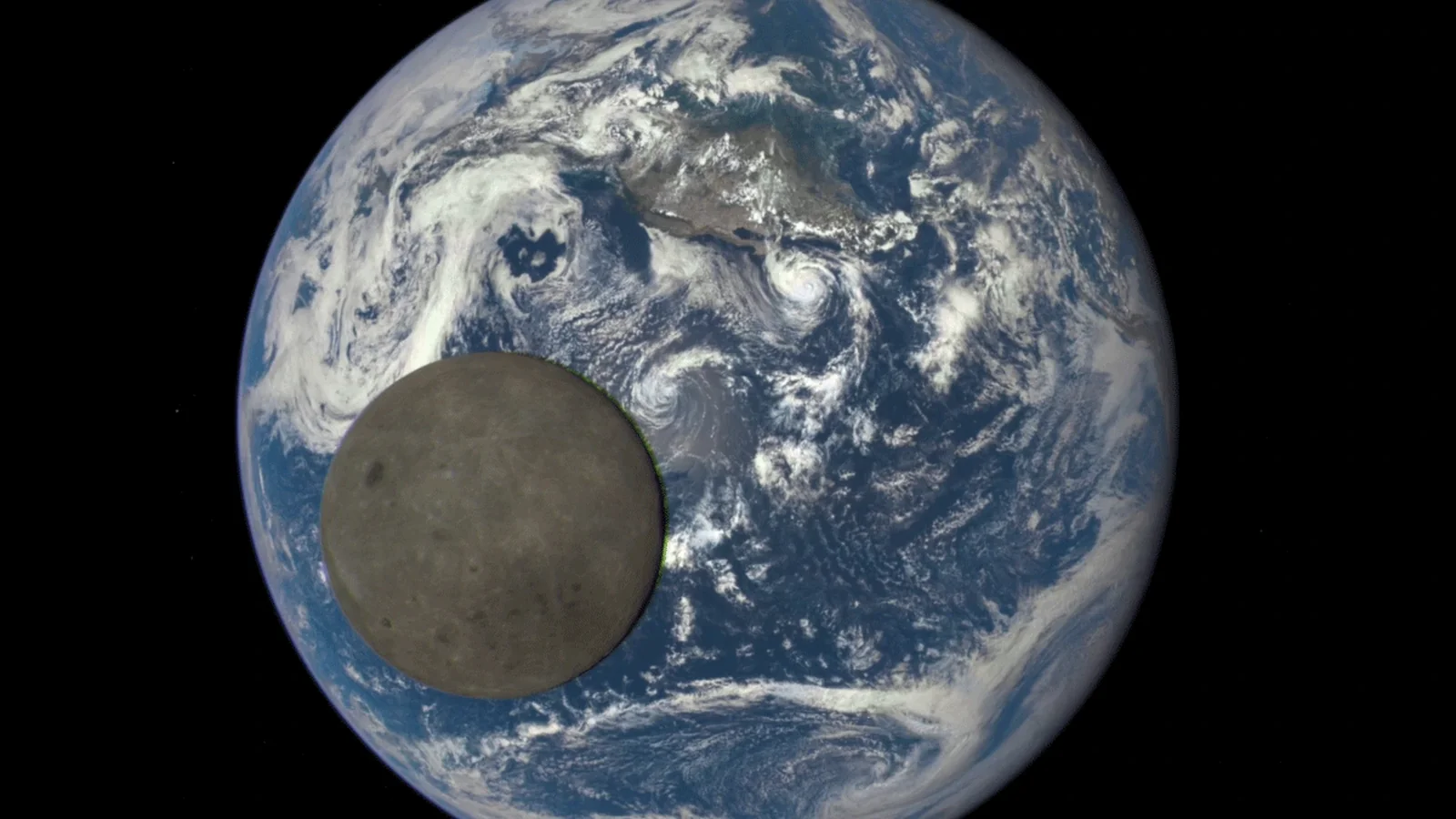
Photo: NASA/NOAA (public domain)
Mind the gap: When the moon is near its farthest point, all seven other planets could fit side by side in the gap between Earth and the moon, ignoring their rings.
A Trip Out Into Space
LIVEWatch live →LIVEWatch live →LIVEWatch live →How Far Away Is Voyager 1?
49 years on the road: Voyager 1 launched in 1977, flew past Jupiter and Saturn, and in 2012 became the first spacecraft to cross into interstellar space. It carries a Golden Record with greetings in 55 languages.
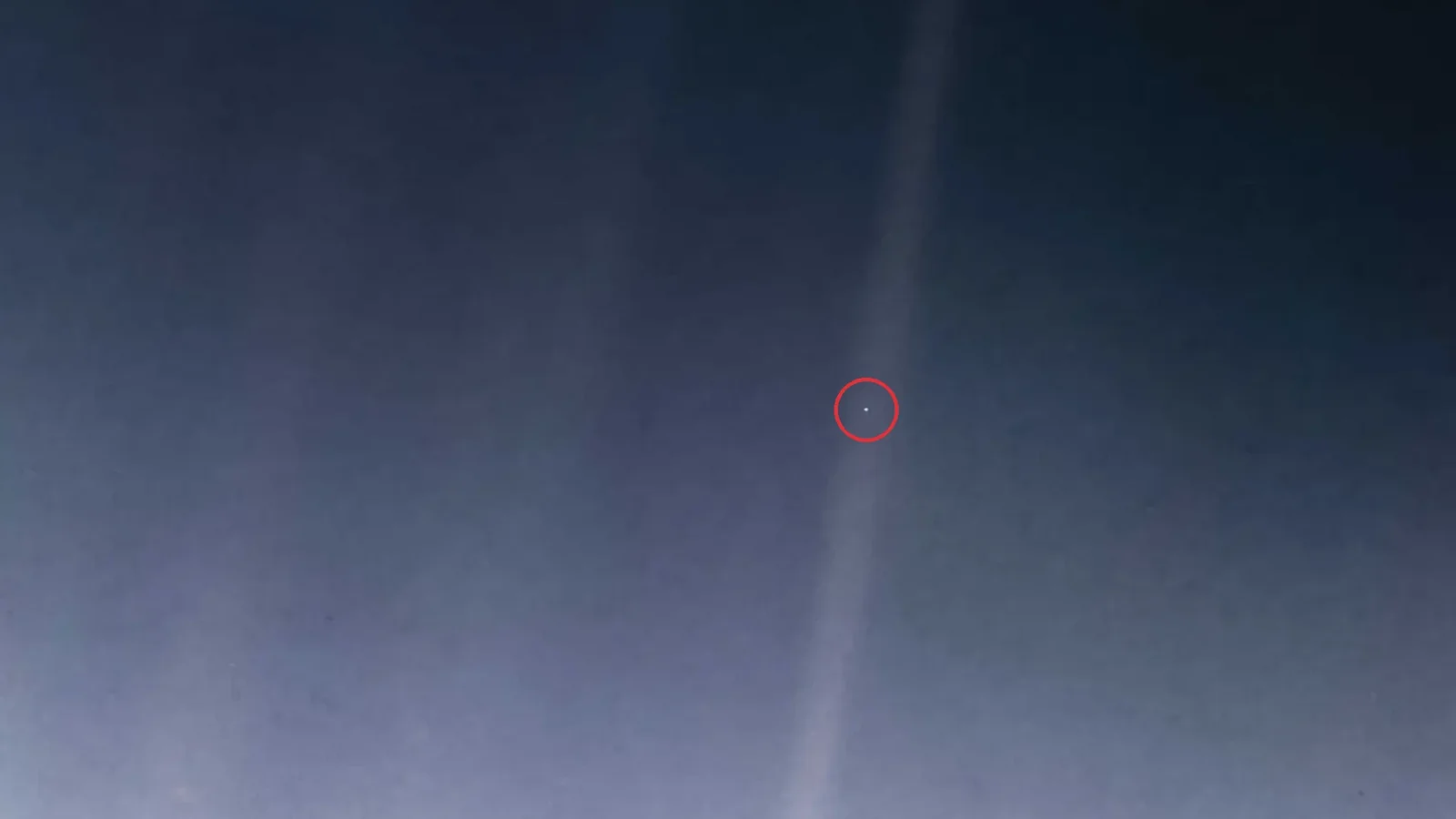
Photo: NASA/JPL-Caltech
Catching it up: Even at Parker Solar Probe’s peak speed, reaching Voyager’s current position would take about 4.3 years. Driving there at 70 mph would take about 26,000 years.
LIVEWatch live →LIVEWatch live → Take Me Anywhere
Sources 14
- NASA - Where are Voyager 1 and Voyager 2 now?
- NASA - Voyager 1: What is a light-day?
- NASA - Daily Moon Guide
- NASA Scientific Visualization Studio - Moon Phase and Libration, 2026
- NASA JPL - Apollo 11 experiment continues to return valuable data
- Live Science - How far away is the moon?
- NASA - Planetary Fact Sheet
- Space.com - Distance to Mars: How far away is the Red Planet?
- Universe Today - How far are the planets from the sun?
- Johns Hopkins APL (2024) - Parker Solar Probe's closest approach to the sun
- Smithsonian's National Zoo - Cheetah
- NASA (2015) - From a million miles away, NASA camera shows moon crossing face of Earth
- NASA - Voyager 1's Pale Blue Dot
- NASA JPL - Horizons system (solar system positions)
Editor's note
The live moon and Voyager 1 distances are estimates calculated in your browser, not live tracking data. The moon distance is center to center, and the Voyager 1 figure is set to match NASA's predicted one-light-day time of November 18, 2026. Planet distances change as they orbit, so we've given ranges. The calculator assumes straight lines at a constant speed, and animal speeds are short sprints, not speeds they could keep up.
How we researched this article
We used NASA and NASA JPL mission pages and data, published moon and planet distances, and NASA's Voyager 1 milestone prediction. Our live moon distance and phase use standard astronomical formulas, which we checked against NASA's hourly moon data, and our Voyager 1 estimate was checked against JPL Horizons.