
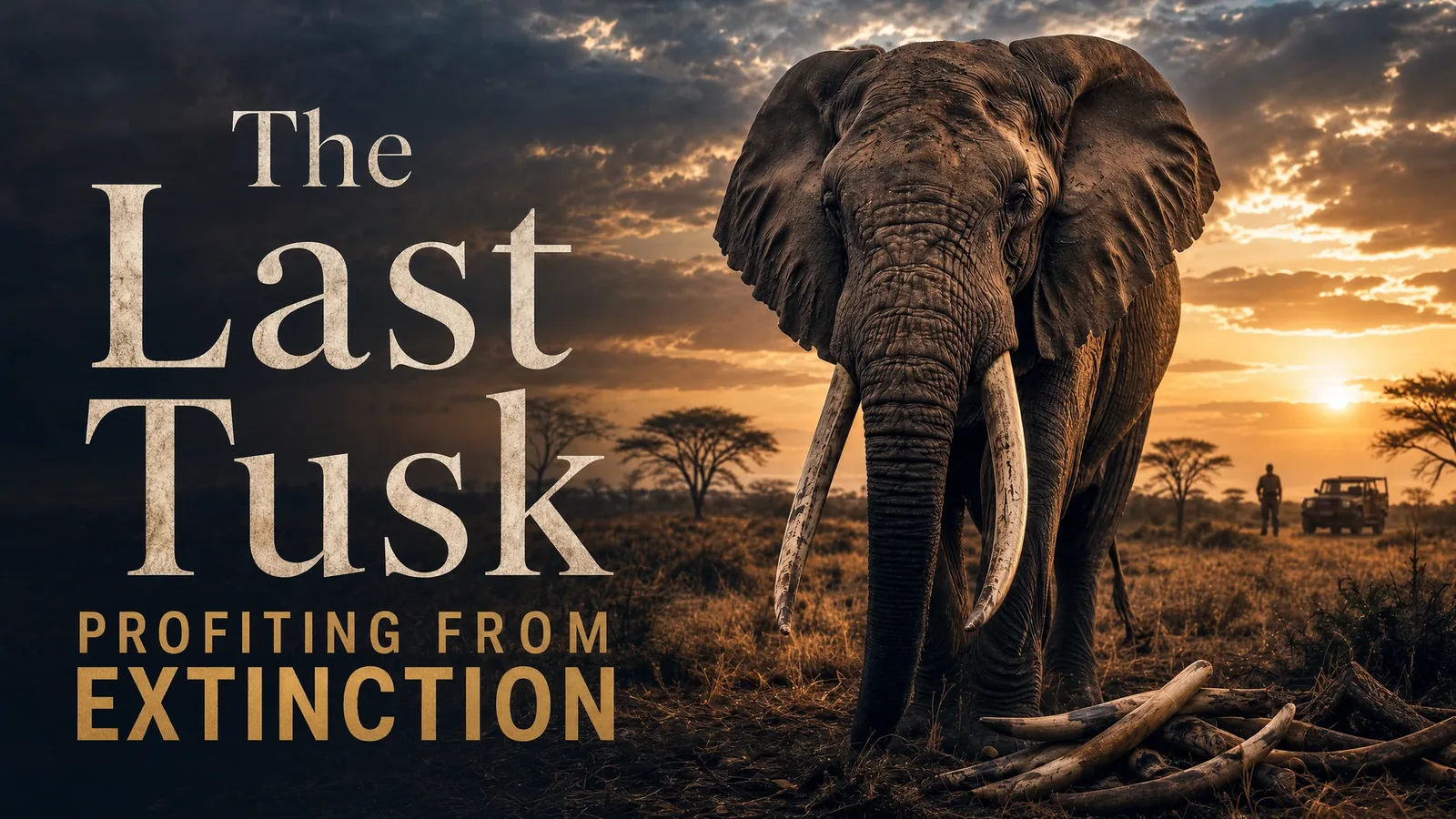
In September 2023, a trophy hunter shot a bull elephant in the Enduimet Wildlife Management Area in northern Tanzania. He was about 35 years old, and his tusks weighed 99 and 110 pounds (about 45 and 50 kilograms).
Researchers at the Amboseli Trust for Elephants, who have been studying the area’s elephants since 1972, identified him from photos of the carcass. His name was Gilgil.
He had spent most of his life a few dozen miles north, in a national park in Kenya, where killing him would have been a serious crime.
Nobody broke into anything. Nobody ran. A license was issued, a fee was paid, and a legal transaction was completed.
That is the part of this story people find hardest to hold onto. The ivory trade that has helped dismantle elephant populations for decades has never been only about poachers.
How It All Began
People have carved ivory for thousands of years. But the modern trade, and the arguments over who gets to profit from it, took shape over the last two centuries.
The Last of the Big Ones
A “super tusker” is a bull elephant with tusks of about 100 pounds (45 kilograms) or more. They aren’t a separate species. They’re simply elephants that lived long enough, with the right genes, to grow tusks that never stop growing.
Definitions differ, though. Some groups count a bull if one tusk passes 100 pounds, others only if both do.
How many are left: Nobody has a full census. Africa Geographic’s running tally, which counts any bull with one tusk over 100 pounds, stood at 26 or more in East Africa and 85 or more across Africa in July 2026. It’s an evolving estimate, and Central Africa’s forests are largely missing from it.
In the Greater Amboseli area, which straddles Kenya and Tanzania, conservation groups put the number at around ten. And in 2026, Kenya lost two of its most famous tuskers to natural causes: Craig in Amboseli in January, and One Ton in the Chyulu Hills in July.
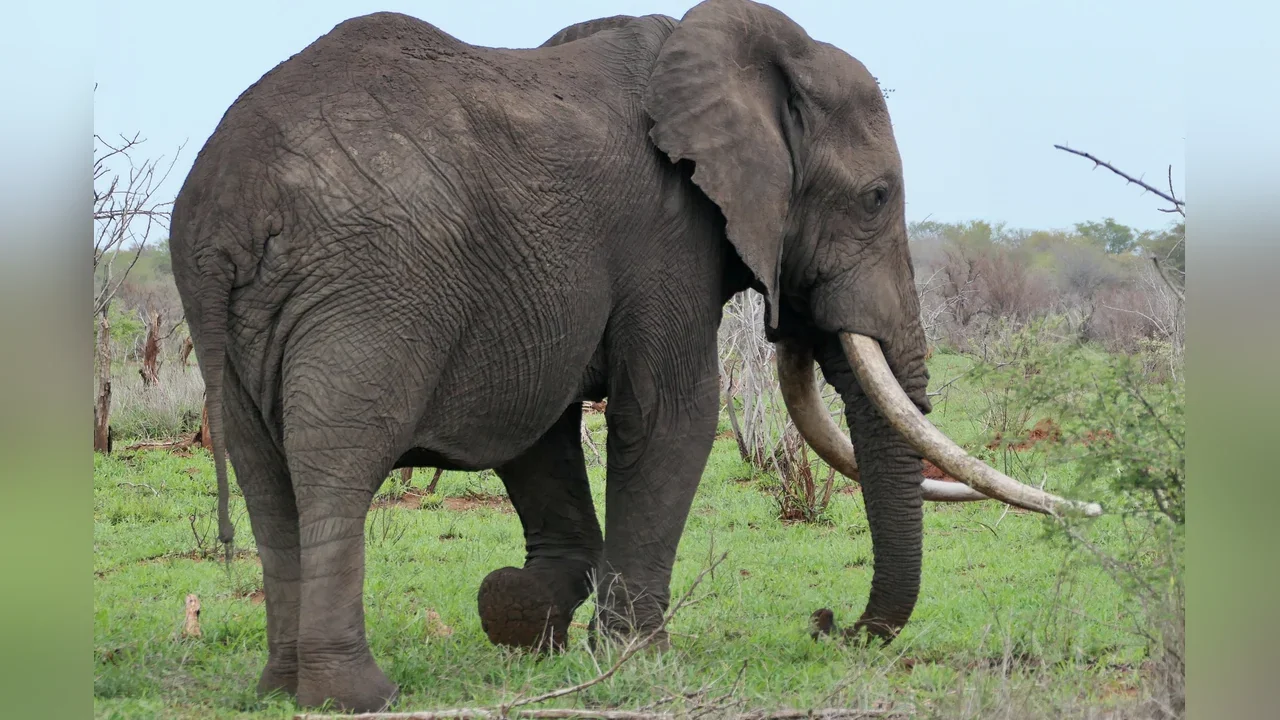
Photo: Bernard Dupont / Wikimedia Commons (CC BY-SA 2.0)
The deal that held for 30 years: Kenya and Tanzania agreed in 1995 not to hunt this shared population, after four Amboseli bulls were shot the year before. It was an informal understanding, not a treaty.
Between September 2023 and April 2024, the Amboseli Trust for Elephants recorded five large-tusked bulls shot under license on the Tanzanian side of the border. Gilgil is the only one identified for certain. The other carcasses were burned or buried.
Tanzania’s hunting season runs from July 1 to December 31. The April 2024 kills fell outside it, and conservation groups have challenged those permits, so calling all five hunts simply “legal” would go too far.
Why big bulls matter: Male elephants father the most calves between about 40 and 54, the same ages their tusks are largest. Tusk size also appears to be partly inherited. So hunting the biggest bulls removes key breeders, and may slowly breed big tusks out of the population.
The licenses are issued in Tanzania. The elephants don’t recognize the border.
You can watch elephants and other wildlife live at a waterhole in Kenya’s Chyulu Hills, next to Amboseli:
LIVEWatch live →What the Numbers Actually Say
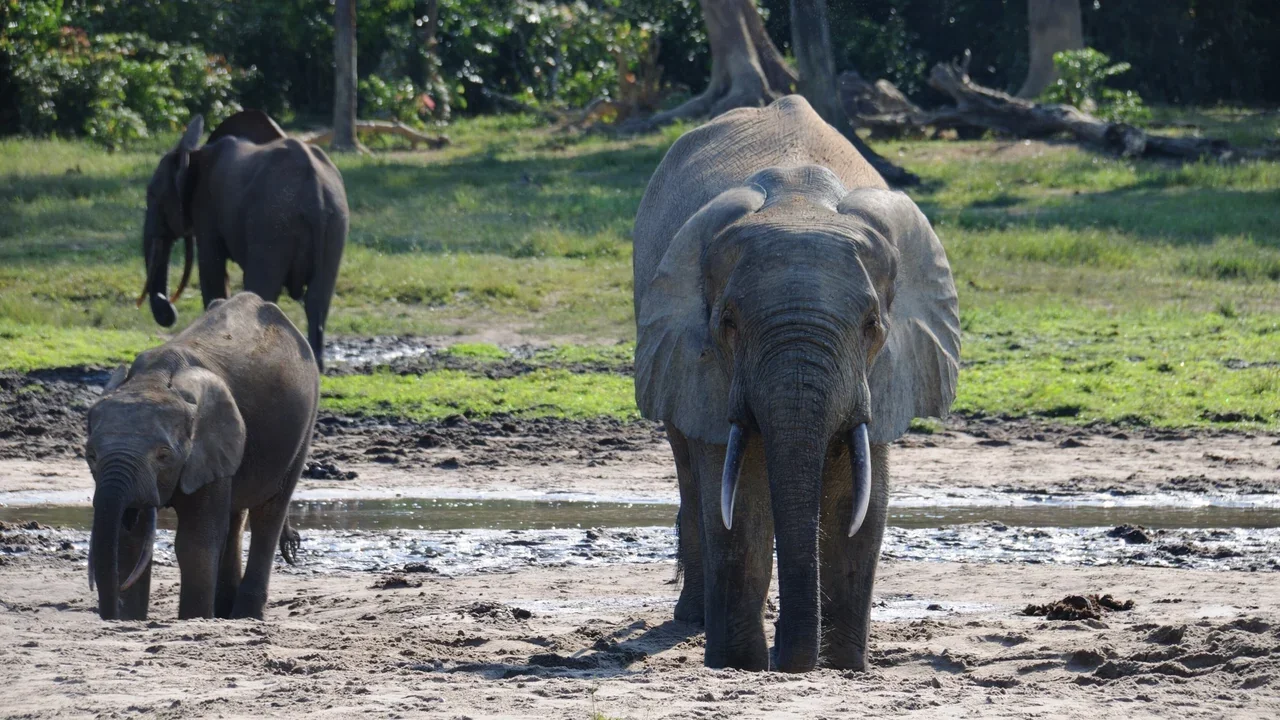
Photo: JosepMGracia / Wikimedia Commons (CC BY-SA 4.0)
Almost every article on this subject opens with a figure like “100 elephants are killed every day.” That number was popularized around 2013 and 2014, from estimates covering the years before. Repeating it now hides a more interesting story.
Two species, not one: In 2021, the IUCN assessed Africa’s two elephant species separately for the first time. Savanna elephants were listed as Endangered, after falling by at least 60% over 50 years. Forest elephants, which live in the forests of Central and West Africa, were listed as Critically Endangered, after a drop of more than 86% in 31 years.
More elephants, or better counting? In November 2025, the IUCN released its first status report dedicated to forest elephants as a separate species. It estimated about 135,690 in surveyed areas, plus several thousand more in areas not properly surveyed. That’s about 16% more than the previous estimate.
That isn’t recovery. The IUCN said the rise reflects better counting, including DNA tests on dung that can identify individual elephants. The species is still Critically Endangered, and about two thirds of the survivors live in Gabon.
The savanna gap: The widely quoted figure of 415,000 African elephants dates from 2016 and covers both species together. There’s currently no published IUCN total for savanna elephants alone. Most live in southern Africa, where many populations have been stable or slowly growing since the mid-1990s.
Poaching really has slowed: A 2013 study estimated that Central Africa’s forest elephants fell by about 62% between 2002 and 2011. One of the 2025 assessment’s authors, Fiona Maisels, told Mongabay that yearly losses had since slowed to around 0.7% between 2016 and 2023.
CITES tracks poaching with a measure called PIKE: the share of elephant carcasses found that were killed illegally. It isn’t a count of dead elephants, but it shows the trend. Its latest modeled estimates show a peak in 2011, a fall after it, and then something most headlines missed: since 2020, there’s been no clear rise or fall across Africa.
Not everyone agrees on the details. A 2020 study that re-ran the data found a clear decline between 2011 and 2018 only in Eastern Africa, and argued that poaching had not fallen across most of the continent.
The Ban, and the Sales That Followed
This 1995 film follows Richard Leakey, who ran Kenya’s wildlife service through the poaching crisis and the 1989 ivory burn:
The ban that worked: When the 1989 ban took effect, ivory prices fell sharply, major markets closed and poaching dropped in several regions. Enforcement and local politics played a part too, but the ban is widely seen as the turning point.
Then it was opened twice: In 1999, Botswana, Namibia and Zimbabwe were allowed a one-off sale of stockpiled ivory to Japan. In 2008, a second approved sale sent 102 metric tons (about 225,000 pounds) to traders in China and Japan.
That 2016 study of the 2008 sale, by economists at Princeton and Berkeley, was a working paper, not a peer-reviewed study. Experts from CITES’s own monitoring program said poaching was already rising before the sale, and advised against using it for policy. The authors stand by it, and the question is still open.
What isn’t disputed is what came next: the worst of the modern poaching crisis, between 2010 and 2012.
Markets start closing: Limiting supply didn’t make ivory worthless. One global analysis found average prices rose about tenfold between 1989 and 2014 before starting to fall.
Then the big markets began to shut, from the United States in 2016 and China in 2017 to Singapore in 2021 and the UK in 2022.
Japan’s domestic market is still open.
Samarkand, 2025
At the CITES meeting in Uzbekistan in late 2025, Namibia asked to sell about 102,000 pounds (46 metric tons) of government-held ivory. It was framed as a one-off sale to fund conservation, the same argument made in 1999 and 2008. It would also have loosened the rules on Namibia’s elephant products for future trade.
It was rejected by a wide margin, roughly four votes to one.
A second proposal passed with far less attention. It changed the rules for elephants in Botswana, Namibia, South Africa and Zimbabwe, mostly about trade in live elephants. But it also let Zimbabwe sell elephant leather goods commercially, in line with the other three.
You can watch elephants live at a waterhole in Zimbabwe’s Hwange National Park, home to one of Africa’s largest elephant populations:
LIVEWatch live →A Tooth, a Seal and a Status Symbol
Start with what ivory actually is, because most people get it wrong.
That’s why rhinos can be dehorned to protect them. A tusk can’t be taken whole without cutting into the skull, so poachers usually kill the elephant. Walruses, narwhals, hippos and warthogs grow ivory too.
What it’s for: Rhino horn is widely sold as medicine, which it isn’t. Ivory is mostly about looks and status. It’s dense, creamy and easy to carve, and owning it shows you could afford it. Today it goes into carvings, jewelry, chopsticks and religious statues.
And name seals.
Japan’s hanko: In Japan, a hanko is a personal seal used instead of a signature, to open a bank account, sign a contract or accept a parcel. Carvers switched them to ivory during the boom of the 1970s and 80s. By 2009, a survey found about 80% of the ivory used in Japan went into them.
Japan still holds just over 250 metric tons (about 550,000 pounds) of declared ivory. By one estimate, it has imported ivory from more than 250,000 African elephants since 1970.
For a stationery item.
The market may be fading on its own. Banks are dropping the hanko requirement as they go digital, and a Tokyo dealer told AFP in December 2025 that he sees one or two customers a month, mostly older Japanese.
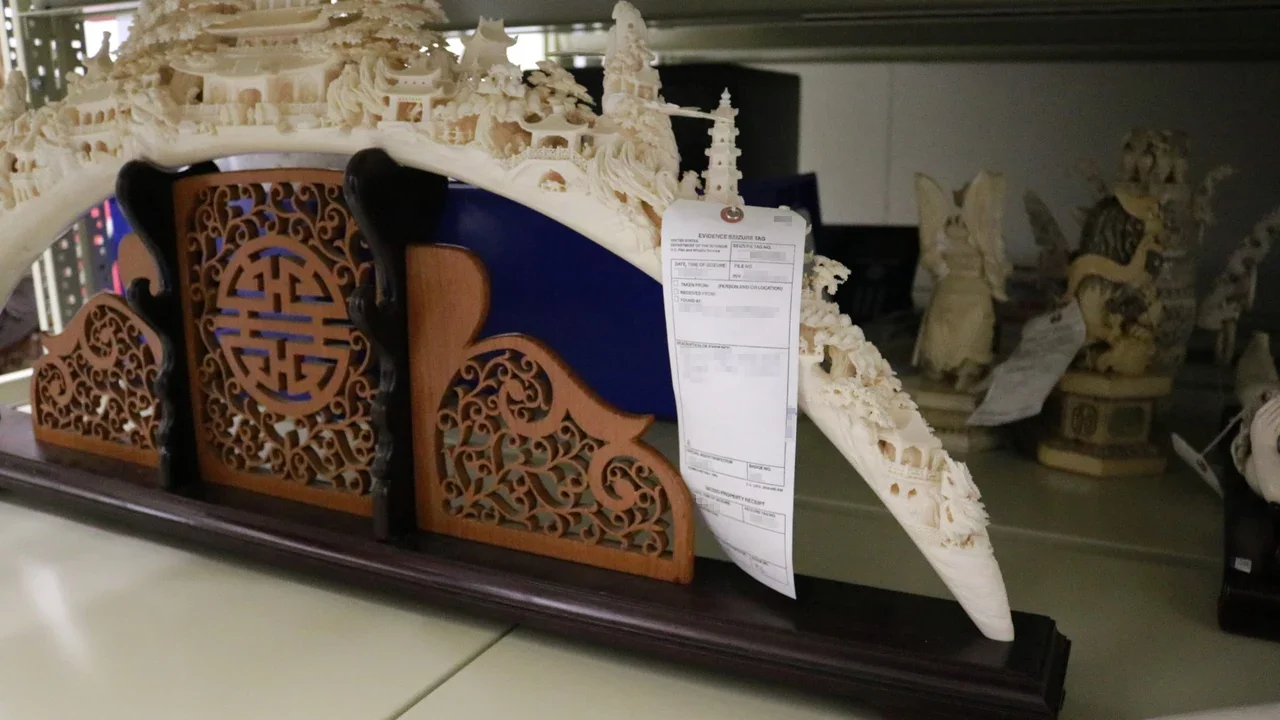
Photo: U.S. GAO / Wikimedia Commons (public domain)
China’s buyers: China was the bigger market until it closed its domestic trade at the end of 2017. In WWF and GlobeScan’s surveys across 15 Chinese cities, the share of people who said they intended to buy ivory fell from 43% in 2017 to 19% in 2020, before rising to 22% in 2021.
But some of the buying moved abroad. In the 2019 survey, 27% of people who traveled outside mainland China at least once a year said they had bought ivory abroad at some point, mostly in Thailand, Hong Kong and Cambodia. That figure is from before Covid and hasn’t been updated.
Demand fell a long way. It didn’t fall to nothing, and part of what remained got on a plane.
Who Actually Gets Paid
There are really two kinds of money in this story: the illegal kind, and the legal kind.
That’s how the UN Office on Drugs and Crime maps the trade. Most figures for exactly who earns what are unreliable, and the UNODC calls its own estimates rough orders of magnitude. The shape of the chain is clear, even if the numbers aren’t.
The legal money: Some of the money is entirely legal. Hunting operators and governments earn fees from trophy hunts like the ones near Amboseli. Governments holding stockpiles want to sell them. And in Japan, registered dealers can still buy and sell ivory at home.
Those arguments aren’t foolish. Stockpiles cost money to guard, people living alongside elephants bear the costs of damaged crops and dangerous encounters, and trophy fees do fund some conservation. But neither past sale has been shown to undercut the black market, which was the main promise.
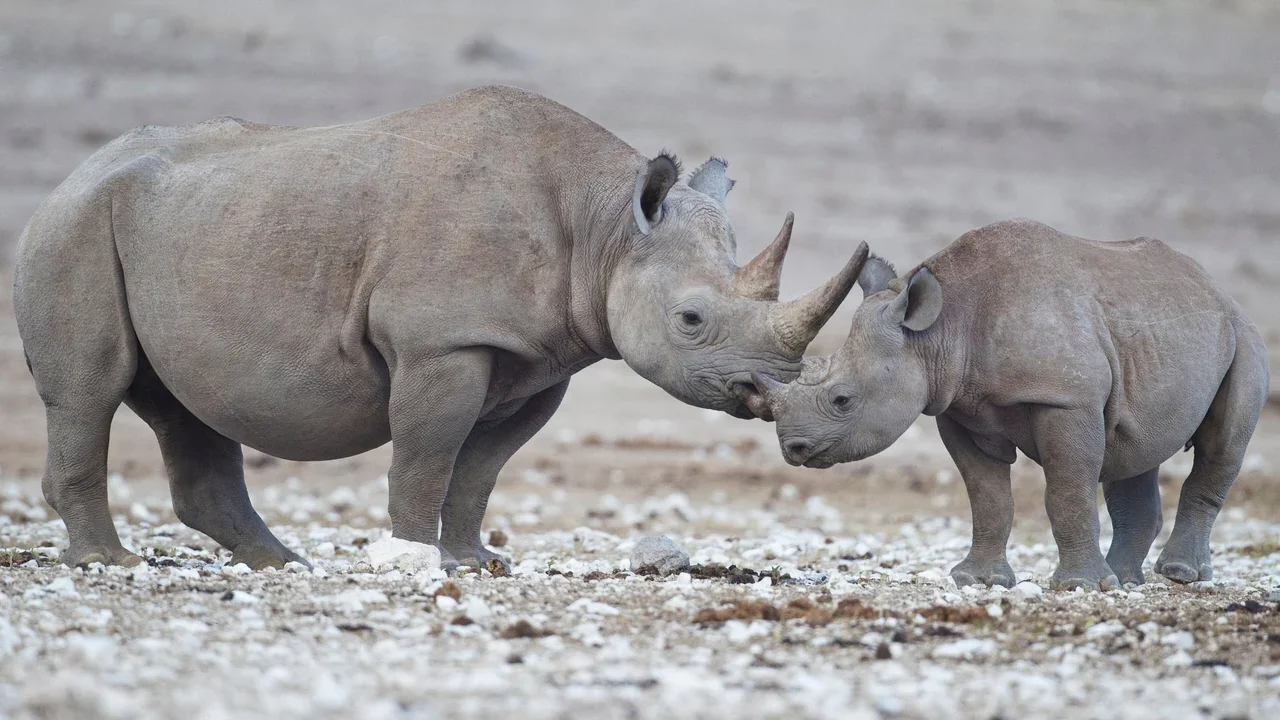
Photo: Yathin S Krishnappa / Wikimedia Commons (CC BY-SA 3.0)
Banking on extinction: Then there’s the most unsettling idea of all. Ivory and rhino horn keep for decades, so they behave less like meat and more like gold.
In 2003, and again in 2012, three economists modeled what a speculator holding a large private stockpile should do. Their answer: under certain conditions, encourage poaching. Once the wild animals are gone, the stockpile is the only supply left, and its owner holds a monopoly. Their simulation, run on black rhinos, found the strategy could pay.
That’s a model, not an accusation. Nobody has shown that anyone is deliberately driving a species extinct to corner the market, and the model needs a lot to go right: a huge private stockpile, real market power and control over supply. What it shows is that the incentive can exist.
Why the last ones are worth the most: Underneath it is a simpler effect. As an animal gets rarer, its parts can become more desirable and more expensive, which pays for more effort to find the ones that are left. Ecologists call this the anthropogenic Allee effect.
Where it happens, the last of a species become the most valuable, at exactly the moment they can least afford to be hunted.
Evolution, Edited
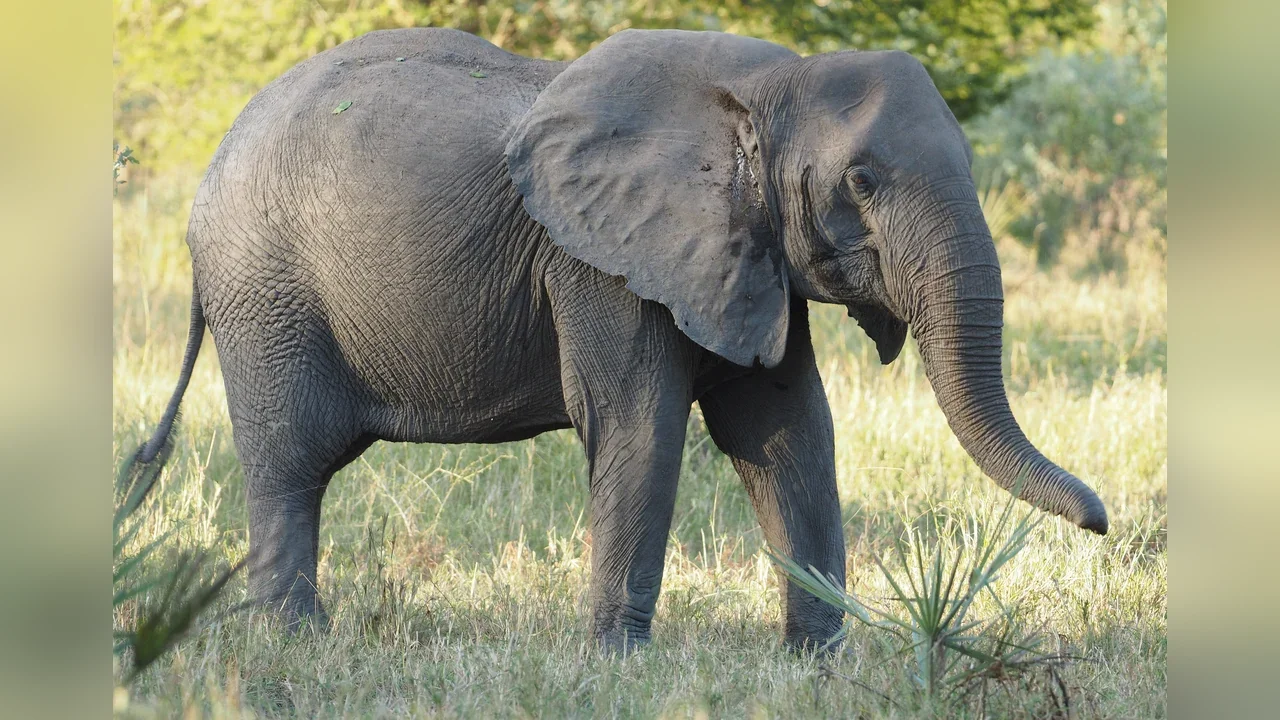
Photo: Judy Gallagher / Wikimedia Commons (CC BY 2.0)
There’s one more cost, and it’s the strangest part of this story.
During Mozambique’s civil war, from 1977 to 1992, fighters on both sides killed elephants in Gorongosa National Park for meat, and for ivory to trade for weapons. More than 90% of the park’s elephants were lost.
Born without tusks: A small share of female African elephants are naturally born tuskless, often put at around 2 to 4% where poaching has been light. In Gorongosa before the war, it was already about 18.5%.
Among the females that survived the war, it was about 51%. Among those born afterward, it was close to a third.
Evolution in one generation: A 2021 study in Science found strong evidence that this was natural selection, not chance. Poachers killed elephants with tusks, so tuskless females were more likely to survive and pass on their genes.
The trait appears to be carried on the X chromosome, and to be fatal in males. The team also identified two genes linked to tooth development that may be involved.
Why it matters: Tusks aren’t decoration. Elephants use them to dig for water, strip bark, move obstacles and fight rivals. A population without them may live differently in its landscape, and nobody yet knows the full effects.
The researchers expect the effect to fade if Gorongosa’s recovery continues. The other way to see it: 15 years of war and demand for ivory shifted the genetics of the largest animal on land.
The Bird Carved Like Ivory
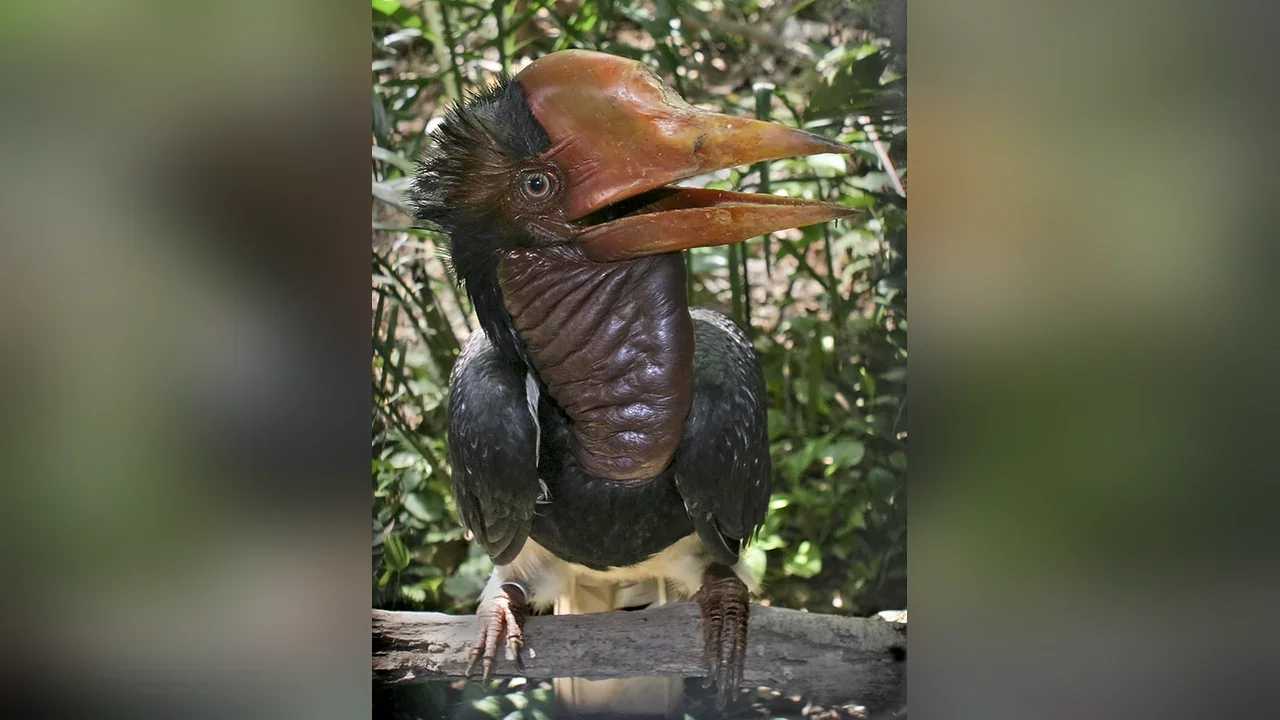
Photo: Doug Janson / Wikimedia Commons (CC BY-SA 3.0)
The trade in carving materials doesn’t stop at elephants.
In the rainforests of Sumatra and Borneo lives the helmeted hornbill (Rhinoplax vigil). On top of its bill sits a casque that is almost solid, unlike the hollow casques of most other hornbills. It makes up around a tenth of the bird’s weight, and males ram each other with it in midair.
“Red ivory” isn’t ivory: Traders call the casque “red ivory”, but it isn’t a tooth. Its carvable outer layer is keratin, which makes it closer to rhino horn than to a tusk. It carves like ivory, though, and holds even finer detail.
A 2016 study found helmeted hornbill products selling for about five times the price of elephant ivory by weight.
An old trade, a new scale: Carved casques were traded from Borneo to the Chinese court as far back as the 1300s. International trade has been banned under CITES since 1975, but that didn’t stop a surge in poaching in the 2010s, as organized gangs moved into the forests.
In 2015, the IUCN moved the helmeted hornbill straight from Near Threatened to Critically Endangered, skipping two levels.
It’s the same pattern again: a beautiful, durable material, a luxury carving market, and a trade ban that didn’t stop the killing. The elephant took a century to reach this point. The hornbill did it in a single reassessment, and most people have never heard of it.
You can see more of the world’s birds live on EarthLive.TV.
The Part That's Working
This isn’t a story without good news, and pretending otherwise would be its own kind of dishonesty.
The threats are changing, too. Habitat loss and conflict between people and elephants are growing, especially in the Congo Basin, as shrinking forests push both into the same space. That’s a harder problem to solve than poaching, and a harder one to film.
You can watch elephants live at Tembe Elephant Park in South Africa, known for its big tuskers:
LIVEWatch live →The last tusk: None of this brings back the bull shot in Enduimet in September 2023, or the four big-tusked males recorded after him.
An elephant like Gilgil takes decades to make. Replacing a wild bull like him would take just as long, with no guarantee the next one grows tusks like his.
His tusks weighed 209 pounds between them. Somebody paid for the license.
For more giants, meet the 5 heaviest land animals ever to exist, watch Africa’s Big Five live, or explore the Live Webcam Map.
 Take Me Anywhere
Sources 35 sources
- Africa Geographic (2024) - Trophy hunted: two super tuskers in Tanzania
- Africa Geographic (2026) - African elephants: how many tuskers are left?
- Institute for Security Studies (2024) - Trophy hunting is decimating super tuskers on the Kenya-Tanzania border
- BBC News (2026) - Craig the beer-ambassador elephant dies aged 54
- Hollister-Smith et al. (2007) - Age, musth and paternity success in wild male African elephants, Animal Behaviour
- Chiyo, Obanda and Korir (2015) - Illegal tusk harvest and the decline of tusk size in the African elephant, Ecology and Evolution
- IUCN (2021) - African elephant species now Endangered and Critically Endangered
- IUCN (2025) - DNA methods help uncover further African forest elephants, but species remains Critically Endangered
- Maisels et al. (2013) - Devastating decline of forest elephants in Central Africa, PLOS ONE
- Mongabay (2026) - Poaching down but threats remain for forest elephants, recent population assessment finds
- Schlossberg, Chase and Sutcliffe (2020) - State-space models reveal a continuing elephant poaching problem in most of Africa, Scientific Reports
- CITES (2025) - CoP20 Doc. 76.4: Monitoring the Illegal Killing of Elephants (MIKE)
- Sosnowski et al. (2019) - Global ivory market prices since the 1989 CITES ban, Biological Conservation
- Hsiang and Sekar (2016) - Does legalization reduce black market activity? Evidence from a global ivory experiment and elephant poaching data, NBER Working Paper
- CITES MIKE-ETIS Technical Advisory Group (2016) - Response to Hsiang and Sekar, CoP17 Inf. 42
- Wittemyer et al. (2014) - Illegal killing for ivory drives global decline in African elephants, PNAS
- Namibian Sun (2025) - CITES votes no to Namibia’s ivory, rhino horn trade proposal
- Earth Negotiations Bulletin (2025) - CITES CoP20 summary report, 23 November - 5 December 2025
- Vigne and Martin (2010) - Consumer demand for ivory in Japan declines, Pachyderm
- Environmental Investigation Agency (2016) - Japan’s Dirty Secret
- CITES (2025) - SC78 Doc. 65.4: Japan’s declared ivory stocks
- AFP via Taipei Times (2025) - Japanese ivory trade attracts fresh global scrutiny
- WWF and GlobeScan (2019) - Demand under the Ban: China Ivory Consumption Research 2019
- WWF and GlobeScan (2021) - Demand under the Ban: China Ivory Consumption Research 2021
- UNODC (2020) - World Wildlife Crime Report
- Mason, Bulte and Horan (2012) - Banking on extinction: endangered species and speculation, Oxford Review of Economic Policy
- Courchamp et al. (2006) - Rarity value and species extinction: the anthropogenic Allee effect, PLoS Biology
- Campbell-Staton et al. (2021) - Ivory poaching and the rapid evolution of tusklessness in African elephants, Science
- Beastall et al. (2016) - Trade in the helmeted hornbill Rhinoplax vigil: the ‘ivory hornbill’, Bird Conservation International
- Surapaneni et al. (2025) - The helmeted hornbill casque is reinforced by a bundle of exceptionally thick, rod-like trabeculae, Annals of the New York Academy of Sciences
- BirdLife International - Helmeted hornbill species factsheet and IUCN Red List status
- Encyclopaedia Britannica, 7th edition (1842) - Ivory
- ElephantVoices - Killed for their ivory
- Tsavo Trust - Kenya’s first ivory burn: an influential moment in the history of elephant conservation
- Al Jazeera (2016) - Kenya burns 105 tonnes of ivory in bid to stop poaching
Editor's note
We've kept counted figures, such as tusk weights and vote results, separate from modeled estimates, such as the 100,000 elephants killed in 2010 - 2012 or the 250,000 elephants' worth of ivory imported by Japan. Where findings are disputed, including the effect of the 2008 sale and how far poaching has fallen, we've said so. The "banking on extinction" idea is an economic model, not evidence that anyone is deliberately driving a species extinct. Super tusker counts vary with definitions and survey coverage. The cover is an illustration, and the hanko seals pictured are not ivory.
How we researched this article
We used the Amboseli Trust for Elephants' records as reported by Africa Geographic, IUCN Red List assessments and status reports, CITES monitoring documents and conference records, and the original studies on poaching trends, ivory prices, the 2008 sale, tusklessness in Gorongosa and the helmeted hornbill trade. Japan and China market figures come from CITES filings, Pachyderm, the Environmental Investigation Agency and WWF's consumer surveys.