
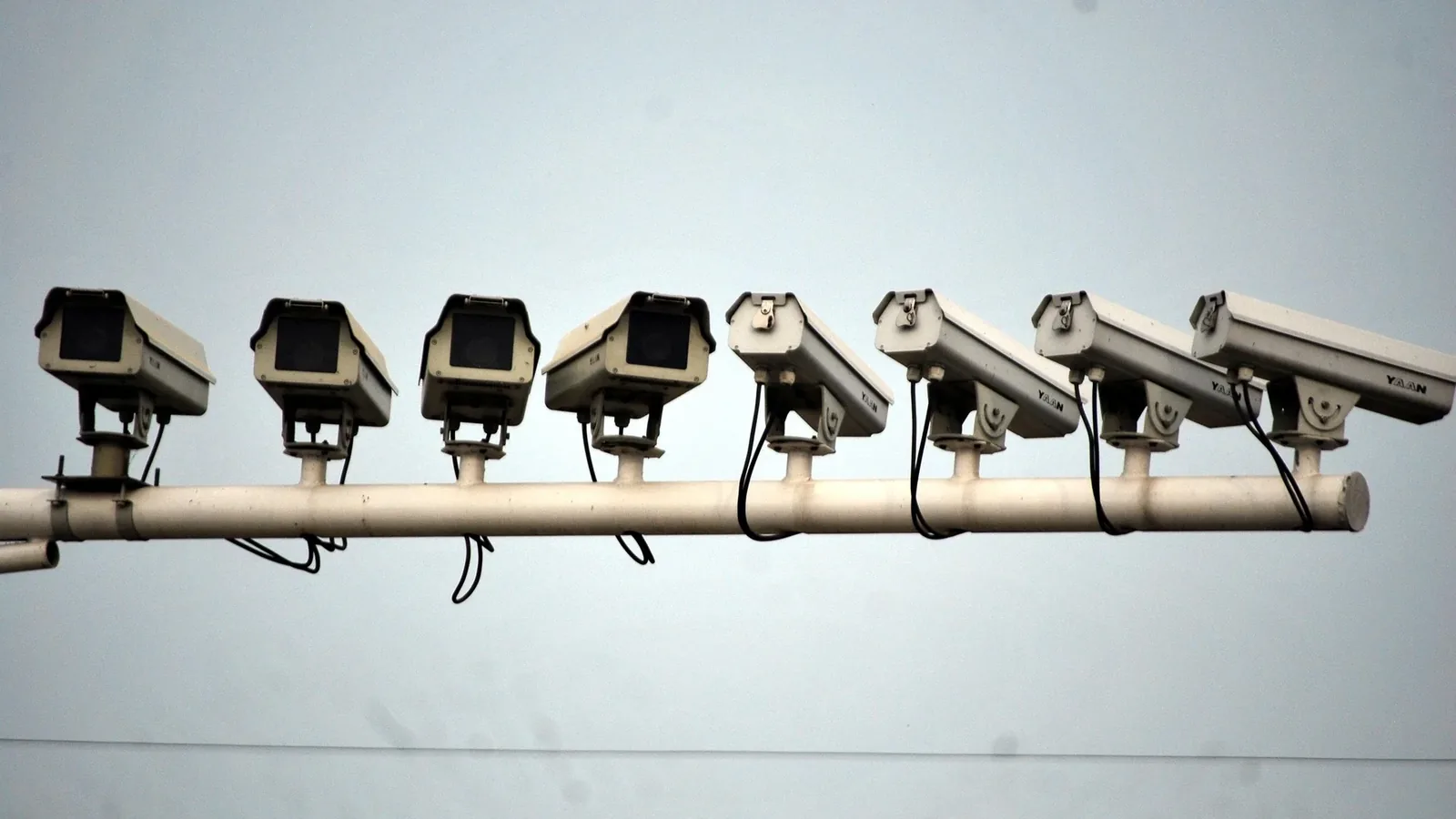
In August 2021, Delhi’s Chief Minister Arvind Kejriwal celebrated a ranking that put his city top of the world for surveillance, with 1,826.6 cameras per square mile. London came second, with 1,138.
When this article was first published, it told the same story.
Neither figure holds up today. In its June 2025 update, Comparitech, the research group behind the ranking, dropped cameras per square mile altogether. It said there is no central source for the data, that estimates vary wildly, and that the numbers didn’t allow a fair comparison between cities. On the measure it kept, Delhi is no longer in the top 10.
That’s the most useful thing to know before reading any list of the world’s most surveilled cities: nobody has actually counted the cameras. What exists is a patchwork of government announcements, police press releases and news reports, gathered by researchers and turned into a table.
Here’s what that table can tell you, and what it can’t.
How the Ranking Works
Every figure below comes from Comparitech’s study, Surveillance camera statistics: which are the most surveilled cities?, by Rebecca Moody, last updated in June 2025. As of October 2026 it’s still the latest edition, so treat everything here as a snapshot, not permanent fact.
The ranking measures cameras per 1,000 people. It mainly counts public CCTV: cameras on public buildings, police cameras, cameras on public transport and traffic cameras that read number plates.
China Can’t Be Ranked
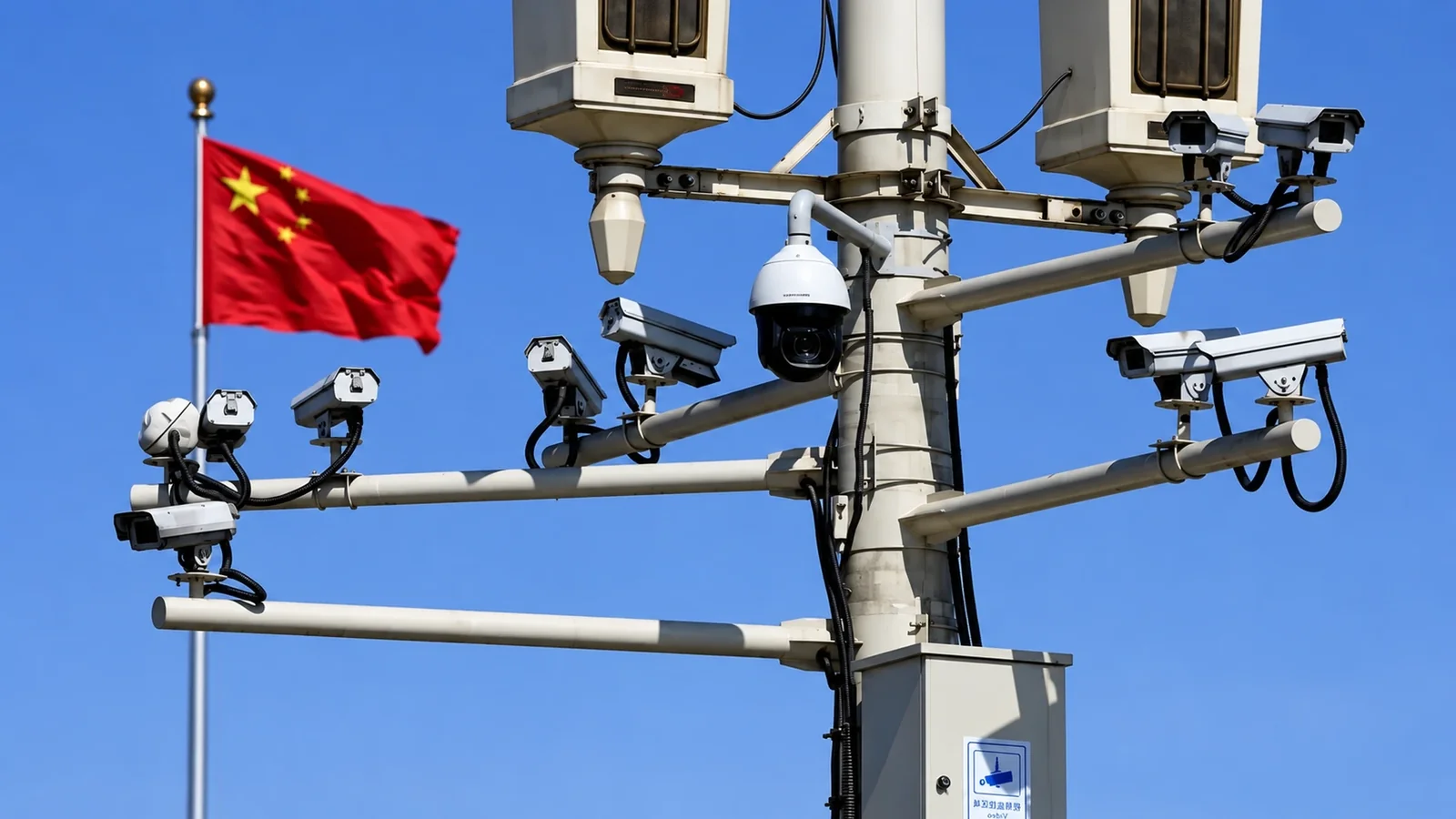
Illustration: EarthLive.TV
China has the largest surveillance camera network ever publicly reported. It’s also the one place this ranking can’t measure city by city.
Comparitech starts from an estimate of 700 million cameras in China’s SkyNet surveillance network, a figure repeated in testimony to a US congressional committee in March 2024. The testimony gives no source for the number, so it isn’t an independently verified count. Spread across 1.42 billion people, it works out to 494.25 cameras per 1,000 people.
Comparitech then gave every Chinese city that same ratio, because the available city estimates were wildly different and often out of date.
So Shanghai is listed with 15,065,778 cameras and Beijing with 11,168,320. Those aren’t counts. They’re each city’s population multiplied by a national average, which means every Chinese city in the study has exactly the same density.
That’s why older lists ranking Taiyuan, Wuxi, Shenzhen and a dozen other Chinese cities against each other no longer stand up. The honest answer is that China leads, but public data can’t show by how much, or which of its cities has the most cameras.
For scale, the research firm IHS Markit forecast in 2019 that more than 1 billion surveillance cameras would be installed worldwide by the end of 2021. That was a forecast, and no one has published a verified global count since.
#10 St. Petersburg
18.22 cameras per 1,000 people · 102,000 cameras
Russia’s second city is listed with 102,000 cameras for a population of just under 5.6 million.
It’s part of a national system that has grown fast. Russian authorities expanded facial recognition cameras from 5 regions to 62 in the space of two years, according to reporting by Worldcrunch in 2025.
Like every city on this list, St. Petersburg’s place rests on the figure its own authorities have made public.
#9 Singapore
18.35 cameras per 1,000 people · 112,999 cameras
Singapore is listed with 112,999 cameras for a population of about 6.2 million.
It’s one of the cleanest entries in the whole study, for a simple reason: Singapore is a city-state, so there’s no argument about where the city ends and the surrounding region begins.
That boundary question quietly skews many other entries. Divide the same number of cameras by a metro population and then by a city population, and you can get very different rankings.
#8 Kabul
18.45 cameras per 1,000 people · 90,000 cameras
Kabul’s figure of 90,000 cameras comes from the Taliban police. In February 2025, the BBC became the first international outlet allowed inside the city’s control center, where a police spokesperson said they could monitor the entire city from that one room.
A resident told the BBC that families in her neighborhood were pressured to pay for cameras outside their homes, under threat of having their water and power cut off.
Kabul also shows how much the population figure matters. Comparitech uses a population of about 4.9 million, while the BBC described Kabul as a city of 6 million. Divide the same 90,000 cameras by 6 million and Kabul drops out of the top 10.
#7 Moscow

Photo: diabosik / Pixabay
19.63 cameras per 1,000 people · 250,000 cameras
Comparitech lists Moscow with 250,000 cameras, though official figures vary. In July 2024, Russia’s Ministry of Digital Development put the number at around 230,000, with roughly a third connected to facial recognition, as reported by Eurasianet.
What’s well documented is how the network gets used. Human Rights Watch reported in 2022 that Moscow’s facial recognition system was being used to track down men avoiding military mobilization.
In July 2023, in the case of Glukhin v. Russia, the European Court of Human Rights ruled that Russia had broken a protester’s right to a private life by using facial recognition to identify, find and arrest him after a one-man protest on the Moscow metro. It also found that convicting him for that peaceful protest broke his right to freedom of expression.
#6 Seoul
24.28 cameras per 1,000 people · 243,426 cameras
Seoul, in South Korea, is listed with 243,426 cameras for a population of just over 10 million.
It’s also the clearest example of why cameras per square mile had to go. The original version of this article gave Seoul 331.9 cameras per square mile. A later Comparitech study put it at 618.45. Same city, same kind of data, and nearly double the result.
Per person, Seoul is still one of the most heavily watched cities outside China on any version of the table.
#5 Lahore
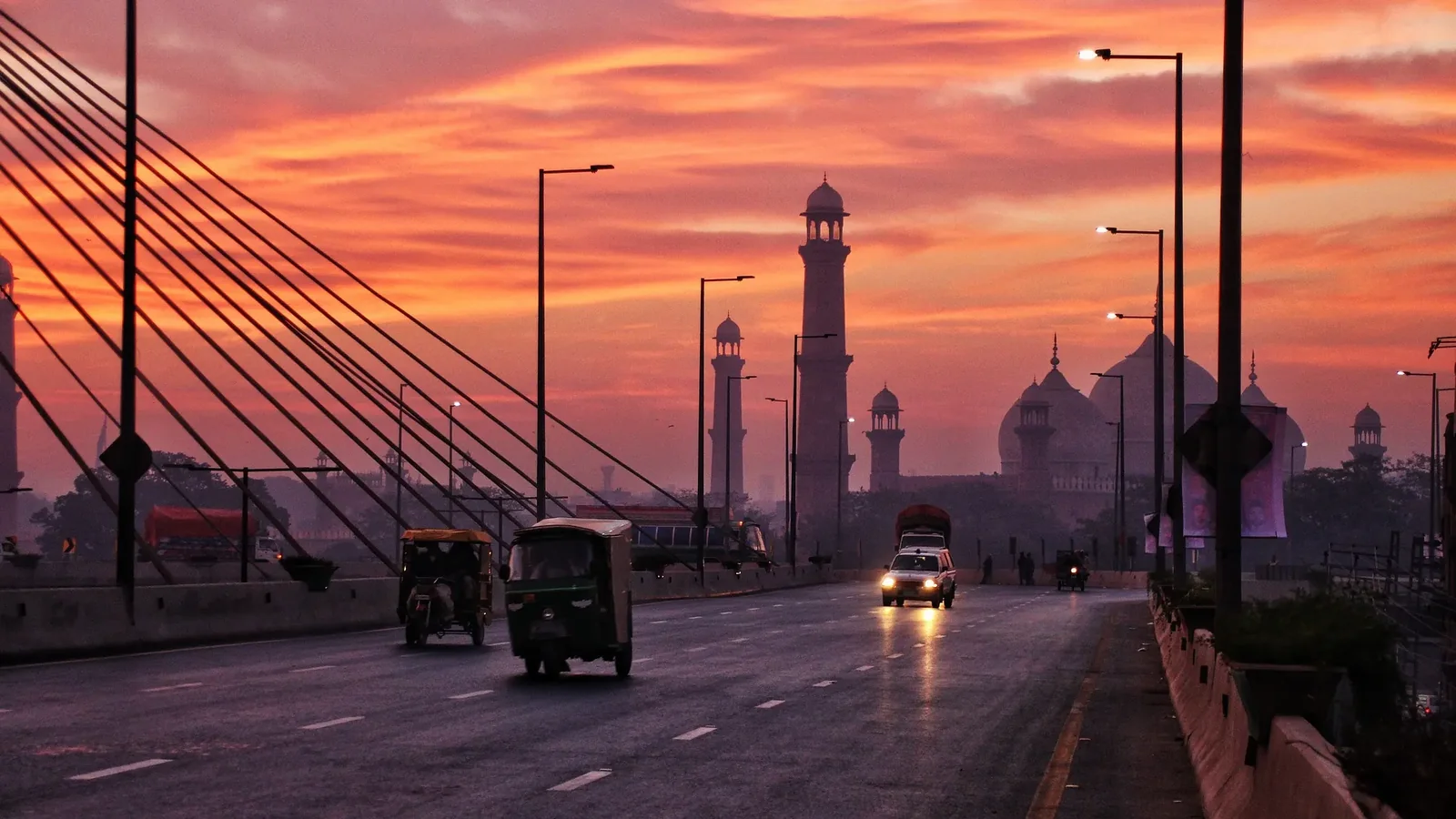
Photo: qkcreativity92 / Pixabay
27.67 cameras per 1,000 people · 410,297 cameras
Lahore, in Pakistan, is a new entry, listed with 410,297 cameras for a population of about 14.8 million.
Almost all of its rise comes from private cameras. Comparitech says 400,000 privately owned cameras in Lahore have been mapped for digital monitoring and crime control, as part of a wider plan to map 2.5 million cameras across Punjab province.
So Lahore’s jump up the table mostly reflects existing private cameras being counted, not hundreds of thousands of new ones going up overnight. What changed is that the police now know where they are.
#4 Bangalore
40.66 cameras per 1,000 people · 585,284 cameras
Bangalore, in India, is listed with 585,284 cameras for about 14.4 million people, and it has taken the spot Delhi used to hold.
The reason is the same as Lahore’s. According to Comparitech, Bangalore police have geo-tagged more than 535,000 public and private cameras, so officers can see where each one is and ask for the footage.
Delhi, meanwhile, fell because a number of the cameras it announced were never installed. Comparitech now lists Delhi at 9.04 cameras per 1,000 people.
#3 Indore
72.21 cameras per 1,000 people · 251,500 cameras
Indore is listed with 251,500 cameras for a population of about 3.5 million.
It’s also the one city Comparitech specifically flags as a likely problem. The study says it believes some private cameras may be included in Indore’s total.
That matters this high up the table. If Indore’s figure includes private cameras and other cities’ figures don’t, it isn’t being compared like for like.
#2 Hyderabad
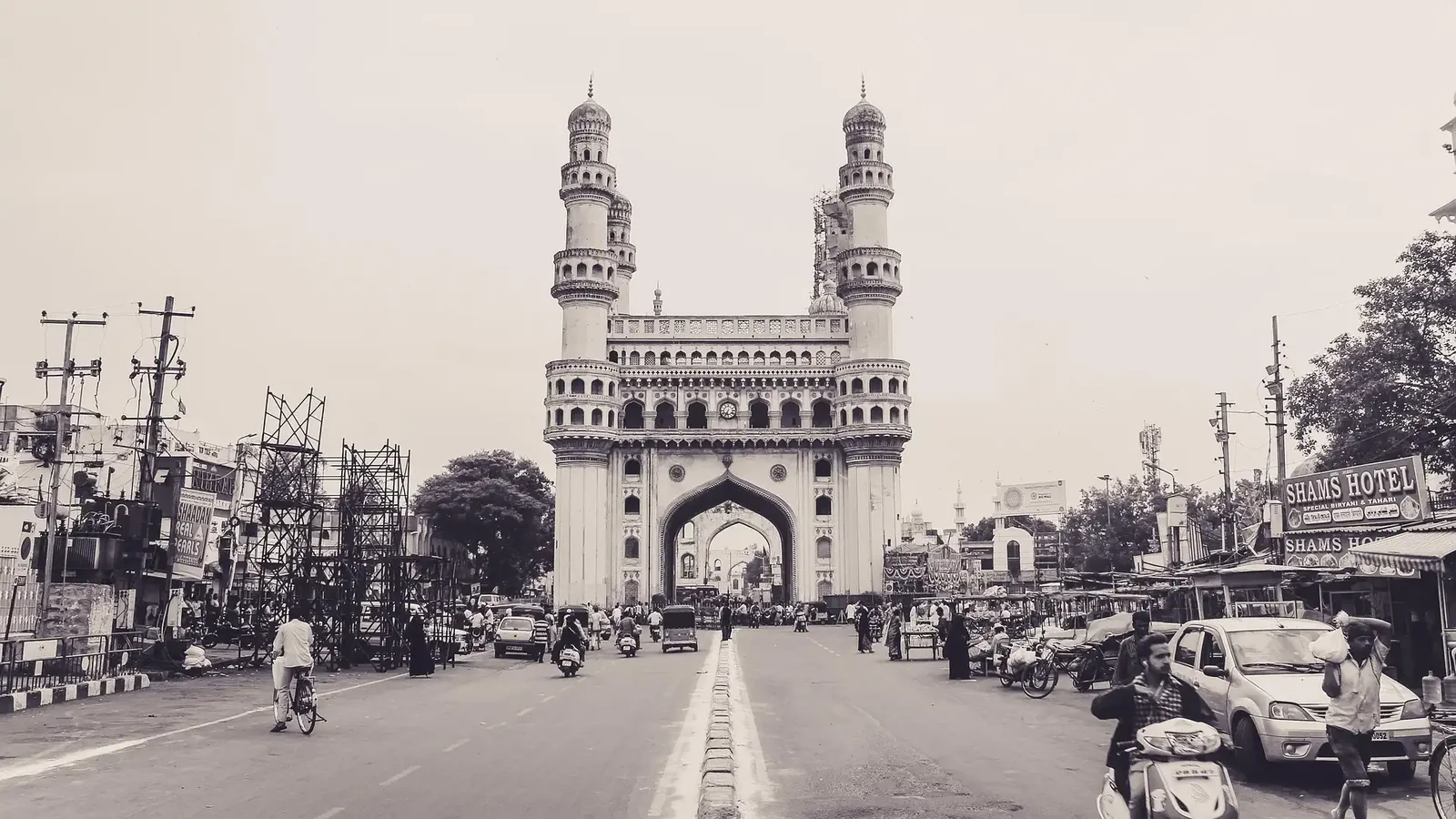
Photo: Photocurry / Pixabay
79.38 cameras per 1,000 people · 900,000 cameras
Hyderabad has the highest published figure of any single city in the current table, with 900,000 cameras listed for about 11.3 million people.
But look at what makes up that number. In November 2025, Hyderabad city police said they owned more than 16,000 street surveillance cameras. On top of those were more than 50,000 community and privately contributed feeds, and over 100,000 cameras installed under Nenu Saitham, a police program that asks residents and businesses to put up cameras and connect them to the police network.
Those police figures add up to about 166,000 cameras, so they don’t account for Comparitech’s full 900,000, but they do show that the police own only a small fraction. In June 2026, police in neighboring Cyberabad began rechecking more than 137,000 geo-tagged Nenu Saitham cameras to see whether they still worked.
#1 China
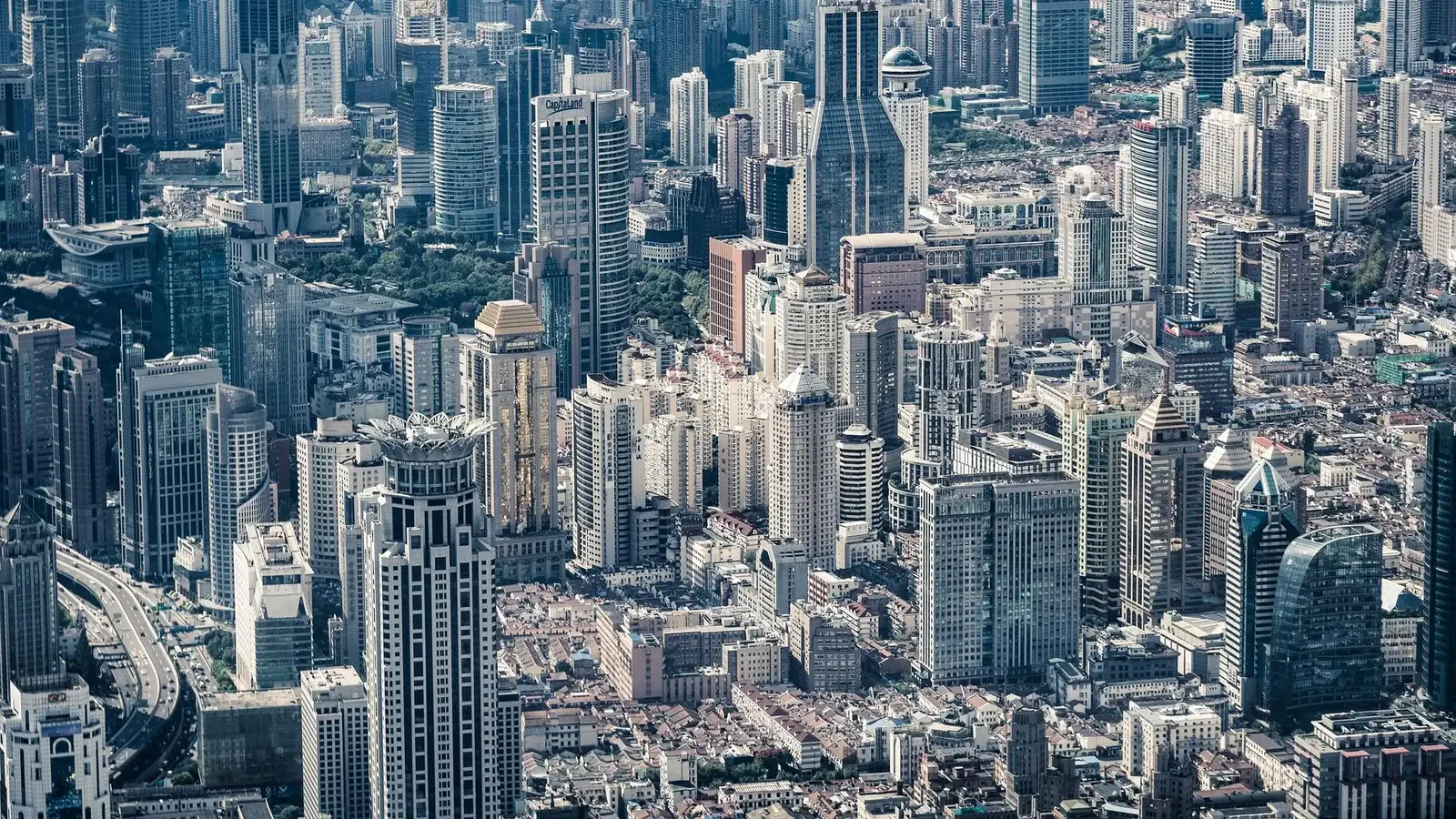
Photo: Pexels / Pixabay
494.25 cameras per 1,000 people · country-wide estimate
The top of the table isn’t a city at all. It’s an estimate applied to a whole country.
At 494.25 cameras per 1,000 people, China’s figure is more than six times Hyderabad’s. It’s also the least checkable number on the list, for the reasons above.
That’s the central problem with every surveillance league table: the country with the biggest camera network is also the one that tells the outside world the least about it.
Where’s London?
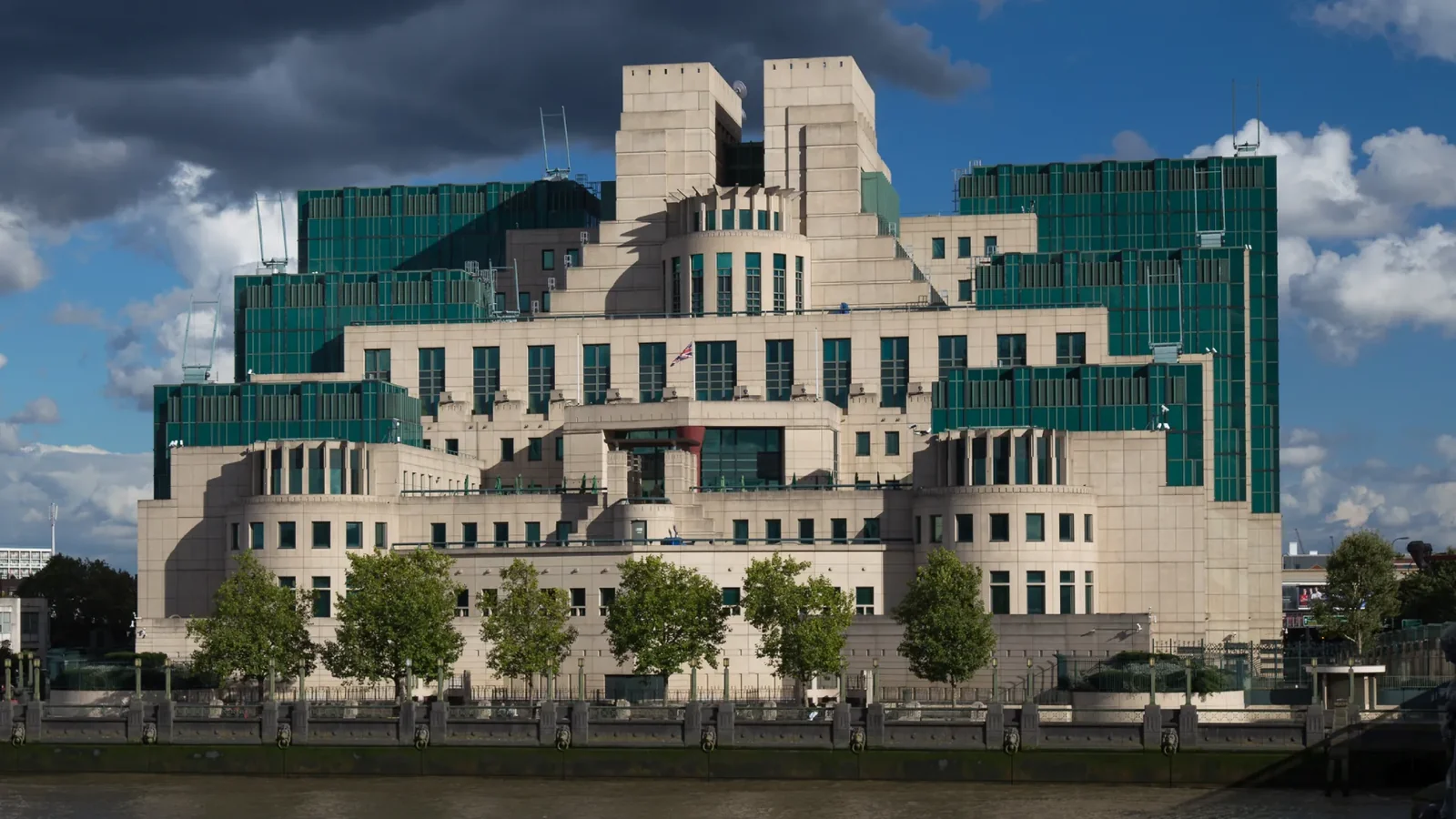
Photo: Laurie Nevay / Wikimedia Commons (CC BY-SA 2.0), cropped
London is not the world’s second most watched city. On the current measure it’s 12th, with 13.4 cameras per 1,000 people and just over 130,000 public surveillance cameras, according to Comparitech.
An earlier edition of the same study listed London with 691,000 cameras. London didn’t take down half a million cameras. The difference is all in what gets counted.
Within London, the City of London, the square-mile financial district, has by far the highest density, at 75.31 cameras per 1,000 residents. But that uses census population, and very few people actually live there compared with the crowds who work there every day, which pushes the ratio up.
Los Angeles sits just behind London, with 46,766 cameras, or 12.4 per 1,000 people. New York City is 16th, with 80,303 cameras for just over 7.9 million people, or 10.12 per 1,000.
The 300-a-Day Myth
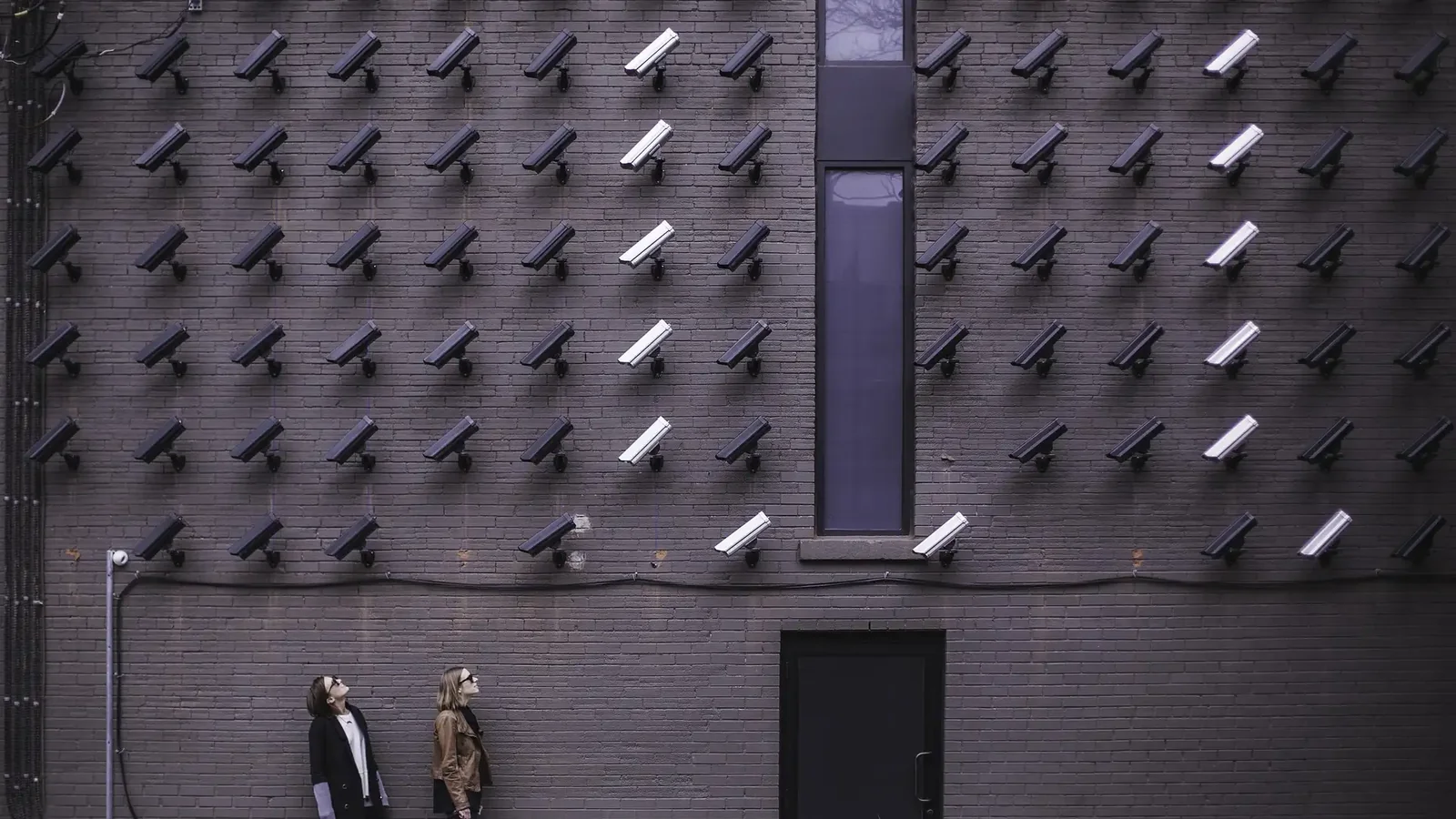
Photo: Pexels / Pixabay
For more than 20 years, articles, documentaries and campaign groups have repeated that the average Londoner is caught on camera 300 times a day. The original version of this article said it too.
The number goes back to The Maximum Surveillance Society, a 1999 book by criminologists Clive Norris and Gary Armstrong. They came up with it by imagining a hypothetical person’s journey through London, past the city’s known CCTV systems. It was meant to start a debate, not to be a measurement.
The UK’s national camera total has the same problem. The widely quoted figure of 4.2 million cameras came from a 2002 working paper by Michael McCahill and Clive Norris. A later estimate by Cheshire Police put the number closer to 1.85 million.
Similar claims that New Yorkers are filmed “hundreds of times a day” have no published source that we could find, so we’ve left them out.
Do Cameras Cut Crime?
Comparitech tested this by comparing camera numbers with crime scores from Numbeo. Those scores come from surveys of Numbeo’s visitors, not from police records.
The study found only a very weak link between having more cameras and having a lower crime score. Its conclusion was that, broadly speaking, more cameras don’t necessarily mean less crime.
Given how shaky the camera counts are, and that the crime scores come from surveys, this is a weak comparison, not a test of cause and effect. It’s best read as “no clear evidence either way” rather than proof that cameras do nothing.
What We Know
Strip away the figures that can’t be checked, and a few things still hold up.
A city’s position also depends heavily on how open its government is. Delhi topped the old table partly because India publishes its camera numbers. A city that publishes nothing can’t appear at all.
Not every camera is pointed at people. Thousands stream wildlife, weather and wild places around the clock, and anyone can watch them. Explore them on our Live Webcam Map, or browse by Interest and Country.
 Take Me Anywhere
Video Transcript About 200 words
0:00 - Intro, EarthLive.TV logo
0:05 - #10 St. Petersburg (18.22 cams per 1,000 people)
102,000 cameras watch about 5.6 million people in Russia's second largest city, St. Petersburg.
0:15 - #9 Singapore (18.35 cams per 1,000 people)
113,000 cameras watch about 6.2 million people in the small, but wealthy city-state of Singapore.
0:25 - #8 Kabul (18.45 cams per 1,000 people)
90,000 cameras constantly watching about 4.9 million residents, a figure given by the Taliban police.
0:35 - #7 Moscow (19.63 cams per 1,000 people)
250,000 cameras watch about 12.7 million people in Moscow, Russia's capital and home to the Kremlin.
0:45 - #6 Seoul (24.28 cams per 1,000 people)
243,000 cameras watch over roughly 10 million people in South Korea's capital city, Seoul.
0:55 - #5 Lahore (27.67 cams per 1,000 people)
410,000 cameras watch about 14.8 million people in Lahore, Pakistan. Most are private cameras.
1:05 - #4 Bangalore (40.66 cams per 1,000 people)
585,000 cameras watch about 14.4 million people in Bangalore, India, both public and private.
1:15 - #3 Indore (72.21 cams per 1,000 people)
250,000 CCTV cameras, some private, watch about 3.5 million people daily in Indore, India.
1:25 - #2 Hyderabad (79.38 cams per 1,000 people)
900,000 cameras watch about 11.3 million people in Hyderabad, India. Most were put up by locals.
1:35 - #1 Cities of China (494 cams per 1,000 people)
An estimated 700 million cameras watch 1.4 billion people across China's cities and countryside.
1:48 - Outro, EarthLive.TV logo
How this video was made
The video has no voiceover; all text appears on screen. Every scene was researched, selected and edited by the EarthLive team, drawing on the fully sourced research in the article above. Figures from Comparitech, updated 25 June 2025.
Sources 16 sources
- Comparitech - Surveillance camera statistics: which are the most surveilled cities? (Rebecca Moody, updated 25 June 2025)
- Comparitech - CCTV surveillance in the most populated cities in the United States (January 2024)
- The Tribune (India) - Delhi has more CCTV cameras than New York, London and Shanghai: Kejriwal (August 2021)
- US House of Representatives - Testimony cited for the 700 million SkyNet figure (7 March 2024)
- The Wall Street Journal - A billion surveillance cameras forecast to be watching within two years (December 2019)
- Siasat Daily - Hyderabad police unveil CCTV surveillance protocol (November 2025)
- The Hans India - CCTV network key to crime prevention: Cyberabad CP (June 2026)
- Afghanistan International - Taliban expands mass surveillance in Kabul with 90,000 CCTV cameras, reports BBC (27 February 2025)
- Human Rights Watch - Russia uses facial recognition to hunt down draft evaders (26 October 2022)
- European Court of Human Rights - Glukhin v. Russia, application no. 11519/20, judgment of 4 July 2023
- European Union Agency for Asylum - Country report citing Russia's Ministry of Digital Development (via Eurasianet, July 2024)
- Worldcrunch - Russia's boom in facial recognition cameras (May 2025)
- LSE Polis - The CCTV 300 a day myth: fact and fiction in the liberty debate (March 2009)
- UK House of Lords Constitution Committee - Minutes of evidence, Professor Clive Norris on the "300 a day" estimate (28 November 2007)
- ABC News - Report: London no safer for all its CCTV cameras (February 2012)
- Kaggle - Cities having the most CCTV cameras (data from an earlier Comparitech edition)
Editor's note
This article was first published using figures from Comparitech's 2021 study, ranked by cameras per square mile. It was rewritten after that metric was withdrawn and the underlying rankings changed. Several statistics in the original version have been removed because no reliable source could be found for them.
How we researched this article
All rankings come from Comparitech's June 2025 study, the latest edition as of October 2026. City details were checked against police statements, news reports, human rights groups, court records and parliamentary evidence. Camera figures are published estimates, not independent counts.