In 1989, scientists listening to the North Pacific through US Navy underwater microphones picked up a whale call they couldn’t match to any known species.
It sounded like a baleen whale, the group that includes blue and fin whales. But it was pitched far higher than the calls those giants usually make, at around 52 hertz.
Over the years, that single voice became famous as “the loneliest whale in the world”, a whale singing in a key no one else could hear. The real story is stranger, and less sad, than the legend.
A Sound Nobody Expected
The microphones belonged to SOSUS, a network of hydrophones, or underwater microphones, that the US Navy laid across the seafloor during the Cold War to listen for Soviet submarines.
Around the end of the Cold War, the Navy began allowing scientists to use parts of SOSUS. A team at the Woods Hole Oceanographic Institution, led by whale acoustics expert William Watkins, began tracking the unusual caller in 1992.
A voice with no match: The calls sounded like a baleen whale, but they didn’t match the calls of any known species. Season after season, the team heard what seemed to be just one source.
Why 52 Hertz Is Strange
Hertz measures frequency, not loudness. A 52-hertz sound vibrates 52 times every second. It’s about the pitch of the lowest notes on a tuba.
The biggest whales are famous for very low calls. Blue whales’ typical calls sit roughly between 10 and 39 hertz, and fin whales are best known for a deep pulse around 20 hertz.
The 52-hertz calls were tones of about 3 to 10 seconds, centered higher than the typical calls of either species.
That doesn’t mean other whales can’t hear it. Fin whales also make calls of around 40 hertz, and baleen whales are thought to hear a wide range of low sounds. The mystery was never that the call was silent to others. It was that no one could say who was making it.
You can listen to a recording of the 52 hertz calls on NOAA’s website. It’s sped up 10 times so human ears can pick it up easily.
Following a Voice Across the Pacific
In 2004, the Woods Hole team published 12 years of tracking. Watkins died earlier that year, before the paper appeared.
The calls were picked up between August and February, most often in December and January. Across its tracked seasons, the caller averaged about 29 miles (47 km) a day.
No two journeys alike: Its route changed every season. In one tracking season it was followed for about 440 miles (708 km), in another for nearly 6,900 miles (11,062 km), ranging from waters off the Aleutian Islands and Kodiak in Alaska to off the coast of California.
A deepening voice: Over the years, the call slowly dropped from about 52 hertz to close to 50. Some scientists think that fits a whale growing older, but nobody knows for sure.
LIVEWatch live →Who Is Making the Call?
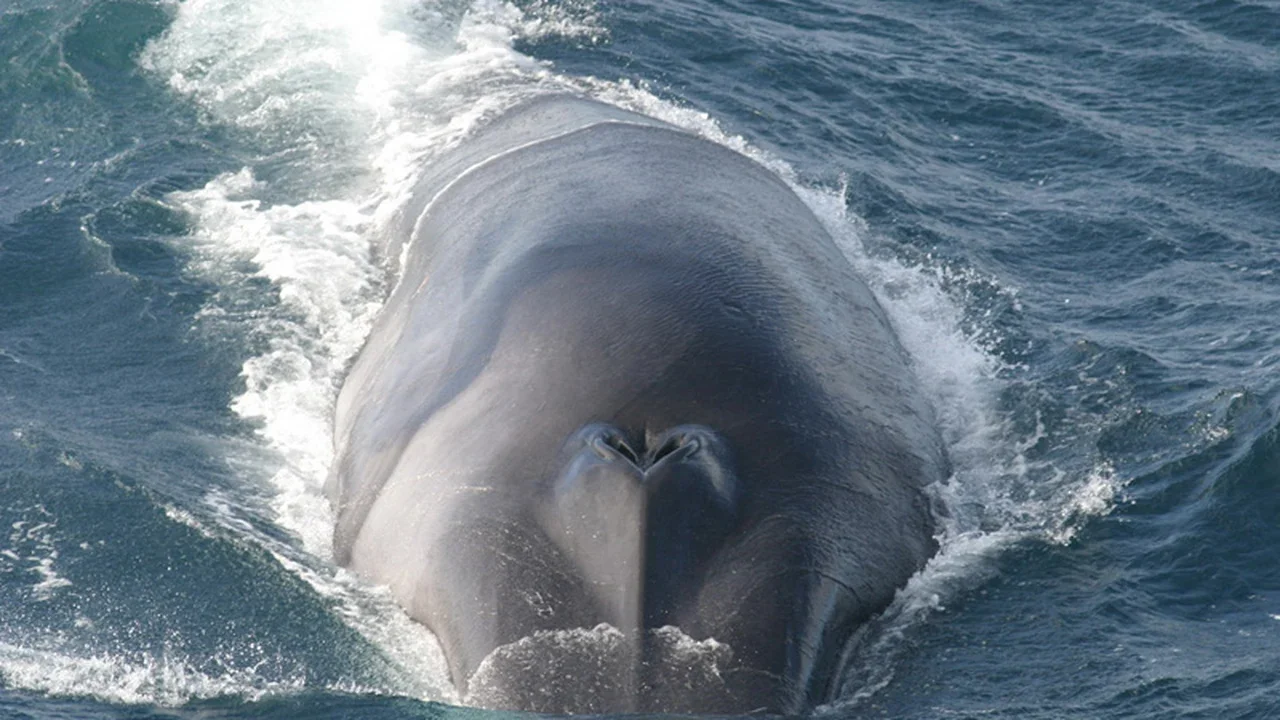
Photo: Annie Douglas, Protected Resources Division, Southwest Fisheries Science Center / Wikimedia Commons (public domain)
No one has ever confirmed the whale by sight, so its identity is still a guess.
A hybrid? One idea is that it’s a cross between a blue whale and a fin whale. Hybrids between the two species are known to exist.
A different body? Another is that it’s a whale of a known species with an unusual body, which shapes its voice differently.
Kate Stafford, an ocean acoustics researcher, has said its seasonal pattern resembles that of blue whales, and that she feels “pretty confident that at least part of this animal is a blue whale.” That’s an expert’s view, not a confirmation.
Not So Alone After All?
In 2010, receivers off California picked up 52-hertz-type calls at stations far apart from each other at around the same time.
John Hildebrand of the Scripps Institution of Oceanography suggested that more than one animal might be making the call. Similar calls have been reported since, though that doesn’t show whether any of them came from the original whale, or that the callers were ever together.
Is it still out there? There’s no reliable recent report confirming whether the original whale is still alive. Large baleen whales can live for many decades, but its fate is unknown.
LIVEWatch live →The Search for 52
In 2021, filmmaker Joshua Zeman released The Loneliest Whale: The Search for 52, following a team of scientists searching for the whale off California.
The team investigated a blue–fin hybrid tagged earlier by another researcher, but it wasn’t singing as it passed a hydrophone, so it couldn’t be identified as 52. They also described recordings they interpreted as two separate 52-hertz callers.
That supports the idea that more than one whale makes this call. It doesn’t prove what happened to the original whale.
Watch the full film: The documentary, executive produced by Leonardo DiCaprio, is available on Apple TV, Prime Video and Google Play.
An Unusual Voice, Not a Lonely Life
The idea of a whale calling out with no one to answer has inspired songs, art and thousands of posts online. It says a lot about how people feel. It says much less about the whale.
Scientists can show that this call is unusual. They can’t show that the whale was lonely, or that no other whale could hear it. Hearing a call, recognizing it and responding are separate questions, and nobody knows the answers for 52.
What is well documented is that ocean noise from ships and industry makes it harder for whales to communicate. Hydrophones like the ones that found 52 are now used to listen for whales and help protect them.
You can listen to the ocean yourself on our hydrophone cams in Canada, explore underwater life, or find out what lives at every depth of the ocean.
 Take Me Anywhere
Sources 8
- Watkins et al. (2004) - Twelve years of tracking 52-Hz whale calls from a unique source in the North Pacific, Deep-Sea Research Part I
- Woods Hole Oceanographic Institution, Oceanus - A lone voice crying in the watery wilderness
- NOAA PMEL Acoustics Program - 52 Hz whale sound recording
- Smithsonian Magazine (2015) - Maybe the world’s loneliest whale isn’t so isolated after all
- Pampoulie et al. (2021) - Evidence of unidirectional hybridization and second-generation adult hybrid between the two largest animals on Earth, the fin and blue whales, Evolutionary Applications
- Genome BC - Calls from the deep (podcast interview with Joshua Zeman)
- Bleecker Street (2021) - The Loneliest Whale: The Search for 52
- NOAA Fisheries - Ocean noise
Editor's note
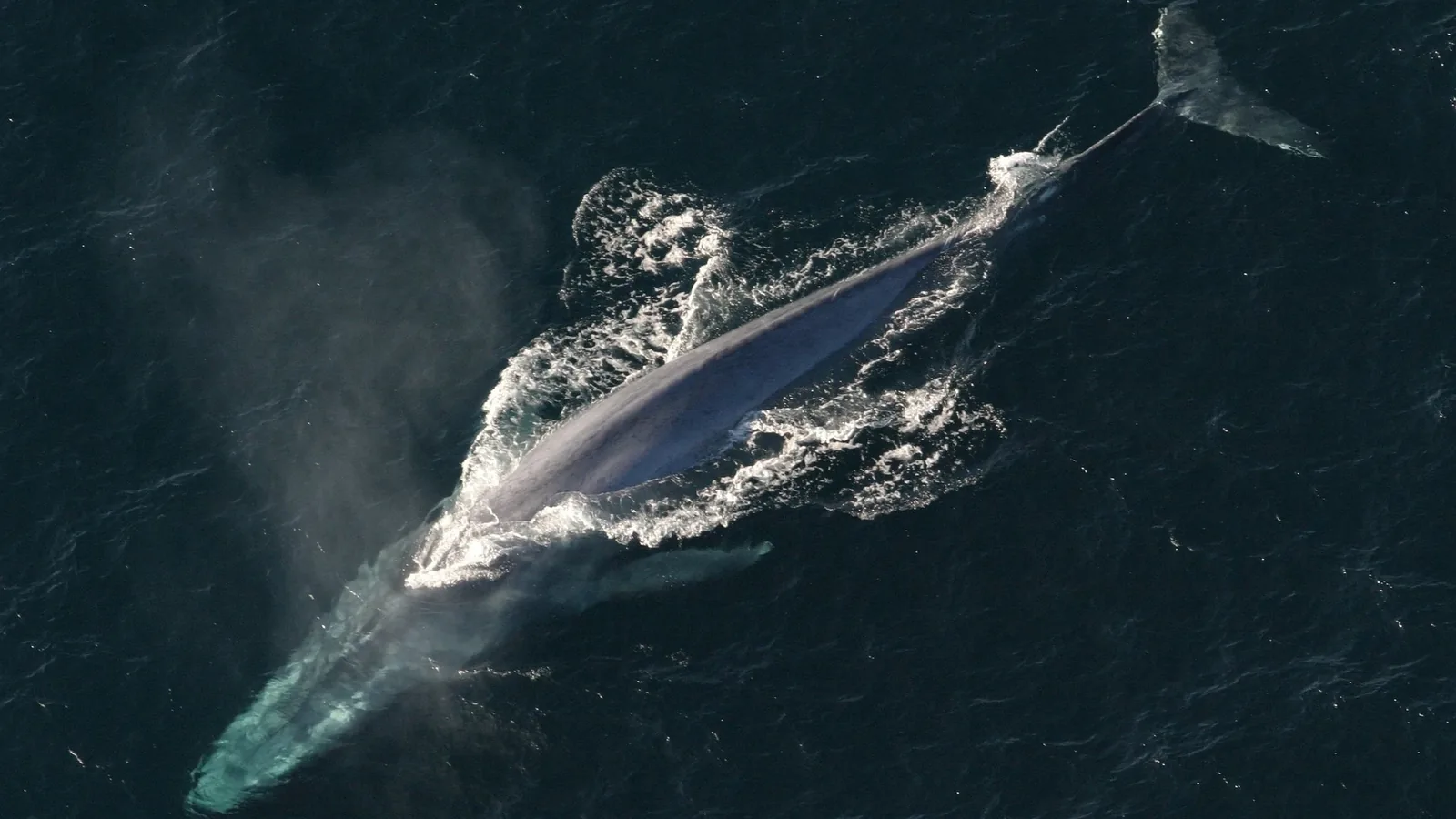
The 52 hertz whale has been heard but never confirmed by sight, so its species and its fate are unknown. Hybrid and unusual-anatomy explanations are hypotheses, not findings. Similar calls recorded since 2010 may come from more than one animal, but that hasn't been shown to include the original whale. "Loneliest whale" is a popular nickname, not a scientific description. The cover shows a blue whale, not the 52 hertz caller.
How we researched this article
We based this article on the original 2004 tracking study by William Watkins and colleagues at Woods Hole, NOAA's acoustic recordings, reporting on the 2010 detections, research on blue and fin whale hybrids, and interviews about the 2021 documentary The Loneliest Whale.