In August 1998, Google was still a Stanford research project. Most home internet users were on dial-up, and live internet video was impractical for ordinary viewers. That month, in a game reserve in the South African lowveld, a small team mounted a CCTV camera on a trailer, powered it with solar panels and batteries, and pointed it at the bush.
Nearly three decades later, the descendant of that camera is still running. Djuma became an early testing ground for many of the ideas that later became central to online wildlife broadcasting: remote cameras, live audience communities and interactive safari broadcasts.
This is the story of how a jury-rigged trailer in the Sabi Sand helped invent the online safari.
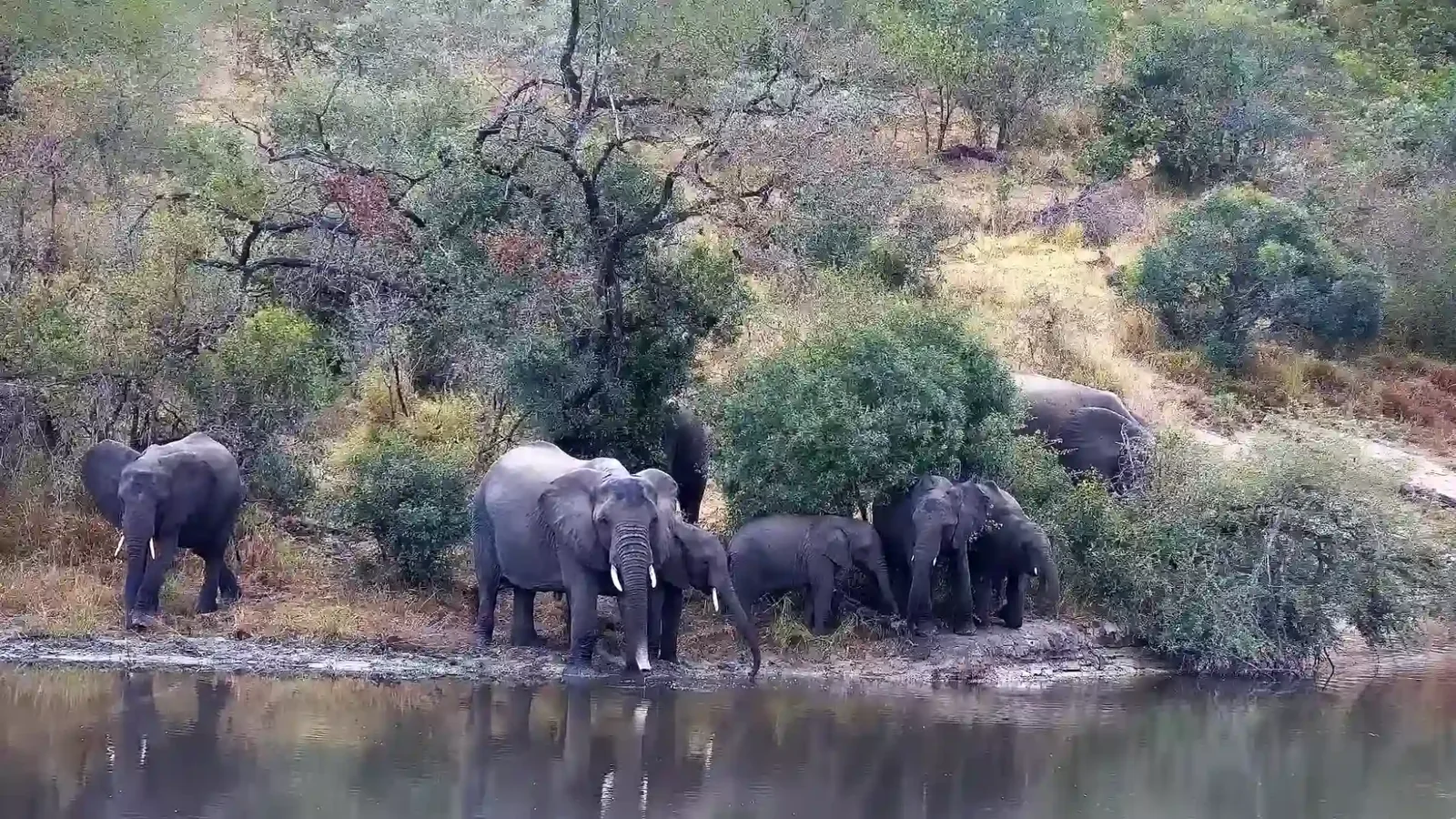
Image: Djuma Cam
The Internet Was a Very Different Place
To understand why Djuma Cam mattered, you have to understand what "live" meant in 1998.
It did not mean video. Video over dial-up was hopeless. What the Djuma team could actually deliver was a single still image, refreshed every 30 seconds.
That sounds pathetic now. At the time it was extraordinary, because the image showed something happening right now, thousands of miles away, and nobody knew what the next frame would bring. A waterhole at three in the morning, updating every half a minute, was genuinely thrilling in a way that is hard to reconstruct.
Everything that follows was built around that constraint.
August 17, 1998: A Camera at Djuma Bush Lodge
According to Djuma's own history of the camera, the first analog webcam launched on August 17, 1998, at Djuma Bush Lodge. It was built by Africam founders Paul Clifford and Graham Wallington, working with reserve owners Jurie and Pippa Moolman.
Worth being precise here, because this is often reported wrongly: the camera did not start at Gowrie Dam. That came later. The lodge it started at no longer carries that name either - Djuma now identifies the original site as what is today Cheetah Plains.
The setup was gloriously scrappy. A CCTV camera was mounted on a trailer loaded with solar panels and batteries - the team called it the "trailer cam". The video signal traveled by analog microwave link back to Djuma Bush Lodge, where a PC grabbed a still frame every 30 seconds and pushed it to servers in California.
A camera in the bush. A microwave link to a lodge. A PC. Servers on another continent. It worked.
The Moolmans had founded Djuma in the early 1990s, turning inherited farmland into a protected reserve in South Africa's Sabi Sand, which shares open borders with Kruger National Park. The name comes from a Shangaan word meaning "roar of the lion".
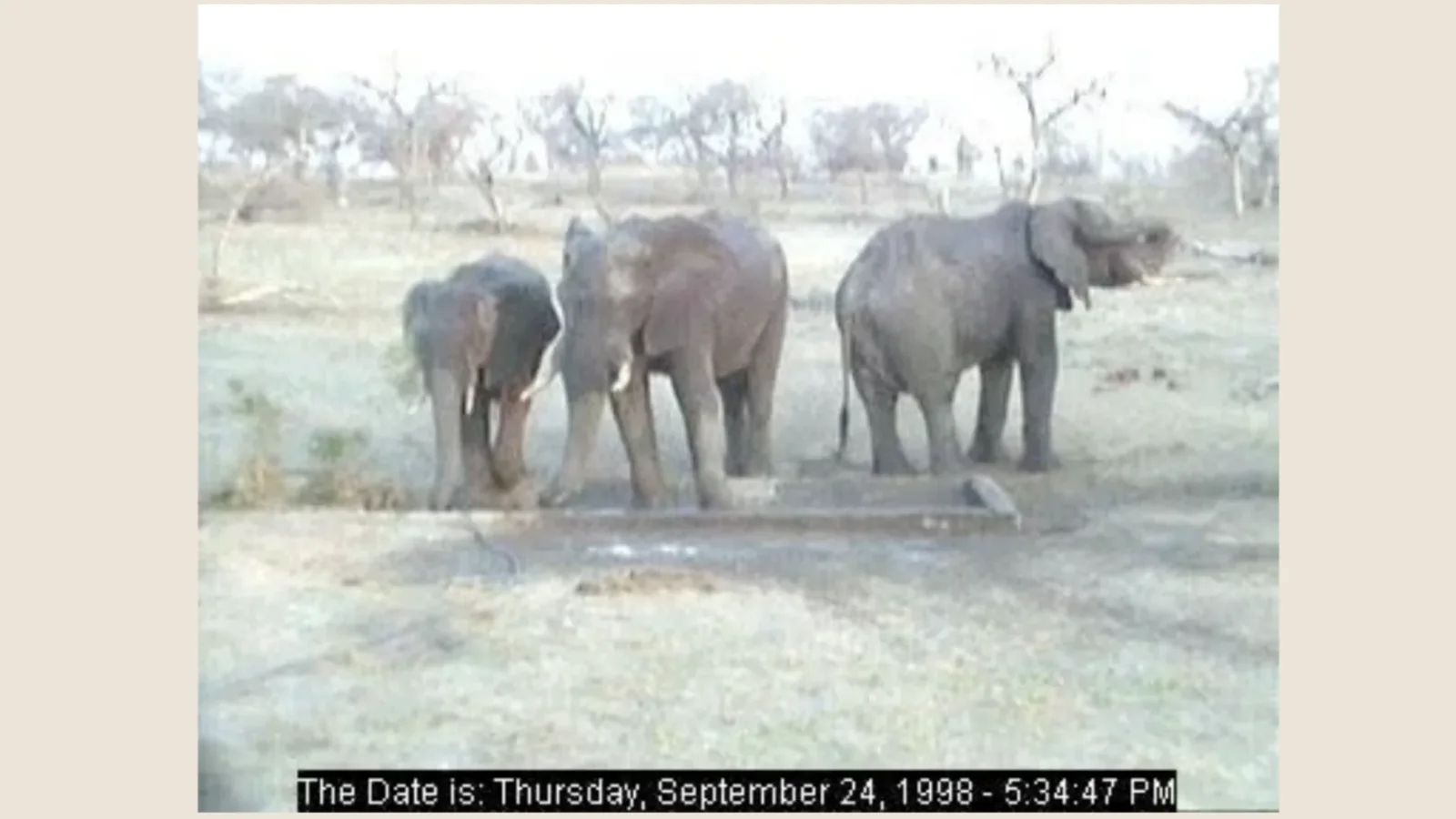
Image: Djuma
Skadonk: Taking the Webcam to the Animals
The trailer had an obvious limitation. It could only watch whatever happened to be in front of it.
So the team took the wheels off and bolted the entire rig onto the back of an old game-drive vehicle they called Skadonk. Now the camera could be driven to a sighting rather than waiting for one.
This produced what is probably the single most remarkable event in the camera's early history. Djuma's account describes a pride of lions killing a zebra not far from camp. The team loaded a generator and lights onto Skadonk, drove out, and broadcast what they describe as the first live lion kill on the internet.
Then the lions dragged the carcass out of frame.
What happened next is the part worth picturing. Jurie Moolman repositioned Skadonk and a nearby Land Cruiser by inching them forward in stages - one vehicle, then the other - without ever stepping onto the ground, because there was a pride of feeding lions a short distance away. Viewers around the world watched the whole maneuver happen live, relaying messages back through Pippa at the lodge.
A man solving an engineering problem in the dark, surrounded by lions, with an international audience commenting on his progress. In 1998.
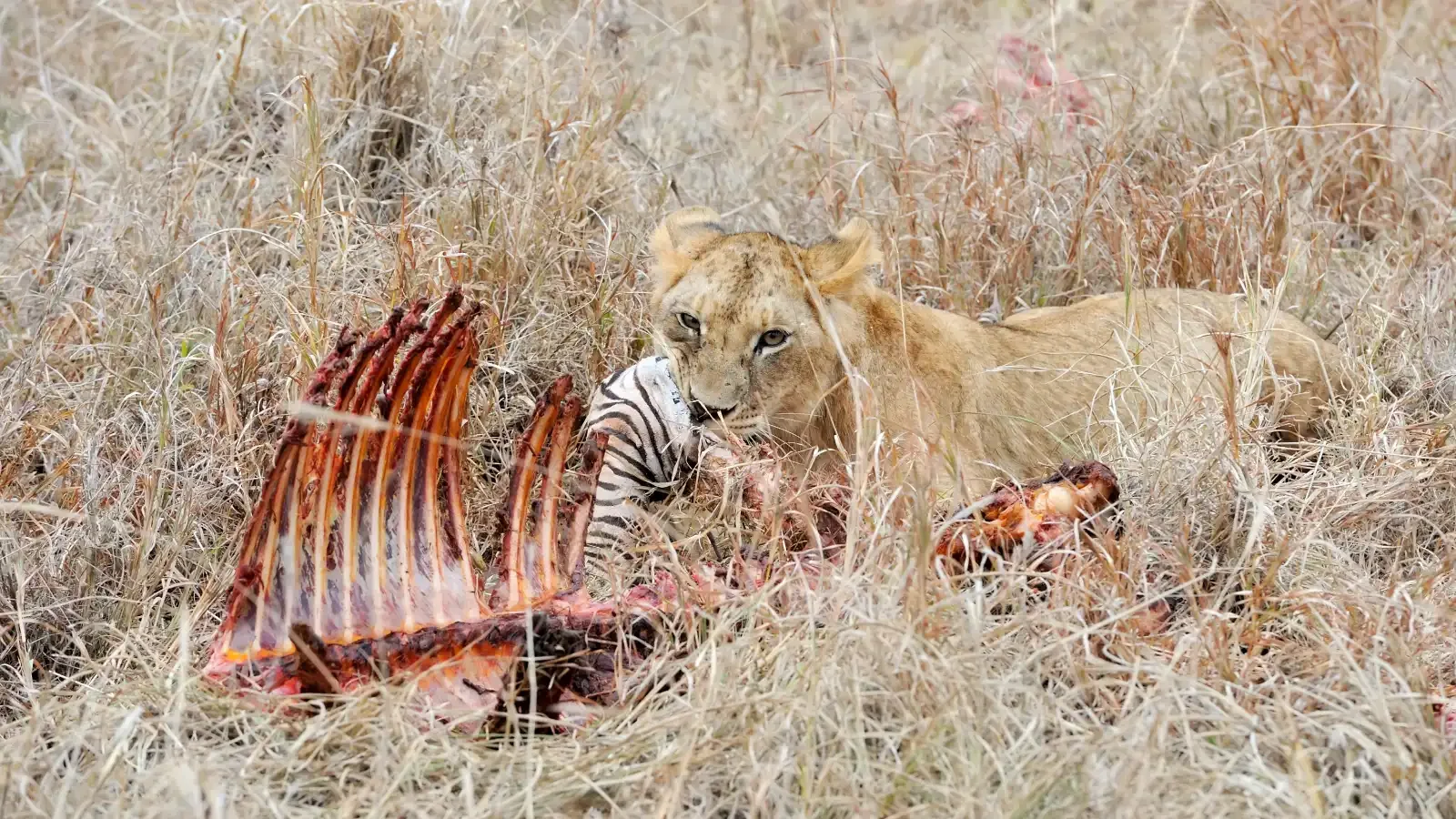
Photo: Envato
Late 1998: The Move to Gowrie Dam
After only a few months, the camera moved to overlook Gowrie Dam, in front of Vuyatela Lodge, and Djuma says it has remained there ever since.
That decision is why the cam still exists. Chasing sightings is exciting and exhausting. A waterhole is patient. Animals must drink, so a camera pointed at water will eventually see much of the reserve's wildlife without going anywhere.
Gowrie Dam is not a spectacular piece of landscape. It is a reliable one.
Nearly three decades of observations exist because somebody worked out that the best place to put a camera is where the animals have to come to you.
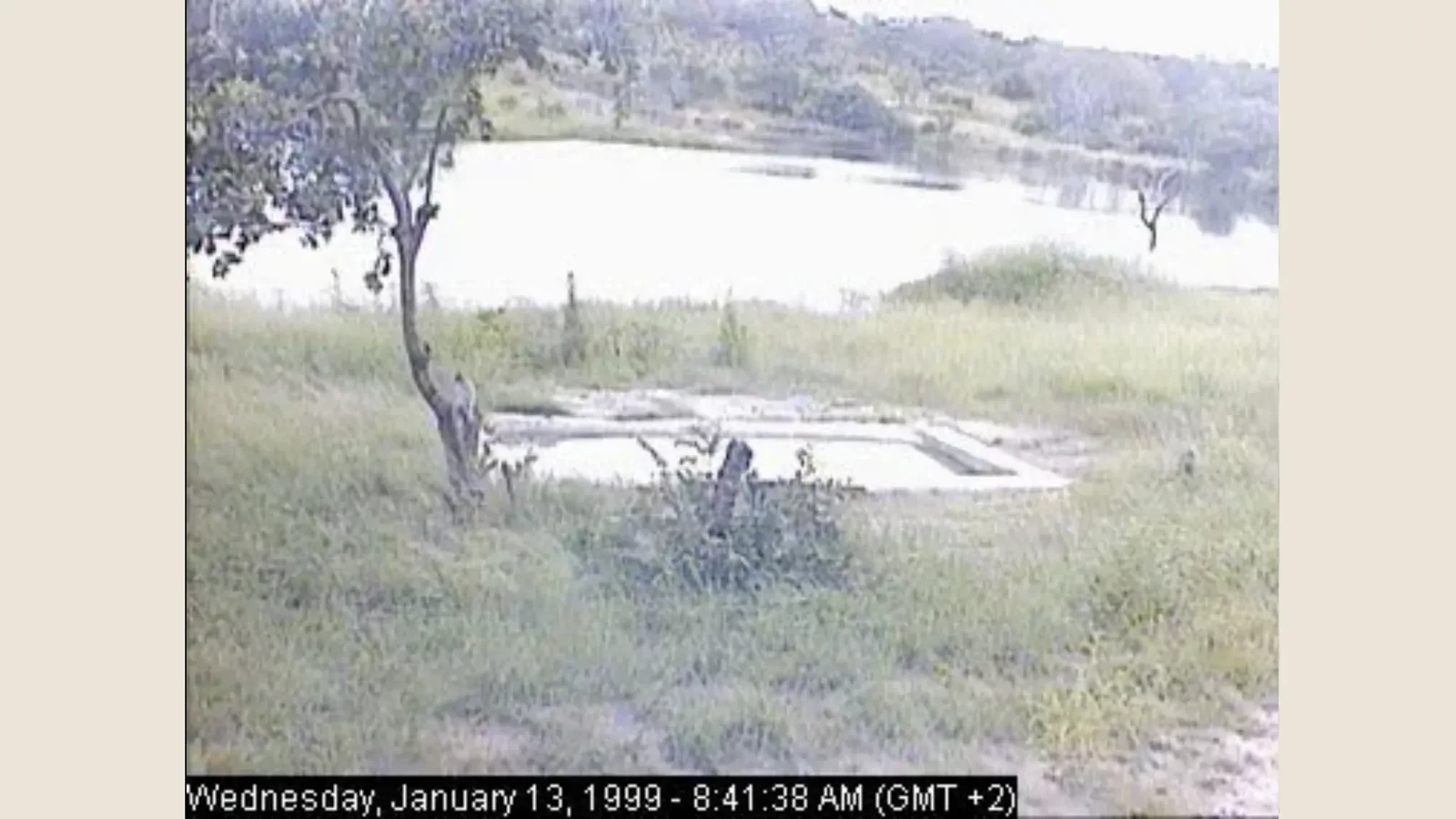
Image: Djuma
Radio for People on Dial-Up
Here is a detail almost nobody mentions, and it is the one that best captures the era.
Because most viewers were on dial-up modems and could only receive a still image every 30 seconds, Africam ran a 24-hour online radio show and provided live audio alongside the static images.
Think about what that means. You could not watch the bush. But you could hear it, continuously, while a photograph of the waterhole refreshed every half minute in your browser.
That is a completely different medium from what we have now, and arguably a more immersive one than the technology should have allowed.
It is also a neat illustration of the whole Djuma approach: when the bandwidth won't do what you want, build something around the bandwidth.
The Virtual Game Drive, Sent by Radio as Sound
In 1999, Clifford and Wallington attempted something considerably harder: broadcasting from a moving safari vehicle.
There was no mobile data network to carry video from the middle of a game reserve. So they used Slow Scan Television, a technique borrowed from amateur radio.
The trick works like this. Take an image from the camera on the vehicle. Convert it into audio frequencies - literally, turn the picture into a sound. Transmit that sound over VHF radio, which will travel across a reserve where nothing else will. At base camp, decode the audio back into an image, save it as a JPEG, and put it on the web.
A picture, encoded as noise, carried by radio, reassembled at the other end.
It was slow and the images were rough, and it worked.
Djuma credits this Virtual Game Drive as the groundwork for later live safari broadcasts, including the Leopard Cam with Kim Wolhuter and, eventually, safariLIVE.
Present-day live safaris with roving presenters and real-time viewer questions are a direct descendant of two men converting photographs into sound in 1999.
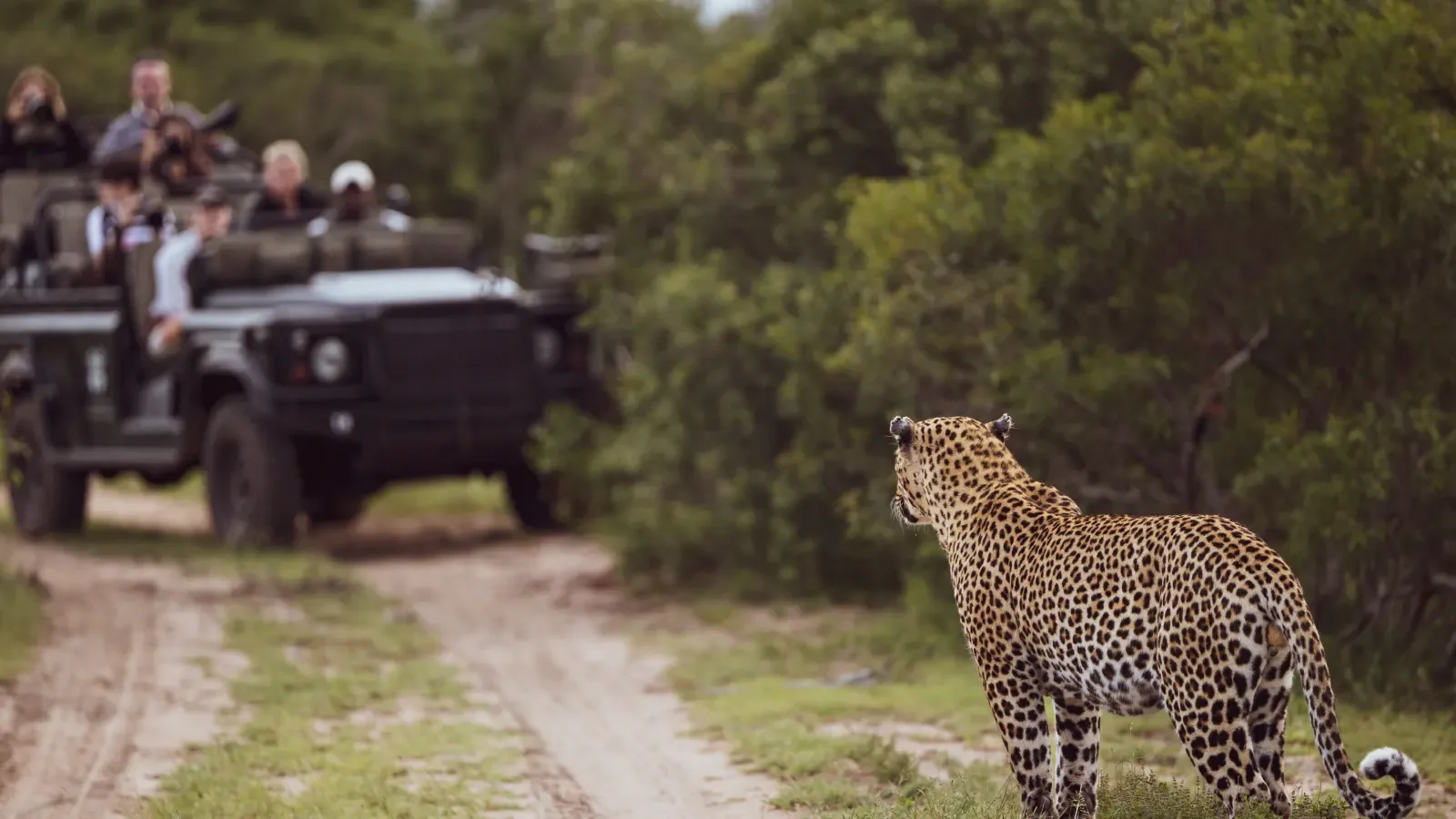
Photo: Envato
The World's Strangest Autofocus System
Early analog nature cameras had no useful autofocus. This was a serious problem, because operators needed to zoom.
The solution the Djuma team built is the best technical detail in the whole story.
When the camera zoomed in on something, the system would step through a range of focus settings, capture a frame at each one, and then pick the sharpest image by comparing file sizes.
A sharp, detailed JPEG compresses less efficiently than a blurry one, so it comes out as a bigger file. The system could not see. It just took a handful of photos and kept the fattest one.
Djuma says this was among the first autofocus systems built for cameras of this kind, and that the approach was later copied at nature-cam sites elsewhere.
The Zoomies
The camera was never left to point itself.
In the early days, the operators - known then as now as "zoomies" - worked from Johannesburg. Because the feed refreshed only every 30 seconds, they used wide-angle sweeps to build up something like a panorama before deciding where to zoom in.
Today, approved volunteer zoomies control the camera remotely, taking turns to pan and tilt in search of something happening. Djuma runs a waiting list for both operator and moderator roles.
That shift, from a handful of people in one South African city to a team of approved volunteers, is the real story of the cam's second act.
Most webcams are watched by people. Djuma Cam is also operated by them, and it has been for nearly thirty years.
A Community Before Social Media
The chat room was there almost from the beginning.
Viewers gathered first on an IRC channel set up by Africam, and on a message board called The Boma. Djuma describes this community as among the very first of its kind on the internet, and it predated MySpace and Facebook by several years.
This matters more than it sounds. The thing that keeps people watching a waterhole where nothing is happening is not the waterhole.
It is the other people watching it with you.
Djuma learned that early, by accident, years before any platform was designed around it - and it is a big part of why live nature cams work at all.
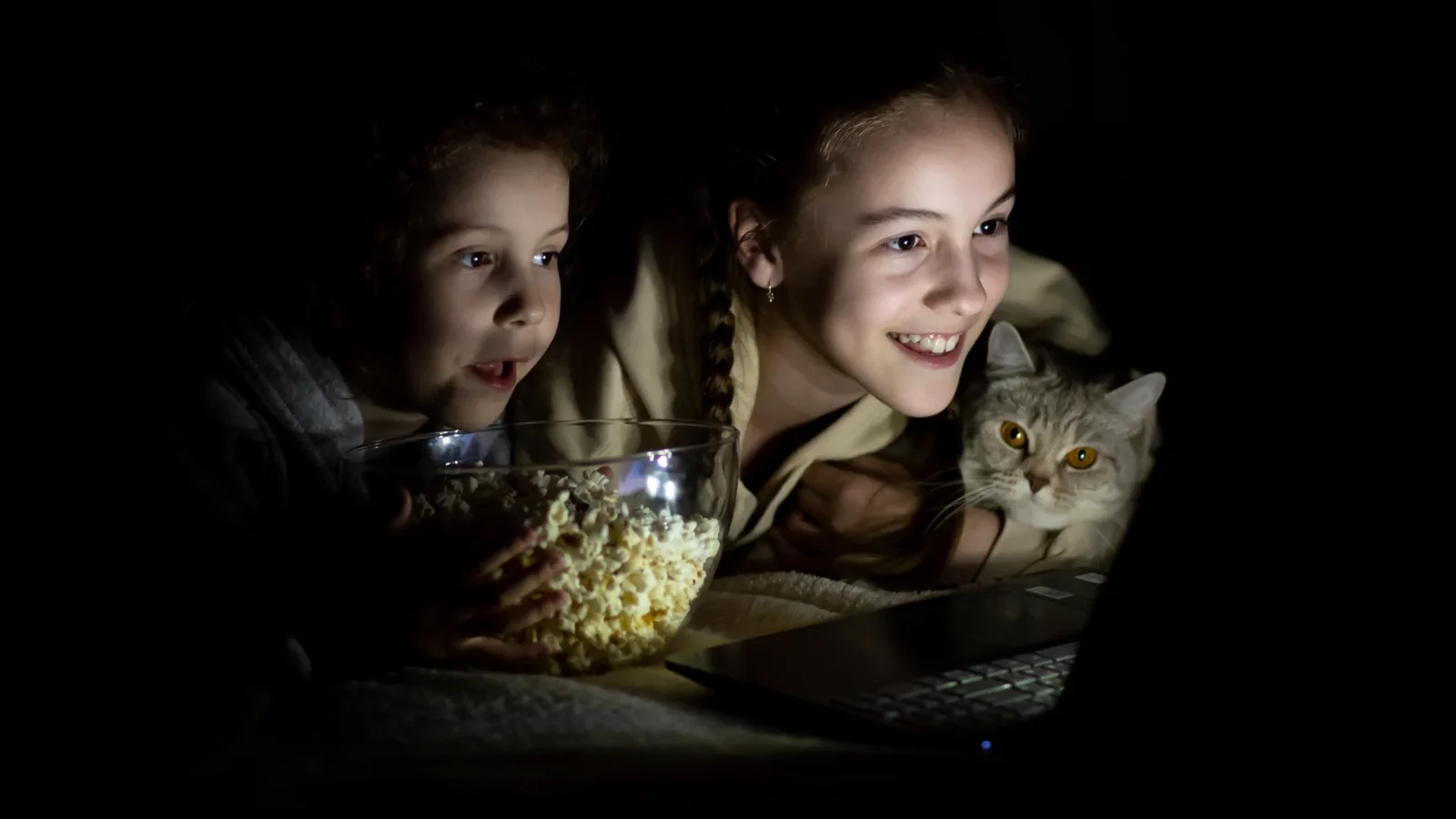
Photo: Envato
Four Generations of Leopard
There is a thread running through all of this that has nothing to do with technology.
When Jurie and Pippa Moolman announced in March 2025 that they were taking the camera back over, they did not lead with the engineering. They led with the leopards.
First Safari, the one-eyed leopard. Then her daughter Karula, who the Moolmans describe as the first queen of Djuma. Karula's daughter Thandi became another familiar female, and today Thandi's daughter Tlalamba carries the line forward.
Four generations of the same maternal line, known by name to an audience scattered across the world.
People did not stay for decades because the resolution kept improving. They stayed because the animals stopped being anonymous. They had histories, offspring and names.
That is the thing a live feed builds in a way a one-off documentary rarely can: not a subject, but a relationship that outlasts the equipment.
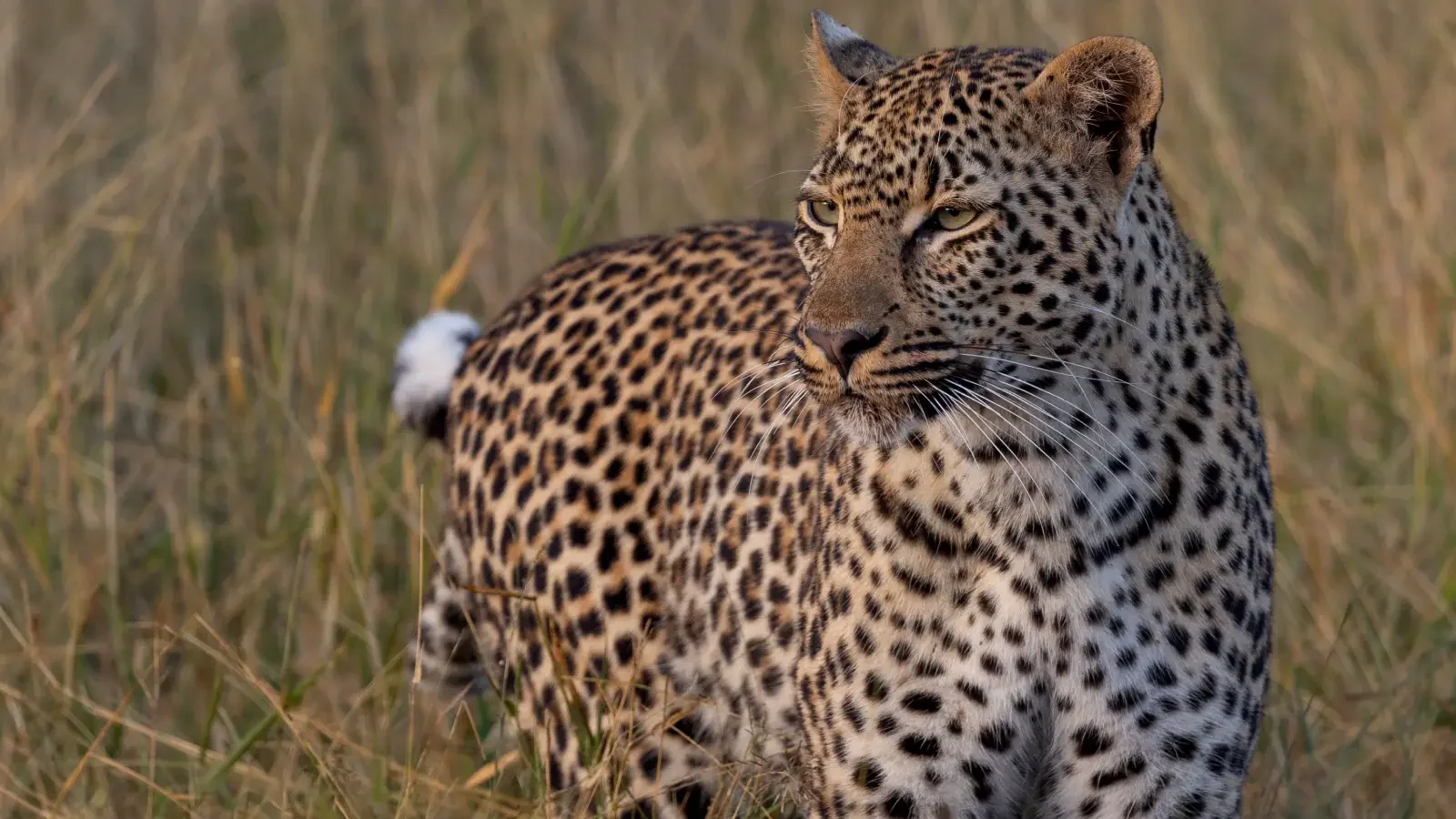
Photo: Envato
A Testing Ground - and Drones in the Dam
Gowrie Dam became a place where the industry tried things.
Djuma's history lists analog video over cables and microwave links, digital cameras on fiber optics, satellite uplinks, 360-degree cameras, low-angle "eye level" cams, camera traps and remote-controlled camera cars. First Africam, then WildEarth, and later National Geographic all used the reserve as a testing ground.
Djuma says some of the earliest drones used to film wildlife were flown there. It notes, with what reads like affection, that several of them crashed into the dam, and that viewers watched live as team members waded in to retrieve the wreckage.
Djuma also says Gowrie was the site of the first internet-controlled "rover cam", which later appeared on National Geographic television.
That one is their claim rather than something independently documented, so treat it accordingly.
From Africam to WildEarth to National Geographic
The commercial history is less romantic and more instructive.
Africam boomed during the dot-com era and later hit hard times. Djuma's account says Jurie, Graham, Paul and others ran it for a period before Campbell Scott and Jon Oliver took over, and that Africam eventually stopped broadcasting from Djuma altogether. Africam still exists today, streaming in HD from sites across southern and eastern Africa.
Meanwhile Graham and Emily Wallington founded WildEarth at Djuma, and with backing from Telkom Media launched WildEarth.tv on April 27, 2007. For a while the entire operation was one safari vehicle and the Djuma Cam, with Graham and Emily commuting weekly between Johannesburg and the reserve.
With later support from National Geographic, that grew into safariLIVE, which became a significant television and online property and expanded well beyond Djuma.
The lineage is worth stating plainly, because it is usually garbled: for National Geographic, Djuma was a testing ground, not a launchpad.
What happened is that a format developed at Djuma - live, unscripted, interactive wildlife, with the audience in the room - turned out to be good enough that a major broadcaster eventually wanted it.
Is It the World's Oldest Nature Webcam?
You will see this claim everywhere, including from Djuma itself. It is worth unpicking, because the truth is more interesting than the superlative.
Start with the competition.
The first webcam of any kind watched a coffee pot. Quentin Stafford-Fraser and Paul Jardetzky set it up in the Computer Laboratory at the University of Cambridge in 1991, initially on a local network so researchers could see whether the pot was empty before walking to it. It reached the web a few years later and was switched off in 2001. It's one of our favorite weird webcam facts.
FogCam was launched by San Francisco State University students in 1994. When it was nearly switched off in 2019, SFSU stepped in to save it, calling it the world's oldest running webcam.
And live animals got online early too. Netscape engineer Lou Montulli built the Amazing Fishcam in 1994, pointing a camera at an office aquarium. That is four years before Djuma.
So Djuma cannot claim the first webcam, the longest-running webcam, or the first camera pointed at animals.
What is independently defensible is that Djuma is one of the earliest live webcams created specifically to watch wild animals in their natural habitat, and Gowrie Dam has been its home since late 1998.
Djuma's own current wording is the sensible one. Their About page says the reserve hosted one of the world's first live wildlife webcams. That is defensible, unglamorous and true, and it does not need improving.
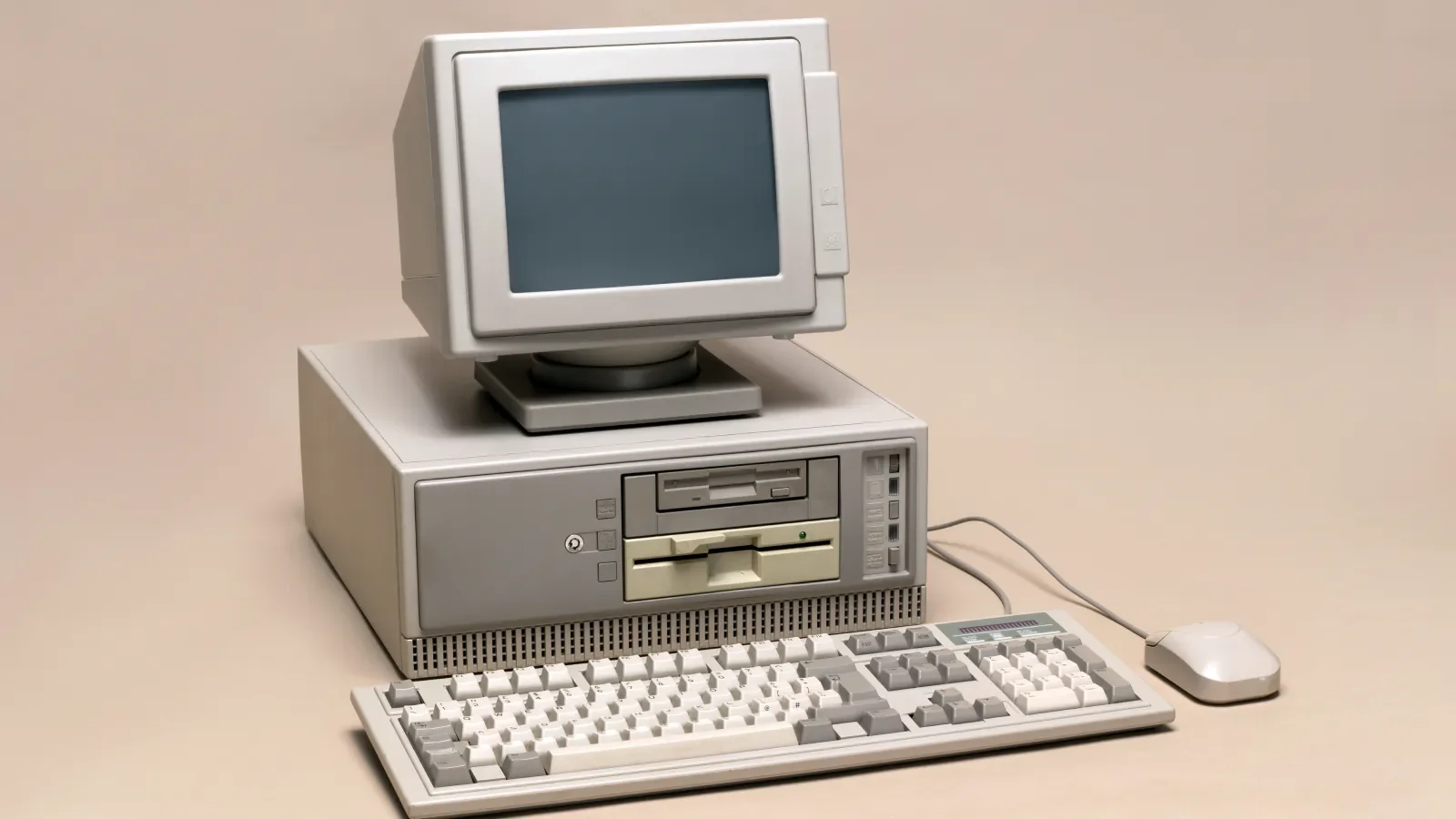
Photo: Envato
The Break Nobody Mentions
The claim you will still find on webcam directories is that Djuma has been broadcasting continuously since 1998. It hasn't, and the source that proves it is Djuma.
In March 2025 the Moolmans posted that the last WildEarth live safari had aired that February and that the reserve was taking the camera back over.
The following month, a post titled "Djuma Cam is LIVE again" announced the camera's return, thanking viewers for their patience over the past month and describing it as a new chapter.
That is not a flaw in the story. It is the most interesting thing to have happened to the camera in a decade.
A piece of infrastructure from 1998 outlasted Africam's broadcasting era at Djuma, then WildEarth's, before the reserve itself took the camera back over and rebuilt it.
Its historical significance was never about uptime.
How Djuma Cam Works Today
The camera at Gowrie Dam is now a PTZ unit - pan, tilt, zoom - controlled remotely through Djuma's own operator platform by approved volunteers. The public feed goes out on YouTube, around the clock, subject to the usual realities of running electronics in a game reserve a long way from anywhere.
Djuma itself no longer operates as a commercial lodge, though the reserve has hosted a handful of small expeditions.
The camera, oddly, has outlasted Djuma's days as a safari lodge.
What You'll See
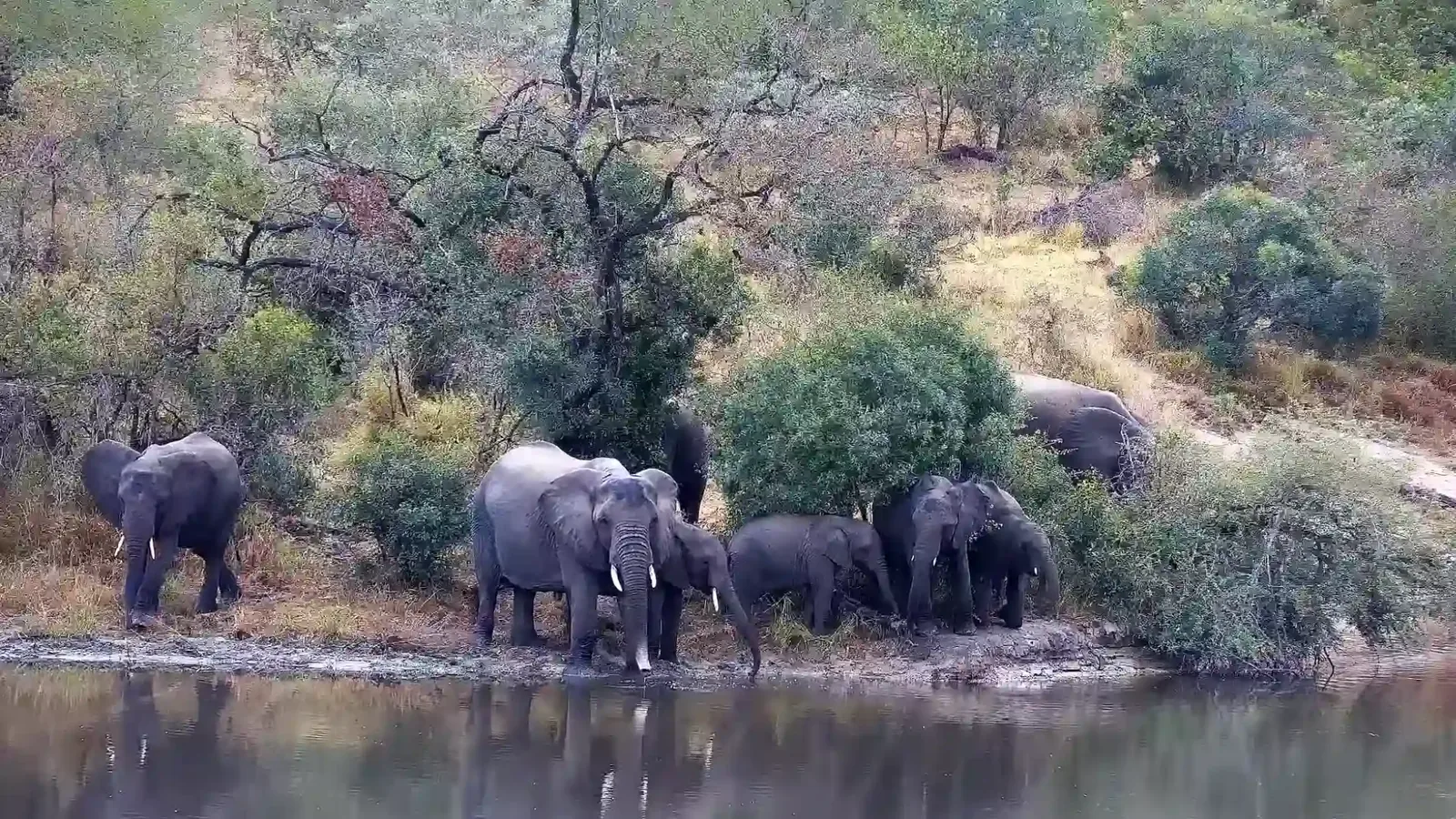
Gowrie Dam does what waterholes do. Elephants arrive in groups and sometimes fill the frame. Impala are near-constant. Waterbuck show the white ring on the rump, and nyala the white flank stripes. Hippos haul out after dark. Birds, reptiles and, when conditions suit, crocodiles.
Leopard and lion pass through. Never on schedule, which is the entire point.
There will be long quiet stretches. That is not a failure of the cam.
It is the one thing a live feed can offer that no edited documentary ever can: the genuine possibility that nothing will happen, which is what makes it matter when something does.
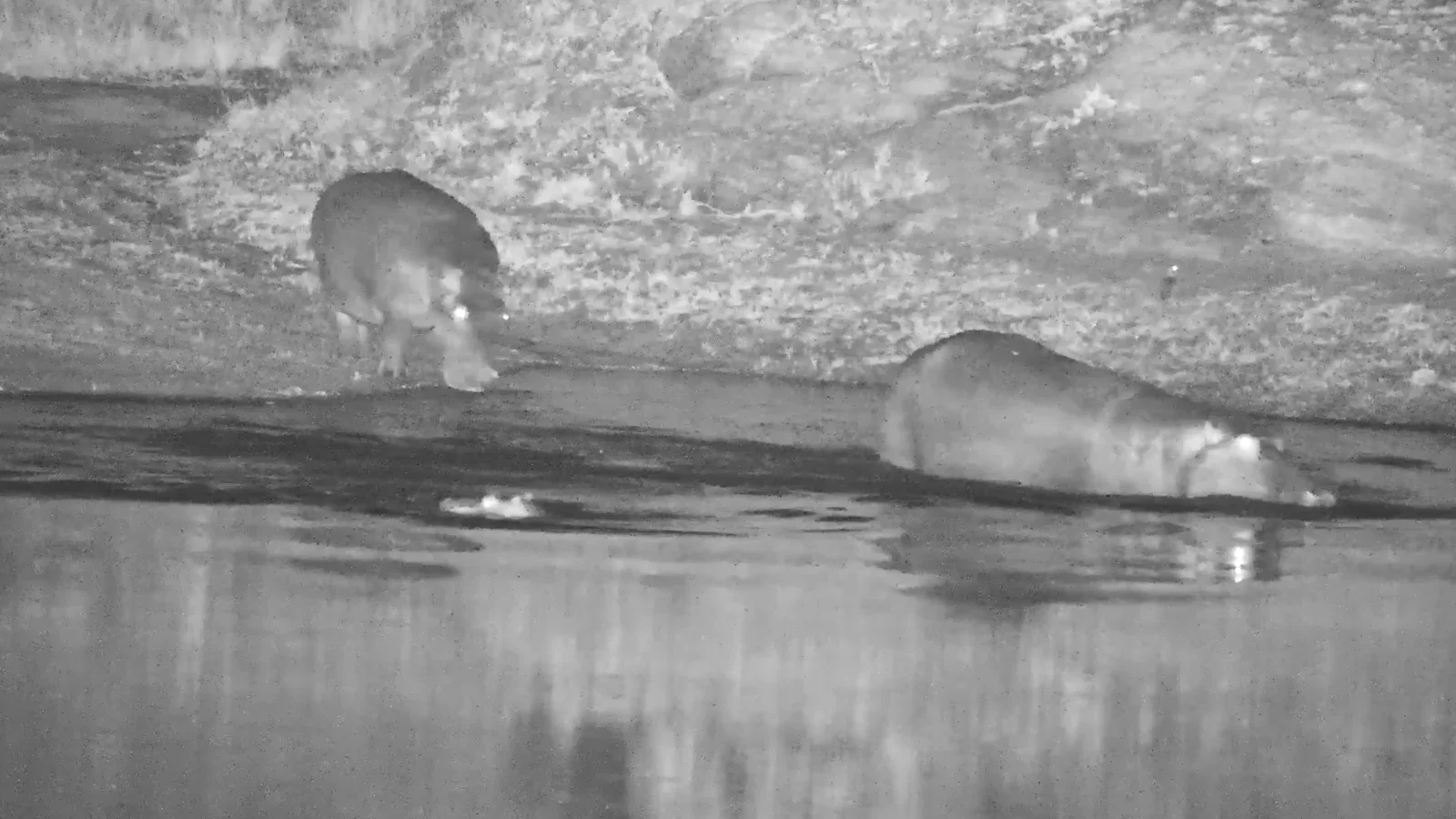
Image: Djuma Cam
Why a 1998 Webcam Still Matters
Every piece of technology in this story has been replaced. The CCTV camera, the trailer, Skadonk, the microwave link, the California servers, the 30-second JPEGs, the radio show, the slow-scan transmitter, the file-size autofocus, the IRC channel, and the broadcasting eras of two separate companies.
The waterhole is the same. And the leopard lineage is still being followed.
What Clifford, Wallington and the Moolmans worked out in 1998 was not a technology. It was a format: point a camera at wild animals, let people watch it live, let them talk to each other while they wait, and do not tell them what is going to happen, because you do not know either.
Everything since has been an argument about bandwidth.
Watch Djuma Cam live, or explore more South Africa cams and wildlife webcams.
 Take Me Anywhere
Sources & Further Reading 12 sources
- Djuma - The history of the Djuma Cam
- Djuma - About Djuma
- Djuma - "Djuma Cam is coming home!" (March 2025)
- Djuma - "Djuma Cam is LIVE again!" (April 2025)
- RTP - Game of Leopard Thrones, episode 2 (Djuma leopard lineage)
- Africam - The Africam Story
- Wikipedia - WildEarth
- Wikipedia - Slow-scan television
- University of Cambridge - The Trojan Room coffee pot, a (non-technical) biography
- FogCam - Happy Birthday Fogcam (SF State, 2004)
- NPR - Internet Campaign Saves University's FogCam (2019)
- Lou Montulli - A Short History of the Fishcam