
How Do Live Webcams Work?
A Simple Explanation For Anyone
__________________________________________
Right Now, a Camera is Live Streaming, Somewhere on Earth.
A beach in Thailand. A runway in Tokyo. A volcano in Iceland.
There are billions of cameras operating globally - from traffic systems and wildlife reserves to beaches, airports, and city streets.
The number of connected cameras worldwide runs well into the billions, and continues to grow every year.
In busy urban areas, the average person can appear on camera dozens of times per day without ever realising it.
We explored this further in our article on the most surveilled cities on Earth - the numbers are staggering.
And yet, most of this footage is never actively watched. At the same time, thousands of cameras are broadcasting live streams - openly - to anyone, anywhere in the world, many of which are organised by location and category on platforms like EarthLive.TV.
Right now, you could be watching a sunrise in Bali, traffic in New York, or snowfall in Japan. All at the same time.
But how does that actually work?
The surprisingly fascinating technology behind the live streams you watch daily.
__________________________________________
How Do Live Webcams Work?
- Quick Answer -
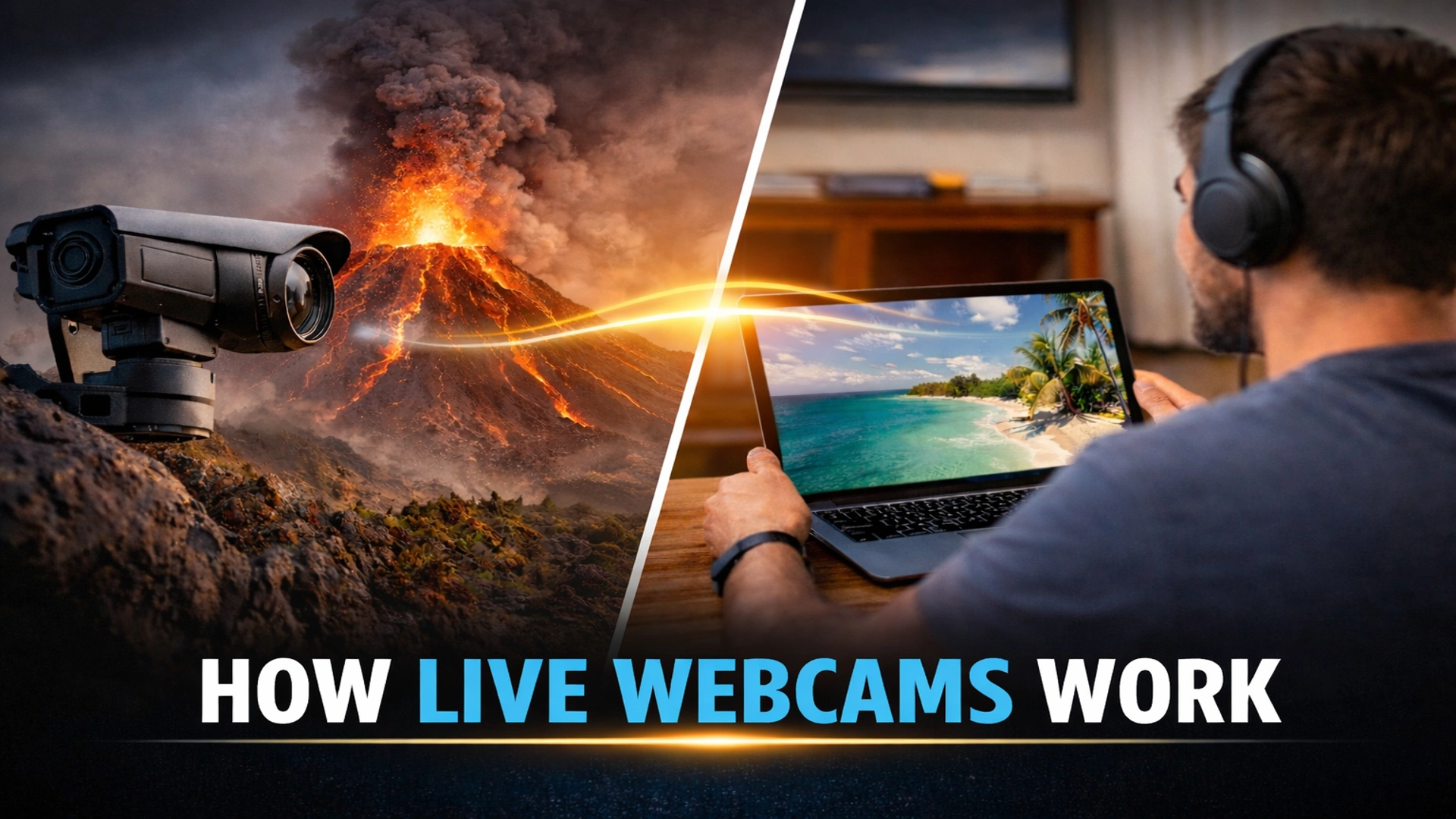
A live webcam works by capturing video, converting it into digital data, sending that data over the internet to a server, and then streaming it to your screen - all in near real-time, usually with just a few seconds of delay.
Camera → Internet → Server → You
Simple. But what's happening underneath is far more interesting.
__________________________________________
The Simple Explanation
- That Actually Makes Sense -
When you watch a live webcam, you're not seeing one continuous video file being sent all at once.
Instead, the footage is broken into thousands of tiny pieces every second. Here's what actually happens:
1. Camera captures video in real time:
It records what's happening, typically at 25-30 frames per second.
2. Video is chopped into small chunks:
Rather than sending one huge file, the stream is split into tiny segments, often just a few seconds long. This is what allows the video to load smoothly even if your connection isn't perfect.
3. Chunks travel across the internet:
Each piece moves through a network of servers, sometimes across countries or continents, before reaching your device.
4. Your device rebuilds the chunks:
Your browser downloads those pieces and stitches them back together in real time, creating seamless live video.
That's why live webcams work even on average internet connections - you're always just a few seconds behind real life, watching a constantly updating stream.
That small gap between reality and your screen is called latency. The further the data has to travel, the longer the delay - usually somewhere between 2 and 30 seconds.
You're effectively watching a constant stream of tiny picture updates - rebuilt so quickly your brain sees it as live.
__________________________________________
The Facinating Bit
- The Wow Facts -
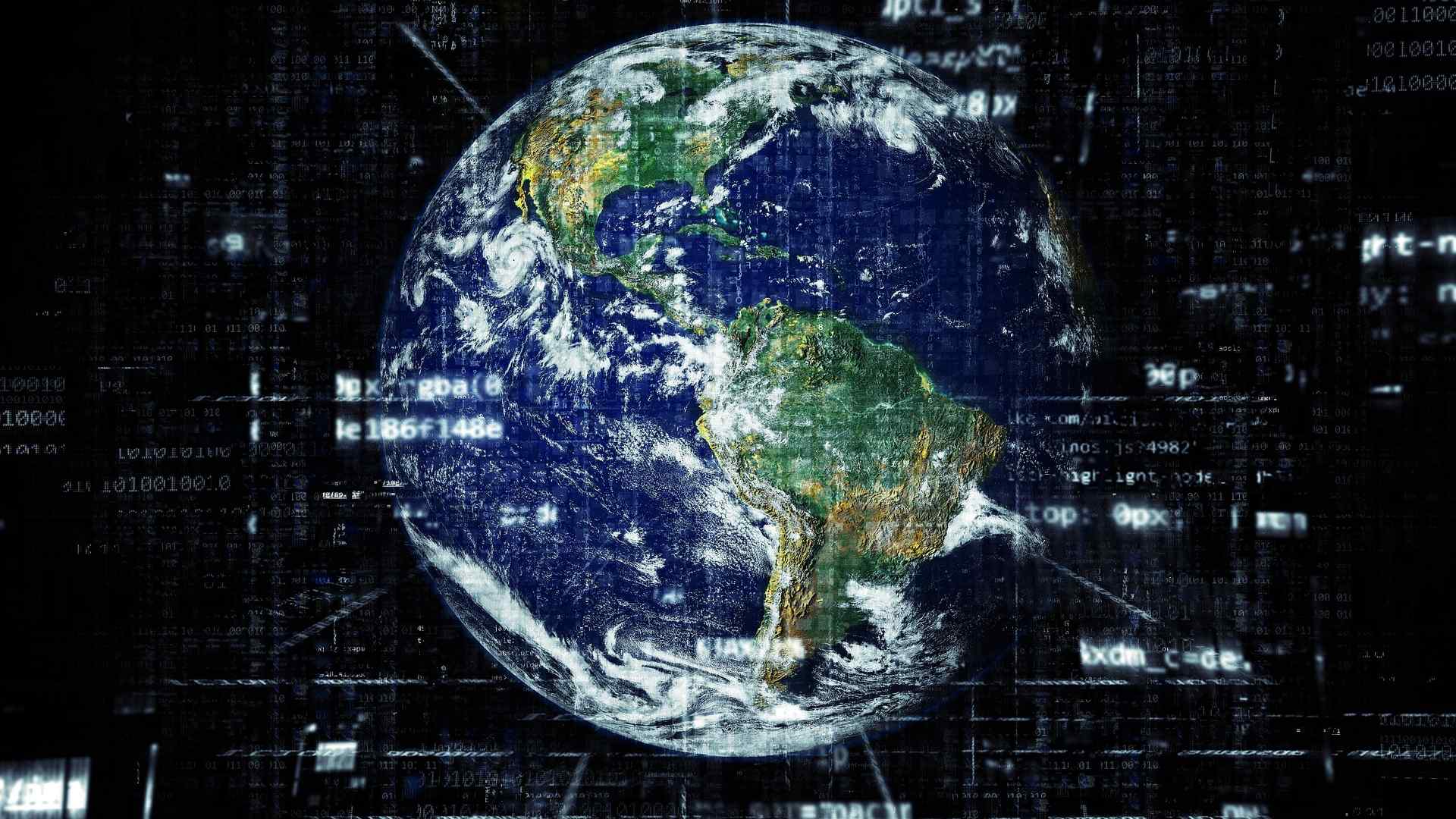
The air around you right now is filled with invisible signals - Wi-Fi, mobile data, and satellite transmissions - all moving at the speed of light, carrying everything from messages to live streams from the other side of the planet.
To put that into perspective: there are around 100,000 commercial flights in the air at any given moment.
At the same time, there are millions of simultaneous data streams moving globally - far more than planes in the sky.
Every second, vast amounts of this data are being broken, routed, copied, and delivered across global networks in milliseconds.
And most of it happens without you ever noticing.
Here's the fact that tends to stop people: Most cameras aren't actively watched by humans.
They simply capture and transmit data continuously - streaming into the void.
Live webcam platforms take a small slice of that global flow and make it accessible, watchable, and genuinely useful.
If you want to go deeper on the stranger side of webcam culture, our article on 15 weird, wonderful and bizarre webcam facts is worth a read.
__________________________________________
Why Do Some Webcams Lag or Go Offline?
If you've ever clicked a stream and seen it freeze or disappear, here's why:
A) Weak internet connection at the camera location - Remote locations are especially vulnerable.
B) Server overload - When too many people tune in at once, such as during a volcanic eruption or major weather event.
C) Weather or hardware damage - Especially for outdoor cameras. A storm that's great to watch is also the thing most likely to knock the camera out.
D) The owner switching it off - Many webcams are run by individuals, hotels, or local authorities who may take them offline for maintenance or cost reasons.
That unpredictability is part of what makes live webcams interesting - they're real, unscripted, and constantly changing!
__________________________________________
How Do 24/7 Webcams Stay Online 24/7?
Running a webcam around the clock requires three things:
Constant power → Most permanent webcams are hardwired into a building's power supply, often with battery backup. Some remote cams use solar panels.
Reliable internet → Commercial fibre or dedicated broadband, sometimes with 4G/5G as backup. The more remote the location, the more creative the solution.
A hosting platform → Most operators use YouTube Live or dedicated streaming services to broadcast the feed. These handle the heavy lifting of delivering video to viewers worldwide.
Who runs them? All sorts of people and organisations:
🏨 - Hotels & Resorts
🏙️ - Cities and transport systems
🦁 - Wildlife companies & national parks
✈️ - Airports
Individuals who simply want to share their view with the world!
If you're interested in running your own 24/7 live stream and getting it listed, EarthLive.TV lists streams for free.
__________________________________________
Frequently Asked Questions
.
Are live webcams actually live?
Almost. Most have a delay of a few seconds depending on the platform and connection.
What you're seeing is real - just very slightly in the past.
.
Why do webcams freeze or go grey?
Usually because the camera or its connection has dropped - not your device.
Try refreshing the page or checking back later.
.
Who pays for live webcams?
Typically whoever owns the camera - usually for tourism, promotion, or public information.
Many recoup costs through YouTube ad revenue.
.
Are they free to watch?
Yes - almost always completely free. EarthLive.TV brings together hundreds of free live streams in one place, organised by interest categoryand country, with no subscription or sign-up required.
__________________________________________
Now You Know How They Work - Go Watch One!
Somewhere right now, a camera is capturing something real.
A beach at sunrise. A city waking up. A storm rolling in. Wildlife moving through the dark.
And all of it is happening live.
Explore the best live webcam categories on EarthLive.TV, browse by country or interest, or jump straight into the interactive map and see what's happening live right now!
Are Live Webcams The Future of Travel?
__________________________________________