
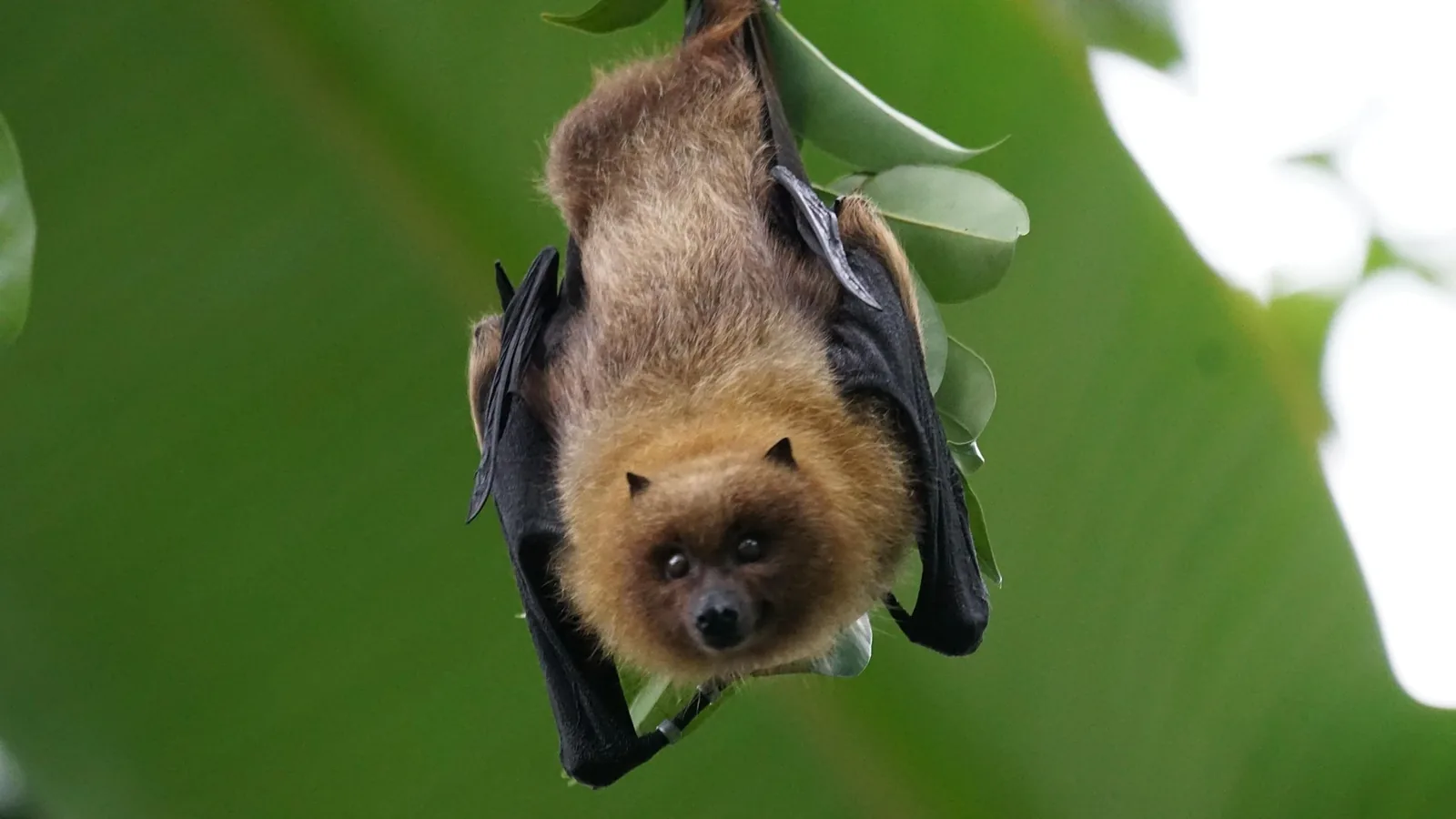
The saying “Blind as a bat” is one of the most familiar in English, and also one of the least accurate. Bats can see, some of them extremely well.
What makes them special is that many species can also “see” with sound.
Here’s how bat vision really works, which bats see best, and where you can watch them live.
Are Bats Blind?
No. Every bat has working eyes. The myth probably sticks because so many bats also use echolocation, which can make it seem like they don’t need their eyes at all.
Echolocation works like sonar. A bat makes high-pitched calls, most of them too high for humans to hear, then listens for the echoes bouncing back off insects, branches and walls. The timing and shape of those echoes tell the bat where things are, how far away they are and even how they’re moving.
But echolocation is an extra sense, not a replacement for sight. Bats use both.
Are All Bats the Same?
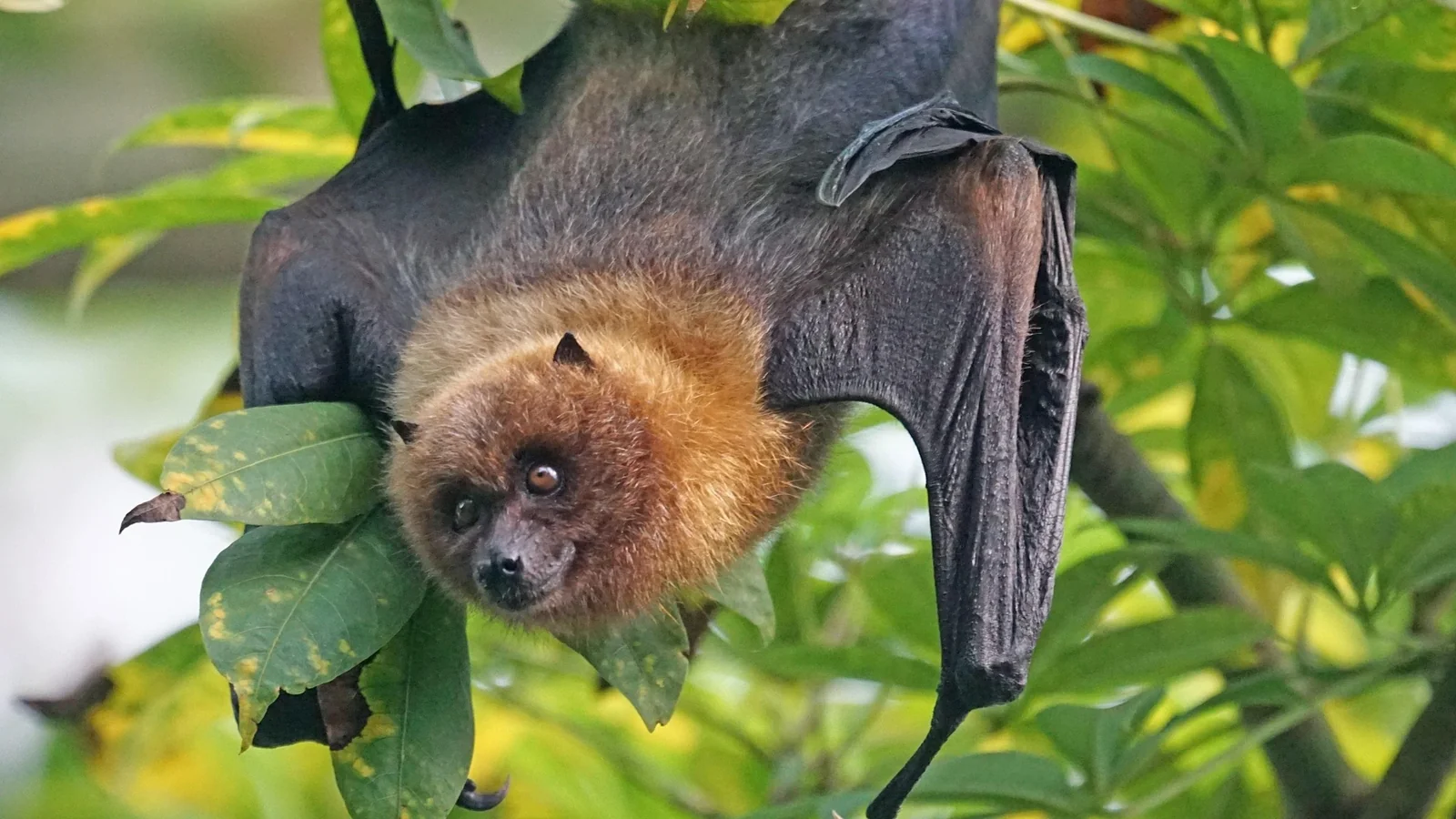
Photo: Pixel-mixer / Pixabay
Not at all. Bats are the second-largest group of mammals after rodents, and their senses vary a lot from species to species.
Most insect-hunting bats rely heavily on echolocation and have small eyes. Small doesn’t mean useless, though. Studies suggest even tiny-eyed species like the little brown bat use vision, for example to find their way by moonlight.
At the other end of the scale are the Old World fruit bats, the family that includes flying foxes. Most of them don’t echolocate at all. Instead, they have large eyes adapted for seeing in low light, along with a strong sense of smell for finding ripe fruit and flowers.
In one small experiment, brown long-eared bats even used their eyes to help find food while still echolocating. Often, the two senses work as a team.
Can Bats See in Daylight?
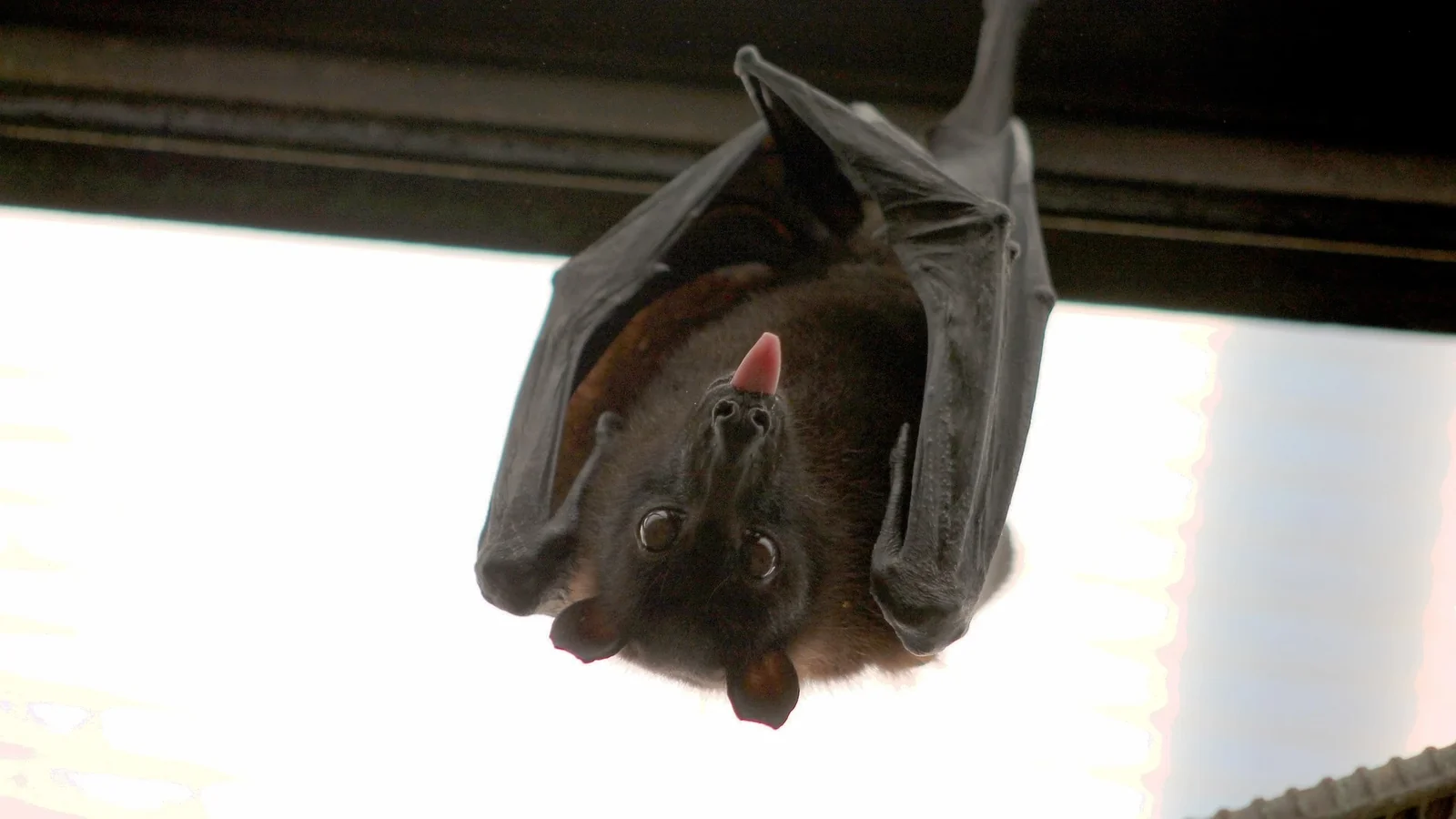
Photo: jochemy / Pixabay
Some can. Most bats are active at night and their eyes are tuned for darkness, but they aren’t blinded by daylight. A few species leave their roosts before sunset, and some are regularly active during the day.
Fruit bats in particular often see well in bright light. In Tel Aviv, researchers have even tracked Egyptian fruit bats flying around the city in the middle of the day.
Are Bats Colorblind?
Not necessarily. A 2009 study looked at two bat species from Central and South America, Pallas’s long-tongued bat and Seba’s short-tailed bat. It found eye cells sensitive to ultraviolet light, plus the eye cells needed to see in daylight and tell some colors apart.
UV sensitivity may help nectar-feeding bats spot flowers, many of which reflect UV light.
Color vision varies between species, and researchers are still working out exactly what different bats can see.
The Bat That Uses Both
The Egyptian fruit bat is one of the Old World fruit bats that can echolocate, and it does it in an unusual way: by clicking its tongue.
A 2022 study led by researchers at Tel Aviv University followed Egyptian fruit bats around Tel Aviv, Israel, during the day. Even with good light, the bats kept echolocating, and they clicked more often just before landing in trees or swooping down to drink.
Professor Yossi Yovel, who led the research group, suggested that echolocation helps the bats measure distances more accurately. It’s a bit like crossing a road using both your eyes and your ears.
You can watch a colony of Egyptian fruit bats live at Tel Aviv University.
Are Bats Blind or Deaf?
Neither. Bats’ hearing is exceptional, and it has to be for echolocation to work. Many species can hear frequencies far above the range of human hearing, which lets them pick up the faint echoes of their own calls.
Humans can learn a version of it too. Daniel Kish, who lost his sight as a baby, uses tongue clicks to build a picture of the world around him, much like the Egyptian fruit bat.
Where Does “Blind as a Bat” Come From?
Nobody knows exactly. The idea that bats see poorly is very old, though. More than 2,300 years ago, the Greek philosopher Aristotle compared the human mind struggling with obvious truths to “the eyes of bats” facing “the blaze of day.”
Whatever its origin, the saying has stuck around far longer than the science supports.
Watch the World’s Largest Bat Colony
Bracken Cave, outside San Antonio in Texas, is home to the largest known bat colony on Earth, an estimated 20 million Mexican free-tailed bats, though nobody knows the exact number. The cave and the land around it are protected by Bat Conservation International.
The bats spend roughly spring to fall at the cave, raising their pups and pouring out each evening to hunt insects, then head south for the winter. The live cam is busiest in the warmer months.
For another huge bat flight, Carlsbad Caverns National Park in New Mexico is home to several hundred thousand Brazilian free-tailed bats, the same species as Bracken Cave’s Mexican free-tailed bats, just under another name. From April to mid-October, they spiral out of the cave each evening around dusk.
LIVEWatch live →Find more live animal cams in our wildlife collection, explore live cams across the United States, or see the best countries for live wildlife webcams. Curious about vampire bats? Meet them and an animal for every letter in our animals A to Z.
 Take Me Anywhere
Sources 11
- Bat Conservation International (2025) - 1,500 bat species and counting
- Live Science - Are bats really blind?
- Müller et al. (2009) - Bat eyes have ultraviolet-sensitive cone photoreceptors, PLOS ONE
- Eitan et al. (2022) - Functional daylight echolocation in highly visual bats, Current Biology
- Tel Aviv University via EurekAlert (2022) - Fruit bats are outstanding navigators, even by day
- Science News (2022) - Most bats don’t echolocate in broad daylight. Here’s an exception
- Eklöf & Jones (2003) - Use of vision in prey detection by brown long-eared bats, Animal Behaviour
- Aristotle - Metaphysics, Book II (MIT Internet Classics Archive)
- Wikipedia - Bracken Cave
- National Park Service - Carlsbad Caverns: Brazilian free-tailed bat outflight
- BBC (2015) - Blind man uses bat-like vision, World’s Weirdest Events
Editor's note
Bat vision varies widely between species, and research into what different bats can see is ongoing. Colony sizes at Bracken Cave and Carlsbad Caverns are estimates and change from year to year. Both colonies are migratory, so the cams are busiest from spring to fall.
How we researched this article
We used peer-reviewed studies on bat vision and echolocation, including research published in PLOS ONE, Current Biology and Animal Behaviour, along with information from Bat Conservation International, Tel Aviv University and the US National Park Service. Background details come from science news coverage and reference sources.