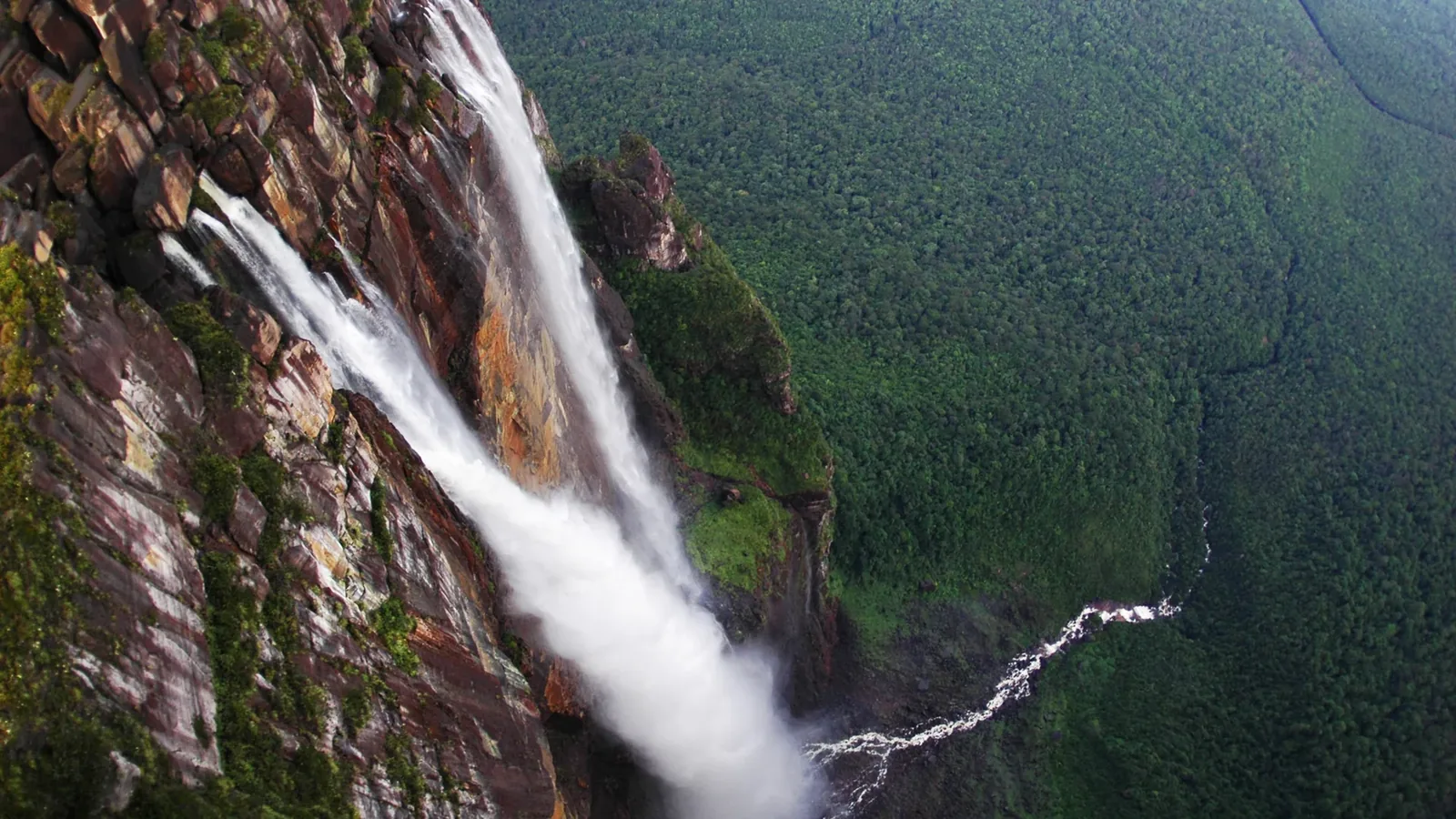
Ask almost anyone to name the tallest waterfall on Earth and they’ll say Angel Falls. At 3,212 feet (979 meters), it has held the title for generations.
But look closely at how that height was measured and a different answer begins to appear, one that takes us from Venezuela to South Africa and finally to the bottom of the Atlantic.
Why Waterfalls Are Hard to Measure
Imagine a river reaching a cliff and dropping straight down 1,600 feet into a pool. Easy: measure the top, measure the bottom.
Real waterfalls are rarely that simple. Water might plunge, hit a ledge, slide along a slope, then drop again. Where does one waterfall end and the next begin?
There’s no single global authority on this. The specialist World Waterfall Database counts connected drops as one waterfall, but records the tallest single drop separately, and that distinction is what this whole argument comes down to.
The 2,648-Foot Giant
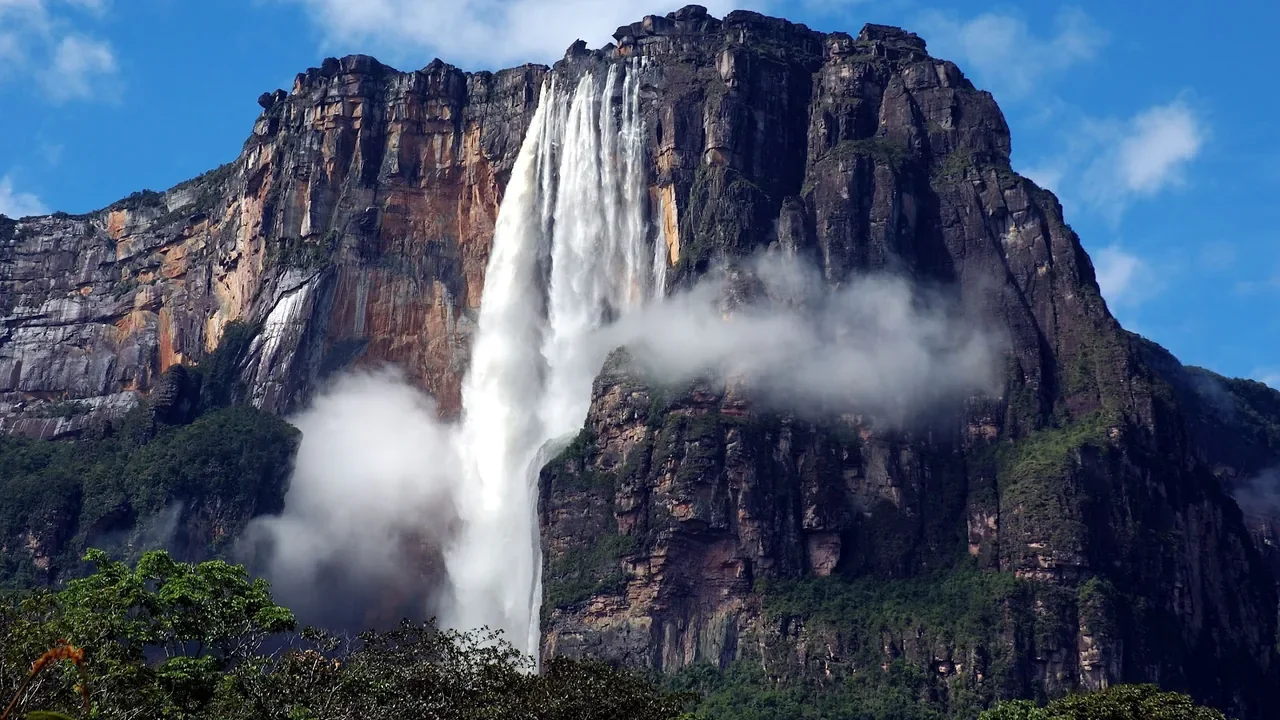
Even if you set the 3,212-foot figure aside, Angel Falls still holds a staggering record. Its main drop is 2,648 feet (807 meters), unbroken from top to bottom.
That’s taller than every building on Earth except the Burj Khalifa. The water falls from the edge of Auyán-tepui for so long that much of it turns to mist before it hits the rocks below.
Guinness lists it as the tallest single drop in a waterfall, and the World Waterfall Database ranks it first for free fall too.
Where the numbers came from: In 1949, American photojournalist Ruth Robertson led the expedition that surveyed the falls. National Geographic refused to sponsor it after earlier attempts failed, but agreed to publish her story if she made it.
Her team reached the falls on May 12 and came back with two figures: 2,648 feet (807 meters) for the main drop and 3,212 feet (979 meters) overall. National Geographic ran the story that November, and both numbers have been repeated ever since.
The argument is over the extra 564 feet in between.
The Problem With 3,212 Feet
The World Waterfall Database thinks the 1949 survey measured more than the waterfall itself.
Its reconstruction of the expedition puts the lower survey point nearly 1.2 miles (2 km) downstream from the base of the main drop. So the 3,212 feet, it argues, is really the drop from the top of Auyán-tepui to a spot far down the valley.
After the big plunge, the water gathers among the rocks and flows on, with a smaller fall farther down. WWD says the two are too far apart to count as one waterfall.
Not everyone agrees. UNESCO still describes Canaima’s falls as the highest in the world, and Guinness still gives Angel Falls the record at 3,212 feet.
But Guinness now openly notes the dispute. If only the main drop counts, it says, the record moves to South Africa.
Tugela Falls: The Challenger
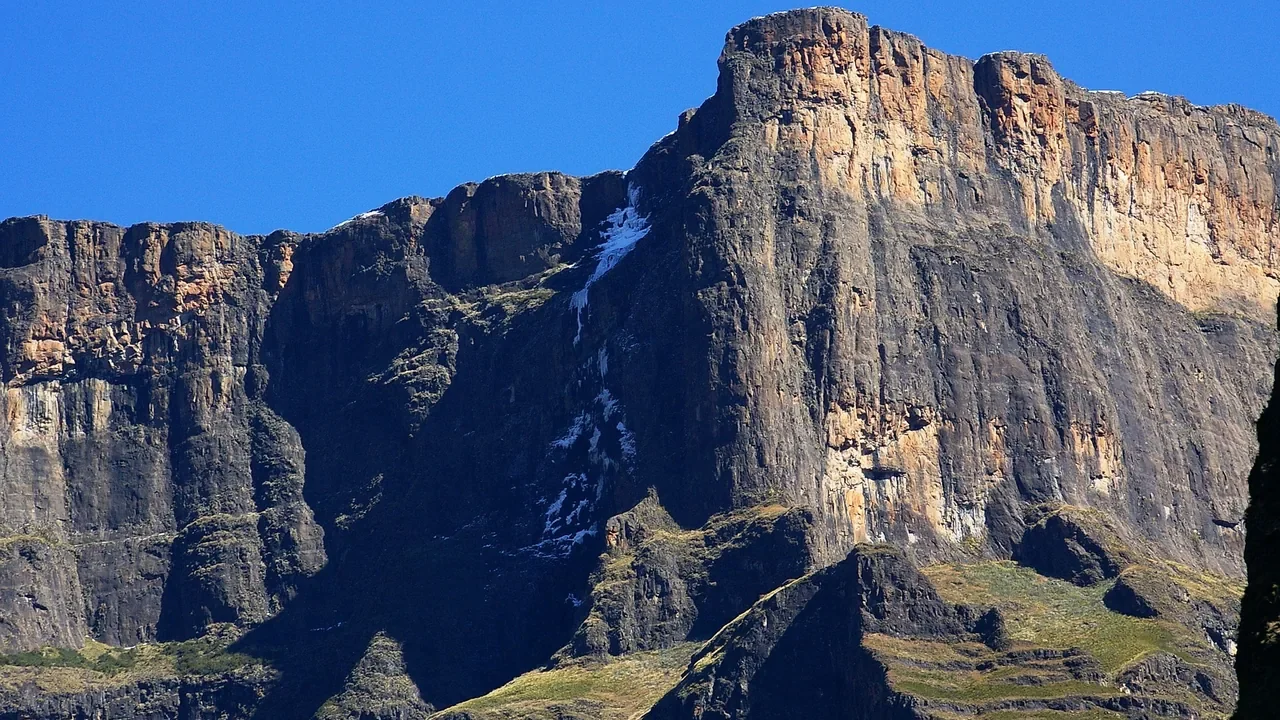
Tugela Falls drops from the Amphitheatre, a huge wall of rock in South Africa’s Drakensberg mountains.
It looks nothing like Angel Falls. Instead of one giant ribbon of water, it steps down the cliff in five tiers, for a total of 3,110 feet (948 meters). Guinness lists it as the tallest multi-tiered waterfall on Earth.
Its biggest single drop is only about 1,350 feet (411 meters), half of Angel’s. So on the traditional numbers, Angel wins by about 100 feet.
The 3,225-foot twist: In 2016, a Czech team of travelers and surveyors remeasured Tugela and got 3,225 feet (983 meters), which would make it 13 feet taller than Angel Falls.
The result was described in a 2017 university press release, but Guinness and the World Waterfall Database still list Tugela at 3,110 feet. WWD rejects the new figure for the same reason it rejects Angel’s 3,212 feet: the lower point was more than half a mile downstream.
So the real case for Tugela isn’t 3,225 feet. It’s that WWD keeps Tugela’s traditional 3,110 feet while counting only Angel’s 2,648-foot main drop, even though WWD admits Tugela has never been definitively measured either.
You can watch another of South Africa’s waterfalls live:
LIVEWatch live →Where Angel Falls Really Ranks
The Other Contenders
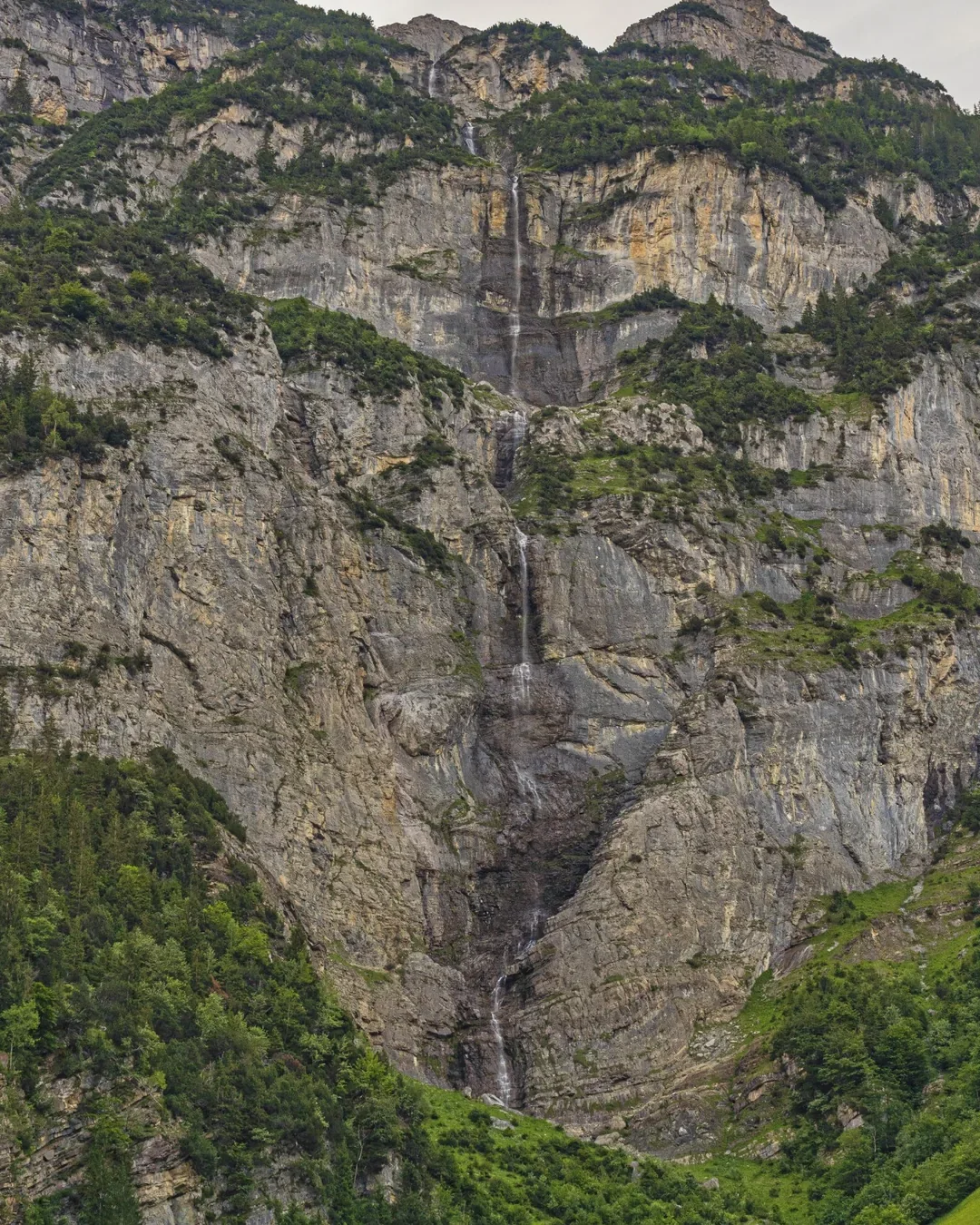
Second on the list is Mattenbachfälle in Switzerland, a waterfall most people have never heard of.
It was once thought to be about 2,756 feet (840 meters) tall. Then, in 2020, a canyoning team abseiled all the way down it and measured roughly 3,050 feet (930 meters), only about 60 feet short of Tugela.
Don’t expect a roaring torrent, though. Mattenbachfälle carries very little water and can almost dry up in a long dry spell, which is one reason it gets nothing like the fame of Angel or Tugela.
Total Height vs. Single Drop
There are really two records hiding inside this question.
If you want the longest single fall of water, Angel Falls wins easily. Its 2,648-foot drop is about twice as tall as Tugela’s biggest tier.
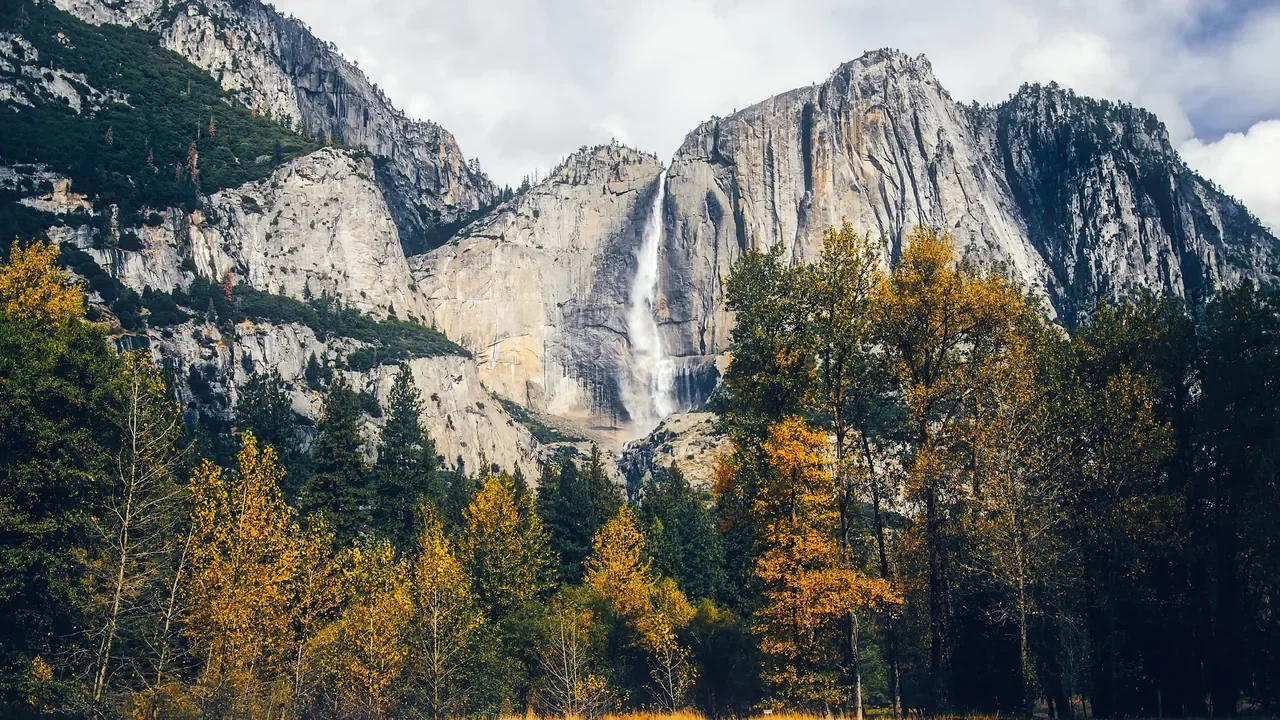
If you count several connected drops as one waterfall, like Yosemite Falls, Tugela has a real claim to first place.
Neither way is wrong. The hard part is deciding how much river can run between the drops before they stop being one waterfall, and nobody has agreed on that.
The Biggest Waterfall Is Underwater
Between Greenland and Iceland, hidden under the Atlantic, is a waterfall that makes Angel Falls look tiny: the Denmark Strait cataract.
Cold water flowing south from the Nordic Seas is heavier than the warmer water it meets. So it sinks beneath it, flows over a huge ridge on the seabed, and slides down a long, gentle slope into the deep Atlantic.
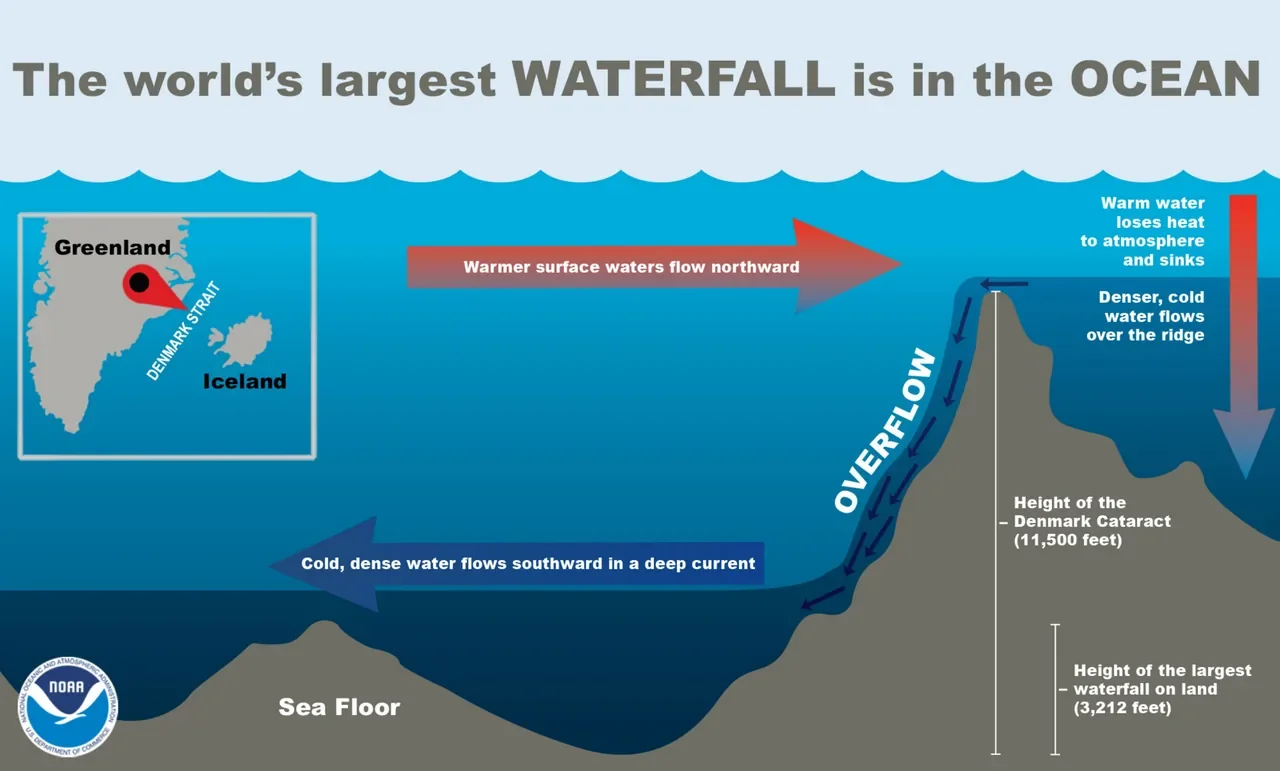
Illustration: NOAA
NOAA puts the seabed drop at about 11,500 feet (3.5 km), more than three times the height of Angel Falls. About 123 million cubic feet of water goes over the edge every second.
Even this one has a measuring problem. Oceanographers quoted by Live Science say the falling water only drops about 6,600 feet (2 km) before it meets a deep pool of equally cold water.
Want to see what lives that far down? Take a look at what lives at every depth of the ocean.
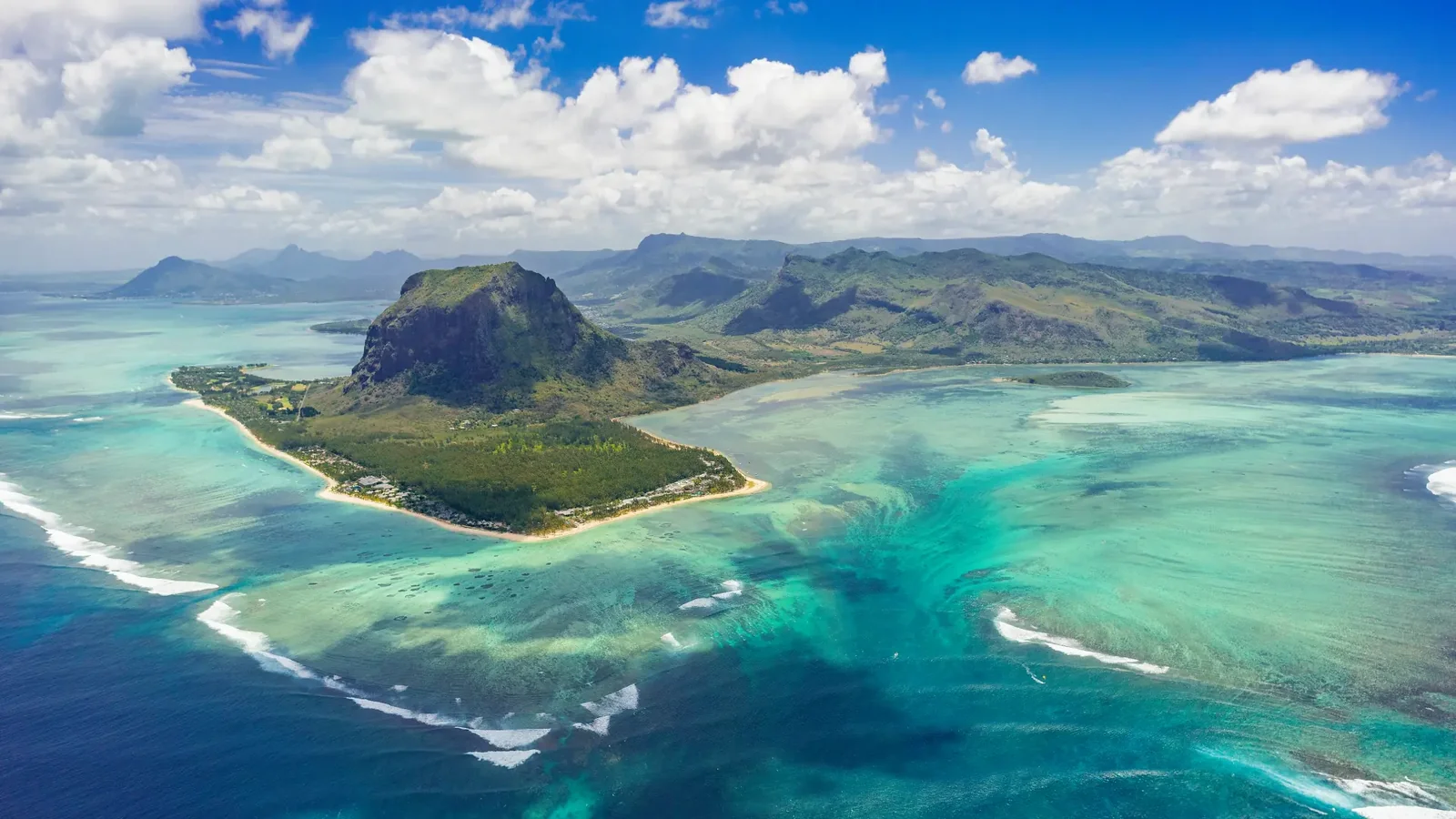
Photo: Christopher Brown / Wikimedia Commons (CC0)
So, What Is the Tallest Waterfall in the World?
If you need one answer for a quiz, it’s still Angel Falls at 3,212 feet. Guinness gives it the record, and UNESCO calls Canaima’s falls the highest in the world.
But that figure is disputed. The World Waterfall Database leaves out Angel’s separate downstream falls, which cuts it to 2,648 feet, and ranks Tugela’s connected tiers first at 3,110 feet.
The one record nobody argues about is Angel’s 2,648-foot single drop, the longest uninterrupted fall of water on Earth.
And if you count the ocean, none of them come close to the Denmark Strait.
Angel Falls doesn’t have a live cam yet, but you can watch one of the world’s most famous waterfalls right now:
LIVEWatch live →For more incredible places you can watch live, see the most extreme live webcams on Earth.
 Take Me Anywhere
Sources 11
- Guinness World Records - Tallest waterfall
- Guinness World Records - Tallest single drop in a waterfall
- Guinness World Records - Tallest multi-tiered waterfall
- UNESCO - Canaima National Park
- Harry Ransom Center - Ruth Robertson archive
- World Waterfall Database - Kerepakupai Merú (Angel Falls)
- World Waterfall Database - Tugela Falls
- World Waterfall Database - Tallest waterfalls by total height
- J. E. Purkyně University - 2017 press release on the Tugela remeasurement
- NOAA - Where is Earth's largest waterfall?
- Live Science - The Denmark Strait cataract
Editor's note
Waterfall heights depend on where you decide a waterfall starts and ends, and there is no single global authority. This article gives the traditional record figures alongside the stricter World Waterfall Database figures so you can see where they differ. Heights are given in feet first, with meters in brackets, and are rounded.
How we researched this article
We checked the current Guinness World Records listings, UNESCO's Canaima National Park entry, the Ruth Robertson archive at the Harry Ransom Center, and the World Waterfall Database's entries and rankings. For Tugela's 2016 remeasurement we went to the original university press release, and for the underwater waterfall we used NOAA and oceanographers quoted by Live Science.