Most live cameras are set up where people gather: city squares, busy beaches, famous landmarks and crowded ski slopes.
But somewhere out there, a camera is staring at an empty sweep of Antarctic ice. Another gazes over a remote Alaskan island that you can only reach by boat or floatplane.
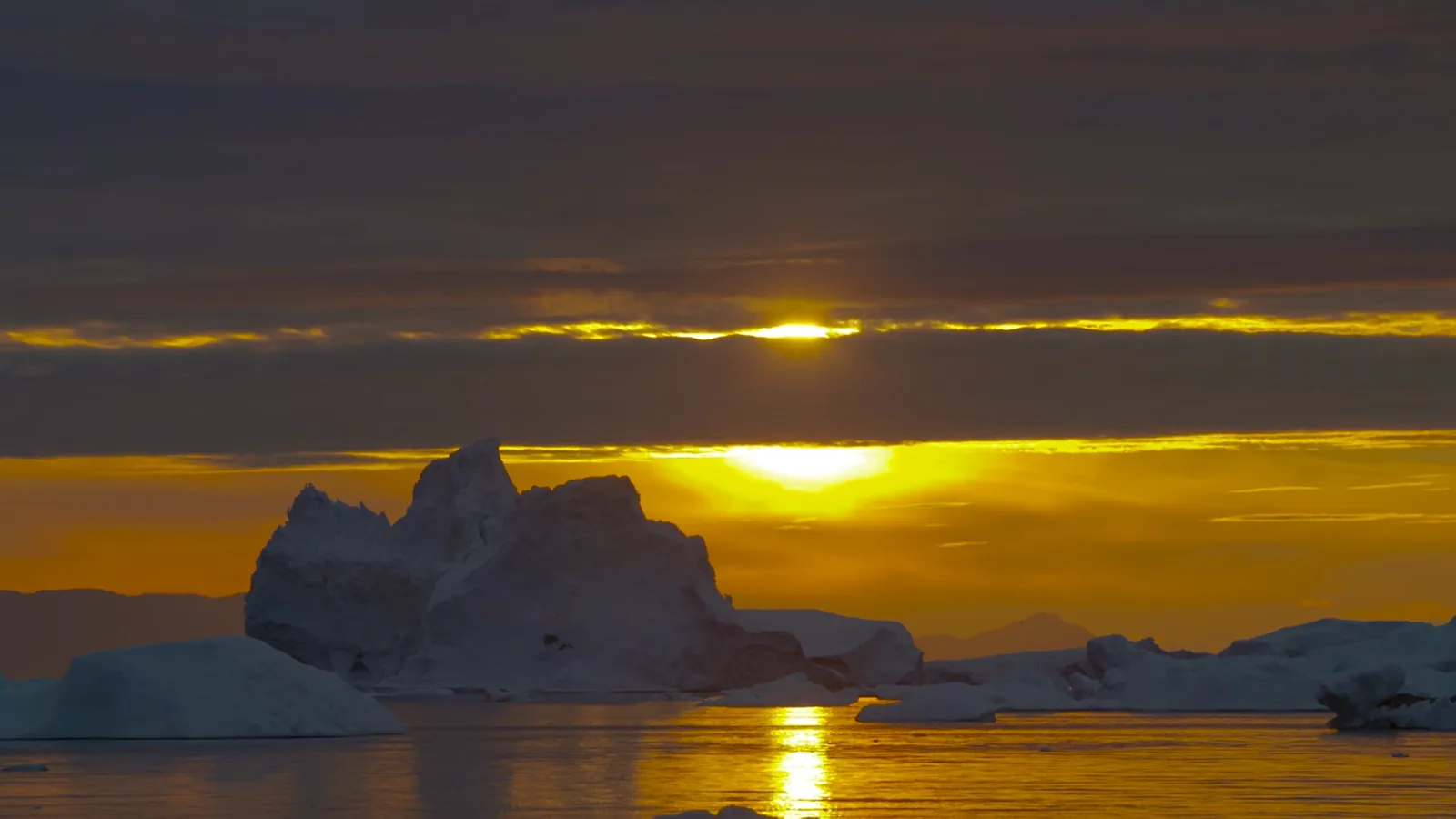
And another blinks quietly over a small Arctic town where icebergs the size of city blocks drift past, day and night. These are the cameras nobody tells you about, and they are often the most fascinating ones to watch.
Here are five live webcams quietly watching some of the emptiest corners of the planet, ordered from lonely to loneliest.
#1 Ilulissat Icefjord, Greenland
How remote? A town of about 5,100 people, roughly 185 miles (300 km) north of the Arctic Circle.
Ilulissat sits on the west coast of Greenland, on the edge of Disko Bay. Its name simply means “icebergs” in Greenlandic, and it is hard to think of a better one.
Small as it sounds, that makes it one of Greenland’s larger towns, which tells you a lot about how empty the rest of the island is.
Just south of town lies the Ilulissat Icefjord, a UNESCO World Heritage Site since 2004. At its head, the Sermeq Kujalleq glacier is one of the fastest and most active glaciers in the world.
It produces about 10 percent of all the icebergs that break off Greenland’s ice sheet, and they drift slowly out of the fjord into Disko Bay, right past the camera.
In summer, the midnight sun keeps the sky glowing all night. In winter, the northern lights ripple over the ice. Either way, the camera is running and the icebergs are moving.
#2 Vágur, Faroe Islands
How remote? The southernmost island of a small archipelago in the middle of the North Atlantic.
The Faroe Islands are a self-governing part of the Kingdom of Denmark, set in the North Atlantic between Iceland, Norway and Scotland.
About 55,000 people live across 18 steep, green islands, battered by wind and rain for much of the year.
Vágur is a fishing town of about 1,300 people on Suðuroy, the southernmost of the islands. It sits at the head of a long fjord, Vágsfjørður, flanked by steep green hills and colorful houses.
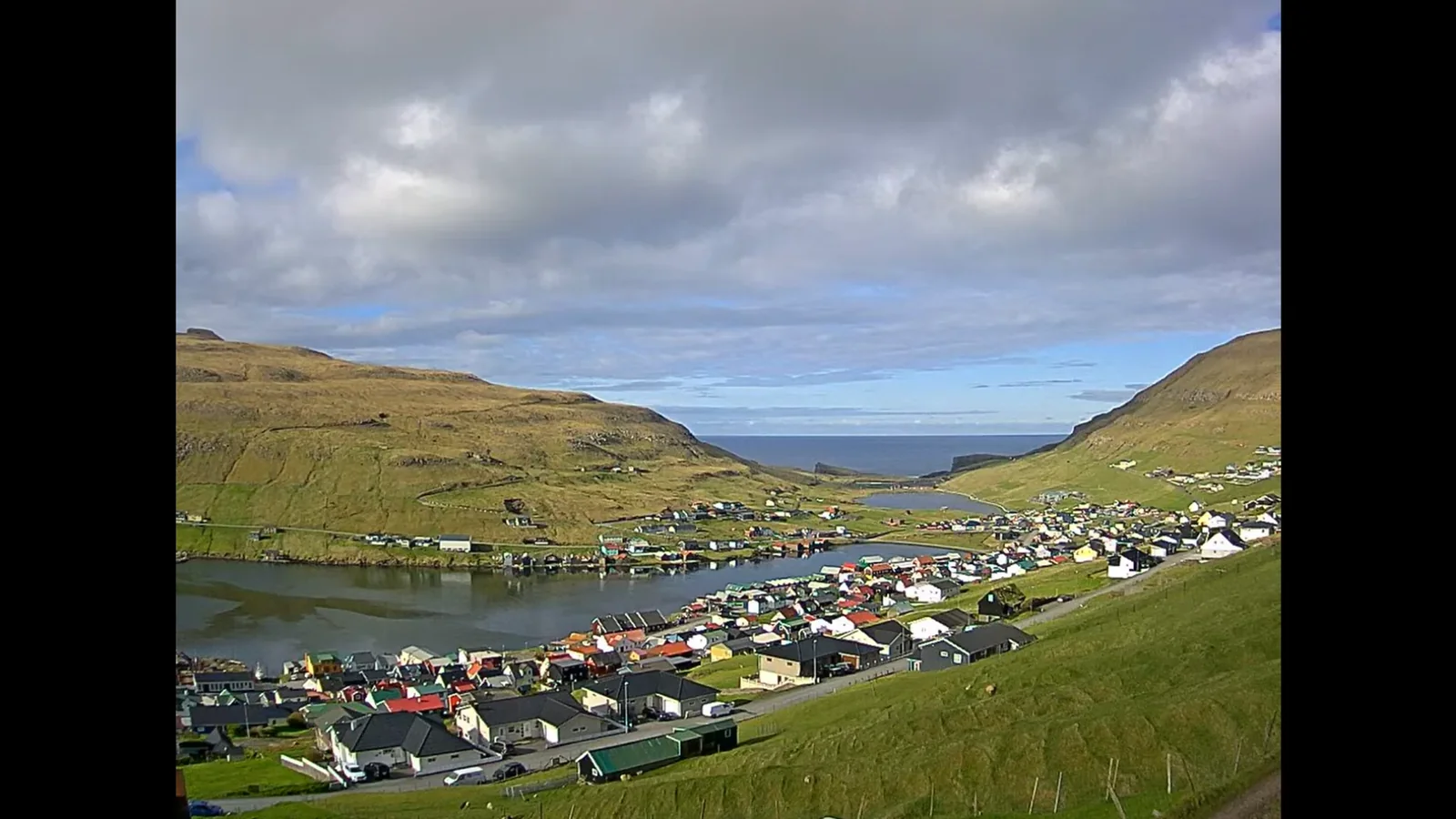
Photo: EarthLive.TV
It is a small place with a big history. The first Faroese-built ship since the Middle Ages was launched here in 1804, and in 1921 the town built the islands’ first hydroelectric power plant.
Cameras look out over the fjord here, and the weather moves fast across the view: within minutes, bright sunshine can give way to low cloud rolling in from the sea. For more views across the islands, Føroyar.live runs dozens of live cameras on its map.
Far from the busiest tourist routes, it is a small community at the edge of the North Atlantic, going about its day while a camera quietly watches.
#3 Raspberry Island, Alaska
How remote? No road connections. The only way in is a floatplane hop of under half an hour, or a 90-minute boat ride, from Kodiak.
Raspberry Island is an 18-mile-long island in the Kodiak Archipelago, off the southern coast of Alaska.
Its only permanent residents live at a small remote lodge and a tiny settlement at Port Wakefield. Kodiak itself is an island town that most Americans have never visited.
The camera looks out over Raspberry Strait, where on any given day you might see a fishing boat, a bald eagle dropping from the sky, or just the mountains sitting silently behind a curtain of mist.
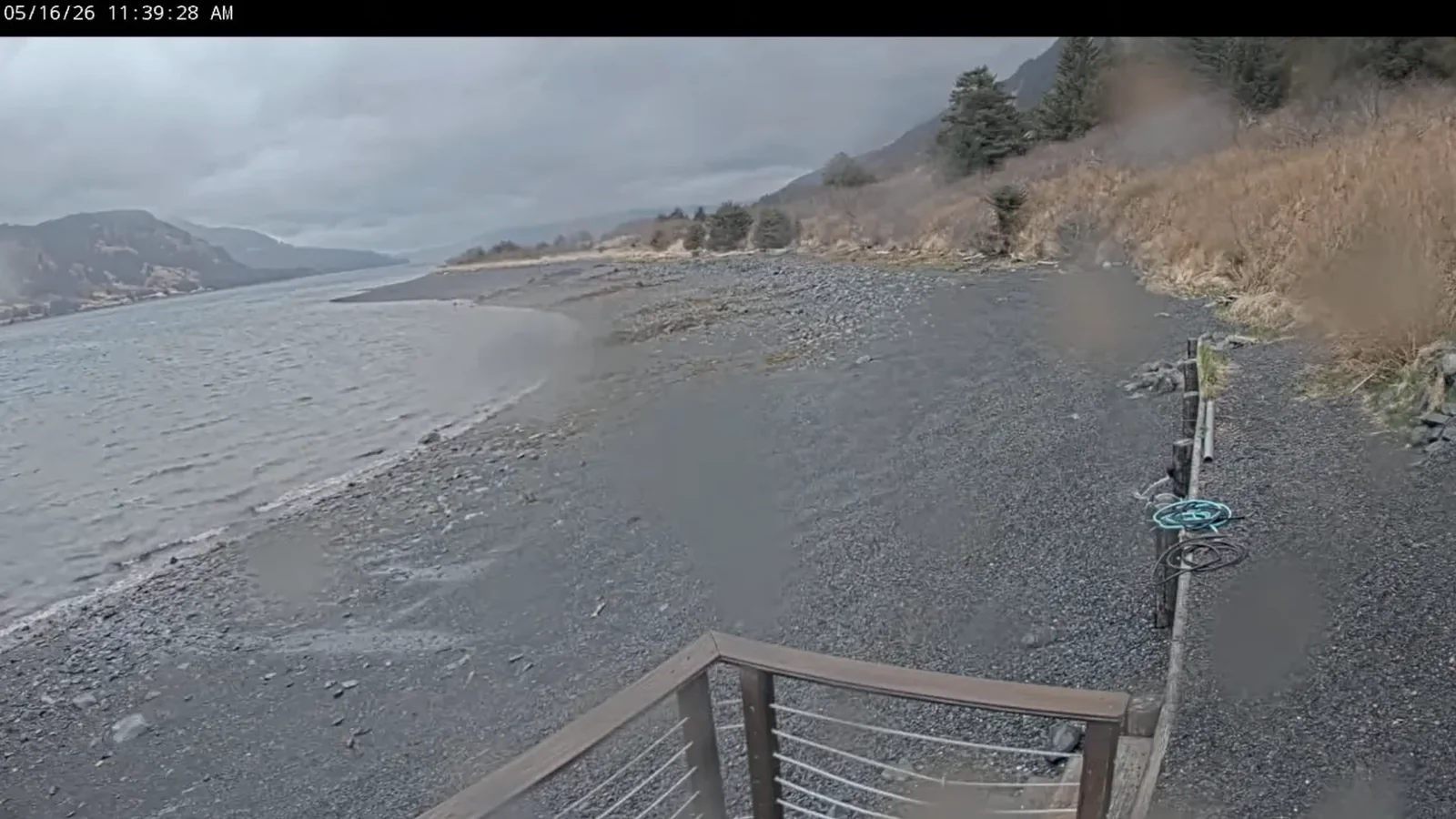
Photo: EarthLive.TV
This is serious wildlife country. Kodiak bears, among the largest brown bears on Earth, roam these shores, alongside Sitka deer, red foxes and Roosevelt elk.
Sea otters float in the kelp, puffins nest on the cliffs, and whales pass through the strait.
#4 Mawson Station, Antarctica
How remote? About 3,400 miles from Hobart, Tasmania, with a winter crew of around 20 people.
Run by Australia, Mawson Station opened in February 1954. It is Australia’s oldest Antarctic station, and the oldest continuously inhabited station south of the Antarctic Circle.
It sits beside Horseshoe Harbour on the coast of East Antarctica, a deep natural harbor that is usually free of sea ice only in February.
A few dozen people live and work here in summer. Through the long winter, that drops to a crew of around 20, cut off from the rest of the world until the ice breaks up again.
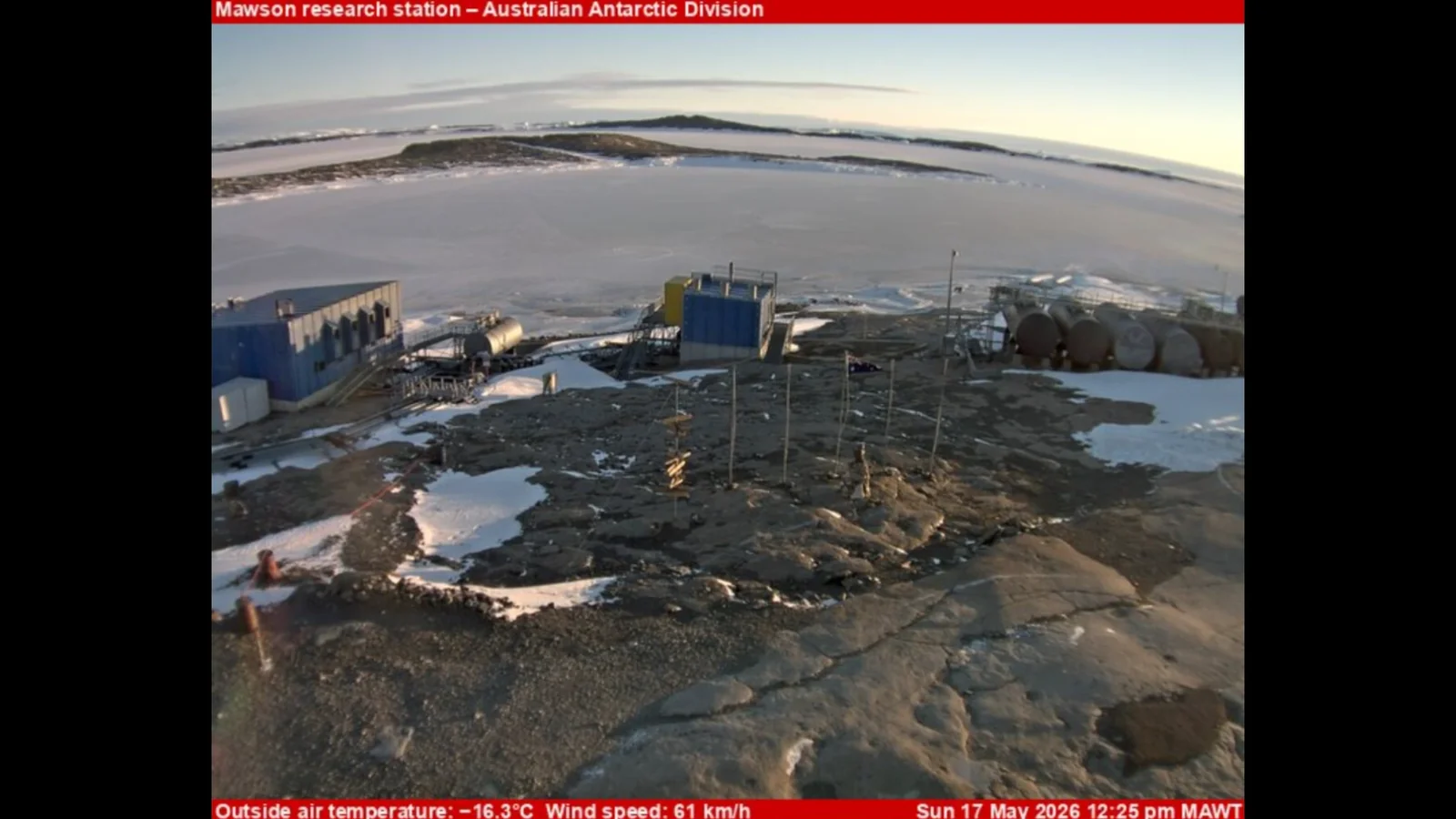
Photo: Australian Antarctic Division
Fierce katabatic winds, cold and dense air pouring down from the Antarctic plateau, regularly sweep the station. On some days visibility drops to almost nothing, and the camera keeps rolling.
The Australian Antarctic Division’s Mawson webcam shows the station buildings, the sea ice and the brutal, beautiful emptiness stretching away in every direction.
#5 Amundsen-Scott South Pole Station, Antarctica
How remote? As remote as it gets.
At the very bottom of the world, a NOAA camera on the roof of the Atmospheric Research Observatory photographs the South Pole station every 15 minutes, whenever a relay satellite is overhead to send the picture out.
The sun sets here around late March and does not rise again until around late September. Through the winter, the only natural light in the pictures comes from the moon and the aurora australis.
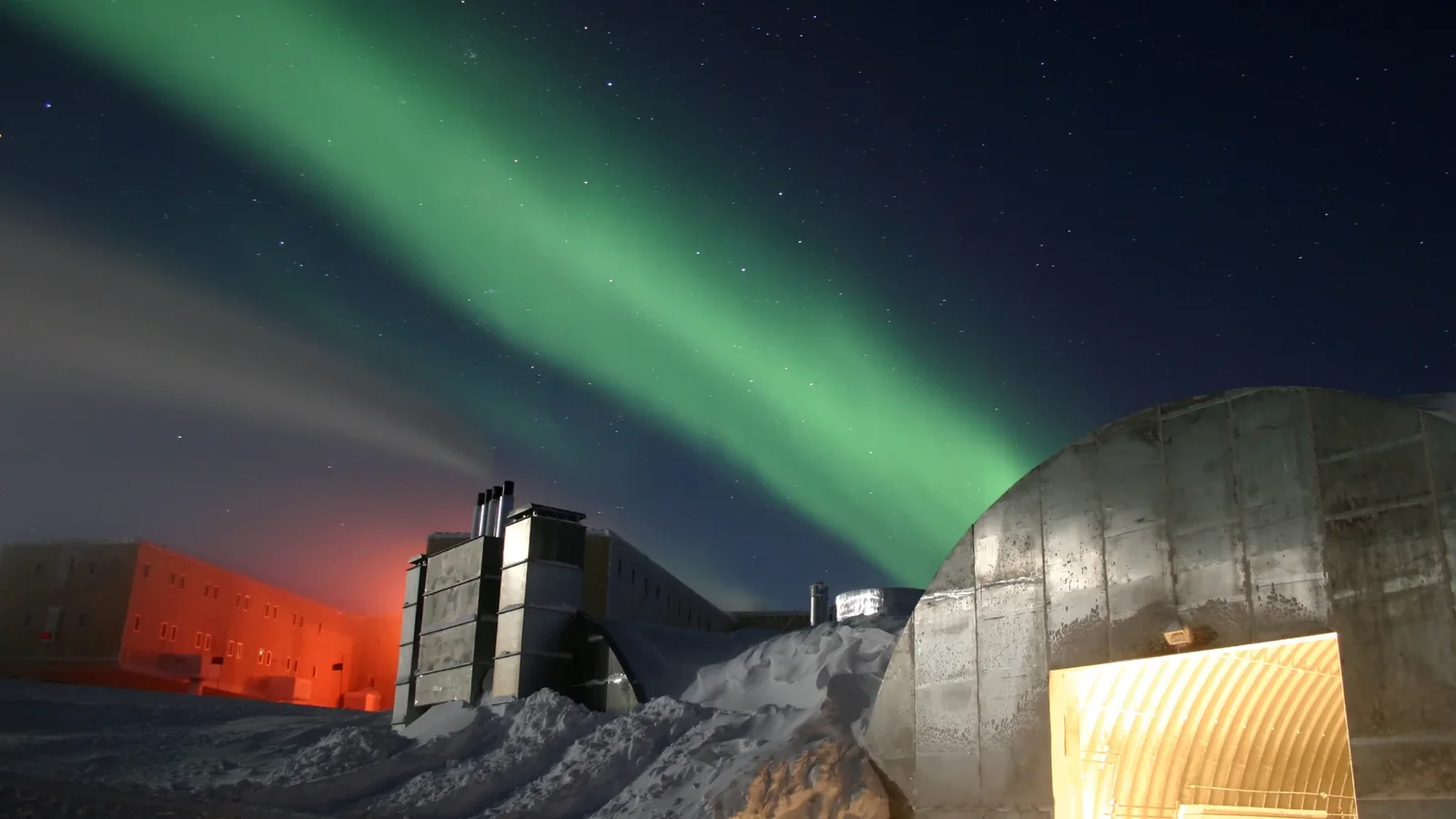
Photo: Chris Danals / National Science Foundation
No road leads here, and no ship can reach it. Getting in means flying to McMurdo Station on the Antarctic coast, then another flight deep into the interior, and through the long winter, planes almost never come at all.
Hours can pass with nothing moving in the frame. And that, strangely, is exactly what makes it compelling.
For the full story of this camera and the others at the edges of the planet, read We Found the Most Extreme Live Webcams on Earth.
Why These Cameras Matter
Most webcams show us what we already know: famous places, busy streets and popular resorts.
The lonely ones show us something different. They remind us how much of the world sits quietly beyond the reach of tourism, beyond Google Street View, and beyond the places most of us will ever go.
Watching an Antarctic webcam at 3 a.m., with nothing on screen but ice and the faint glow of the aurora, is oddly moving. It is proof that the world is still vast, still wild and still mostly unwatched.
These cameras are there whether anyone is looking or not. And that, somehow, makes them the most honest cameras of all.
Explore more remote places on our Live Webcam Map.
 Take Me Anywhere
Sources & Further Reading 10 sources
- UNESCO - Ilulissat Icefjord
- Wikipedia - Ilulissat
- Wikipedia - Faroe Islands
- Wikipedia - Vágur
- Føroyar.live - Live cameras across the Faroe Islands
- Wikipedia - Raspberry Island (Alaska)
- Australian Antarctic Division - Mawson station
- Australian Antarctic Division - Mawson webcam
- NOAA Global Monitoring Laboratory - South Pole live camera
- NASA Goddard Space Flight Center - Greenland icebergs footage