There’s something magical about watching a bird sit patiently on her eggs, knowing that at any moment a tiny beak could break through the shell. Live nest cams give kids a front-row seat to one of nature’s great events - in real time, for free, from the sofa.
Whether you’re a parent looking for screen time that actually teaches something, a homeschool family studying life cycles, or a teacher bringing nature into the classroom, these cams are made for it.
We’ve picked nine of the best nest cams on Earth, from bald eagles in the mountains of California to penguins on the South African coast - plus one bonus that isn’t a bird at all.
For more, explore our live Wildlife and Zoos & Aquariums cams.
Bald Eagle Nest - Big Bear Valley, California
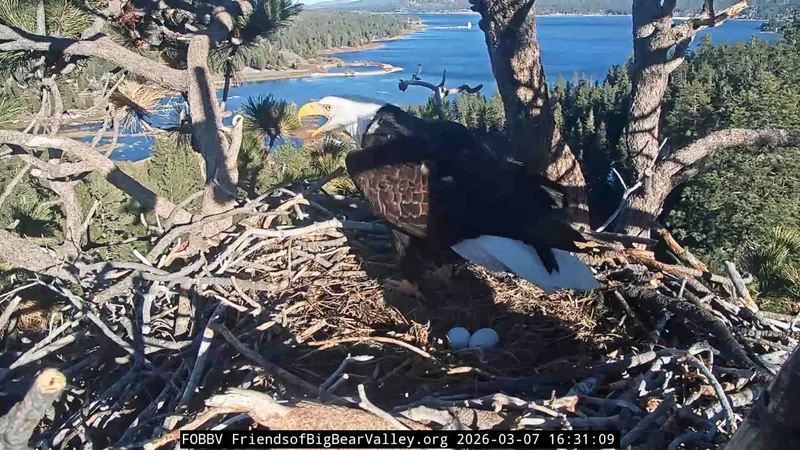
The stream at the top of this page is one of the most-watched nest cams in the world. It looks into a bald eagle nest high in a Jeffrey pine above Big Bear Lake, in the mountains of Southern California in the United States.
For years it followed Jackie and Shadow, a pair that millions of people watched raise their chicks. Jackie died in August 2026, and Shadow is now at the nest with a younger eagle, Kaydee.
Bald eagles take parenting seriously. Mom and dad take turns keeping the eggs warm, then both hunt to feed the chicks once they hatch. Nesting runs from winter into early summer - and if you’re lucky, you’ll catch the moment an egg hatches.
Why kids love it: Bald eagles are huge, and watching them feed their fluffy chicks bite by bite is something kids don’t forget.
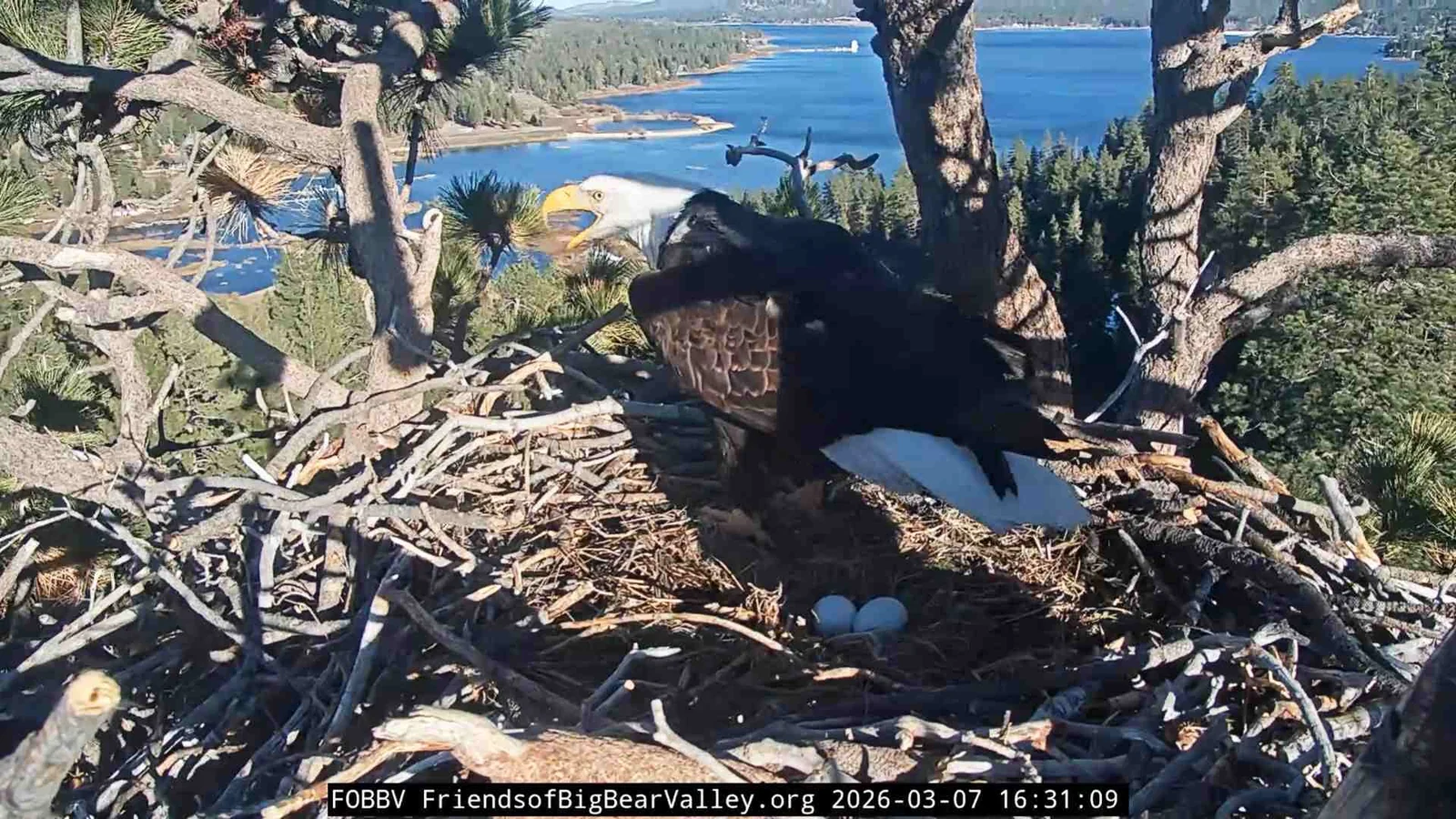
Photo: Friends of Big Bear Valley
Barn Owl Nest - Even Yehuda, Israel
This camera looks right inside a barn owl nest box in Even Yehuda, central Israel. It’s part of a citizen science study run with the Charter Group of Wildlife Ecology, from the Shamir Research Institute and the University of Haifa. All the owls are wild and free to come and go, and an infrared camera lets you watch them in the dark.
Barn owls hunt at night, so evenings are the best time to tune in. Watch for the ghostly white parents swooping in with prey, and the chicks crowding forward to grab it.
Their heart-shaped face isn’t just for looks. It works like a satellite dish, funneling sound to their ears so they can find a mouse in total darkness.
Why kids love it: The night-vision footage looks straight out of a nature documentary - and barn owls have the most wonderfully strange faces.
Barn Owl Nest - Everglades, Florida
This second barn owl cam comes from the University of Florida’s research center in Belle Glade, in the farmland south of Lake Okeechobee. As in Israel, the owls are wild and free to come and go.
Farmers here put up nest boxes on purpose. A single pair of barn owls and their chicks can eat more than 1,000 rodents a year, which makes them some of the best pest controllers in the fields.
Why kids love it: Watch it alongside the Israel cam - same species, two continents apart. Barn owls live on every continent except Antarctica.
Osprey Nest - Loch Arkaig, Scotland
Deep in the ancient Caledonian pine forest of the Scottish Highlands in the United Kingdom, the Woodland Trust runs two osprey cams at Loch Arkaig, each watching a different nest a few kilometers apart.
LIVEWatch live →Every spring the ospreys fly thousands of miles from West Africa to breed here, and their return is a big event. It means even more because ospreys were wiped out in Britain in the early 1900s and only came back to breed in Scotland in the 1950s.
Why kids love it: The Highland forest is stunning, and ospreys catch fish by diving feet first into the water - one of the most dramatic hunts in the bird world.
Fru Rauer Osprey Nest - Rauer Island, Norway
Meet Fru Rauer - Norwegian for “Mrs. Rauer”, named after her home island - an osprey who nests on Rauer, a small uninhabited island in the Oslofjord in Norway. Every spring she flies thousands of miles from Africa, across ocean and desert, to return to this same spot.
She usually lays two to four eggs, which hatch after around five to six weeks. Then both parents fish the surrounding waters to feed the growing chicks.
Ospreys are built for fishing. They can turn one of their outer toes backward, giving them two toes in front and two behind - a much better grip on slippery fish than most birds of prey can manage.
Why kids love it: Norway! Islands! Ospreys! It’s an adventure cam - and you can compare it with the Scottish nest to see if the two families do things differently.
Griffon Vulture Nest - Hai-Bar Carmel, Israel
Not every nesting bird is cute and fluffy - and this pair has one of the most remarkable stories of any nest cam. Both vultures were born at Gamla Nature Reserve in the early 2000s, but they grew up with a bone disease that left them disabled.
They paired up and started laying eggs anyway. So the Israel Nature and Parks Authority built them a special nest they can climb up to, and each year chicks from other nests or the Jerusalem Biblical Zoo are placed in it for the pair to raise as their own.
Griffons are huge, with a wingspan of up to about 9 feet (2.8 meters). They feed almost entirely on dead animals, which sounds gross but is a vital job - clearing carcasses helps stop diseases spreading. They’re endangered in Israel, and these foster chicks are part of the effort to bring them back.
Why kids love it: Two parents who can’t do everything other vultures can, raising chick after chick anyway. Best for ages 8 and up.
Verreaux’s Eagle Nest - Selati, South Africa
This camera looks down on a clifftop nest at Selati Game Reserve, in the Limpopo province of South Africa. A breeding pair of Verreaux’s eagles repair the nest, incubate their eggs and raise a chick high above the bush.
With a wingspan of up to around 7.5 feet (2.3 meters), Verreaux’s eagle is one of Africa’s largest eagles. It’s jet black with a white V on its back, and pairs usually stay together for years, often switching between a few favorite nests on the same cliffs.
Their favorite food is the rock hyrax - a small, furry animal that looks like a big guinea pig but is, amazingly, one of the closest living relatives of the elephant. The eagles live near cliffs and rocky hills because that’s where the hyraxes are.
Why kids love it: The African bush stretches out behind the nest, so you never know what other wildlife might wander into view.
White Stork Nest - Bad Salzungen, Germany
Not every nest cam is about birds of prey. This one sits high above the red rooftops of Bad Salzungen, a spa town in central Germany, where a pair of white storks return each spring to rebuild their nest and raise their chicks.
Most white storks fly thousands of miles to spend the winter in Africa, then come back to the same nest year after year. In many European countries, a stork nesting on your roof is a sign of good luck and new life.
Storks have almost no voice. Instead of calling, they greet each other by clattering their bills together - a loud, wooden rattle you can often hear on the stream.
Why kids love it: Storks are the birds said to deliver babies in old stories - and their huge, messy nest perched on a rooftop is hard not to love.
African Penguin Colony - Betty’s Bay, South Africa
Yes, penguins are birds - they’re just hopeless at the flying part! This camera overlooks the colony at Stony Point Nature Reserve in Betty’s Bay, one of only a handful of places where African penguins breed on the mainland.
African penguins are the only penguins that breed in Africa. Unlike their Antarctic cousins, they nest in burrows and shallow scrapes on the ground, and you can often spot parents feeding chicks or birds waddling back from fishing trips.
They need all the help they can get. In 2024 they were listed as Critically Endangered, the last step before extinction in the wild.
Why kids love it: Most kids think penguins only live in the ice and snow - so a wild colony on a sunny African beach is a big surprise.
If your kids love penguins, there’s another penguin cam at Moody Gardens in Texas:
LIVEWatch live →Bonus: Egyptian Fruit Bats - Tel Aviv, Israel
Bats aren’t birds, but they raise their babies in much the same way - which makes this a perfect extra for nest cam night. This infrared camera watches a roost of Egyptian fruit bats at Tel Aviv University.
Bats are mammals, so mothers feed their pups milk, usually raising just one baby at a time. Watch for pups clinging tight to their mom as the colony hangs, squabbles and grooms.
Egyptian fruit bats have a rare trick. Most fruit bats find their way by sight and smell, but these ones also click their tongues and listen for the echoes, so they can fly in total darkness.
They matter more than most people think, too. By eating fruit and spreading the seeds, fruit bats help plant new trees and keep forests growing.
Why kids love it: Mysterious, a little bit spooky and totally fascinating - and perfect for Halloween. Best for ages 8 and up.
Tips for Watching with Kids
Pick the right time: Daytime birds are busiest in the early morning. Barn owls come alive in the evening, while the bats are easiest to watch during the day, when they’re all back at the roost.
Check the season: Most of these nests are busiest from late winter to early summer. In the Southern Hemisphere - South Africa - the seasons are flipped, so there’s usually something happening somewhere.
Be patient: Live nature isn’t always action-packed. Talk about what the animal might be doing and why while you wait.
Ask questions: “Why do you think she keeps turning the eggs?” or “What do you think dad is bringing back to eat?”
Keep a nature diary: Kids can sketch what they see, or write down when the eggs were laid and when they hatched.
Check back often: Chicks grow fast. A fluffy blob one week can look almost like a grown-up bird a few weeks later.
Quick Quiz: Can You Guess?
Frequently Asked Questions
Are these nest cams free to watch?
Yes. They’re public live streams run by the wildlife groups and researchers behind each nest, and you can watch them all here for free, with no sign-up needed.
Are these cams suitable for young children?
They’re hand-picked with younger viewers in mind. The griffon vulture and bat cams are best for ages 8 and up. Because these are wild animals, nature can sometimes be unpredictable, so it helps to have a parent or teacher nearby.
Can I use these cams in a classroom or for homeschooling?
Absolutely. They’re a great way to teach life cycles, animal behavior, geography and conservation, and they’re easy to put up on a classroom screen.
 Take Me Anywhere
Sources & Further Reading 10 sources
- Wikipedia - Jackie and Shadow
- ABC - What's next for Shadow after Jackie's death
- Charter Group Birdcams - Barn Owl Cam, Even Yehuda (stream notes)
- University of Haifa - Dr. Motti Charter's barn owl research
- UF/IFAS Everglades REC - Barn Owl Research and Extension
- UF/IFAS - Barn owl conservation in South Florida
- Store norske leksikon - Rauer
- Charter Wildlife Cams - Griffon Vulture Nest (stream notes)
- BirdLife International - African Penguin on the brink of extinction
- PMC - Echolocation in tongue-clicking fruit bats