
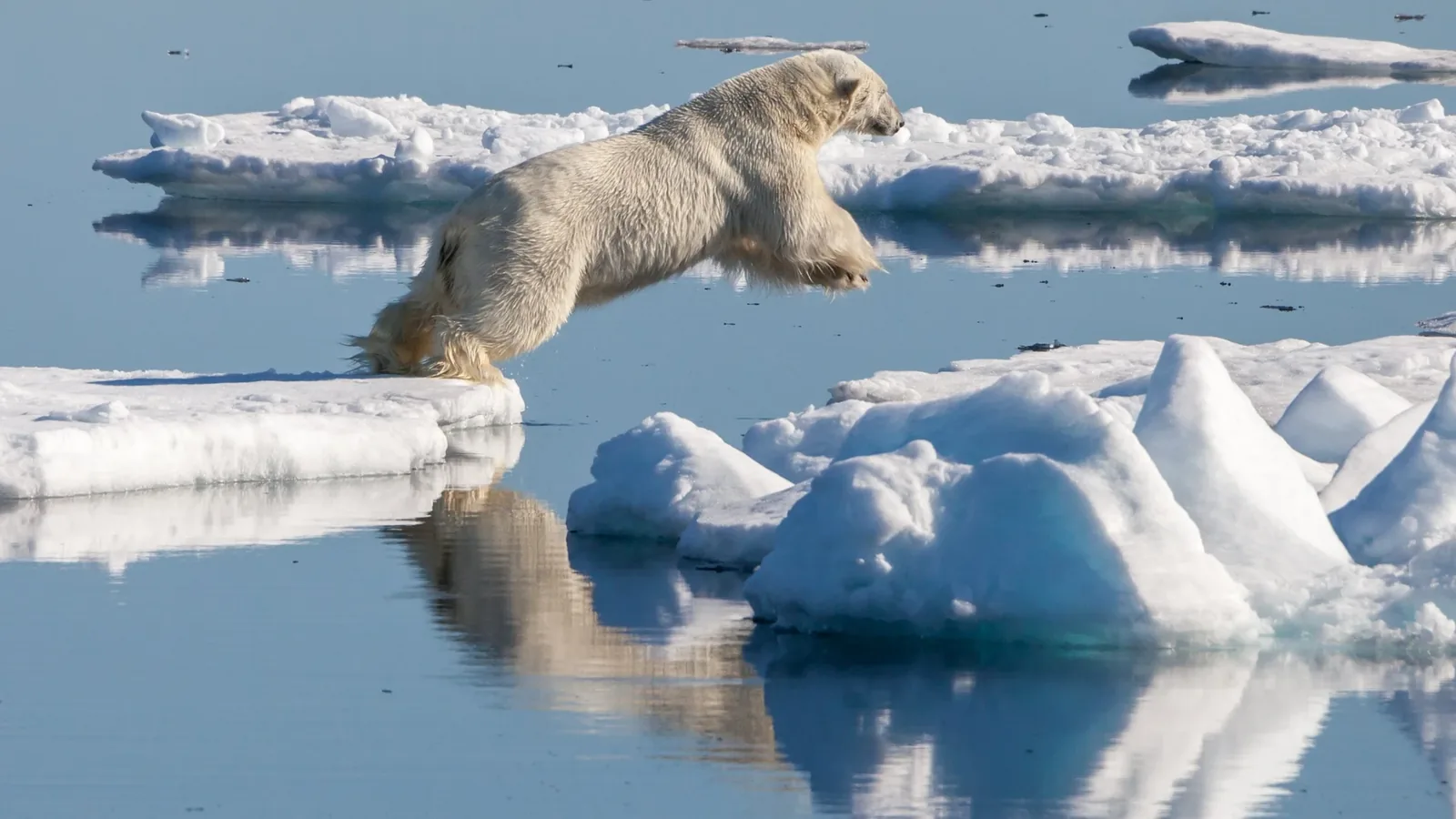
Polar bears depend on Arctic sea ice, as it is where they hunt seals. That is why their home changes with the seasons, and why fall is the best time for watching them live.
In October and November, many polar bears gather near Churchill, Canada, waiting for Hudson Bay to freeze. You can watch them live in this story, and find more bears on the Live Bear Cams page.
Where Do Polar Bears Live?
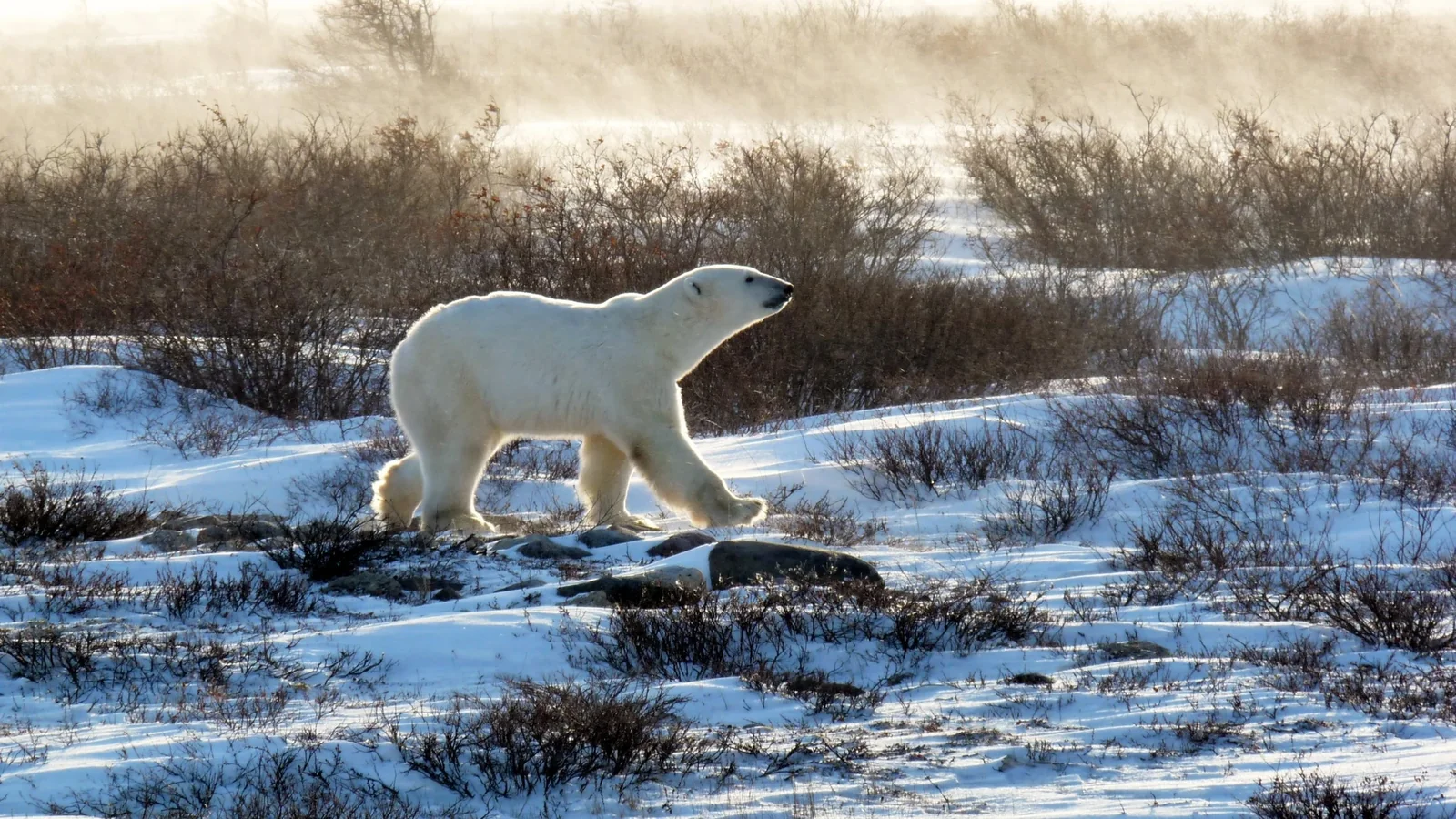
Photo: Ian Stewart / Wikimedia Commons (CC BY-SA 3.0)
Polar bears live way up north in the Arctic, on and around sea ice. You'll find them living freely in five countries: Canada, Greenland (Denmark), Norway, Russia and the United States (Alaska). Canada is home to the highest concentration of polar bears, where about 60% of the entire population lives.
Two of the best-known places on Earth to see polar bears are Churchill and Hudson Bay in Canada, during October and November, as the sea ice melts during summer months, forcing the polar bears to come ashore and wait on land for the shores to freeze over again, so they can catch seals to feed themselves and their young.
Below you can watch polar bears live. The Cape South camera streams all year, while the others usually run live in October and November, with recorded highlights shown the rest of the year.
You can find even more bear species to watch live on our Live Bear Cams page.
LIVEWatch live →LIVEWatch live →LIVEWatch live →Are There Polar Bears in Alaska or Antarctica?
Alaska: yes. Antarctica: no. Alaska is home to two groups of polar bears: the Southern Beaufort Sea bears along the North Slope, and the Chukchi Sea bears off the western coast.
There are none in Antarctica. Polar bears evolved from brown bears in the far north, and bears are mostly a Northern Hemisphere animal, so polar bears have never had a way to get to the other end of the world. Antarctica is also very hard to reach. The nearest land is the tip of South America, across the stormy waters of the Drake Passage.
Would they survive there? Possibly, as there are plenty of seals and penguins to eat. Which would be a big problem. Antarctic animals have never had to deal with a land predator, so they wouldn't have learned to run away. Which could be a disaster for the wildlife, which is why polar bears are better off staying up north in the Arctic where the wildlife knows to RUN!
Alaska's best-known live bear cams also show brown bears, which you can watch below.
LIVEWatch live →LIVEWatch live →How Many Polar Bears Are Left?
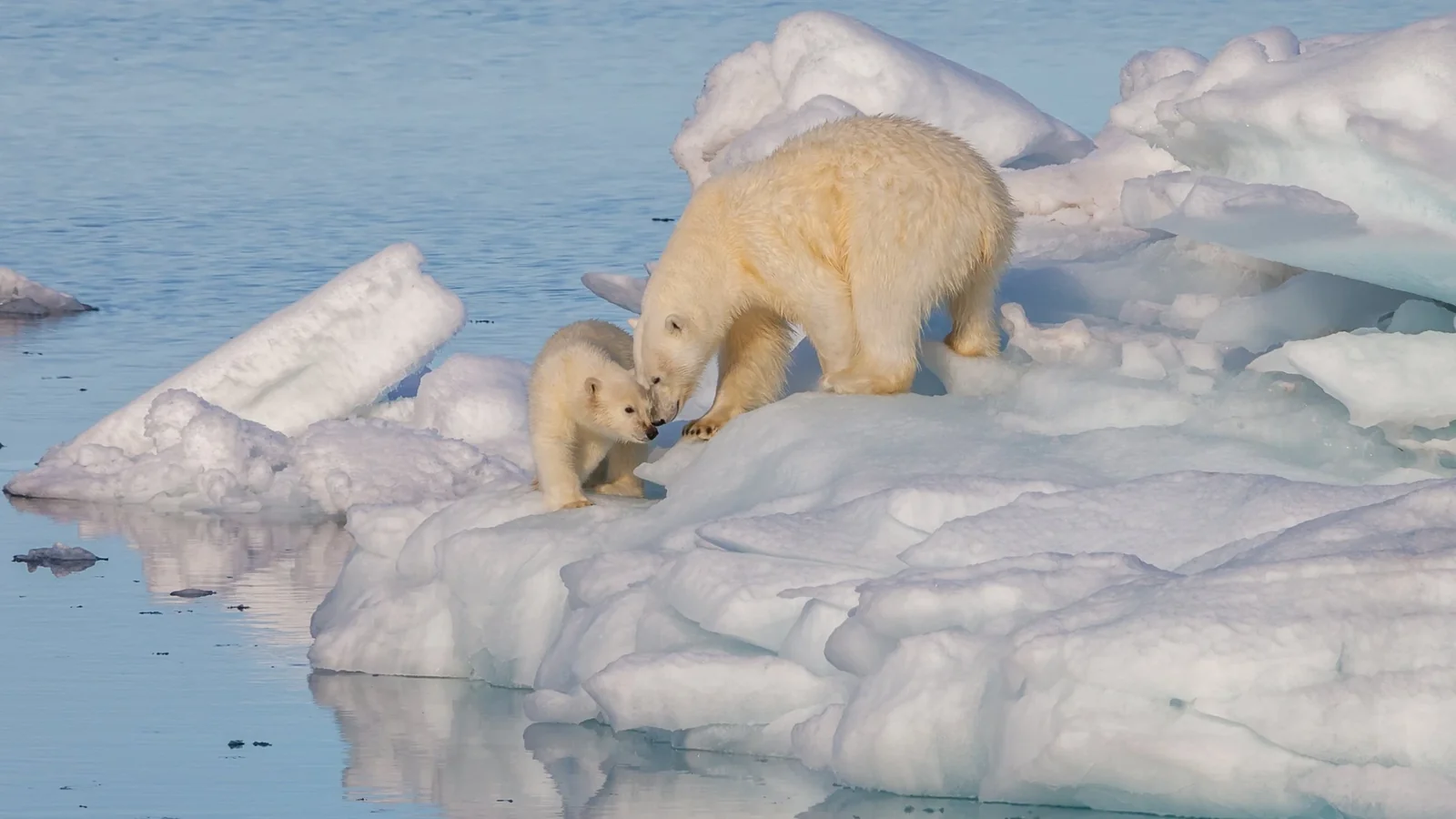
Photo: Andreas Weith / Wikimedia Commons (CC BY-SA 4.0)
The latest estimate from a study undertaken in 2016 from the IUCN Polar Bear Specialist Group, is that there are about 26,000 polar bears worldwide, with a likely range of 22,000 to 31,000. Although at the time of writing this, those numbers are about a decade old.
So nobody knows the exact number, as polar bears roam huge areas of sea ice and are very hard to keep track of and count. The latest report splits them into 20 groups, called subpopulations. For 10 of those groups, there isn't enough information to say whether they are growing or shrinking. Of the rest, 3 are likely decreasing, 5 are likely stable and 2 are likely increasing.
What Do Polar Bears Eat?
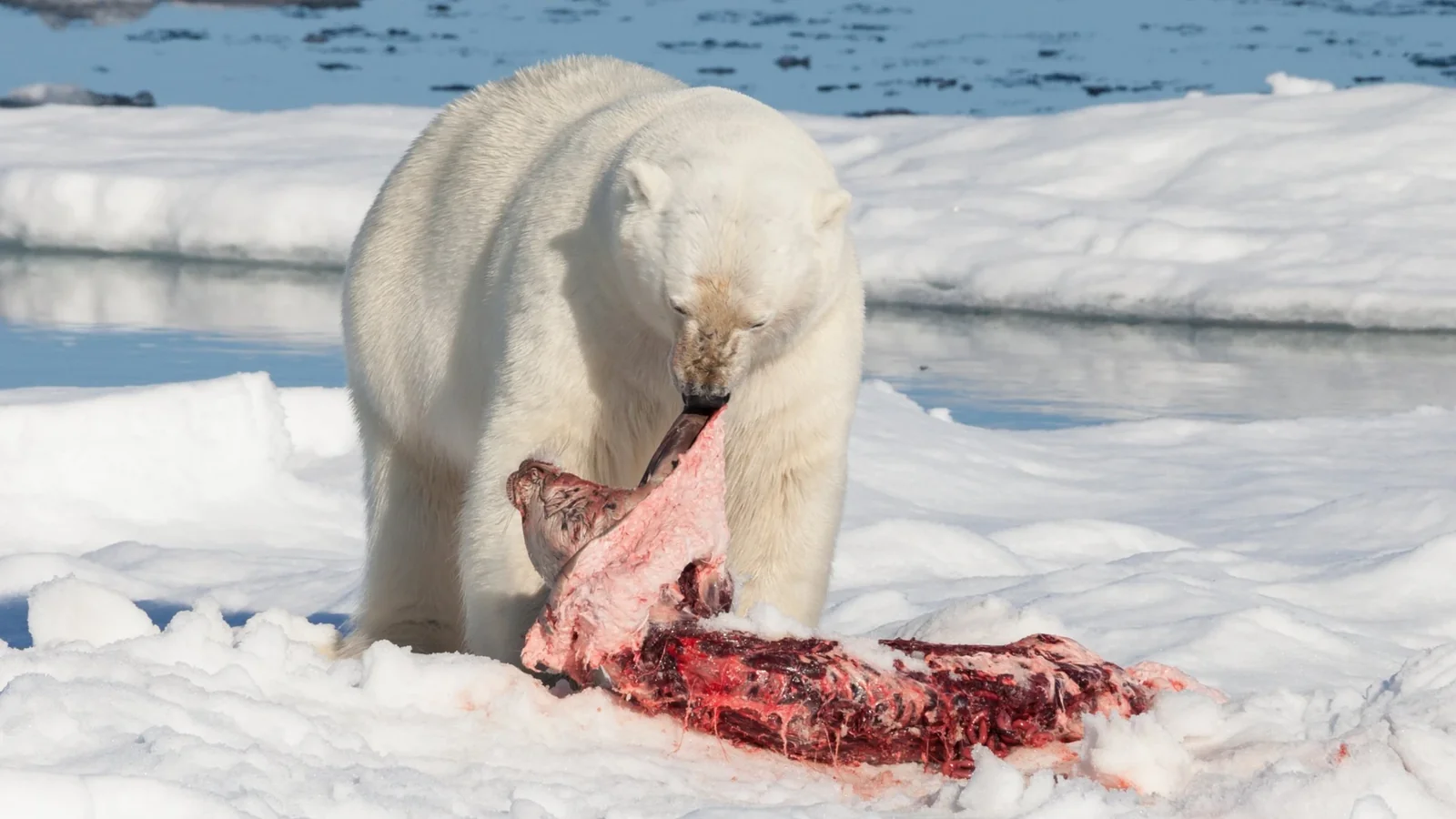
Photo: Andreas Weith / Wikimedia Commons (CC BY-SA 4.0)
Mostly seals. Polar bears hunt ringed and bearded seals from the sea ice, as they need all that fat to survive the summer months, when the ice melts in some places and hunting becomes very difficult. Bears off Alaska also eat some walrus and beluga whales, and feed on dead whales and walruses they find.
All that food adds up. Most adult males weigh between 600 and 1,200 pounds (273-545 kg), and an extra-large male can top 1,700 pounds (770 kg). Adult females weigh roughly 400 to 700 pounds (182-318 kg).
Do Polar Bears Hibernate?
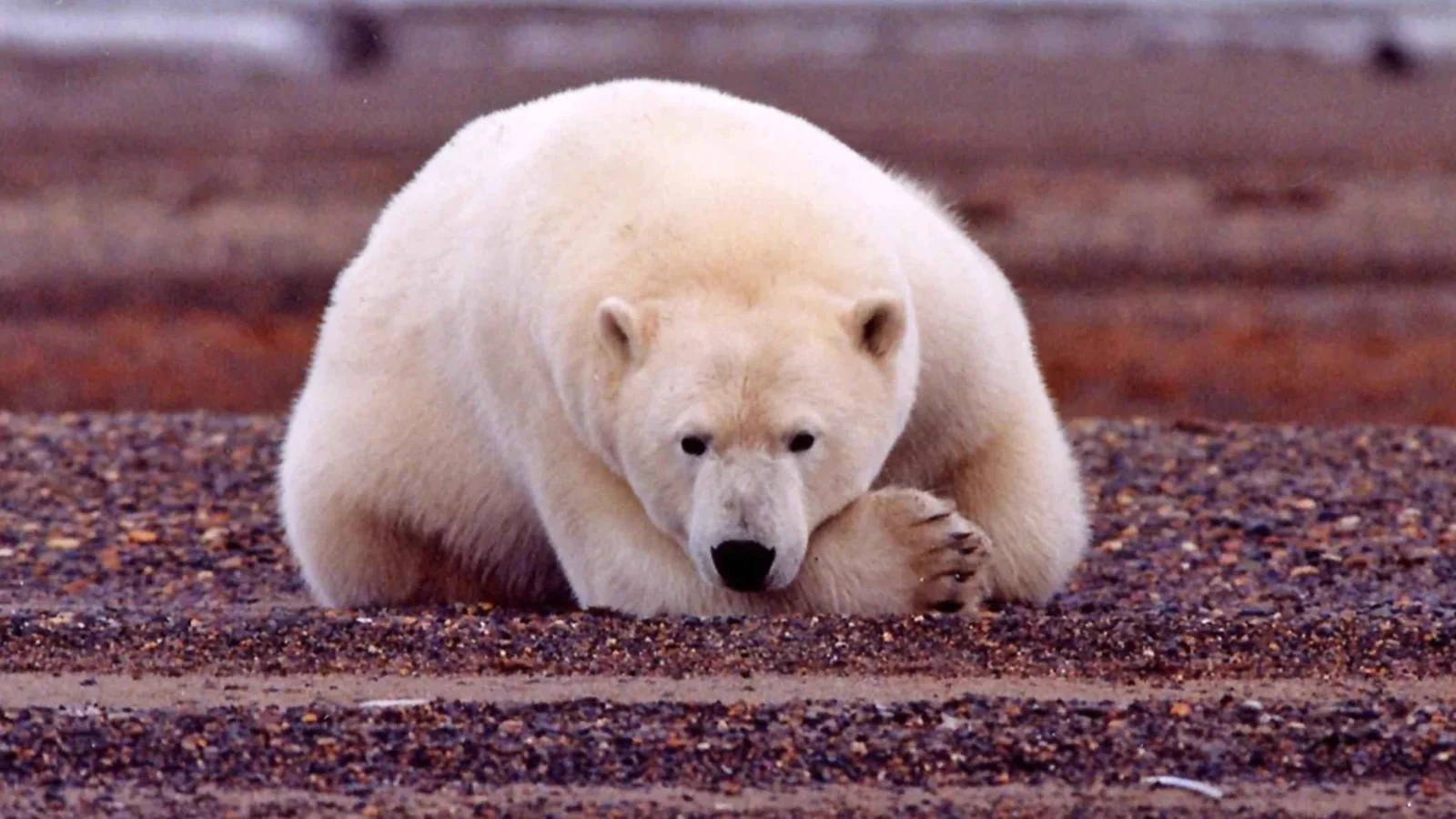
Photo: Susanne Miller / U.S. Fish and Wildlife Service / Wikimedia Commons (public domain)
Not in the usual sense. Only pregnant females spend the winter in dens. They go into their dens in October or November, have their cubs in December or January, and come out again in March or April. Other polar bears stay active all winter, hungrily hunting the seals out on the ice.
In summer, bears left on land when the ice melts, like the ones near Churchill, mostly rest and go without food until the ice returns. That isn't hibernation either, as they still wander around awaiting the return of icy waters, while their body temperatures barely drop.
Are Polar Bears Endangered or Going Extinct?
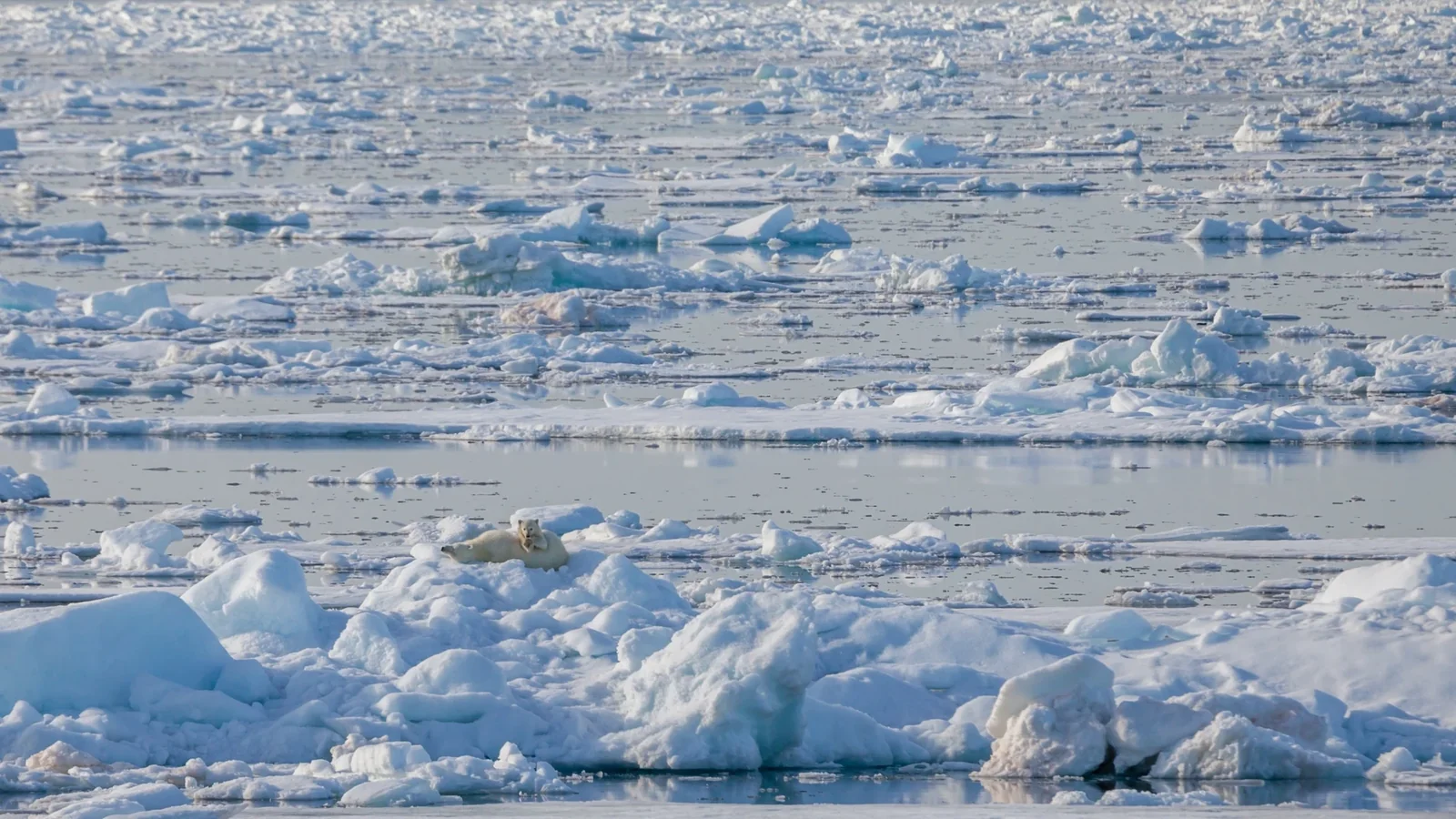
Photo: Andreas Weith / Wikimedia Commons (CC BY-SA 4.0)
Not extinct, but at risk. The IUCN lists polar bears as Vulnerable, and the United States lists them as threatened under the Endangered Species Act. The US Fish and Wildlife Service reviewed that in 2023 and kept the listing, naming the loss of sea ice as the main threat.
The change is already showing in Western Hudson Bay, home to the bears that gather near Churchill. The population was estimated at about 1,200 in 1987, 935 in 2004 and 618 in a 2021 survey published in 2022. The survey methods differ, but the long-term evidence points to a clear decline.
Polar bears aren't the only animal under pressure. See our story on the ivory trade.
Do Polar Bears Hunt Humans?
Rarely, but it has happened. A scientific study found 73 attacks by wild polar bears between 1870 and 2014 across the five polar bear countries. 20 people were killed and 63 were injured. In most of the attacks the bears were hunting, and hungry adult males were the biggest risk. A scientist from Polar Bears International estimates there are one to three attacks a year worldwide.
Sea ice loss can push bears further inland, where they meet more people, which obviously increases the chances of a dangerous encounter. Watch them from a safe distance on our Live Bear Cams page.
 Take Me Anywhere
Sources 18
- IUCN SSC Polar Bear Specialist Group - Global population estimate
- IUCN SSC Polar Bear Specialist Group - 2024-2025 report
- WWF-Canada - Where the Bears Are
- World Wildlife Fund - Polar bear
- Polar Bears International - Why do polar bears gather near Churchill?
- Polar Bears International - Polar bear cams
- Live Science - Why aren’t there polar bears in Antarctica?
- Discover Wildlife - Why can’t polar bears live in Antarctica?
- Marine Mammal Commission - Polar bear
- Alaska Department of Fish and Game - Polar bear (Wildlife Notebook Series)
- PBS Nature - Polar bear fact sheet
- USGS Alaska Science Center - Polar bear maternal denning
- Science News - Polar bears’ “walking hibernation” not much of an energy saver
- Polar Bears International - Polar bears in summer
- US Fish and Wildlife Service (2023) - Polar bear status remains threatened
- Polar Bears International - Polar bear status
- USGS - Polar bear attacks on humans: implications of a changing climate
- Polar Bears International - How often do polar bears attack?
Editor’s note
Population figures are estimates and change with each survey. Polar bear counts are hard to make because the animals roam over huge areas of sea ice, which is why the global range is wide. The global estimate comes from a 2016 study. Sources give slightly different weights for polar bears, so we use the Alaska Department of Fish and Game range, and they count 19 or 20 subpopulations, so we use the 20 in the latest Polar Bear Specialist Group report. The Antarctica explanation is general science, and what a polar bear would do to Antarctic wildlife is an informed estimate, not something that has happened. The Katmai cams show brown bears, not polar bears. Most Churchill cams usually run only in October and November.
How we researched this article
We checked each fact against the sources listed and used the wording each source uses for its claim. Photos are credited beneath each image.