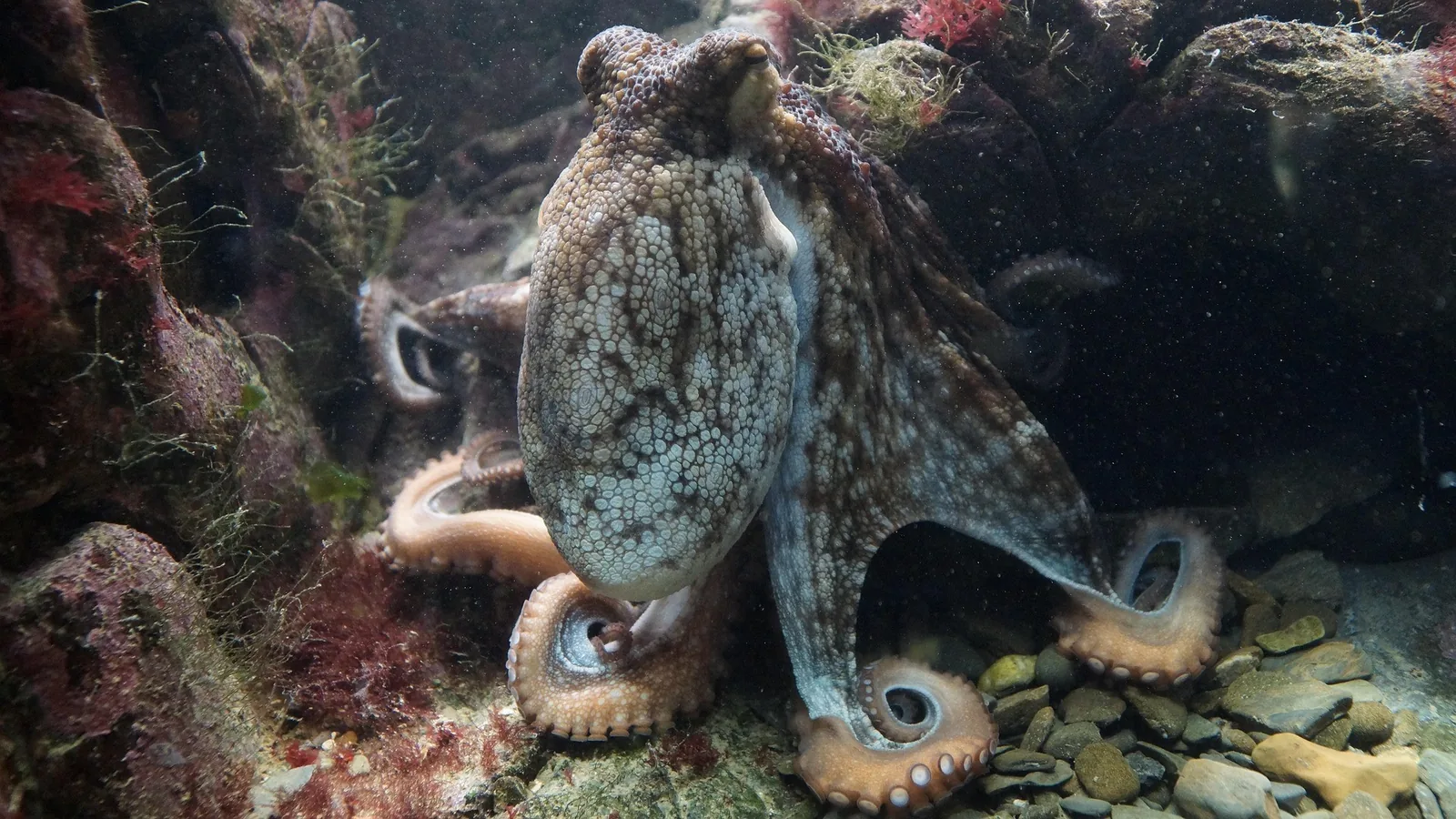
Three hearts, blue blood, no bones and arms packed with nerve cells. The octopus is one of the strangest animals on Earth, and one of the cleverest.
Here are the answers to the questions people ask most about octopuses, from how many hearts they have to whether they really came from space.
How Many Hearts Does an Octopus Have?
Three. Two small hearts, called branchial hearts, sit next to the gills. Each one pushes blood through one gill, where it picks up oxygen.
Blood leaves the gills at low pressure, so the third and biggest heart, the systemic heart, pumps it out again to the rest of the body.
Blue blood: Octopus blood carries oxygen using hemocyanin, which contains copper instead of iron. That turns it blue. In cold water with little oxygen, it can work about as well as our red blood, or even better.
Swimming tires them out: When an octopus swims by squirting jets of water, its main heart can briefly stop beating. Scientists aren’t completely sure why, but it may be one reason octopuses often prefer to crawl.
How Many Brains Does an Octopus Have?
One central brain, plus huge networks of nerve cells in each of its eight arms. That’s why people often say an octopus has “nine brains,” but really it has just one.
An adult common octopus has roughly 500 million nerve cells, with most of them in its arms. Each arm can do a lot on its own, like feeling and tasting what it touches. But a 2020 study showed the arms still work together with the central brain, not completely by themselves.
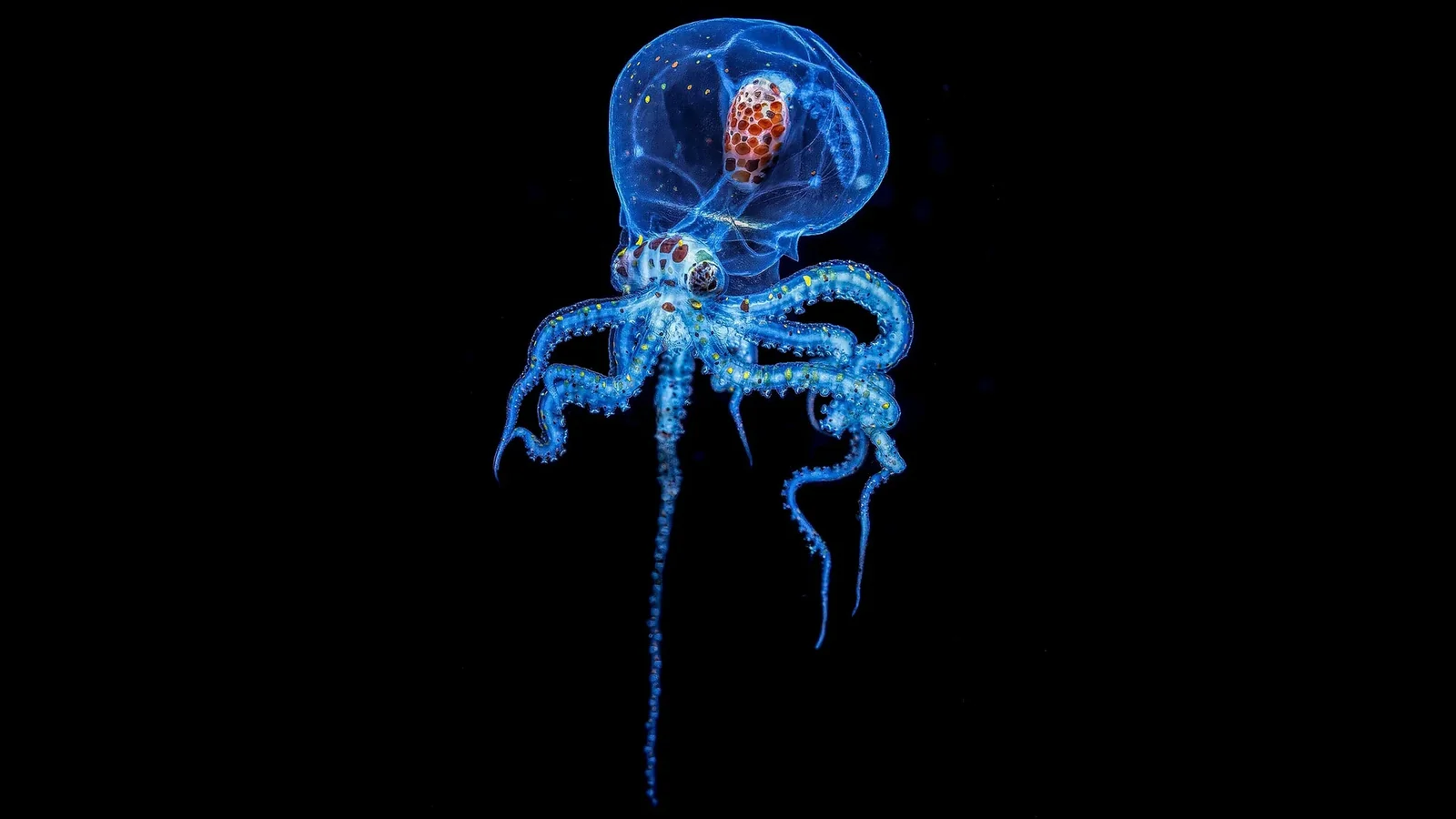
Photo: Edgar117 / Pixabay
How Many Arms Does an Octopus Have?
Eight arms, and no tentacles. The undersides of the arms are covered in suckers that are very sensitive to touch and taste, so an octopus can taste what it grabs.
Squid and cuttlefish are different. They have eight arms plus two special tentacles, which they shoot out to catch food from farther away.
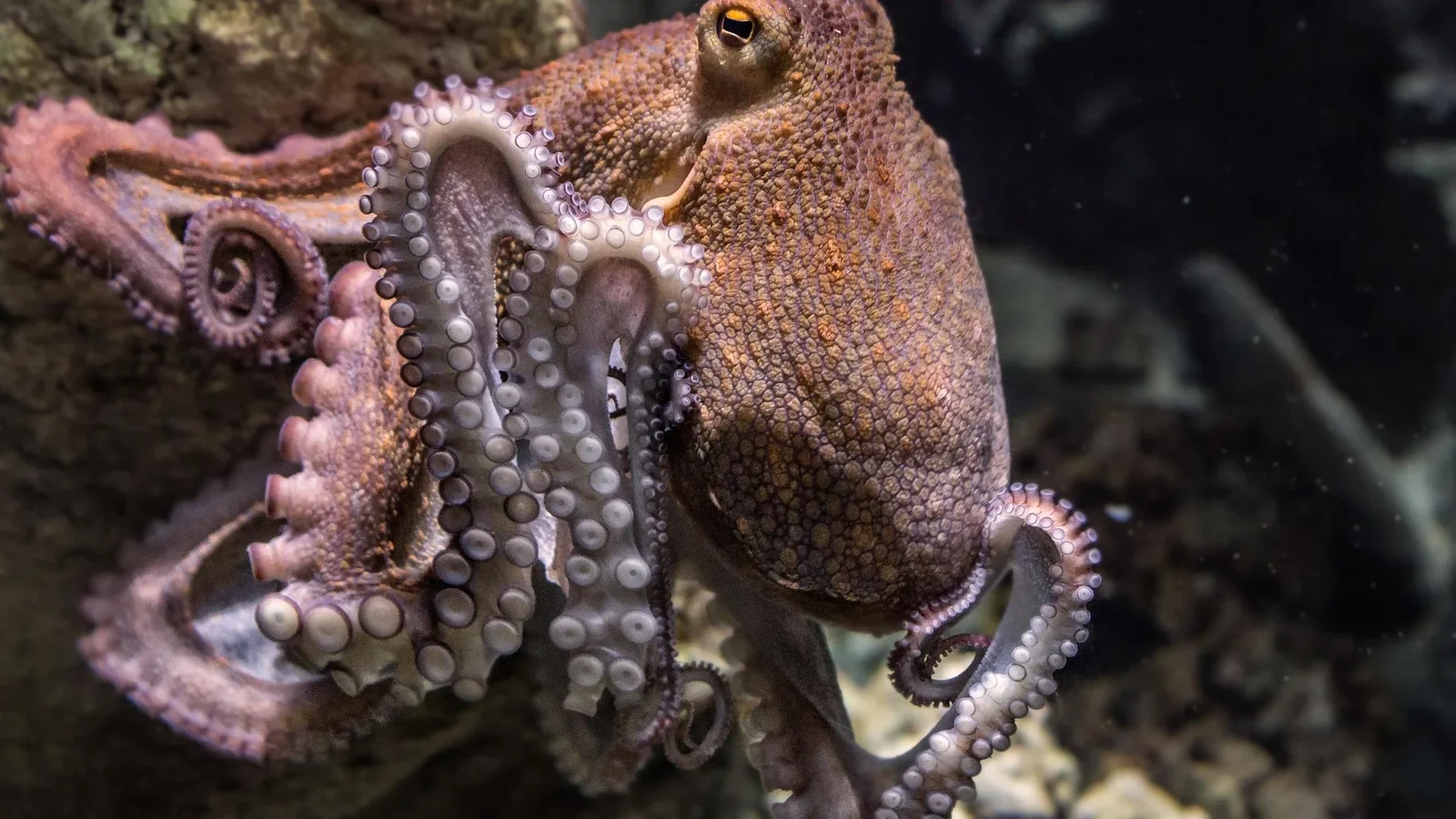
Photo: edmondlafoto / Pixabay
How Smart Are Octopuses?
Very smart for an invertebrate, an animal without a backbone. Octopuses have been seen opening jars, untying knots and escaping from their tanks.
One of the most famous examples is the veined octopus in Indonesia. Divers watched these octopuses pick up halved coconut shells, carry them across the seafloor, and put two together to make a hiding place. In 2009, scientists called it the first evidence of tool use in an invertebrate.
Comparing octopus brains to ours is tricky, so scientists don’t rank them on a simple scale. But there’s no doubt they can learn and solve problems.
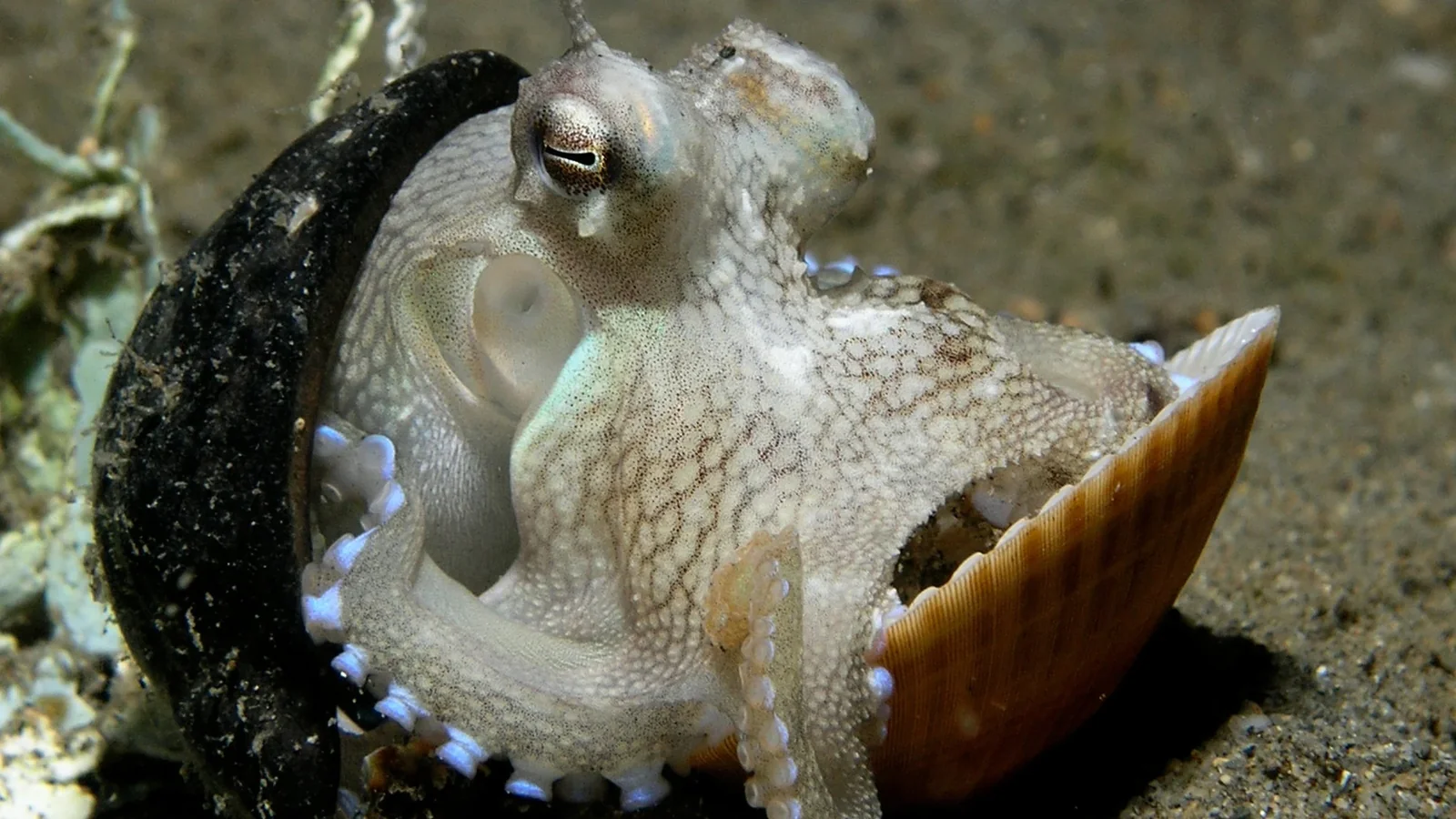
Photo: Nick Hobgood / Wikimedia Commons, CC BY-SA 3.0, cropped
Do Octopuses Have Bones?
No. An octopus has no bones at all. It has a hard beak, which sits in the middle of its arms and is strong enough to crack open crab shells.
With no skeleton, an octopus can squeeze its soft body through surprisingly small gaps, which helps it hide in rocky cracks and escape from predators.
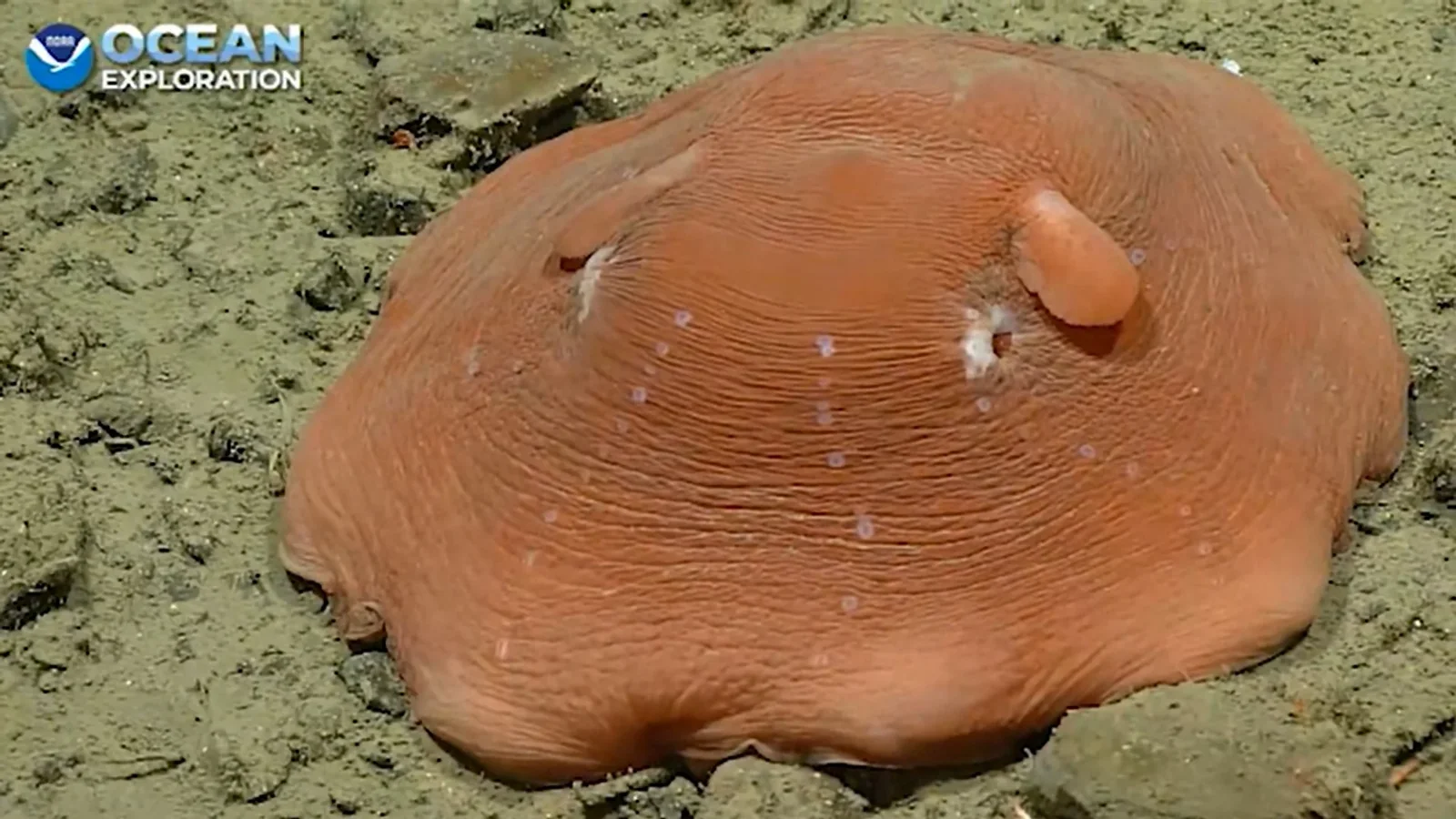
Photo: NOAA Ocean Exploration
What Do Octopuses Eat?
Octopuses are hunters. Adults eat crabs, clams, snails and small fish, and sometimes even other octopuses. In many species, babies start by eating tiny animals floating in the water, like crab larvae.
An octopus uses its beak to bite through shells. It also has a rough, tongue-like body part called a radula, lined with tiny teeth, which can drill into shellfish.
How Long Do Octopuses Live?
Not very long. Most octopuses live about one to three years, depending on the species. The giant Pacific octopus, one of the biggest, usually lives about three to five years in the wild.
Record-breaking mom: In Monterey Canyon off California in the United States, scientists watched a deep-sea octopus guard her eggs for 53 months, about four and a half years, from 2007 to 2011. That’s the longest time any animal is known to have brooded its eggs. She seems to have gone without food the whole time, and like other octopus moms, she most likely died soon after her eggs hatched.
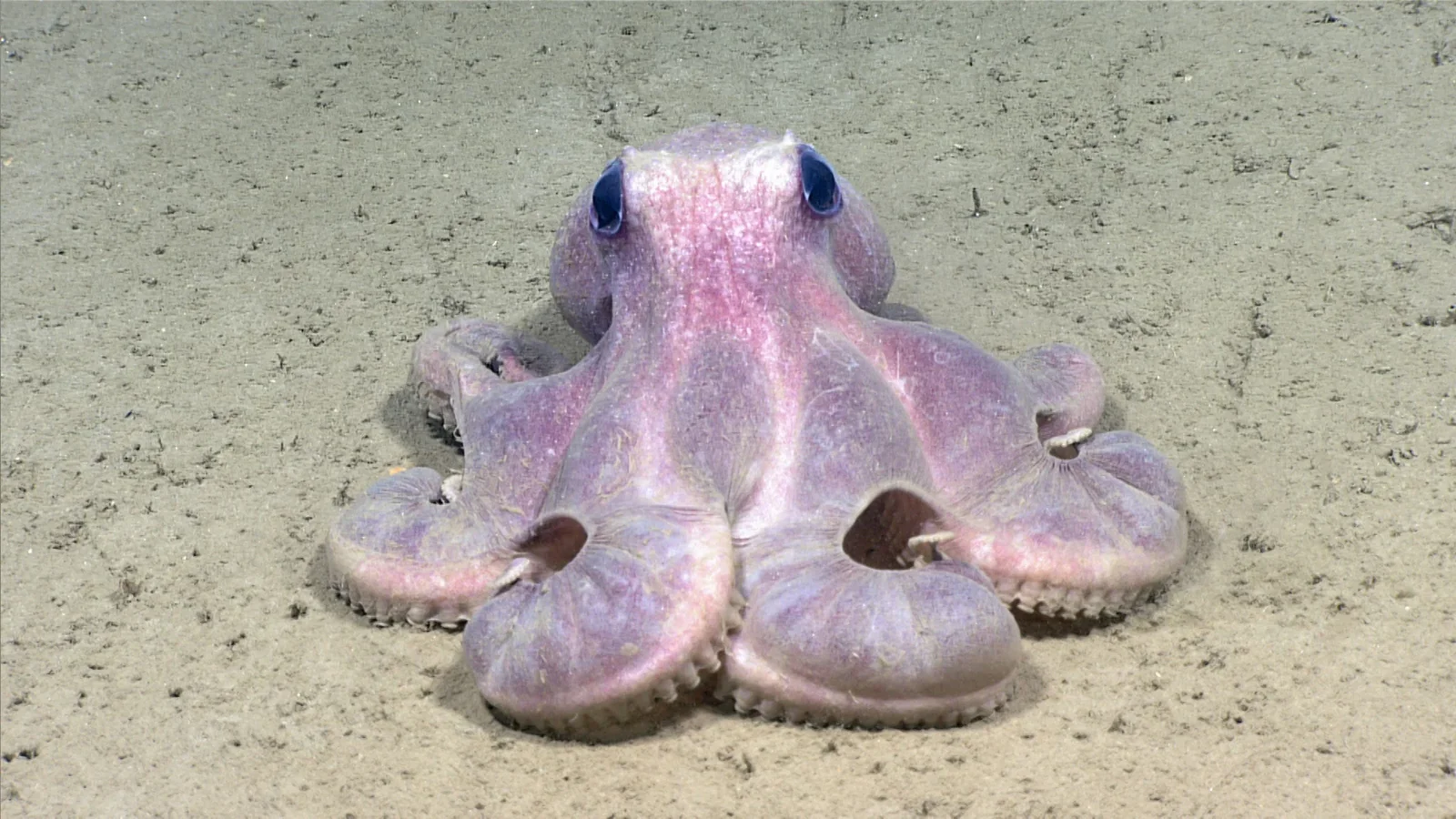
Photo: NOAA Ocean Exploration
Why Do Octopuses Squirt Ink?
To escape. When a predator attacks, many octopuses squirt out a cloud of dark ink. It works like a smokescreen, confusing the predator while the octopus jets away.
Not every octopus can do it, though. The deep-sea dumbo octopus, one of our 27 weirdest animals, has no ink sac at all.
Masters of disguise: Octopuses can change their skin color and pattern in a fraction of a second, using thousands of tiny color cells called chromatophores. Amazingly, their eyes have only one type of light-sensing cell, which makes them technically colorblind, and scientists are still working out exactly how they match their surroundings so well.
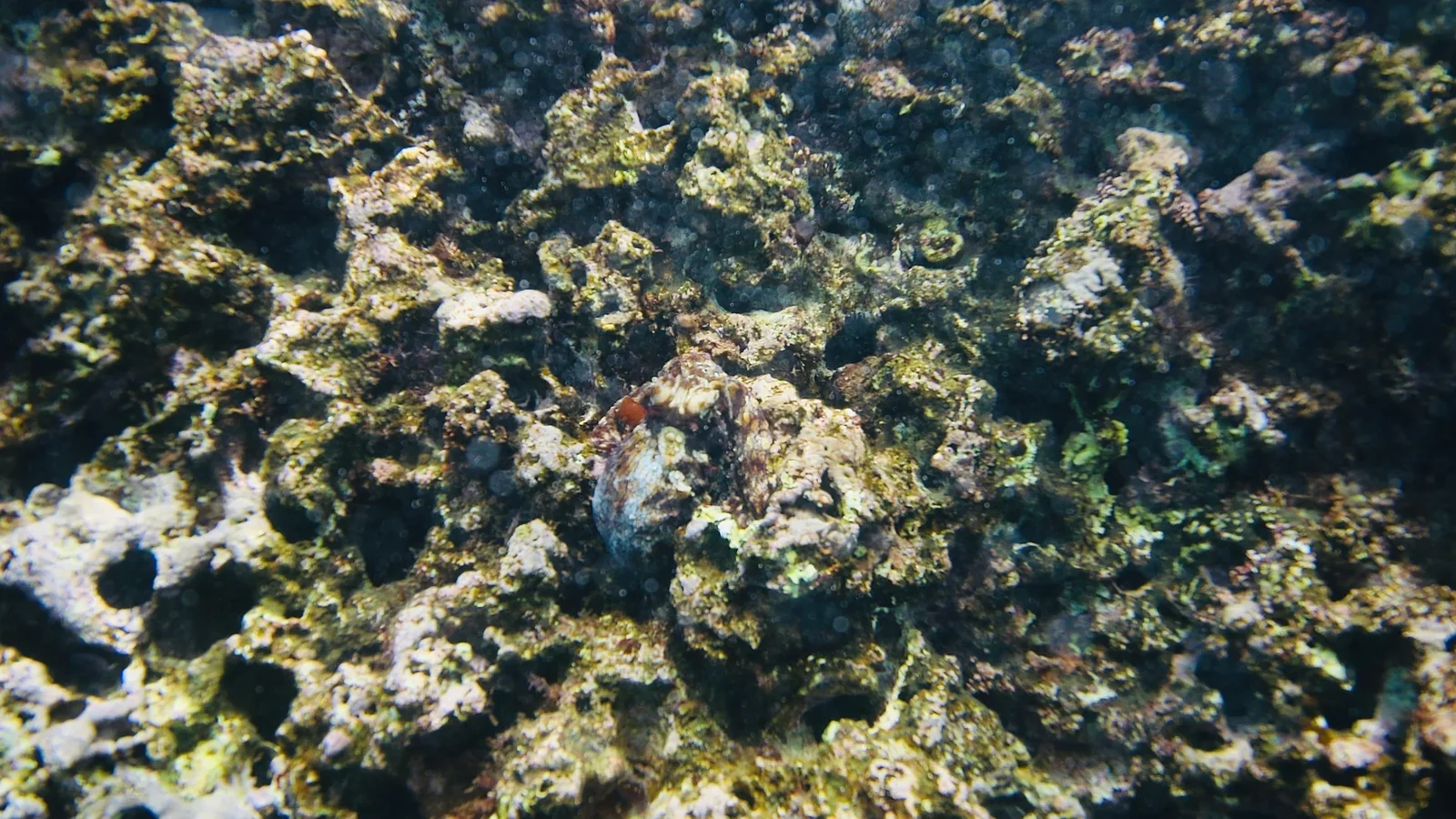
Photo: alana barthel / Wikimedia Commons, CC BY 4.0, cropped
Are Octopuses Aliens?
No. There’s no credible evidence that octopuses came from space.
The idea comes from a 2018 paper that suggested octopus eggs, or a virus, might have arrived on Earth from a comet. Other scientists strongly disagreed. One virologist said there was “no evidence for it at all.”
Studies of octopus DNA show they evolved here on Earth and belong to the same broad animal group as snails and clams: mollusks. When scientists first sequenced an octopus genome in 2015, one of them joked that it was “the first sequenced genome from an alien,” but he meant how strange octopuses are, not that they’re actually from space.
Is Calamari Squid or Octopus?
Squid. Calamari is just the Italian word for squid, and it’s the name usually used when squid is served as food. Octopus is a different animal, and it’s usually just called octopus on menus.

Photo: Chensiyuan / Wikimedia Commons, CC BY-SA 3.0, cropped
What Is the Plural of Octopus?
Octopuses is the most widely used plural, and it’s the one we use. Octopi is also accepted by dictionaries, and octopodes is a rare third option.
Watch Ocean Life Live
We don’t have an octopus cam yet, but you can watch jellyfish, kelp forests and coral reefs live right now. See what lives at every depth of the ocean, or browse all our zoo and aquarium cams. Curious how much of the deep sea we’ve actually seen? Find out how much of the ocean has been explored.
LIVEWatch live →LIVEWatch live →LIVEWatch live → Take Me Anywhere
Sources 14
- Live Science - How many hearts does an octopus have?
- Smithsonian Ocean - Octopuses, squids and relatives
- National Wildlife Federation - Octopuses
- ScienceDaily (2020) - Do octopuses’ arms have a mind of their own?
- Star-Bulletin (2009) - Octopuses go coconuts
- University of Washington Interactive Oceans - Giant Pacific octopus
- National Geographic (2014) - Octopus cares for her eggs for 53 months, then dies
- Robison et al. (2014) - Deep-sea octopus conducts the longest-known egg-brooding period, PLOS ONE
- Oceana - Dumbo octopus
- Space Daily, via Marine Biological Laboratory - Octopuses are technically colorblind
- Live Science (2018) - No, octopuses don’t come from outer space
- University of Chicago (2015) - Landmark sequencing of octopus genome
- Chowhound - What is calamari?
- Merriam-Webster - The many plurals of octopus
Editor’s note
Octopus species vary a lot in size, lifespan and behavior, so the facts here describe octopuses in general unless we name a species. The nerve cell count is an estimate for the common octopus. We don’t have a dedicated octopus cam, so the live cams show the kind of ocean habitats octopuses live in, not octopuses themselves.
How we researched this article
We picked the questions people search for most about octopuses, then checked each answer against museums, aquariums, government science agencies such as NOAA, university research news and peer-reviewed studies, including the 2014 PLOS ONE paper on the record-breaking octopus mom. Photos come from Wikimedia Commons, Pixabay and NOAA Ocean Exploration, credited under each image.